REVIEW · SAPPORO
Private Car Tour of Furano and Biei in Hokkaido with Local Guide
Book on Viator →Operated by Hokkaido Treasure Island Travel Inc. · Bookable on Viator
A day of color chaos, in the best way. This private car tour strings together Furano and Biei flower highlights with pickup and transfers so you’re not figuring out trains and buses all day. What I liked most: the flowers in Farm Tomita and Shikisai no Oka, plus the guide’s real-world context between stops; one thing to plan around is that flower conditions depend on the weather, so the exact look can vary.
You also get a proper local feel. Guides like Mari (with driver Kameda) and Kyoko (with driver Mr. Yoshida) kept things punctual and easy to follow, and they were the type to answer questions instead of just reading a script. The day runs long—about 10.5 hours—so it helps to be ready for walking, sitting in a car, and a bit of heat or chill depending on the season.
In This Review
- Quick reasons to choose this Furano and Biei private car day
- How the private car day actually runs from Sapporo
- Farm Tomita: lavender color, plus the greenhouse trick
- Shikisai no Oka in Biei: the four-seasons hill
- Alpaca Farm: a short, sweet animal break (with separate admission)
- Shirogane Blue Pond and Shirahige Falls: why the blue can look different
- Food, timing, and the cash you should bring
- Value check: what you’re paying for (and what you’re not)
- Who this tour fits best (and who might want another plan)
- Should you book this Furano and Biei private tour?
- FAQ
- What time does the tour start?
- How long is the tour?
- Is this a private tour, and how many people can join?
- What’s included in the price?
- What’s not included?
- Are the flowers guaranteed to look like the photos?
Quick reasons to choose this Furano and Biei private car day
- Hotel pickup and round-trip transfers make the day stress-free, even with scattered sights
- Farm Tomita and Shikisai no Oka are both included, each with about an hour on the ground
- Blue Pond’s changing color is explained in plain terms, including why it varies with recent weather
- Private pacing means you can spend a little more time where you care most
- A guide adds meaning between photo stops, not just directions
- Cash note for extra fees helps you avoid a last-minute scramble
How the private car day actually runs from Sapporo
This is set up for one group at a time (up to two people), which matters more than it sounds. You’re not waiting for others, and you’re not cramming your day around a fixed rhythm built for strangers. Your start time is 7:30 am, and the total time is about 10 hours 30 minutes.
The car handles the heavy lifting: round-trip transfers, parking, and highway fees are included. Your guide rides with you and bridges the gap between stops—what you’re seeing, why it exists, and what to look for when you’re standing in front of it. That’s the difference between “I took photos” and “I get what I’m looking at.”
You’ll also want to know the tour is designed for a moderate fitness level. That usually means you can handle short walks and getting on and off buses/tractors (when available), but don’t expect a full day of hills with no breaks.
You can also read our reviews of more guided tours in Sapporo

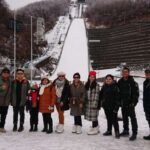
Farm Tomita: lavender color, plus the greenhouse trick
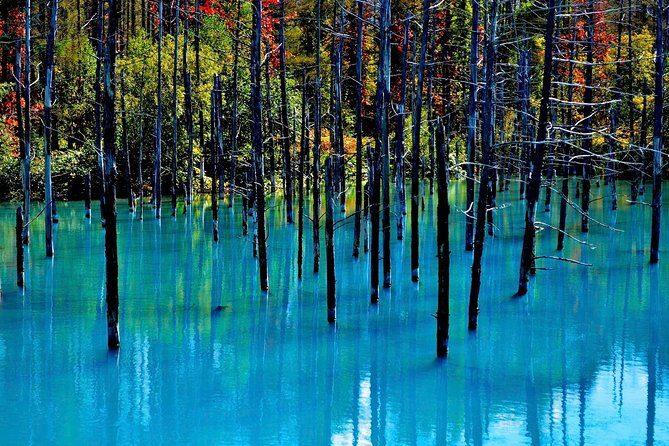
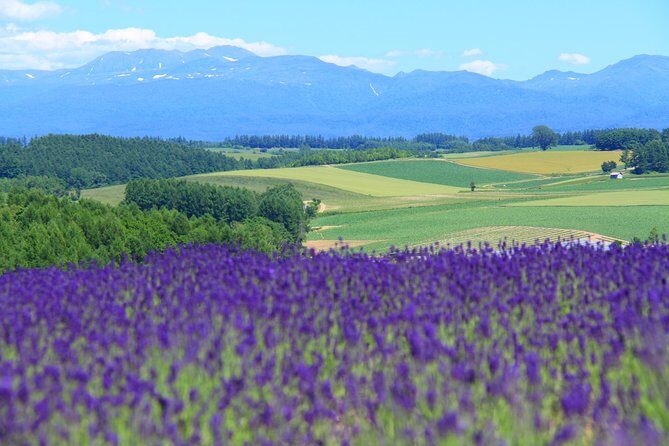
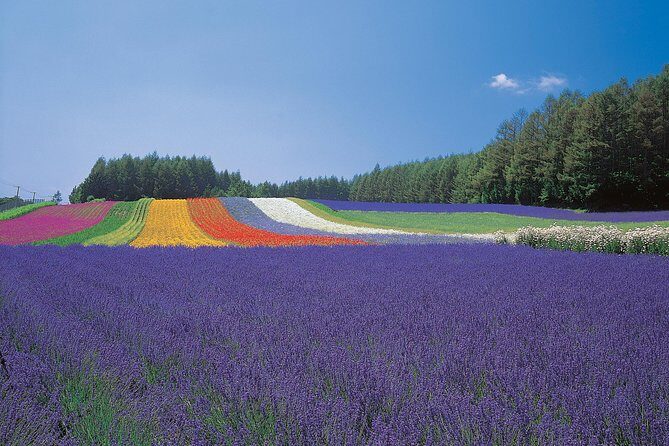
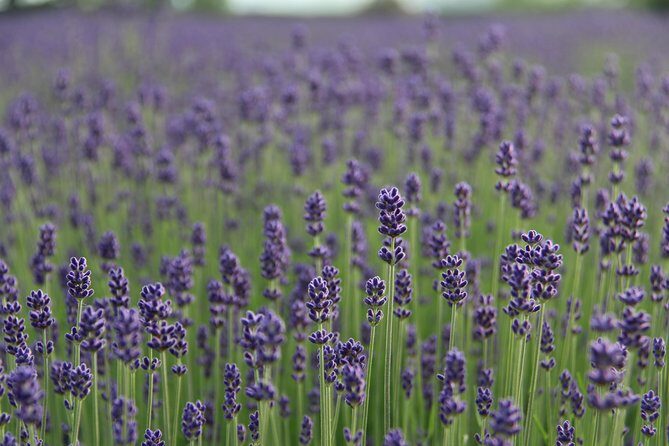
Farm Tomita is one of Hokkaido’s best-known flower scenes, and it’s easy to see why. You get about one hour here, and the admission is free. The standout is a huge lavender field—12 hectares—plus other flowers that can shift through the year (spring to autumn), with extra options in the warm greenhouse when it’s cold outside.
What I like about this stop is that it doesn’t feel like a single-theme photo set. Even in a short visit, you can spot different plantings and textures, and you’ll likely end up taking more than one kind of shot: wide-field views, close-ups, and the “I can’t believe this is real” lavender-product shopping.
A practical note: Farm Tomita is popular in peak seasons, so the time limit is real. If you want “wander for 45 minutes, then think about what to buy” instead of “rush and snap,” show up ready—water, sunscreen (or layers), and decent shoes.
Shikisai no Oka in Biei: the four-seasons hill
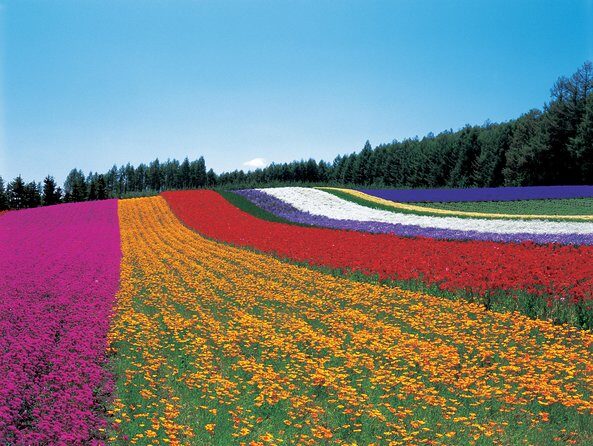
If Farm Tomita is the lavender show, Shikisai no Oka is the color-mixing master class. This is also about one hour, and admission is free.
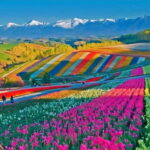
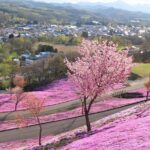
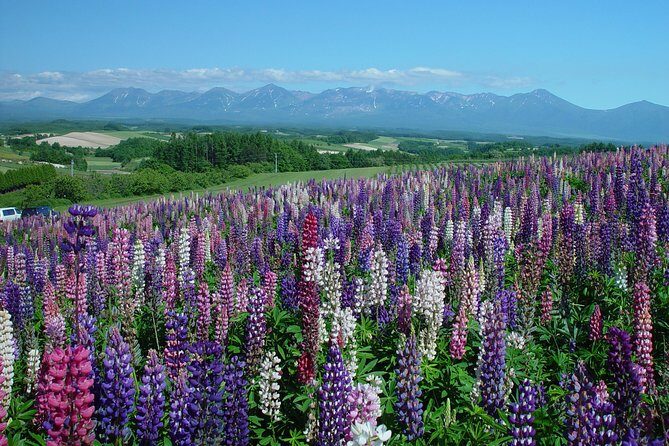
The key idea here is in the name: it’s built around the theme of color across the year—so the plant list and colors change by season. Depending on when you go, you may see tulip, lupine, lavender, salvia, sunflower, dahlia, and Japanese anemone. The garden covers a 7-hectare hill, and you’re walking in a way that still lets you catch broad views even in a limited time.
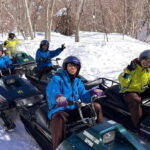
Here’s the fun part: there are ride options if you want to reduce walking. You can take a tractor bus called Shikisai Norokko, plus smaller buggy or cart experiences. If your legs are feeling it, these rides can turn the stop from a “quick walk” into a calmer, more scenic loop.
The drawback is simple: what you get visually depends on weather and timing. Flower conditions are explicitly weather-dependent, so manage expectations. You can still have a great time even if the peak color isn’t 100%, because the hill design and plant layout make it pretty in many scenarios.
Alpaca Farm: a short, sweet animal break (with separate admission)
Right after Shikisai no Oka, there’s a brief 15-minute stop at an alpaca farm where you can meet and feed the animals. Admission here is not included, so budget for that add-on.
This is the kind of stop that works best if you treat it like a reset button. Don’t expect a long interaction. The whole day is timed, so use the minutes for a quick feed, photos, and then move on while the rest of the day is still ahead of you.
If you’re traveling with kids or you just enjoy animals, this moment can make the day feel less like a marathon of gardens and more like a balanced day outdoors.
Shirogane Blue Pond and Shirahige Falls: why the blue can look different
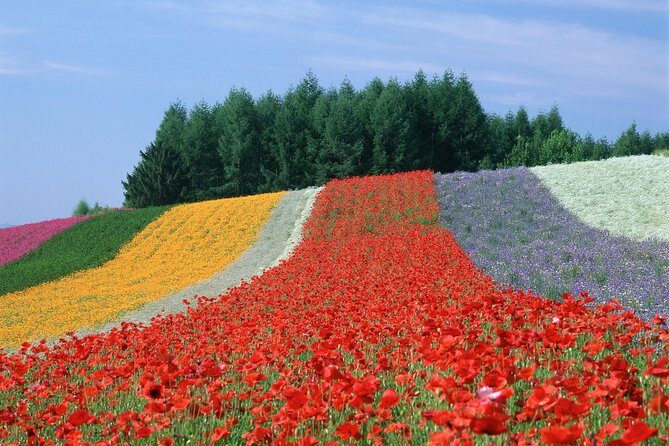
Now for the sight people plan their photos around: Shirogane Blue Pond. You get about 45 minutes, and admission is free.
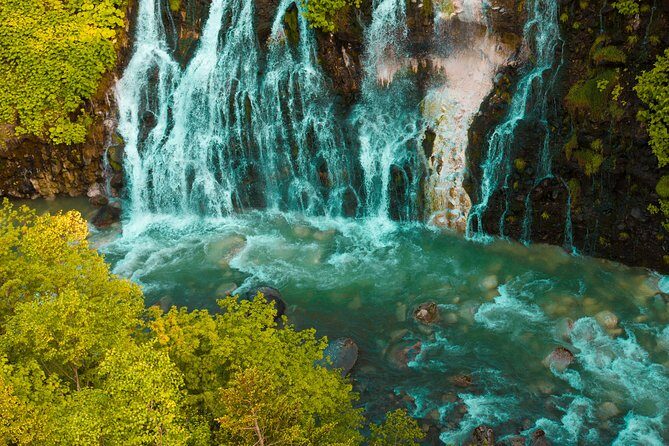
The blue color is caused by the interplay of sunlight with minerals in the water. The color is changeable, and it depends on the weather from the previous three days. That’s a big deal. If your pond looks a little darker or lighter than you expected, it’s not you—it’s physics and recent weather.
One detail I really liked learning is why the pond exists in the first place. It was made about 20 years ago to help protect the area from volcanic eruptions and landslides or water flows coming from Mt. Tokachi. So yes, it’s pretty. But it also has a practical purpose that gives the scene more meaning than a random scenic stop.
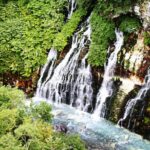
A short hop away is Shirahige Falls (about 15 minutes here, admission free). The falls have a blue tint as well, and that theme of blue ties the two stops together nicely for a quick “watch, then breathe” moment.
Practical tip: bring shoes you’re comfortable standing in around damp areas. This isn’t a long hike, but it’s still a waterfall-adjacent environment.
You can also read our reviews of more private tours in Sapporo



Food, timing, and the cash you should bring
Lunch is not included, and the tour setup notes that you should pay extra fees by cash. That’s specifically a heads-up for items like highway-related charges that can come up. Credit cards are acceptable for lunch only, so don’t assume your card will work for everything.
Another timing detail matters: there’s an additional fee of 13,000 yen per hour if the tour exceeds 10.5 hours by your request or if you don’t return at the designated time. In a private day, “we’ll just stay a bit longer” can turn into an expensive surprise. So if you want extra time, ask early and be clear.
If you’re the type who likes to eat on the go, plan your lunch strategy in advance. The tour asks you to advise dietary needs for lunch, but you still need to coordinate how you’ll handle the meal during the day.
And yes, plan for weather. The day is mostly outdoors. Even if you’re going in summer, you’ll be switching between car time and garden time. Dress in layers and keep sun protection handy.
Value check: what you’re paying for (and what you’re not)
Price is $1,311.60 per group (up to two people). That’s not cheap on the surface. But you’re buying a full-service private day, not just a ride to a couple places.
Here’s what’s included:
- Round-trip transfers with pickup offered
- Taxes
- Highway fee
- Parking fee
- A local guide who gives commentary across the day
- Mobile ticketing
What’s not included:
- Lunch
- Tips/gratuities
- Any personal expenses
- Alpaca farm admission
- And, on a bigger level, flower timing itself (because it depends on conditions)
So the value comes from three things working together: you avoid navigation stress, you avoid losing time on logistics, and you get context from a guide. If you were to try to recreate this on your own, you’d spend a lot more effort (and likely money) piecing together transport and tickets.
For couples or two-person groups who want a “show up, ride, see, and learn” day, the price starts to make sense. For solo travelers, or for people who truly enjoy public transport and self-guided days, you might decide it’s more than you need.
Who this tour fits best (and who might want another plan)
This is best for you if:
- you want Furano and Biei in one day without the stress of coordinating routes
- you care about flowers but also like explanations about what you’re seeing
- you prefer a private pace instead of syncing with other groups
- you want to maximize time at key stops (each garden has a defined stay)
This is less ideal if:
- you’re determined to fully control the day yourself and don’t mind sorting logistics
- you get uncomfortable with a long day (10.5 hours is a real chunk of time)
- you only want one or two stops and could skip the rest
In short: if you want the “cleanest” version of a Furano/Biei day, this private format is a strong match.
Should you book this Furano and Biei private tour?
I’d book it if your priority is easy flow plus top sights—Farm Tomita, Shikisai no Oka, Blue Pond, and Shirahige Falls—paired with a guide who keeps the day organized. The biggest reason isn’t just comfort. It’s the way the stops are connected: you spend less time figuring things out and more time noticing details.
I’d think twice if you’re on a tight budget or if you’re the kind of traveler who doesn’t mind changing plans when flowers look different. The tour itself doesn’t control bloom timing, and conditions are weather-dependent. If you’re flexible on what you see and focus on the experience, you’ll do well.
FAQ
What time does the tour start?
It starts at 7:30 am.
How long is the tour?
It runs about 10 hours 30 minutes.
Is this a private tour, and how many people can join?
Yes. It’s a private tour/activity with only your group participating, and it’s priced for up to two people.
What’s included in the price?
Included are round-trip transfers, taxes, highway fees, and parking.
What’s not included?
Lunch, other personal expenses, and tips/gratuities are not included. Alpaca farm admission is also not included.
Are the flowers guaranteed to look like the photos?
No. Flower conditions are totally dependent on the weather.
You Might Also Enjoy
 Private group Local Food Tour in Takayama
 Full-Day Guided Private Tour in Tokyo, Japan
 Miyako island: Pumpkin Limestone Caving & kayaking
 Walking around town in a kimono, you can choose your favorite kimono from the traditional Okinawan costumes “Ryuso”, “Kimono”, “Yukata” 《Hairset & Lipstick & Kimono & Rental Fee》All Comic Book