REVIEW · TOKYO
Ride Through The Streets Of Shibuya and Sinjuku By Go Kart
Book on Viator →Operated by Neo-Tokyo-Kart · Bookable on Viator
Tokyo moves fast, even at street level. This go-kart tour turns Shibuya at night into a real ride experience, not a slow walk between attractions, and I liked having single-person karts so you’re fully in control. One heads-up: the meeting spot can be a little tricky to find, so give yourself extra time to get oriented.
In about an hour, you’ll follow a local guide through the streets of Shibuya and Shinjuku, with stops built in for photos and short bursts of local context. The “why” is simple: you cover a lot more ground than you would on foot, and you do it while feeling the energy of Tokyo up close.
Before you get excited about speed, double-check the driving rules. This activity requires the right driving paperwork (an International Driving Permit under the right convention rules), and it runs on good weather, so plan your slot with that in mind.
In This Review
- Key things to know before you go
- Entering Shibuya and Shinjuku From a Go-Kart Perspective
- The 1-Hour Ride: What Your Timing Actually Looks Like
- What You’ll See on the Road: Architecture, Street Energy, and Street-Level Views
- How “Public Roads” Works Here (and What Keeps You Safer)
- Photo Stops and Post-Ride Sharing: Turning Speed Into Memories
- Price and Value: Is $99.10 Worth It?
- License Reality Check: The IDP Rules You Cannot Ignore
- Weather and Timing: When to Book for the Best Ride
- Who Should Book This Shibuya-Go-Kart Ride
- Should You Book This Go-Kart Experience?
- FAQ
- How long is the go-kart tour?
- What is the meeting point location?
- Do I ride a single-person go-kart?
- Do I need an International Driving Permit (IDP) for this activity?
- What kind of IDP is accepted?
- Are some countries not allowed to drive in Japan?
- Do you provide a safety briefing?
- What if the weather is bad?
- What is the cancellation policy?
- Who provides the guide during the ride?
Key things to know before you go
- Single-person, road-ready karts: You drive yourself in vehicles designed for public roads in Japan, with a guide nearby.
- Shibuya + Shinjuku coverage in about an hour: Ideal when your Tokyo schedule is packed and walking won’t cut it.
- Photo stops included: The guide takes photos during the ride and shares them afterward (you may receive them via air-drop).
- Mobile ticket: You’ll use your phone ticket for entry and start the tour from a set meeting point.
- IDP rules are strict: You need a valid 1949-convention IDP in booklet format; digital copies and card-style permits aren’t accepted.
Entering Shibuya and Shinjuku From a Go-Kart Perspective
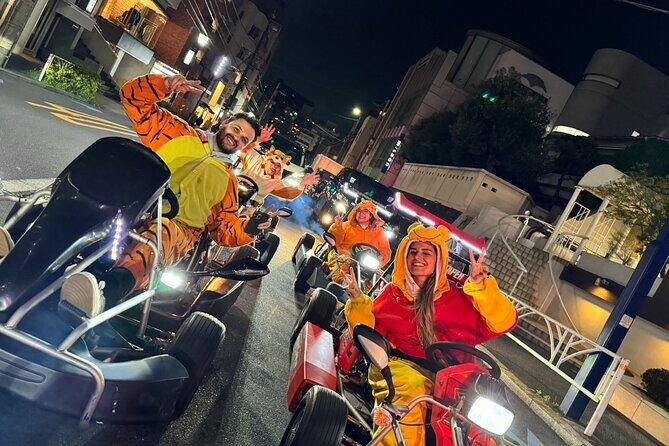
Shibuya and Shinjuku are famous because they’re intense. The sidewalks are busy, the streets are loud, and every corner has something going on. What’s different here is that you’re not just watching that chaos—you’re navigating it, behind the wheel, in a kart that’s made for real public driving.
I like this approach for first-timers. Tokyo can feel like sensory overload on foot. In a go-kart, you still get the visuals—street scenes, architecture, and the constant motion—but you move with purpose. A local guide keeps you pointed the right way and helps you avoid the “we’re lost in Shibuya” spiral.
And because you’re in a single-person kart, the experience feels more personal. You’re not waiting for a passenger to look left or manage photos; you’re driving, braking, accelerating, and taking in the streets at your own rhythm. That matters when you only have about an hour.
You can also read our reviews of more tours and experiences in Tokyo.



The 1-Hour Ride: What Your Timing Actually Looks Like
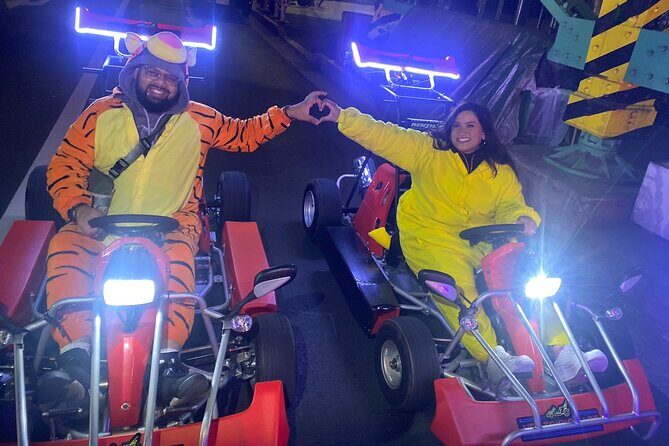
The tour runs about 1 hour (approx.), starting and ending at the same meeting point in Shinjuku. Within that hour, there’s a clear flow: check-in, safety briefing, then your drive loop.
Here’s how it typically plays out:
1) Meet, check in, and get ready
You’ll start at 4-chōme-18-2 Nishishinjuku, Shinjuku City. The location is described as near public transportation, but it may still take a minute to find, especially if signage isn’t obvious. I’d treat this like a “arrive early” situation.
2) Safety briefing before you drive
Before you hit the road, you’ll get a safety briefing. This is where the guide explains how the ride works, what to watch for, and how to stay controlled. Since you’re driving on public roads, this step isn’t optional fluff—it’s what makes the experience feel organized instead of chaotic.
3) Drive with your guide and pause for photos
Once you’re on the move, the guide stays involved. The ride includes opportunities to stop for photographs, and you’ll pick up quick insights along the way. This is one of the nicest parts: you don’t just zip by scenes; you get chances to frame them and capture the moment.
4) Return back to the meeting point
After your Shibuya and Shinjuku circuit, you head back to where you started. The whole experience is designed to be complete and simple, not a half-day commitment.
If you’re the type who likes a tight plan, this timing is a win. If you like slow, unstructured wandering, this tour still gives you motion—but it’s built for “see a lot fast.”
What You’ll See on the Road: Architecture, Street Energy, and Street-Level Views
The big promise is straightforward: you’ll see incredible architecture and busy streets while driving past areas that cars normally can’t reach in the same way. You’ll also get a “local guide” layer that turns street-scene visuals into something you can actually place in context.
Shibuya is known for motion—crosswalk flows, neon rhythms, and that feeling that the city is always mid-event. Shinjuku brings a different texture: dense blocks, stacked signs, and a more vertical sense of Tokyo going up and around you. From the kart, these neighborhoods feel more like a moving photo set than a walking tour.
You also have an advantage you don’t get on foot: your angle changes. On a sidewalk, everything is at eye level, and you’re stuck with the street you’re standing on. In a kart, you’re continuously repositioning. You catch street fronts and building edges in quick succession, and that makes the ride feel like you’re “experiencing Tokyo,” not just sightseeing Tokyo.
Night can add extra value. One of the strongest practical tips from rider feedback is to choose a slot around 6 pm onwards if you can. The street lighting and energy can make the ride feel more dramatic, and you’ll likely enjoy the photos more too.
How “Public Roads” Works Here (and What Keeps You Safer)
This isn’t a theme-park track. It’s a go-kart sightseeing tour where you ride on public roads. That changes the mindset: you’re driving in traffic conditions, even if the tour is managed and the karts are designed for the rules.
The provider states that the karts are designed for driving on public roads in Japan. That’s important because it means you’re not guessing how the vehicle behaves. You still need to follow instructions, drive safely, and stay alert—but the setup is built around real road use, not just spinning around a course.
Your guide is on hand for the experience. That matters because you’re not navigating complex turns or searching for the route while also concentrating on driving. It also helps during photo stops: you can pause when the guide indicates instead of pulling over randomly.
One more safety reality: if you’re under the influence of alcohol, you’re not allowed to participate. That’s not just a rule on paper; it’s part of how the operator keeps the activity responsible.
Photo Stops and Post-Ride Sharing: Turning Speed Into Memories
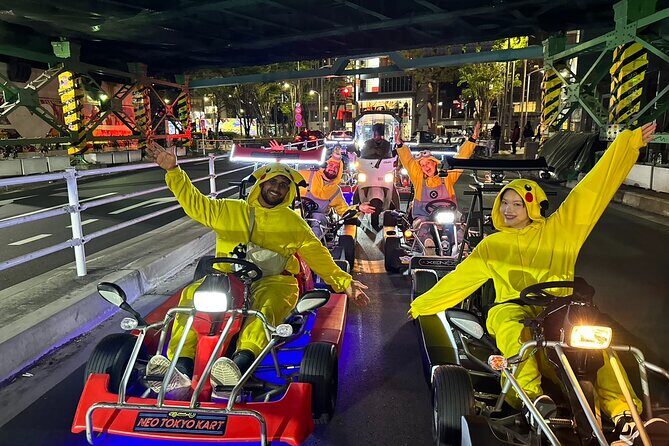
If you only walked through Shibuya, you’d probably take photos and keep moving. Here, you get a different rhythm. The ride includes photo stops, so you’re not just snapping shots while driving past at speed.
There’s also a practical memory benefit. In rider feedback, the guide took several photos during the tour and shared them afterward via air-drop. Even if your exact delivery method varies, the intent is the same: you’ll come away with more than blurry shots you took mid-motion.
Quick tip: treat those photo stops like a mini-moment. Stop where the guide indicates, stand where you can be seen in the frame, and let yourself enjoy it. With go-karts, the temptation is to rush back to driving, but the best pictures usually happen when you slow down for those brief pauses.





Price and Value: Is $99.10 Worth It?
At $99.10 per person, this isn’t the cheapest thing on your Tokyo list. But it’s also not just “rent a kart and go.” You’re paying for several value layers:
- Time efficiency: About an hour can cover more ground than walking, which matters if you’re trying to fit Tokyo neighborhoods into a packed itinerary.
- Guided navigation: You’re not planning a route, solving street logistics, or figuring out where you can safely ride.
- Road-ready setup: The karts are designed for public road use in Japan, and you get a safety briefing.
- Photo value: Photo stops plus the chance to receive ride photos at the end makes the experience feel more complete than a quick activity.
If you’re the kind of traveler who values “small time, big experience,” the price makes sense. If you’re mostly interested in slow cultural exploration, you might feel this is more adrenaline than depth. For the right traveler, though, it hits a sweet spot: thrilling + structured + efficient.
Also, you’ll use a mobile ticket, which keeps the start simple.
License Reality Check: The IDP Rules You Cannot Ignore
This is the section you should read twice, because the rules are strict—and they affect whether you can drive at all.
You’re required to confirm your country’s driving license and IDP eligibility for Japan. The key points are:
- An International Driving Permit under the 1949 convention is required to legally drive on Japan streets.
- Your IDP must be in booklet format. Digital IDP, card types, pictures, and copies are not accepted.
- Certain residency country groups are not allowed to drive in Japan, including residents from China, Mexico, Indonesia, Pakistan, Saudi Arabia, Kuwait, and Qatar.
- The operator cannot issue refunds if you provide incorrect or invalid documents on the activity day.
There’s also an extra requirement for specific passport countries. For people from Switzerland, Germany, France, Taiwan, Belgium, Estonia, or Monaco, you must have (1) original driving license, (2) official Japanese translation by the authorized organization, and (3) your passport. All three documents are required to drive.
Finally, the general guideline is to check how Japan’s rules apply to your passport country (the information points travelers toward Japan Automobile Federation guidance). I’d treat that as a non-negotiable checklist item before you book—because the activity depends on it.
If you don’t meet the IDP rules, you’re not just risking a hassle. You risk being unable to participate.
Weather and Timing: When to Book for the Best Ride
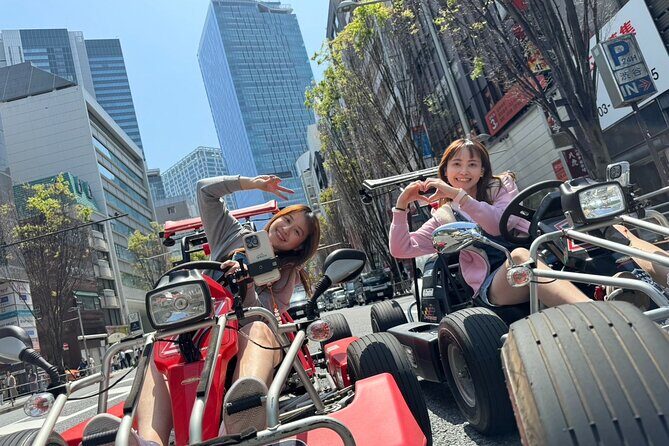
This experience requires good weather. If it gets canceled due to poor weather, you’ll be offered a different date or a full refund.
That means your best planning move is to pick a time when your Tokyo weather outlook isn’t a coin flip. If you’re flexible with your schedule, you can choose a safer weather window.
Timing can change the vibe too. Riders specifically highlight an evening slot—getting a time around 6 pm onwards can be amazing. If you like nighttime Tokyo (and many people do), this can be one of your best “one-hour experiences” because Shibuya and Shinjuku look different after dark.
Who Should Book This Shibuya-Go-Kart Ride
This tour is a great fit if you want Tokyo that feels fast, visual, and fun without spending half a day commuting or walking.
You’ll likely enjoy it most if:
- You’re a first-time Tokyo visitor who wants to see more in less time.
- You like adrenaline activities but still want a guided experience and a safety briefing.
- You’re traveling with enough time to handle an IDP checklist before you go.
- You want photos and memories beyond a few quick snapshots.
You might want to skip it if:
- You don’t have the right IDP/document setup for Japan driving.
- You’re not comfortable driving in real road conditions, even with a briefing and guide support.
- You’re traveling during a weather-uncertain period and can’t adjust your schedule.
It’s also a smart choice if your itinerary is packed and you’re looking for a concentrated dose of Shibuya and Shinjuku without the “stand in line, then rush to the next thing” feeling.
Should You Book This Go-Kart Experience?
I’d book it if you match the core requirements and you want a short, high-impact Tokyo highlight. The combination of single-person driving, a local guide, and the chance to cover Shibuya + Shinjuku in about an hour makes it feel like good value for the experience level.
My “don’t get burned” advice is simple: confirm your IDP rules early and arrive with extra buffer time for the meeting point. If you do those two things, you’ll spend your focus on the fun parts—driving, photo stops, and that street-level Tokyo energy that you just can’t get from a bus window.
If you want, tell me your travel month and whether you already have an IDP. I can help you pick a sensible time window and checklist priorities so you don’t waste a single day in Tokyo.
FAQ
How long is the go-kart tour?
The duration is about 1 hour.
What is the meeting point location?
The start point is 4-chōme-18-2 Nishishinjuku, Shinjuku City, Tokyo 160-0023, Japan. The tour ends back at the meeting point.
Do I ride a single-person go-kart?
Yes, you drive a single-person kart.
Do I need an International Driving Permit (IDP) for this activity?
Yes. The activity requires a valid international driving permit that is eligible for Japan under the correct rules described by the operator.
What kind of IDP is accepted?
An IDP under the 1949 convention is required, and it must be in booklet format. Digital IDPs, card-type IDPs, and copies or pictures are not accepted.
Are some countries not allowed to drive in Japan?
The operator lists residents from China, Mexico, Indonesia, Pakistan, Saudi Arabia, Kuwait, and Qatar as not allowed to drive in Japan.
Do you provide a safety briefing?
Yes. A safety briefing happens before you start driving.
What if the weather is bad?
This experience requires good weather. If it’s canceled due to poor weather, you’ll be offered a different date or a full refund.
What is the cancellation policy?
Free cancellation is available up to 24 hours in advance for a full refund.
Who provides the guide during the ride?
The tour is led by an experienced local guide who stays on hand to help during the drive.