REVIEW · TOKYO
Sumi-e (ink painting) experience in Tokyo
Book on Viator →Operated by Shuminavi Inc. · Bookable on Viator
Sumi-e class in Tokyo has a funny way of making you slow down. In an hour, you’ll get taught how to use the brush for ink work and how to look at Sumi-e so your own marks feel intentional, not random. The core exercise is a simple bamboo sketch that builds confidence fast.
I especially like the format: tools included and a guide there to keep things practical. And with a maximum group size of 9, you’re not just watching from the back of the room—you can ask questions and get direct feedback.
The main drawback to consider is timing. If you show up late or miss your group, the class can’t really work for you, and communication may feel abrupt if you no-show—so plan to arrive early and be at the right meeting point.
In This Review
- Key things to know before you try Sumi-e in Asagaya
- Sumi-e in 60 Minutes: What You’ll Do and Why It Works
- Meeting at JR Asagaya Station: Easy to Find, Fast to Start
- Bamboo Strokes and Tool Time: How the Instructor Guides You
- Learning to Look at Sumi-e: The Skill That Stays With You
- The Practical Flow of Your Class (and When You Can Ask Questions)
- Price and Value: Is $65.15 Worth It?
- Who Should Book This Sumi-e Class (and Who Might Want Another Option)
- The One Misstep to Avoid: Missing Your Group
- Should You Book This Sumi-e Experience in Tokyo?
- FAQ
- FAQ
- How do I choose between ink painting and the other options?
- Where is the meeting point for the class?
- When should I arrive before the meeting time?
- How long is the Sumi-e class?
- What will I draw during the Sumi-e instruction?
- What’s included in the price?
- What isn’t included?
- How many people are in the group?
- Is pickup available?
- When do I get confirmation after booking?
- Is this experience refundable or changeable?
Key things to know before you try Sumi-e in Asagaya
- You’ll start with a bamboo sketch while the instructor explains how to use the tools.
- You’ll learn how to look at Sumi-e, not only how to copy it.
- Class runs about 60 minutes, so it’s focused and beginner-friendly.
- Small group size (up to 9) makes it easier to get help when you get stuck.
- Pickup may be available, plus a mobile ticket makes the logistics lighter.
Sumi-e in 60 Minutes: What You’ll Do and Why It Works
This class is built for real beginners. The schedule is short on purpose, so you don’t spend your energy figuring out where everything is. Instead, you spend that time learning a few key moves with ink, then putting them into practice.
You start with a basic Sumi-e bamboo drawing. That’s a smart choice because bamboo gives you a natural mix of brush strokes: straight-ish stems, branching lines, and leafy marks. It also makes your mistakes useful. If a line looks shaky, it still reads like bamboo in ink because the style accepts imperfection and rhythm.
The other half of the class is just as important: you learn how to look at Sumi-e. That means you’re not only producing a picture. You’re training your eye to notice brush pressure, spacing, and the way empty paper matters. For many people, that shift is what turns a frustrating “art class” into a satisfying one.
You can also read our reviews of more tours and experiences in Tokyo.



Meeting at JR Asagaya Station: Easy to Find, Fast to Start
You meet at JR Asagaya Station, at the ticket gate area. The check-in timing is tight in the best way: you’re asked to arrive about 5 minutes before the meeting time.
From there, the walk to the venue is short—about 5 minutes on foot. This matters because ink classes punish late arrivals. Once you’re in the room and ink is ready, you want to start right away rather than standing around trying to catch up.
If you’re coming from Tokyo’s maze of trains, I’d treat this as a “get there early” outing. Even if you’re fast with the subway, give yourself time for signage, platform stairs, and any last-minute questions. That small buffer pays off.
Bamboo Strokes and Tool Time: How the Instructor Guides You
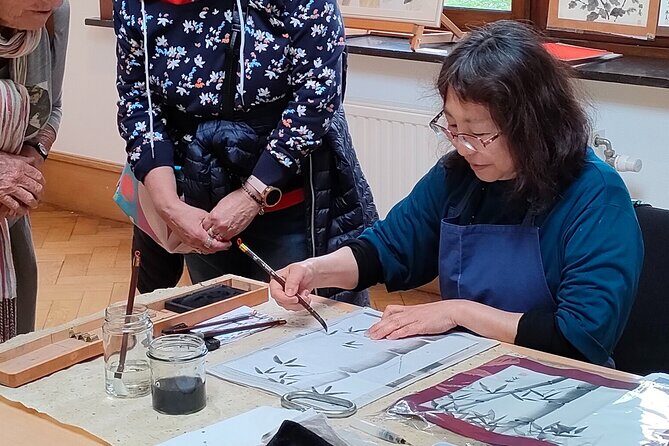
The class includes calligraphy tools, so you’re not bringing your own brush set or ink. The instructor shows you how to hold and use the tools, then you practice while they talk.
The teaching method is step-by-step:
- The instructor explains how to use the tools.
- They draw a basic bamboo as a live example.
- Then you draw your own version.
Why this format works: you’re watching a moving model, not just receiving a static picture. Ink painting is all about motion and timing, and a bamboo demo is perfect for showing that control without overcomplicating things.
Also, because it’s a one-hour session, you’re not expected to master everything. You’re learning a few rules that keep your marks looking like Sumi-e instead of generic brush lines.
Learning to Look at Sumi-e: The Skill That Stays With You
A lot of art classes focus only on making. This one includes a short lesson on how to look at Sumi-e, and it’s surprisingly useful on the street afterward.
Here’s what that skill changes for you:
- You start noticing ink density and how it changes as you move.
- You recognize when a mark is meant to be thin and when it’s meant to be bold.
- You see how spacing and negative space create balance.
Even if you don’t consider yourself an artist, this helps. You’ll leave with more confidence reading ink art in Japan’s galleries and shops, not just producing something on the day.
And because the main drawing is bamboo, the “looking lesson” ties back to what you’re doing in real time. You’re not learning theory in a vacuum.
The Practical Flow of Your Class (and When You Can Ask Questions)
The rhythm is simple and easy to follow:
- Meet at JR Asagaya Station ticket gate.
- Walk to the venue.
- Get introduced to the tools and how to use them.
- Draw the bamboo with instructor guidance.
- Q&A and wrap-up.
The Q&A session is part of the value here. Ink work can feel abstract at first—until someone points out what to adjust in your hand or pressure. In a small group, those adjustments are easier to get than in larger classes where everyone waits their turn.
One thing to keep in mind: because it’s a short session, questions tend to be practical. Ask about what you’re doing right then. Instead of asking broad art philosophy, you’ll get the most benefit by asking what to change in the stroke you’re about to make.






Price and Value: Is $65.15 Worth It?
At $65.15 per person for about 60 minutes, this class is priced like a hands-on workshop, not like a souvenir experience. The big value drivers are:
- Tools are included, so you’re not paying extra for materials.
- A guide stays with you the whole time.
- Small group size (up to 9) means more attention.
- It’s near public transport, with a short walk from Asagaya Station.
Could you find cheaper ways to pick up a brush? Probably. But cheaper often comes with trade-offs: no tools, weak instruction, big groups, or classes that feel like a factory line. Here, the structure is tight and focused, which is what you want when you have limited time in Tokyo.
Also, consider how early it books. The experience is typically reserved about 18 days in advance on average. That usually signals steady demand, and it’s a good reason to book sooner if your schedule is firm.
Who Should Book This Sumi-e Class (and Who Might Want Another Option)
This Sumi-e workshop is a good fit if you want:
- A short, beginner-friendly creative activity
- A guided session with real tools
- A small-group experience near a train line
It’s also noted that most travelers can participate, so it’s not framed as overly technical or physically demanding.
I think it’s especially good for:
- First-time art makers who want confidence more than complexity
- Travelers who want something uniquely Japanese without needing museum-level time
- People who like structured lessons with a clear endpoint
One caveat: if you absolutely need a totally flexible schedule, this may not feel ideal because the class format depends on showing up at the meeting point in time.
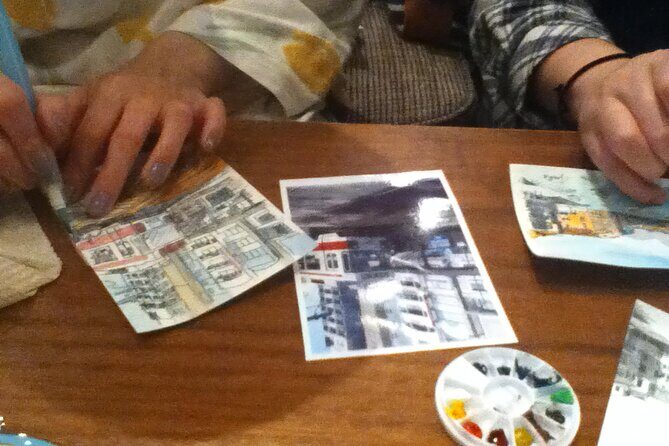
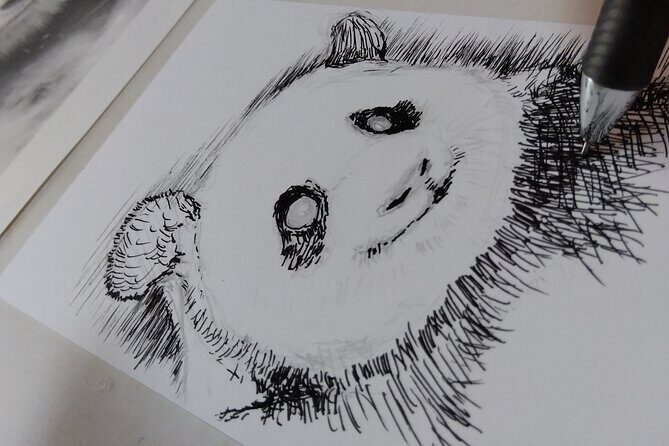
And if you’re unsure about ink painting, this same operator offers other options you can choose by email, including watercolor (with Mt. Fuji as the subject) and ballpoint pen drawing (with instructor-chosen Japanese landscape photos), plus colored pencil drawing on postcard-size paper. If ink doesn’t sound like your thing, it’s worth checking those choices when you receive the email after booking.
The One Misstep to Avoid: Missing Your Group
There’s a caution worth taking seriously. One disappointed experience came from a missed class due to finding the route hard, and the communication afterward was understandably brief. I don’t want to scare you, but I do want you to protect your time.
Do this to avoid problems:
- Arrive at JR Asagaya Station early enough to orient yourself.
- Follow the meeting instructions exactly (ticket gate timing matters here).
- If your plans change, handle it quickly rather than assuming someone will wait.
Since you’ll be doing ink work, the schedule can’t drift much. Plan like it’s a train connection: you want to be there before you need to be.
Should You Book This Sumi-e Experience in Tokyo?
Yes, if you want a focused, beginner-friendly Sumi-e session with tools included and a guide who helps you through a real drawing. The bamboo exercise gives you a manageable first win, and the extra instruction on how to look at Sumi-e is the part that makes the class feel more like learning than just making a picture.
Hold off if you’re the kind of traveler who struggles with finding meeting points on short notice, or if your day is too tight. This class rewards calm timing. Show up ready, and you’ll leave with an ink painting style you can actually recognize and appreciate.
FAQ
FAQ
How do I choose between ink painting and the other options?
After you book, you’ll be contacted by email. You can choose which experience you want (ink painting, watercolor painting, or ballpoint pen drawing).
Where is the meeting point for the class?
You meet at JR Asagaya Station at the ticket gate.
When should I arrive before the meeting time?
You’re asked to arrive 5 minutes before the meeting time.
How long is the Sumi-e class?
The duration is about 60 minutes.
What will I draw during the Sumi-e instruction?
During Sumi-e, the instructor explains the tools and will draw a basic bamboo Sumi-e. Then you will draw.
What’s included in the price?
The price includes calligraphy tools and a guide.
What isn’t included?
Traveling expenses are not included.
How many people are in the group?
The class has a maximum of 9 travelers.
Is pickup available?
Pickup is offered, and you’ll have that option as part of the experience details.
When do I get confirmation after booking?
You should receive confirmation within 48 hours, subject to availability.
Is this experience refundable or changeable?
This experience is non-refundable and cannot be changed for any reason.