REVIEW · TOKYO
Super Express Nara & Kyoto Private 1-Day Tour from Tokyo
Book on Viator →Operated by Japan Gray Line · Bookable on Viator
One day, two ancient capitals, and almost no slack time. This private tour strings together Tokyo → Kyoto → Nara → Kyoto → Tokyo with fast trains and a licensed English-speaking guide, so you can hit the big sights without getting buried in schedules. You’ll do a calm walk at Nara Park with its deer, then the scale of Todai-ji’s Great Buddha, and finish with the iconic red torii gates of Fushimi Inari Taisha.
What I like most is the way the day is paced for first-timers. You start early (pickup around 6:30am) and you still get structured time at each stop, instead of free-for-all wandering. I also like that the tour handles the travel math: bullet train tickets (non-reserved), the local limited express, and the key admissions are wrapped in, so you can focus on the sights.
The main drawback to consider is simple: this is walking outdoors in a time-boxed day. You’re moving between regions by rail, and there’s no lunch included, so plan for a quick meal break and bring comfortable sneakers plus rain gear.
In This Review
- Key things that make this tour worth your morning
- A full day timeline that doesn’t feel like a maze
- Hotel pickup and the morning reality: 6:30am is early
- Tokyo to Kyoto by bullet train: the most efficient leg
- Kyoto to Nara: switching to the limited express
- Nara Park with deer: what the short walk really gives you
- Todai-ji Temple and the Great Buddha: big scale, tight time
- Your Nara break: city atmosphere in one hour
- Kyoto return: a second limited express and panoramic views
- Fushimi Inari Taisha: torii gates in a controlled 50-minute visit
- Back to Tokyo on the Nozomi super express
- Price and value: what you’re really paying for
- Who this tour suits best (and who should consider a different plan)
- Small-but-important logistics to plan around
- Should you book this Nara and Kyoto day trip from Tokyo?
- FAQ
- FAQ
- What time does the tour start?
- How long is the tour?
- Is hotel pickup included?
- How do I get tickets?
- Are train tickets included?
- Do I need to pay for Todai-ji Temple?
- Is lunch included?
- Is this a private tour?
- What should I wear or bring?
- What if weather is bad or the tour changes?
Key things that make this tour worth your morning
- Early start with hotel pickup in central Tokyo, then guided rail connections that keep the day moving
- Nara Park + Todai-ji as a focused combo, anchored by the Great Buddha and a gentle deer-filled stroll
- Fushimi Inari Taisha scheduled for a short but memorable visit to the torii gate corridor
- English guide with proven pacing, including real praise for guides like Yoshi for keeping timing tight without feeling rushed
- Trains included: round-trip bullet train plus local transportation, with a mobile ticket option
A full day timeline that doesn’t feel like a maze
This tour is built like a rail shuttle with sightseeing stops stacked on top. The core idea is that you trade a lot of train confidence for a lot of sightseeing momentum. That’s a smart trade if you’re short on time and you don’t want to spend your day decoding transit routes.
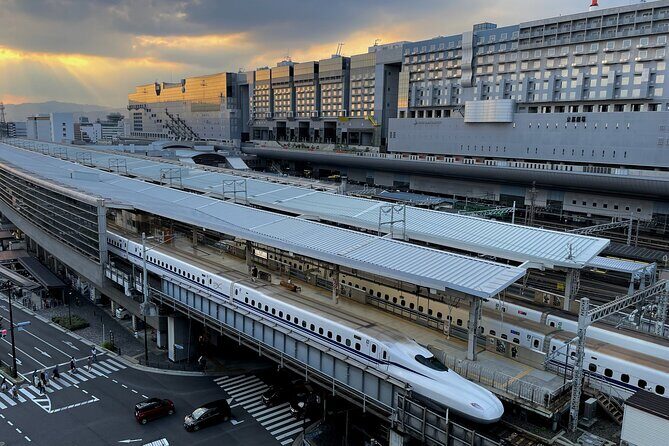
You’ll be picked up from many central Tokyo hotels, then directed to Tokyo Station (Marunouchi Ekimae Hiroba). From there, the schedule runs on trains: bullet train to Kyoto, limited express to Nara, then back to Kyoto and onward to Tokyo on the Nozomi super express. It’s fast, but it’s not chaotic—there’s a plan for what happens when.
The tour also notes a good fit for people with moderate physical fitness, because you’ll be walking outdoors and moving between transit and attractions. If you know you slow down in crowds or on uneven ground, this is still doable, but you’ll want to wear supportive shoes and keep expectations realistic for a one-day run.
You can also read our reviews of more private tours in Tokyo


Hotel pickup and the morning reality: 6:30am is early
Your day starts at 6:30am, which is the price of admission for fitting both Nara and Kyoto from Tokyo. The payoff is that you’re not arriving at the big sites at the latest possible times.
Pickup is included from most central Tokyo hotels. If your hotel isn’t in the designated list, you can still ask if pickup is possible, and in some cases alternative transit may be needed. The tour also points out an important detail: if your hotel is outside the pickup range and the guide can’t reach the first destination by practical public transport, you may be responsible for fares that cover the guide’s transportation as well.
Practical tip: if you’re prone to sleep inertia, pack your day bag the night before. You’ll want essentials ready for a full day outside—water, a light layer, and rain gear.
Tokyo to Kyoto by bullet train: the most efficient leg
The first major transit block is a 2 hours 40 minutes bullet train ride to Kyoto. This is where the tour earns its keep: train time is predictable, and you get to spend your morning traveling comfortably rather than doing multiple transfers.
You’ll be riding on non-reserved seats for the bullet train. That doesn’t mean chaos, but it does mean you should be ready to follow the guide’s lead on boarding order and where to sit. If you’re sensitive to seat-by-seat variation, this is the one part of the day that may feel less controlled than the sightseeing.
Arriving at Kyoto Station, the tour shifts gears. Kyoto Station is huge and easy to get turned around in if you’re on your own; with a guide and a direct plan, you can move quickly toward the next train.
Kyoto to Nara: switching to the limited express
Once in Kyoto, you take a local limited express toward Nara. The ride is about 50 minutes, and the tour includes transportation for this segment.
Even though it’s short, this switch matters because Nara is a different vibe from Kyoto. Kyoto tends to feel refined and busy; Nara can feel calmer and more open once you reach the park area. That matters because the tour’s first sightseeing focus is Nara Park, and it’s most pleasant when you’re not already tired from a long scramble.
You’ll spend time on the ground after arriving, with a walk toward the park area. The schedule gives this portion just enough room to feel like an experience, not just a photo stop.
Nara Park with deer: what the short walk really gives you
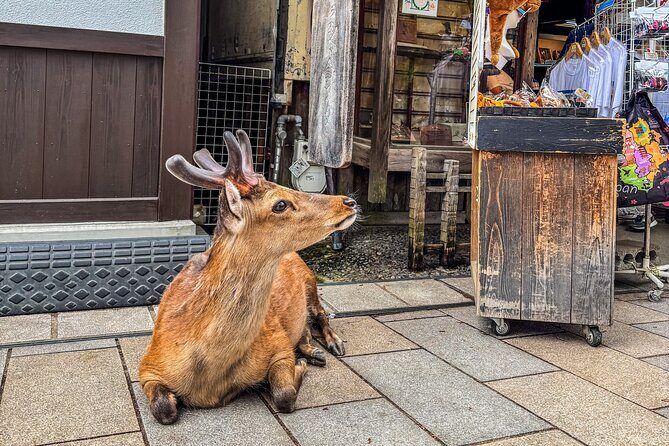
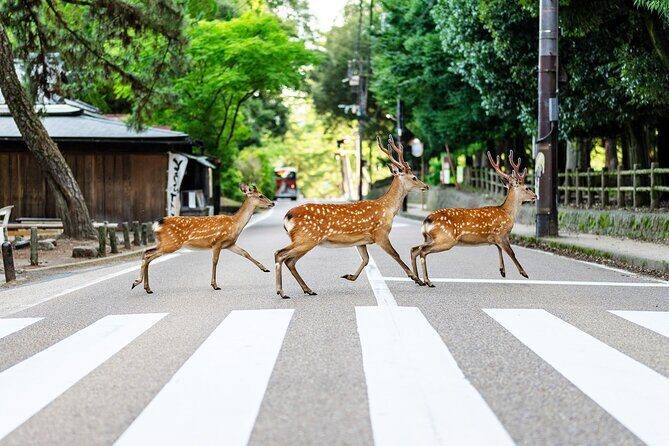
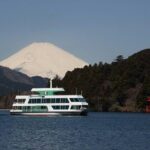
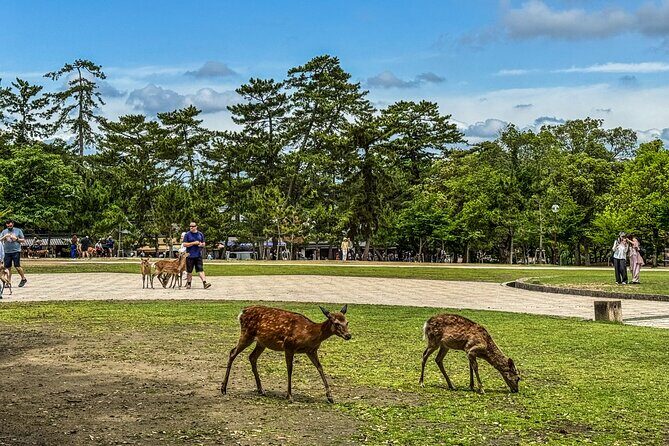
Nara Park is where the day’s tone changes. You’ll walk from the station area to the park and reach the deer-filled grounds (about 40 minutes for this stop, depending on pacing).
The tour’s promise here is straightforward: over 1,000 friendly deer share the space with locals. That means you’re not just seeing deer from behind a barrier. You’re walking through the same kind of area where people and deer move together.
This is one of those places where it helps to have guidance on how to behave. I’d treat the deer like a wild-animal environment even if they seem tame. Keep your space, pay attention to where you’re stepping, and avoid sudden movements.
From here, the tour moves to one of Japan’s most famous temple experiences.
A few more Tokyo tours and experiences worth a look




Todai-ji Temple and the Great Buddha: big scale, tight time
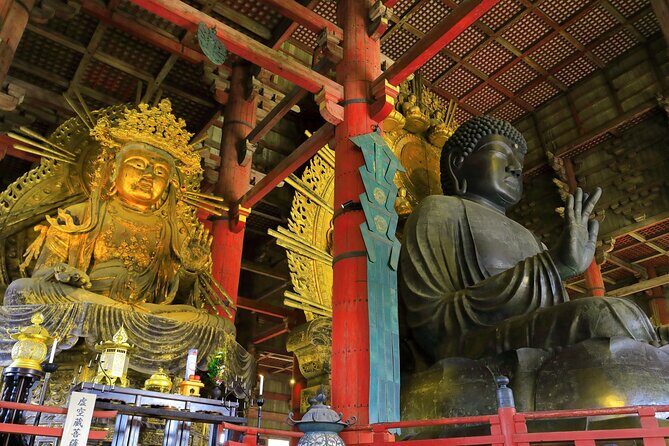
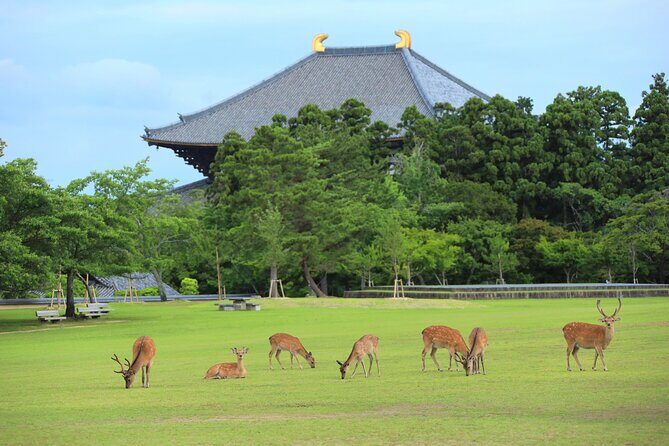
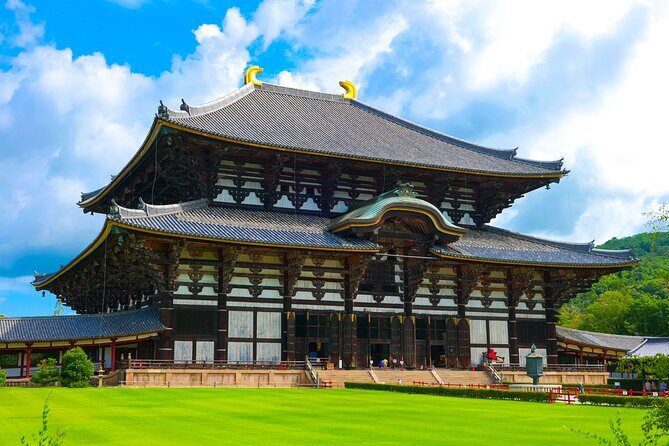
At Todai-ji Temple, you’ll have about 1 hour. This is the heart of the Nara stop, known for the massive wooden structure that shelters the Great Buddha statue.
Even with limited time, Todai-ji works because the main attraction is not spread out across dozens of separate locations. You’re essentially going to one standout place with strong visual payoff, and it’s easy to appreciate without needing a deep background course.
The time-box is worth noting: you won’t have hours to wander every side pathway, but the tour’s structure gives you enough time to take in the scale and the atmosphere. If you like major monuments and clear highlights, this fits you well.
Your Nara break: city atmosphere in one hour
After Todai-ji, the tour includes time labeled simply as Nara for about 1 hour. This is your buffer for shopping streets, small lanes, or a quick change of pace after temple time.
The city’s draw here is that Nara was Japan’s capital from AD 710 to AD 794, before the capital moved to Kyoto. That historical timeline shows up in the atmosphere as you walk—less like a theme park and more like an old city with everyday streets.
You’ll get better results from this hour if you decide in advance what you want:
- A quick bite (remember lunch isn’t included in the tour price)
- Photos and a short stroll
- A relaxed break if your morning pace felt intense
Kyoto return: a second limited express and panoramic views
After lunch time, you head back to Kyoto Station via the limited express (about 50 minutes). One small detail that matters: the train includes large panoramic windows, so you’re not just sitting through the transit.
This ride is a useful decompression moment. By now you’ve already seen Nara’s deer and Todai-ji, so the Kyoto portion is more about atmosphere and one big visual target: Fushimi Inari.
If you’re the type who gets train fatigue, use this segment to reset—water, restroom break, and a quick look at what you want to photograph at the shrine.
Fushimi Inari Taisha: torii gates in a controlled 50-minute visit
At Fushimi Inari Taisha, you’ll visit for about 50 minutes. You’ll transfer to JR Line and take a short 10-minute ride to Fushimi Station, then walk to the shrine.
This is Japan’s most visited Shinto shrine, famous for its thousands of red torii gates. In less time than it takes to climb the longer routes, you’ll still get the core “torii corridor” feeling—the visual repetition that makes photos and first-time impressions so strong.
The biggest practical takeaway: 50 minutes is enough for a solid experience, but it’s not enough to do every trail option to the far viewpoints. Go for what you care about most:
- If you want the classic torii-lined look, stick to the main gate corridor
- If you want higher viewpoints, plan to choose a shorter climb rather than trying to do everything
Back to Tokyo on the Nozomi super express
To end the day, you board the Nozomi super express from Kyoto Station back to Tokyo Station, about 2 hours 10 minutes. This is a comfortable landing: you’ve already done the heavy sightseeing, and the final rail leg is mostly about relaxing and getting home without extra planning.
After arriving back in Tokyo, the tour escort returns you toward your hotel. The overview states return by 6:30 PM, while the step-by-step schedule mentions around 7:00 PM. In practice, plan for an evening arrival in that range.
Price and value: what you’re really paying for
At $624.30 per person, this isn’t a budget day trip. But you’re also not paying for just entry tickets. Your price covers:
- Certified English-speaking guide
- Round-trip hotel to Tokyo Station transfer (in central areas)
- Bullet train tickets (round trip, non-reserved)
- Limited express/local transportation in Nara and Kyoto
- Todai-ji admission
Lunch is not included, and gratuity isn’t included. Those two points matter because they affect your total day spend. On a day like this, a quick meal is normal—but you’ll want to factor it into the budget rather than assuming you’re fully covered.
Where the value gets real is in time saved and stress reduced. Doing Tokyo–Kyoto–Nara–Kyoto on your own means juggling timetables, station navigation, and admission planning while you’re tired from an early start. This tour basically swaps that mental load for a structured schedule and someone to keep you moving.
Also note the pricing is tiered by group size. That means the per-person cost can shift depending on how many people you’re traveling with, and solo travelers typically pay more than larger groups.
Who this tour suits best (and who should consider a different plan)
This is a strong fit if you want one day that checks major boxes: deer at Nara Park, the Great Buddha at Todai-ji, and the torii gates of Fushimi Inari. It’s also a good fit for families who need structure and someone to keep timing reasonable.
One real-world clue: the guide Yoshi gets praised for being kind, intelligent, on time even with an early start, and for keeping the day on schedule without making it feel rushed. There’s also a mention of a family of four (with kids ages 5 and 7) feeling comfortable throughout the day. That suggests the tour can work for children when pacing is handled well.
This might be less ideal if you:
- Want a slow, lingering day with long museum-style breaks
- Struggle with trains and transfers early in the morning
- Need lots of rest time between attractions
- Want a full hike experience at Fushimi Inari beyond the main corridor
Small-but-important logistics to plan around
A few practical notes can make the difference between a good day and a mildly annoying one:
- Wear sneakers: the tour involves outdoor walking and movement across transit zones.
- Bring rain gear: the tour specifically suggests an umbrella or raincoat.
- Have a flexible mindset: itinerary elements can change due to weather or operational reasons, and visits may be substituted.
- Know your pickup zone: if your hotel is outside the range, you might need to cover additional transit fares.
If you’re someone who likes control, this tour is structured—but it’s still dependent on morning operations and weather.
Should you book this Nara and Kyoto day trip from Tokyo?
If you’re short on time and you want the highlights of Nara and Kyoto with the least stress, I think this is a smart booking. The combination of rail tickets, admissions (including Todai-ji), and a real guide plus hotel pickup makes it easier to pull off than the DIY version.
I’d book if you can commit to the early start, pack comfortable shoes, and accept that the visit rhythm is fast. You’ll trade depth for momentum, but you’ll come away with the big images your trip should include.
I’d skip or look for a slower option if you want to spend hours on-site, or if the early morning and walking outdoors will wear you down more than you expect.
FAQ
FAQ
What time does the tour start?
The tour start time is 6:30 am.
How long is the tour?
The duration is listed as 11 hours (approx.).
Is hotel pickup included?
Pickup is offered from most hotels in central Tokyo. If your hotel isn’t on the designated list, you can ask about arranging pickup.
How do I get tickets?
The tour includes a mobile ticket, and confirmation is received at booking time.
Are train tickets included?
Yes. The tour includes bullet train tickets (round trip / non-reserved seat class) and local transportation in Nara and Kyoto, including the limited express.
Do I need to pay for Todai-ji Temple?
Yes, Todai-ji admission fee is included.
Is lunch included?
No, lunch is not included.
Is this a private tour?
Yes. It’s a private tour/activity, meaning only your group participates.
What should I wear or bring?
The tour says there’s a good amount of walking outdoors, so wear sneakers or comfortable shoes and bring rain gear such as an umbrella or raincoat.
What if weather is bad or the tour changes?
The tour notes it requires good weather. If canceled due to poor weather, you’ll be offered a different date or a full refund. It also says the itinerary may change or certain visits may be omitted or substituted for operational reasons.