REVIEW · KYOTO
Sushi or Traditional Japanese Cuisine in a Kyoto Home with Emika
Book on Viator →Operated by Traveling Spoon · Bookable on Viator
Kyoto tastes different when you eat at home. This meal in Emika’s Kyoto house starts with traditional matcha green tea and turns into a cozy sit-down around a table—real ingredients, real conversation, no restaurant script.
I especially like the way you’re welcomed into daily life, not just fed a set menu. One other big win is that you get to learn about Obanzai, Kyoto’s home-style cooking built around what’s in season.
You also come away with practical food knowledge, like how classic basics such as miso soup and sushi are made in a traditional way. I love that the focus stays on fresh, seasonal flavors—many ingredients may come from the home’s own garden—which makes the meal feel personal and grounded.
One drawback to plan for: there’s no hotel pickup or drop-off, so you’ll need to get yourself to Emika’s home near public transportation and be on time.
In This Review
- Key things you’ll remember
- A Kyoto home meal starts with matcha, then the conversation flows
- Obanzai on your plate: what it is and why it’s a big deal
- Sushi and miso soup: learning the basics without the tourist performance
- Tea ceremony as a mini ritual, not a lecture
- Local alcohol, Kyoto calm: how the meal really feels
- Price and value: what $79 buys you (and what it doesn’t)
- Lunch or dinner fit: scheduling without stress
- Who should book this Kyoto home meal?
- Should you book it?
- FAQ
- How long is the experience?
- Where do I meet for the experience?
- Is this lunch or dinner?
- What is included in the experience?
- Does the menu stay the same every time?
- Is there a tea ceremony included?
- Is this a private experience?
- Is hotel pickup or drop-off included?
- Can I request dietary accommodations?
- Can I cancel and get a full refund?
Key things you’ll remember
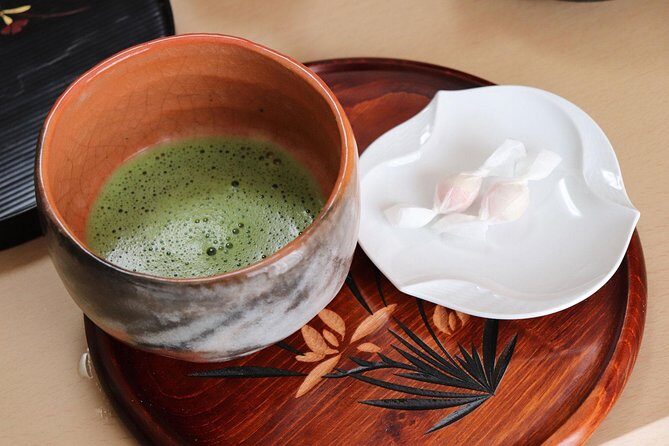
- Traditional matcha first, served in a classic style before the meal
- Obanzai made with seasonal vegetables and seafood, often sourced locally
- Sushi and miso cooking methods shared during the experience
- A possible small tea ceremony moment, guided by Emika’s father
- Private, personalized dining with only your group
- Local alcohol included, if you choose to partake
A Kyoto home meal starts with matcha, then the conversation flows
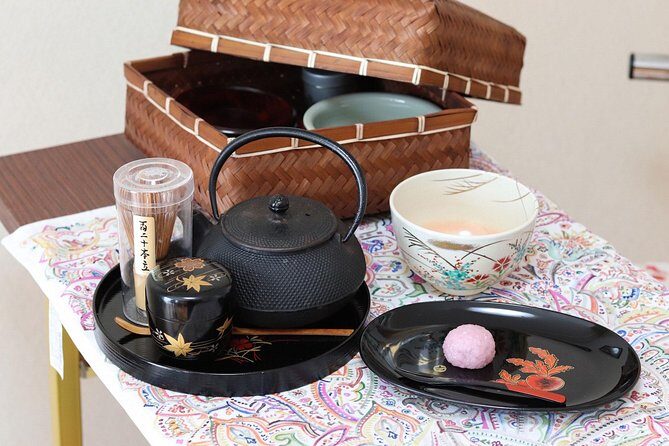
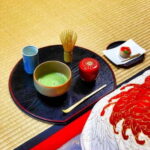
The setting is simple: you meet Emika at her home and settle in at the dining table. The experience begins with a freshly made cup of matcha green tea prepared traditionally—either by Emika or her father—so you get a calm start before the food arrives.
What makes this start feel different is the pace. You’re not rushed like a typical dinner service. Instead, you’re in a home rhythm: tea comes first, then you talk, then you eat. It’s a small thing, but it changes how you taste everything afterward. When the tea is prepared with intention, you’re more likely to pay attention to subtler flavors—mild umami, gentle bitterness, and the clean finish of green tea with sweets.
From the reviews, Emika’s personality also becomes part of the meal. People describe her as gracious, quiet-but-witty, and genuinely open about her life in Japan. That matters because it turns the evening into more than food consumption. You’ll likely find yourself asking normal questions—about ingredients, cooking habits, Kyoto life—and getting answers in a natural back-and-forth, not a rehearsed script.
You can also read our reviews of more tours and experiences in Kyoto.


Obanzai on your plate: what it is and why it’s a big deal
Obanzai is Kyoto home cooking. It’s built from seasonal vegetables and seafood, with an emphasis on local ingredients and careful simplicity. In practice, that means the meal doesn’t feel like one heavy set item after another. Instead, you get a sequence of dishes designed to work together, each one highlighting a different ingredient and season.
In the best home-cooked versions, you can taste the logic of the kitchen. Ingredients often arrive at peak flavor, and the cooking keeps things balanced rather than overly dressed up. If you’re used to Western-style portioning or big, bold sauces, Obanzai can feel like a reset: here, the goal is harmony and freshness.
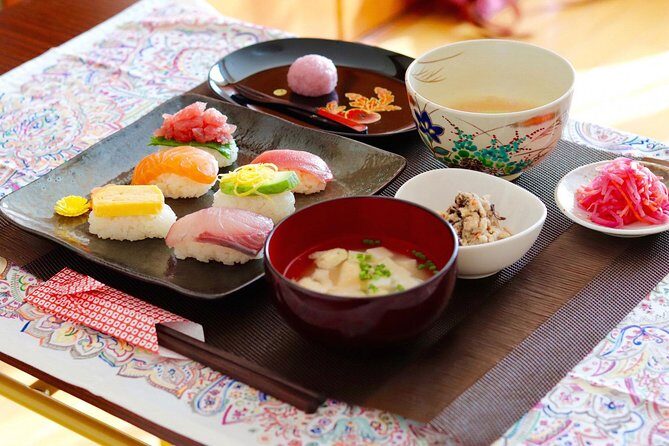
The courses you might see include basics you can recognize—miso soup and rice—plus traditional Obanzai dishes made from what’s best that time of year. There’s also a sweet that pairs with matcha, which is a very Kyoto way to close the loop. You drink tea, you get a small dessert, and suddenly the whole meal feels like it has an ending, not just a conclusion.
One detail I really like here is the focus on seasonal variation. The menu can change depending on what’s available. That means you’re not just ordering the same experience every time—you’re getting what the season offers in this home kitchen.
Sushi and miso soup: learning the basics without the tourist performance
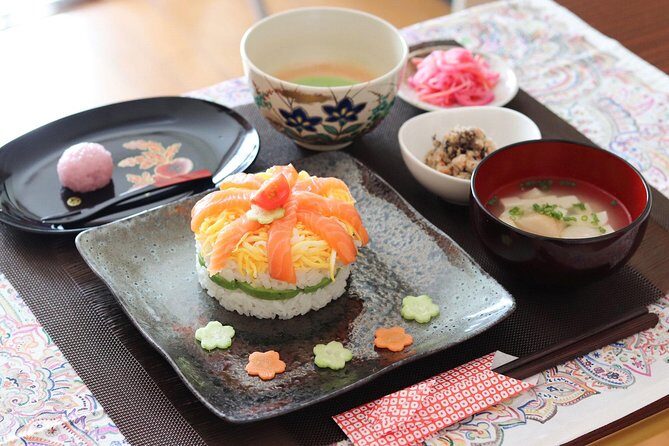
The title mentions sushi, and the experience is described as a Japanese meal that may include sushi along with miso soup, plus Obanzai dishes. Even if you’re not a sushi expert, this kind of home format makes the learning feel straightforward.
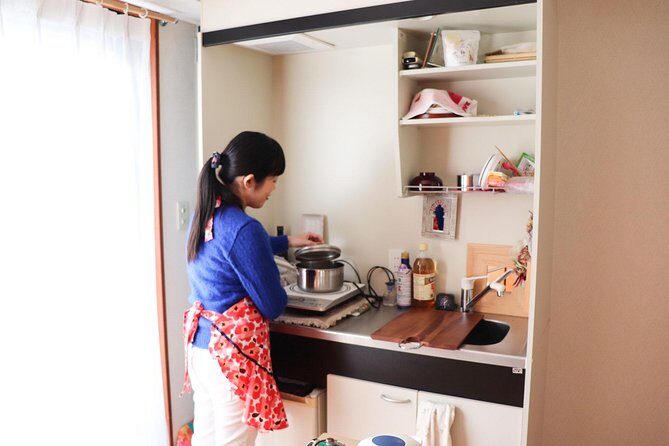
What you’re looking for is how traditional technique shows up in small choices. Reviews describe Emika sharing the traditional way to make sushi and miso soup, and in some cases you may even see preparation happening in a way that feels hands-on and personal. You’re sitting right there at the table, so when something matters—temperature, timing, balance—you can usually connect the dots faster than you would in a loud kitchen class.
I’d also call out the freshness. Home-cooked Japanese cuisine can be very different from what you get in a high-volume restaurant because the food is treated like a meal, not a product. Reviews mention extremely fresh sides and produce, and some describe ingredients grown locally and even from the home’s own garden. Even if you don’t know where everything comes from, you’ll notice the taste difference when things are picked and cooked with care.
If you want something more than just eating, this is where the experience pays off. You get a reason to slow down, ask questions, and try to understand what you’re tasting. It’s not a lab. It’s still a meal—but with the added benefit of cultural and cooking context.
Tea ceremony as a mini ritual, not a lecture
Matcha is the anchor here, but a standout from past experiences is a possible small tea ceremony moment. Reviews mention participating in a tea ceremony that Emika’s father is associated with, described as a master of the tea ceremony.
Even if you only get a brief version, it changes the meaning of the matcha. Instead of drinking it because it’s part of the meal, you drink it with attention—how it’s presented, how it’s served, and how the timing connects to the courses. Tea ceremony doesn’t need to be complicated to be effective. A simple, respectful format can make you notice aroma and bitterness more clearly, and it can make the dessert taste cleaner and less sweet-heavy.
Practical mindset tip: treat it like a calm pause. Don’t overthink it. Watch the cues from your host, follow along with the pace, and stay present. The ceremony part works best when you let it slow your breathing a notch.
Local alcohol, Kyoto calm: how the meal really feels
The experience includes local alcohol, which is a nice add-on if you want a pairing with Japanese flavors. You might not get a full pairing menu, but you can still enjoy the contrast: green tea’s sharpness and the meal’s savory depth, with alcohol used more like a toast than a performance.
Even if you skip alcohol, the meal still has a natural rhythm because tea and food drive the sequence. You’ll start with matcha, then move into Obanzai courses and Japanese basics, then finish with something sweet that goes well with tea. This is important if you’re worried about being overwhelmed by too many dishes. In a good home setup, the courses feel guided rather than dumped on your plate all at once.
Also, because this is a private experience for your group, the pace is less about matching a restaurant crowd. If your group likes to talk, you can talk. If you prefer quiet tasting, you can do that too. The home setting gives you that choice.


Price and value: what $79 buys you (and what it doesn’t)
At $79 per person for about 1 hour 30 minutes, this is not a cheap “grab a meal” option. It’s closer to paying for access. You’re paying for a Kyoto resident’s home-cooked meal, matcha service, Obanzai education, and a conversation-driven evening that feels personal.
What you get for the price:
- An authentic, home-cooked Japanese meal
- Traditional matcha to start
- Obanzai dishes based on seasonal ingredients
- A meal that may include sushi and miso soup
- Local alcohol included
- A private setup with only your group
What you don’t get:
- Hotel pickup and drop-off
- A guarantee of the exact dishes every single time (the menu varies by season)
For value, the big question is whether you want the story and context that comes with a private home meal. If you’d rather eat quietly and check the box on sushi, a restaurant might be better. If you want real cultural context, cooking explanations, and the chance to sit where locals cook, this pricing makes a lot more sense.
One more signal: the experience tends to be booked about 25 days in advance on average. That suggests limited availability, so if this is on your must-do list, plan to book earlier rather than later.
Lunch or dinner fit: scheduling without stress
You can choose lunch or dinner timing, which helps a lot in Kyoto. That flexibility means you can match the meal to your day’s plan—temple mornings, neighborhood walks, or a calmer afternoon before an evening commitment.
The total time is about 1.5 hours, so it won’t eat an entire evening. It’s long enough to settle in, eat multiple courses, and have meaningful conversation. It’s short enough that you don’t feel locked into one big block of your itinerary.
Because there’s no hotel pickup, the best way to enjoy this is to treat it like a local appointment: plan your transit, arrive a few minutes early, and keep your day moving at a reasonable pace. The meeting location is near public transportation, but you’ll still want to build in a little walking buffer.
Finally, if you have dietary requirements, you should tell the host at booking. The menu can vary by season, so the more context you give, the better your odds of a meal that works for you.
Who should book this Kyoto home meal?
This experience is ideal if you:
- Want Obanzai and Japanese home cooking in an actual Kyoto home
- Like food experiences that include practical learning, not just sightseeing
- Enjoy quiet, conversation-led meals
- Prefer private experiences over crowds
It may be less ideal if you:
- Need someone to pick you up from your hotel
- Want a very fast meal with no time for tea and conversation
- Are expecting the meal to look exactly the same year-round, regardless of seasonal availability
Also, if you’re traveling with a service animal, the experience allows service animals, which can be a deciding factor for some visitors.
Should you book it?
If you’re the type of traveler who likes to eat like a local and leave with more than a photo, I’d book this. The combination of traditional matcha, seasonal Obanzai, and a private table with cooking conversation is exactly the kind of experience that makes Kyoto feel like more than a list of landmarks.
The only real reason to hesitate is logistics: no pickup, so you must handle getting to the meeting point. If you’re comfortable with that, you’re going to enjoy the pace, the freshness, and the cultural context that comes with sitting in Emika’s home.
FAQ
How long is the experience?
It runs for about 1 hour 30 minutes (approx.).
Where do I meet for the experience?
You meet at 31-30 Katsurainariyamachō, Nishikyo Ward, Kyoto, 615-8025, Japan, and the experience ends back at the same meeting point.
Is this lunch or dinner?
You can choose from lunch or dinner time.
What is included in the experience?
You’ll get an authentic, home-cooked Japanese meal, traditional matcha green tea, and local alcohol.
Does the menu stay the same every time?
No. The menu may vary depending on the season.
Is there a tea ceremony included?
The experience starts or ends with traditional matcha green tea prepared by Emika or her father, and a tea ceremony moment may be included.
Is this a private experience?
Yes. It’s private and personalized, and only your group participates.
Is hotel pickup or drop-off included?
No. Hotel pickup and drop-off are not included.
Can I request dietary accommodations?
Yes. You should advise any specific dietary requirements at the time of booking.
Can I cancel and get a full refund?
Yes. There is free cancellation, and you can cancel up to 24 hours in advance for a full refund.