REVIEW · TOKYO
Tea ceremony experience in Japanese-style room 60min
Book on GetYourGuide →Operated by 株式会社和樂苑 · Bookable on GetYourGuide
Matcha tastes better when you make it. In Asakusa, this Wasako tea ceremony lets you choose the sweets and a matching matcha bowl, then learn the ritual in a beautiful traditional room. It’s a calm break from the Tokyo rush, wrapped up in a setting inside the Charyo-Ichimatsu restaurant.
I especially love the parts where you actually get hands-on: you’ll learn how to prepare matcha and then brew your own. I also like the small-group feel (up to 7 people), plus the warm guidance from hosts such as Ryouko, with help from assistant Akiko in many sessions. You’re guided step-by-step, not left to guess.
One thing to consider: the experience is compact. Even though the duration range can look wide, you should plan for a focused session that can feel closer to about an hour than to a full-length class—so show up expecting a short, precise ritual.
In This Review
- Key highlights
- Inside Wasako’s Room at Charyo-Ichimatsu: What the Setting Feels Like
- Where You Meet and How to Get There Without Stress
- Timing Matters: Four Start Times for a Short, Focused Ritual
- Choosing Tea Sweets and Matcha Bowls: The Part You Don’t Want to Rush
- The Demonstration Segment: What You Learn While You Watch
- Brewing Your Own Matcha: The Hands-On Moment That Changes the Experience
- Photo-Friendly Rooms and the Fun of Not Having to Hunt for Angles
- Socks, Tatami, and the Shoes-Off Reality
- Group Size and Language: English Support Without Losing the Details
- The $45 Price: What You’re Paying For (and When It Feels Like a Deal)
- Who Should Book This Wasako Tea Ceremony
- Extra Touches: Kimono Dressing and Staff Hospitality
- Should You Book This Tea Ceremony Experience?
- FAQ
- Where is the meeting point?
- Do I need socks for the tea ceremony?
- Are shoes allowed indoors?
- What start times are available?
- How long does the experience take?
- Is it suitable for kids or wheelchair users?
Key highlights
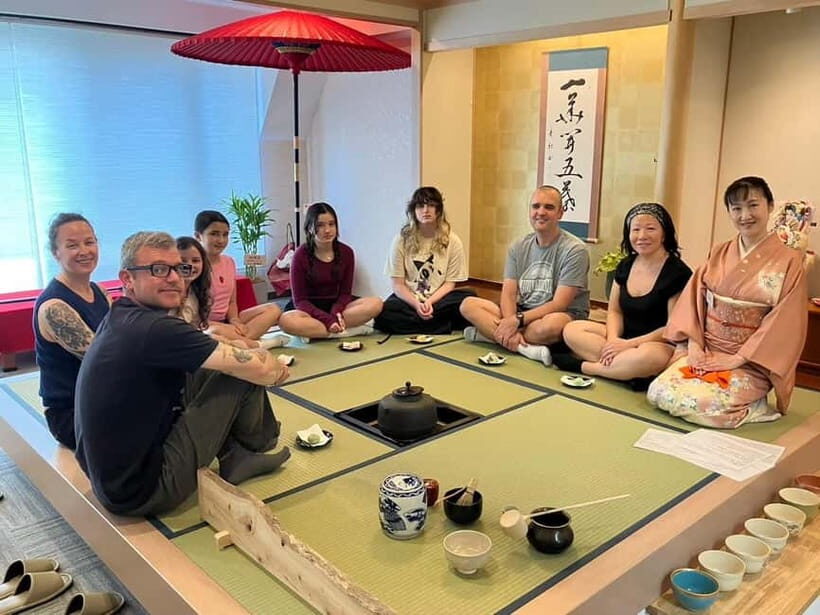
- Choose sweets and a matcha bowl before the ceremony starts, with different bowl designs explained
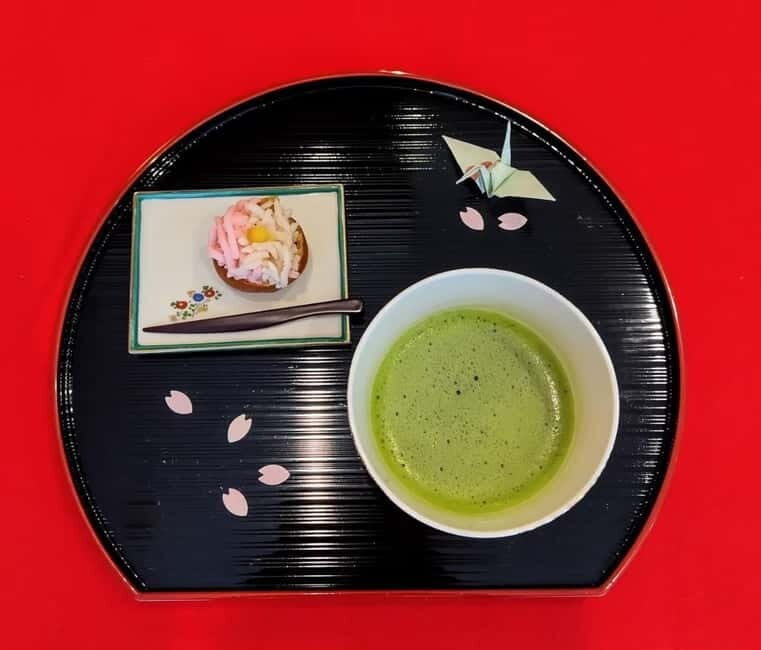
- Watch the demonstration, then enjoy the sweets and drink the matcha you’re served
- Make your own matcha after the teaching—this is the moment that makes it stick
- English/Japanese instruction in a small group of up to 7
- Photo-friendly Japanese room and building (Ichimatsu is a registered tangible cultural property)
- Tatami socks rule: you’ll need socks indoors, and shoes come off
Inside Wasako’s Room at Charyo-Ichimatsu: What the Setting Feels Like
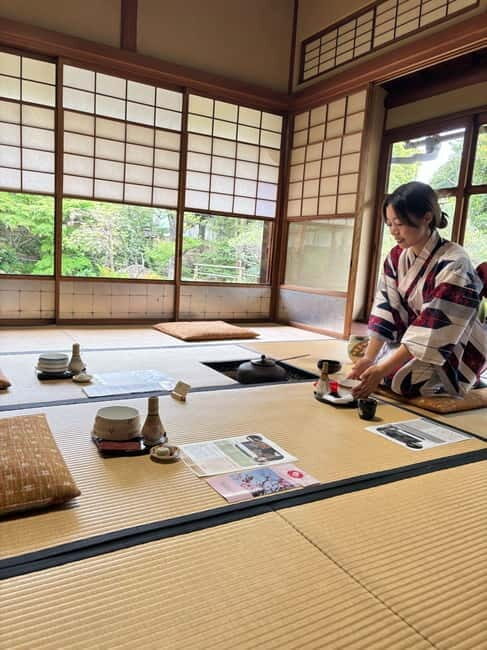
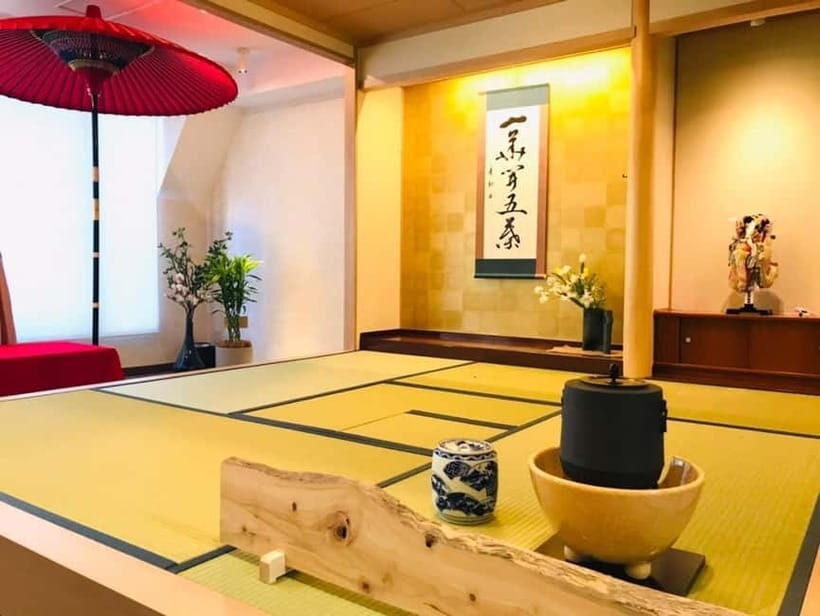
You enter a Japanese-style room of Wasako, located inside the Charyo-Ichimatsu restaurant complex. The vibe is intentionally quiet: you’re not in a crowded showroom. Instead, you’re in a room designed for attention—on utensils, on motion, on the pace of pouring and whisking.
One reason this works so well is the setting itself. The Ichimatsu building is designated as a registered tangible cultural property in Japan, so there are lots of photo-worthy spots once you arrive. If you like travel photos that don’t look like everyone else’s, this helps a lot.
You can also read our reviews of more tours and experiences in Tokyo.



Where You Meet and How to Get There Without Stress
Your meeting point is about a 5-minute walk from Tawaramachi Station (Tokyo Metro Ginza Line, Exit 3). It’s also around a 10-minute walk from Asakusa Station (Toei Asakusa Line, Exit A4). That gives you flexibility depending on what you’ve been doing that morning or afternoon.
Practical tip: signage and directions can be a bit vague, so don’t hesitate to ask for help on the spot. I’d also plan to arrive a few minutes early so you’re not rushing while you hunt for the tea ceremony room inside the building.
Timing Matters: Four Start Times for a Short, Focused Ritual
There are four start times: 10:00, 11:30, 13:30, and 15:00. That’s great if you like structure, because you can build it between Asakusa sights and dinner plans without losing half the day.
This ceremony is not meant to be a long, wandering experience. Even with the duration range listed for scheduling, the flow is designed around a clear sequence: you’ll select items, watch the demo, enjoy what’s served, then learn and brew your own matcha. If you’re the type who loves short activities that still feel meaningful, this fits.
Choosing Tea Sweets and Matcha Bowls: The Part You Don’t Want to Rush
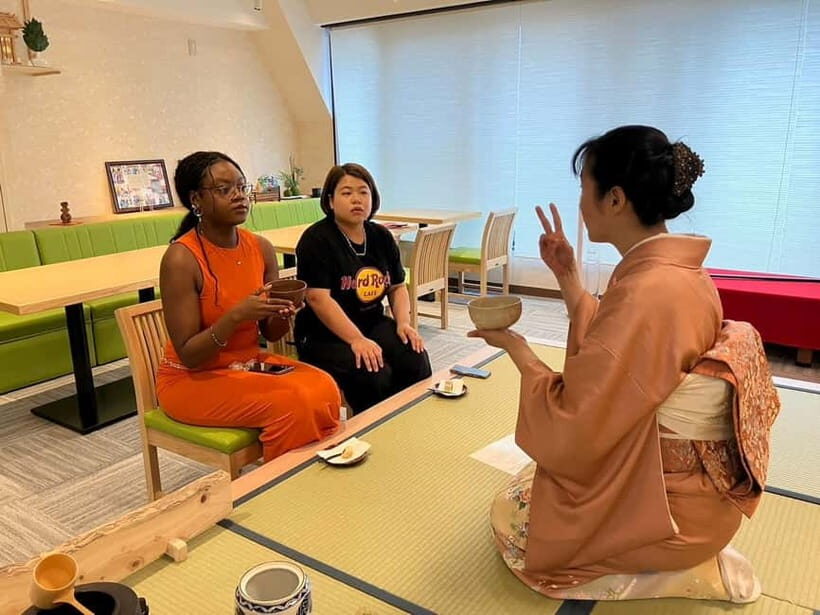
Before the ceremony begins, you’ll select your tea sweets and the matcha bowl you’ll use. Each matcha bowl has its own design, and the staff explain it individually. That means you’re not just choosing for taste—you’re choosing for the look and mood of the moment.
I love this part because it gives you agency. Once you pick, the room feels more personal, like the ceremony is adjusting to you rather than the other way around. It also gives you something tangible to remember when you’re back out in the street noise later.
The Demonstration Segment: What You Learn While You Watch
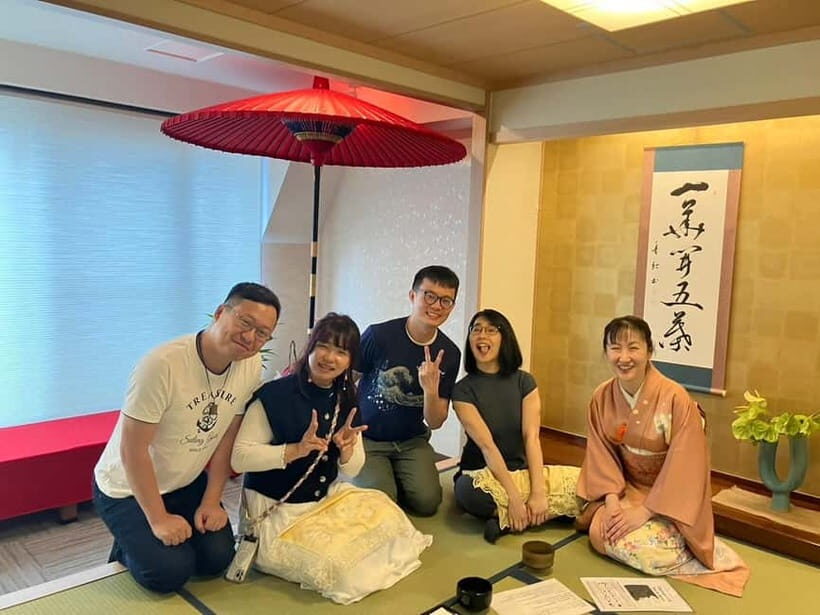
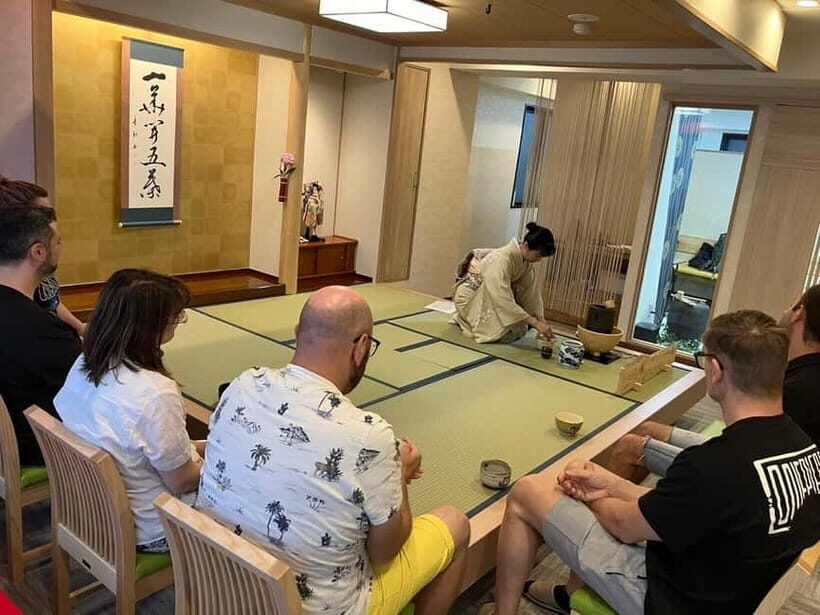
You’ll watch the demonstration while you enjoy the sweets and drink the matcha. This is where the ceremony becomes more than a snack moment. As the demonstration unfolds, you’ll get explanations about things like hanging scrolls, furnishings, and how the tea ceremony developed over time.
If you like cultural details you can actually use, this is the best window. You’ll see how utensils are handled, you’ll notice how attention is directed, and you’ll hear what each step is meant to communicate. The pace is calm, so you’ll have time to follow along without feeling lost.
Also, the room itself gives you visual cues. Lighting, arrangement, and the way objects are presented all reinforce what you’re being taught: this is a ritual of care, not a performance of speed.






Brewing Your Own Matcha: The Hands-On Moment That Changes the Experience
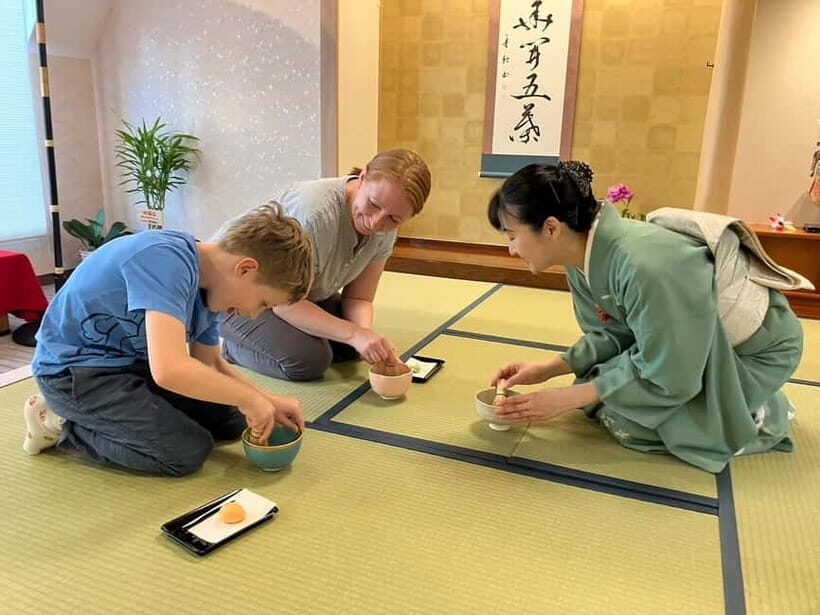
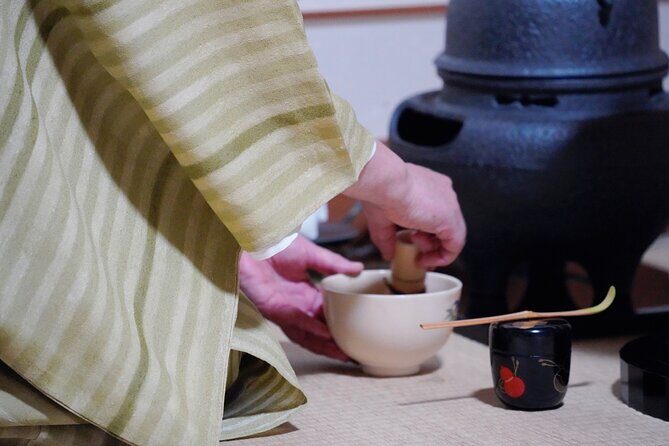
After the demonstration and explanations, you’ll learn how to prepare matcha and then brew it yourself. This part is why the experience feels worth the money to me, because you’re not just observing—you’re doing.
You’ll be guided through the basics, and you’ll get support as needed. That’s especially helpful if you’ve never whisked matcha before, since the technique and timing matter more than people expect.
When you brew your own, you start tasting the details. The experience turns into a skill you leave with, even if it’s just for trying one good cup later back home. And yes, it also makes for very satisfying photos because your hands are part of the story.
Photo-Friendly Rooms and the Fun of Not Having to Hunt for Angles
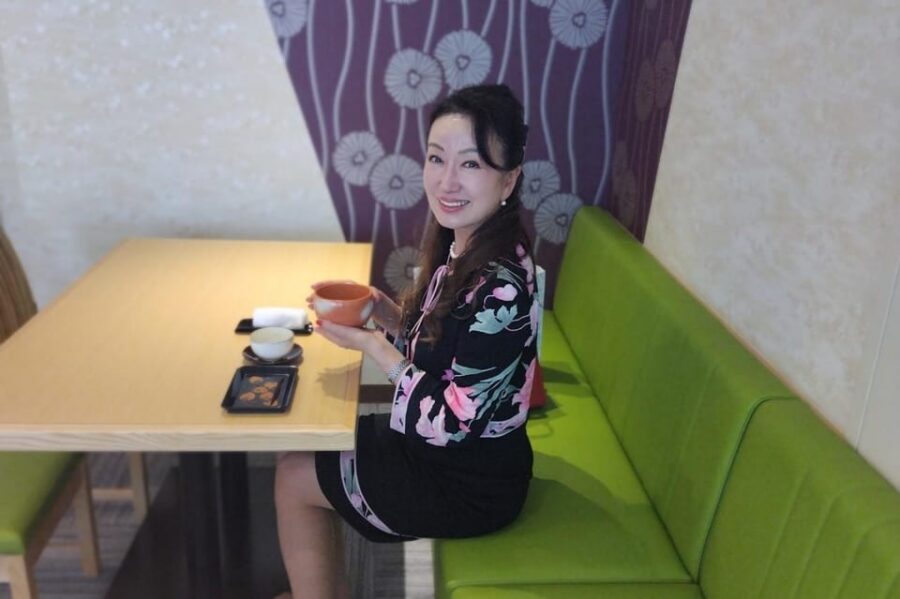
There’s a lot of space for photos, both inside the room and around the property. Since the building is a registered tangible cultural property, you get plenty of architectural texture—wood, layout, and traditional design elements that look good without over-editing.
Many sessions also focus on helping you capture the experience. Hosts like Ryouko are described as taking photos through the ceremony, so you don’t have to choose between participating and documenting. If you’re traveling with family or friends and want at least a few clean group shots, this is a nice advantage.
Socks, Tatami, and the Shoes-Off Reality
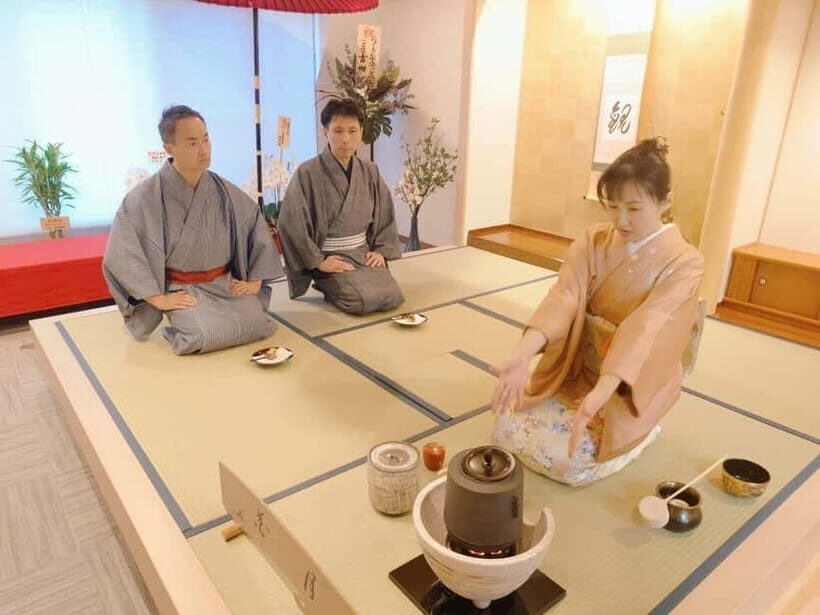
Shoes are not allowed indoors, and if you want to get on the tatami, you’ll need socks. If you don’t have socks, they’ll sell them for 500 yen, but it’s smarter to bring your own.
This is one of those rules that can quietly affect your comfort. If you arrive without socks, you’ll spend a few minutes solving a preventable problem. Bring thin socks (or at least socks you don’t mind getting matcha-adjacent) and you’ll flow right into the ceremony.
Group Size and Language: English Support Without Losing the Details
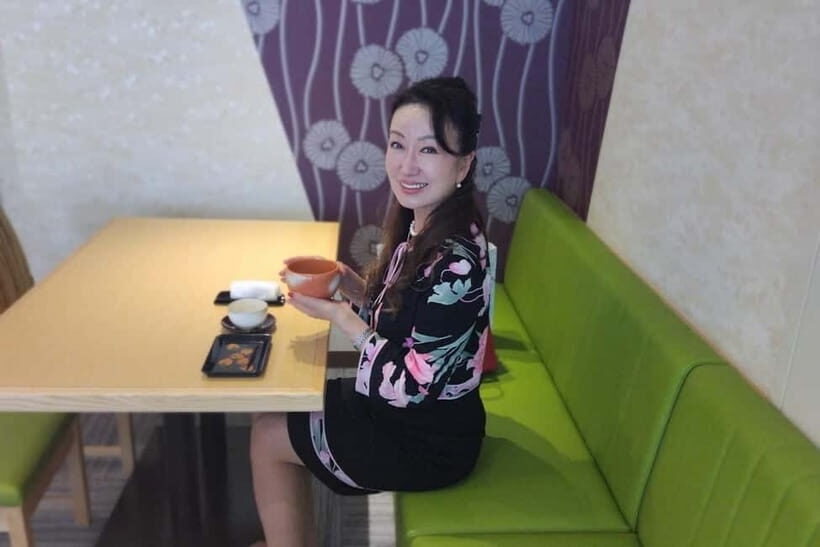
This is a small group, limited to 7 participants. That matters because tea ceremony teaching works best when the guide can slow down, check your posture and movements, and answer questions.
In terms of language, the instructor speaks English and Japanese. So if you want to understand the meaning behind steps—like explanations of scrolls and furnishings—you can actually follow it, not just watch it.
The $45 Price: What You’re Paying For (and When It Feels Like a Deal)
The price is $45 per person. That’s not cheap for tea, but tea ceremonies aren’t just about drinking matcha. You’re paying for the room, the guidance, the utensils, and the structured experience: demo, sweets, matcha served, and then making your own matcha.
Here’s how the value lands in a practical way:
- You get tea sweets plus matcha as part of the flow.
- You get to watch and learn, not just sit down and drink.
- You get the key step: you brew your own matcha.
- You’re in a traditional Japanese room in a culturally designated building.
If what you want is a quick taste with minimal explanation, this may feel like more than you needed. One person noted they wanted deeper information, so if you’re the type who reads tea blogs for fun and wants a lecture-level class, you may want to set expectations that this is focused, not academic.
Who Should Book This Wasako Tea Ceremony
I think this is a great fit if you want a calm cultural moment in Asakusa that’s easy to schedule. It also suits people who love hands-on learning, because you’re not only observing—you’re making matcha.
It can be a nice option for teenagers and adults who enjoy cultural activities. And if you’re traveling as a couple, the photo-friendly environment and guided flow make it feel special without needing planning gymnastics.
Two groups might want to skip:
- Children under 6
- Wheelchair users
Extra Touches: Kimono Dressing and Staff Hospitality
Some participants add kimono rental, and staff help with dressing so you can participate comfortably and look the part. That kind of extra support can turn the ceremony into a full cultural snapshot, not just a matcha lesson.
What consistently shines in accounts of this experience is the hospitality. Hosts are described as kind, calm, and attentive, including help with photos throughout the ceremony. If you’re the type who appreciates being looked after while you’re doing something unfamiliar, this is a strong match.
Should You Book This Tea Ceremony Experience?
If you want a short, structured Japanese tea ceremony in Asakusa where you choose your sweets and bowl, watch a demonstration, and then make your own matcha, I think you should book it. The small group size, the cultural setting, and the hands-on instruction are what turn this from a simple activity into a memory.
Book it especially if:
- you want an hour-ish cultural break with real participation
- you care about photos but also want to stay present
- you’d rather learn by doing than reading
Skip it if:
- you’re expecting a long, in-depth class
- you don’t want to follow tatami and shoes-off rules
- mobility or age restrictions apply
FAQ
Where is the meeting point?
It’s a 5-minute walk from Tawaramachi Station (Ginza Line, Exit 3) and about a 10-minute walk from Asakusa Station (Toei Asakusa Line, Exit A4).
Do I need socks for the tea ceremony?
Yes, if you want to get on the tatami bring your own socks. If you forget them, socks are sold for 500 yen.
Are shoes allowed indoors?
No. Shoes are not allowed indoors.
What start times are available?
There are four start times: 10:00, 11:30, 13:30, and 15:00.
How long does the experience take?
The scheduled duration is listed as 45 minutes up to 4 hours, depending on the slot. Check availability to see what’s offered for your time.
Is it suitable for kids or wheelchair users?
It is not suitable for children under 6, and it’s not suitable for wheelchair users.