REVIEW · KYOTO
Kyoto: Table-Style Tea Ceremony at a Kyo-Machiya
Book on GetYourGuide →Operated by Éclat Japon · Bookable on GetYourGuide
Tea time in Kyoto, minus the floor. This table-style ceremony in an old townhouse makes the ritual feel approachable, while still keeping the key manners and details. I especially love making matcha with a bamboo whisk and watching the guides turn a simple drink into something you can actually feel.
Another thing I like: you don’t just observe. You’ll get hands-on steps like calligraphy, flower arranging, and even photo time with fun props like folding fans and a katana-style sword. One possible drawback: it’s not in central Kyoto, so you’ll need a short train ride (and the kimono option can require extra early arrival).
In This Review
- Key Things I’d Circle Before You Go
- Table-Style Tea Ceremony in a 100-Year Kyoto Townhouse
- Getting There: Southern Kyoto (Sake Town Access, Not City-Center)
- Garden Purification and Your First Drink
- The Ceremony Steps You’ll Actually Do (Not Just Watch)
- Matcha at Your Own Table: Creamy, Frothy, and Photogenic
- Calligraphy and Flower Arranging: The Parts That Feel Personal
- Calligraphy with your name
- Flower arranging (ikebana-style)
- Kimono Rental: Worth It, If You Plan the Timing
- Price and Value: How $45 Works for 90 Minutes
- Should You Book This Kyoto Tea Ceremony?
- FAQ
- Is the tea ceremony done sitting on the floor?
- How long does the Kyoto tea ceremony last?
- What is included in the price?
- Do I get to make matcha myself?
- Can I take photos and videos during the ceremony?
- Is the instruction in English?
- Does the experience offer kimono rental?
- If I choose kimono, when should I arrive?
- Is there hotel pickup or drop-off?
- Can I get a refund if my plans change?
- Is this wheelchair accessible?
Key Things I’d Circle Before You Go
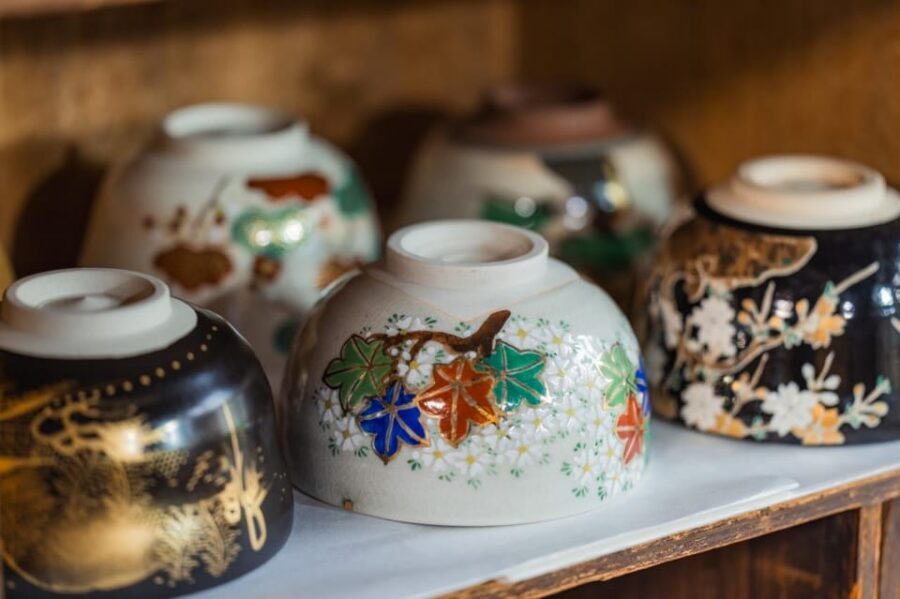
- Sit at a table, not on the floor in a traditional townhouse setting
- Whisk creamy matcha using a bamboo whisk (no experience needed)
- Garden purification at a stone basin for a real shrine-style moment
- Calligraphy with a name scroll or envelope in kanji or hiragana
- Photos and videos with period-style props, including umbrellas and fans
- Optional kimono rental plus flower arranging as extra culture
Table-Style Tea Ceremony in a 100-Year Kyoto Townhouse
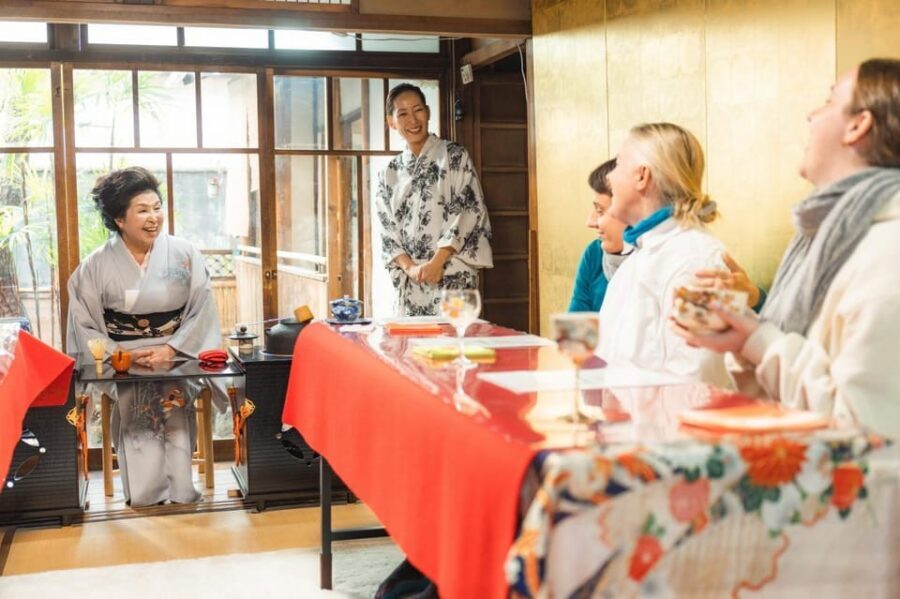
This experience is built around one big comfort upgrade: you sit on a chair. That alone changes the vibe. Instead of worrying about kneeling posture, you can focus on the rhythm of the ritual and the small etiquette cues that make tea ceremony feel like more than just making a drink.
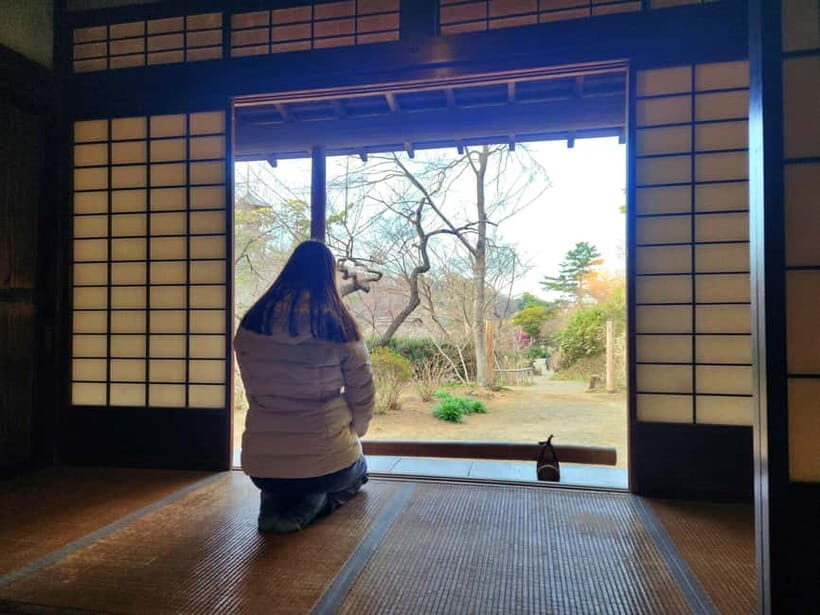
The setting helps too. You’ll be in a traditional house that’s over a century old, with an atmosphere that feels like Kyoto’s everyday past. Plan to slow down. Even before the tea starts, there’s a lot to look at as you walk through the townhouse space, including old altars and some antiques. The ceremony happens inside a lived-in-feeling environment, not a showroom.
And yes, the tea ceremony is still explained as a cultural practice. You’ll watch an English-language presentation (via slides) on how tea ceremony developed in Japan and the manners behind it. The pacing is designed so you can understand what you’re doing while you’re doing it.
You can also read our reviews of more tours and experiences in Kyoto.



Getting There: Southern Kyoto (Sake Town Access, Not City-Center)
This is in southern Kyoto, around 20 minutes by train from the city center. That’s not a deal-breaker, but it does affect how you plan your day. The upside is you get easy access to nearby sights after (or before) your session, especially Fushimi Inari area, and you can also connect toward Uji for tea-town vibes.
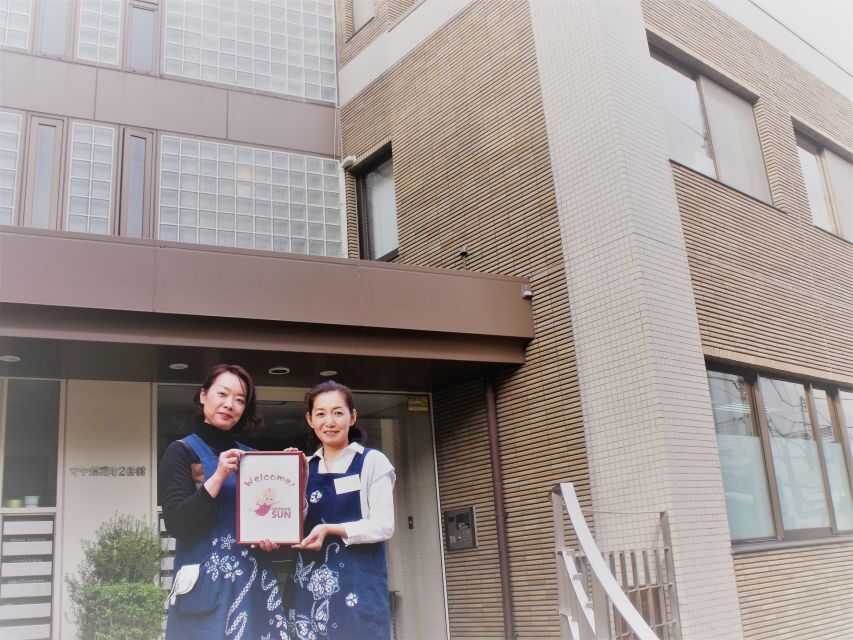
Your meeting point is on the outskirts. There’s no hotel pickup, so you’ll want to be comfortable using train stations and short walks. Directions are pretty specific: from Kintetsu Kyoto Station you take an express train about 15 minutes to Kintetsu Momoyama-Goryo-mae Station; from Keihan Gion-Shijo you head to Fushimi-Momoyama Station. From JR Momoyama Station you walk and follow the Otesuji shopping arcade cues past a shrine and toward landmarks like Mizuho Bank or Rakuten.
Two practical notes:
- If you pick up a kimono option, you’ll need extra time because you should arrive 30 minutes before the ceremony starts.
- It’s not set up for wheelchair users, so if mobility is an issue, you’ll want to pick an alternate activity.
Garden Purification and Your First Drink
Before matcha, you’ll do something that feels very Kyoto: purification at a stone basin in the garden, shrine-style. It’s a small step, but it sets the tone. You’re not just learning an art; you’re entering a moment of ritual.
Then you’ll settle in with a welcome drink. Depending on what’s offered during your session, this can include sake or juice, plus Japanese tea. It’s a nice way to take the edge off jet lag and start the experience without feeling like you’re being tested.
This first stretch matters. When you’re comfortable, you participate better. And tea ceremony rewards calm. The guides keep the flow smooth, so you’re not left waiting while everyone else knows what to do.
The Ceremony Steps You’ll Actually Do (Not Just Watch)
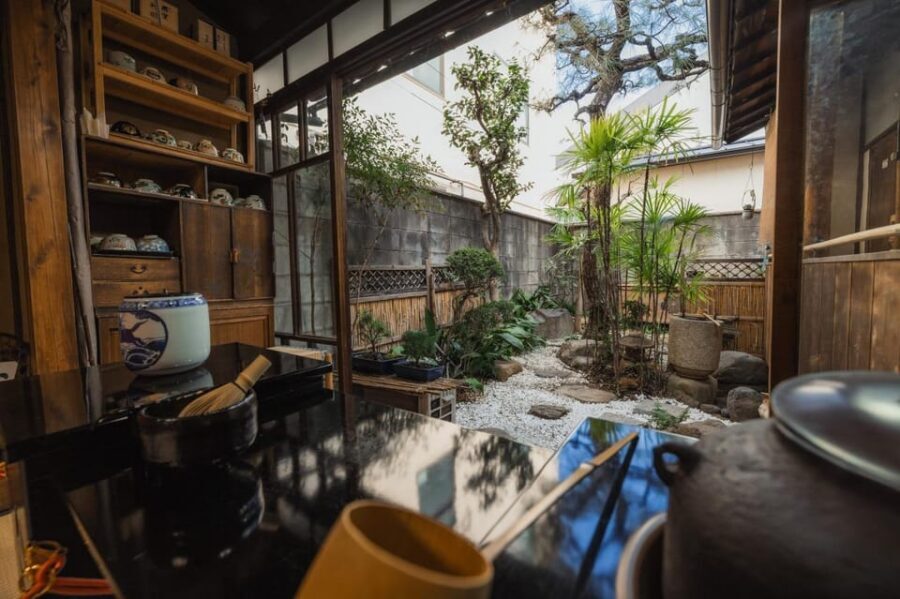
You’ll learn the logic behind the movements, not just copy them. The guides explain the meaning and sequence of key actions, including how to prepare, present, and enjoy tea with proper manners.
A highlight is that you’ll experience the ceremony while seated at a table. That means:
- The etiquette is taught, but you’re not battling stiff knees and ankles.
- You can focus on hand and bowl coordination without a posture scramble.
- It’s easier to take photos at the right moment without breaking the mood.
You’ll also get time to take photos and videos in the townhouse/garden setting. Props are part of it: umbrellas, folding fans, and a katana-style sword. The goal isn’t just a costume shot. It helps you feel what ceremonial culture looks like when it’s translated for visitors in a respectful way.
One more detail I appreciated: you can explore the townhouse space itself, including architecture and small historic touches. That adds texture to the tea portion. It’s not a rushed back-and-forth between workshop and exit.
Matcha at Your Own Table: Creamy, Frothy, and Photogenic
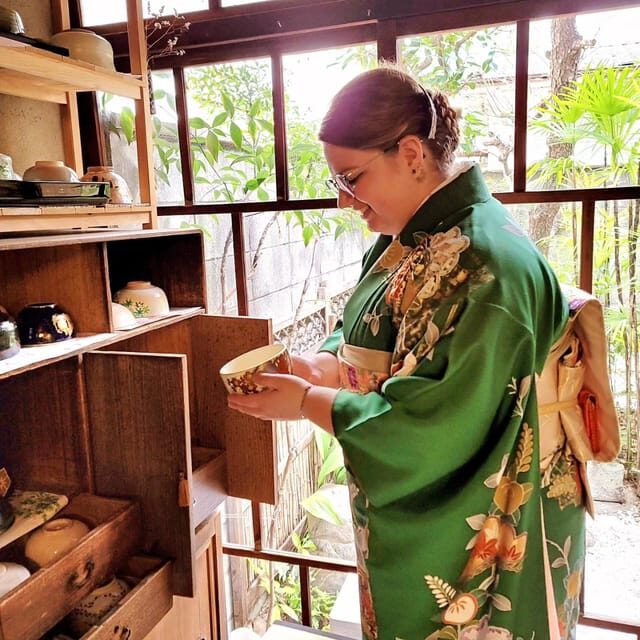
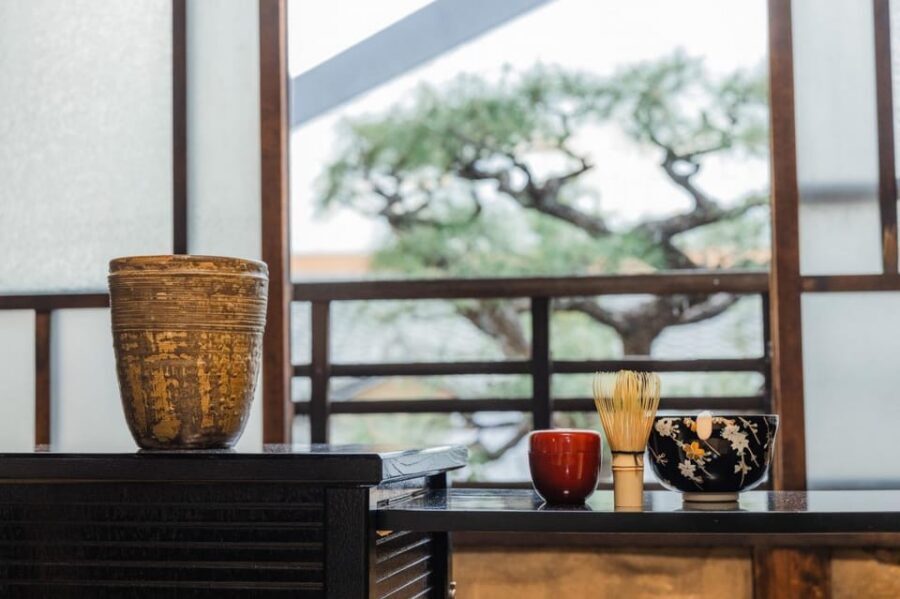
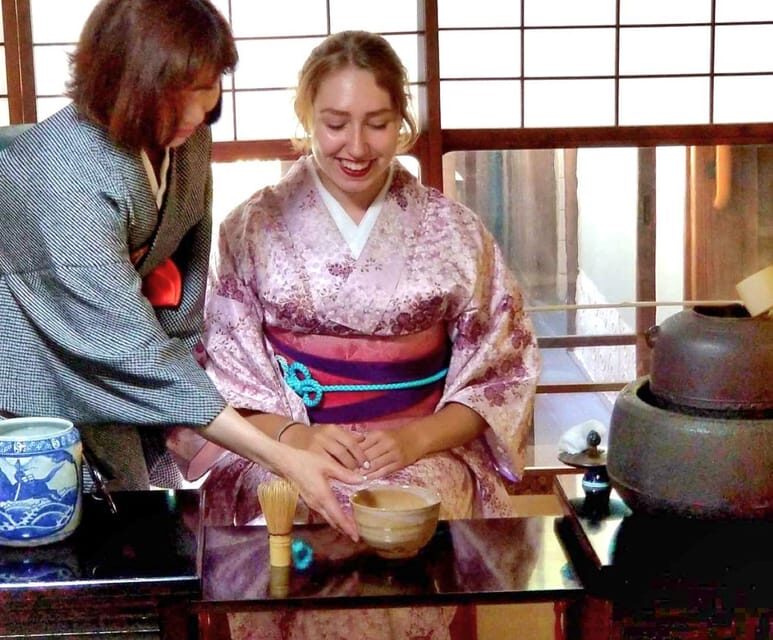
Making matcha is the part most people remember, and for good reason. You’ll use a bamboo whisk (chasen) to mix your own matcha. The experience is designed so you get that creamy, frothy result rather than a sad, flat drink.
This hands-on approach teaches you the difference between swirling for show and whisking with purpose. You’ll get enough guidance to correct your technique, then you can enjoy the result.
And there’s a fun bonus built in: latte art using thick tea. It’s not exactly what you’d see in every tea house, but it’s included here as a playful, visitor-friendly way to slow down and see your tea take shape visually.
If you’re a matcha fan, you’ll also likely appreciate that you learn how to experience it properly, not just how to drink it. The guides link flavor to practice—how you make it, how you serve it, and how you take your time.






Calligraphy and Flower Arranging: The Parts That Feel Personal
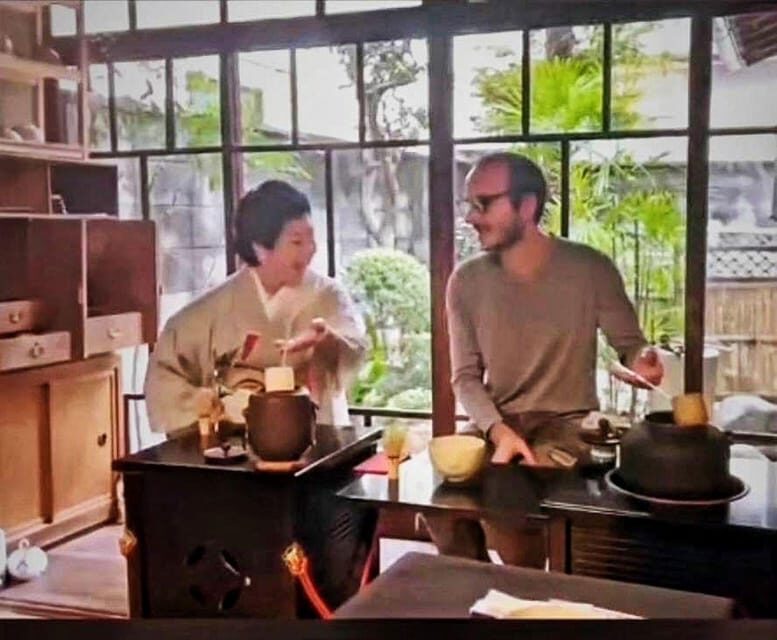
After tea, the workshop shifts into creative culture.
Calligraphy with your name
You’ll write your name in Japanese kanji or hiragana. You’ll also receive a hanging scroll or an envelope with your written name. This is the kind of souvenir that doesn’t feel generic. Your handwriting becomes the memory.
You might even practice different scripts during your session. The program description emphasizes kanji or hiragana, and some people are guided through more than one style, which makes this a great option if you’re curious about how different writing forms look.
Flower arranging (ikebana-style)
You’ll also do a flower arranging experience. The exact setup depends on the materials and flow of the day, but the core idea is the same: you create an arrangement as part of the tea atmosphere. It’s a way to connect tea ceremony with seasonal beauty and careful observation.
This section can be surprisingly grounding. It turns the experience from performance into participation.
Kimono Rental: Worth It, If You Plan the Timing
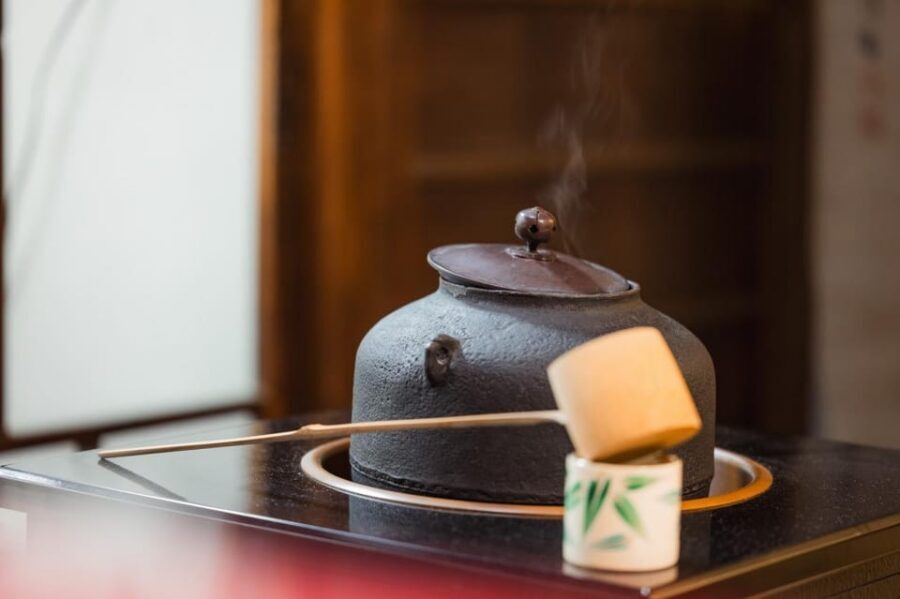
The kimono option is optional, but it’s one of the biggest “value add” choices. If you select it, you’ll be dressed in kimono by the staff, and there’s time for styling. In practice, that means the experience feels more immersive because you’re inside the cultural look from the start of your ceremony.
Just keep a couple points in mind:
- If you choose kimono, arrive 30 minutes early.
- For guests who are pregnant, the guidance is to refrain from wearing kimono for health and safety.
Also, since the ceremony is table-style, the kimono doesn’t have the same kneeling-stress as some floor seating setups. That’s a real comfort win, especially if you’re excited to dress up but want the overall experience to stay enjoyable.
Price and Value: How $45 Works for 90 Minutes
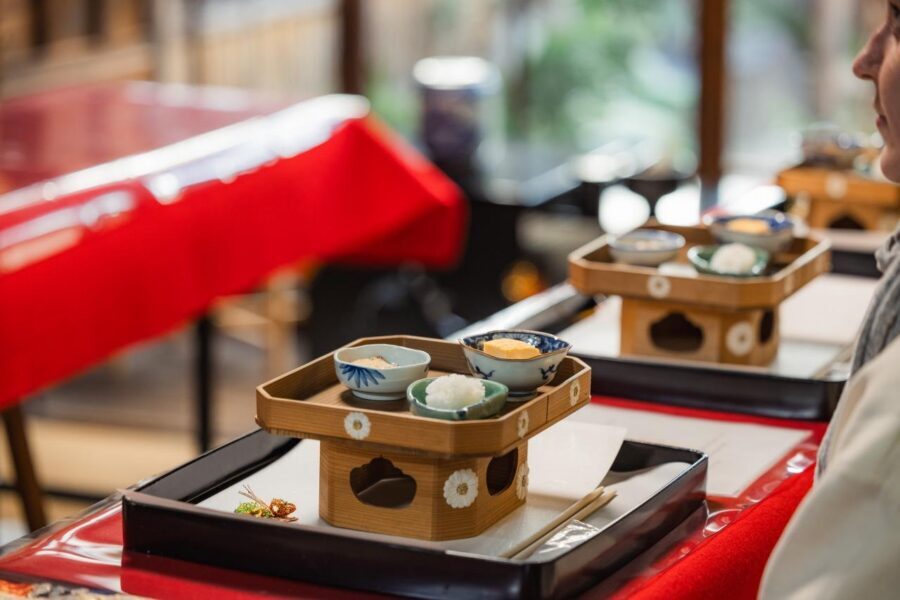
At $45 per person for about 90 minutes, you’re paying for more than a single tea drink. You get:
- The tea ceremony experience itself
- Traditional sweets
- A welcome drink (sake or juice, plus Japanese tea options)
- Hands-on matcha whisking
- Latte-art style tea art
- Calligraphy with your name and a keepsake item
- Flower arranging
- Extra photo-friendly time and props
That’s a lot packed into a short session, and the main value comes from participation. You’re not just watching someone perform. You’re doing the craft steps and creating a personal memento.
If you can add the kimono option, the value rises further because you’re not paying extra just for a costume moment. The guides also help with photos and the overall flow so the kimono supports the experience, not delays it.
Should You Book This Kyoto Tea Ceremony?
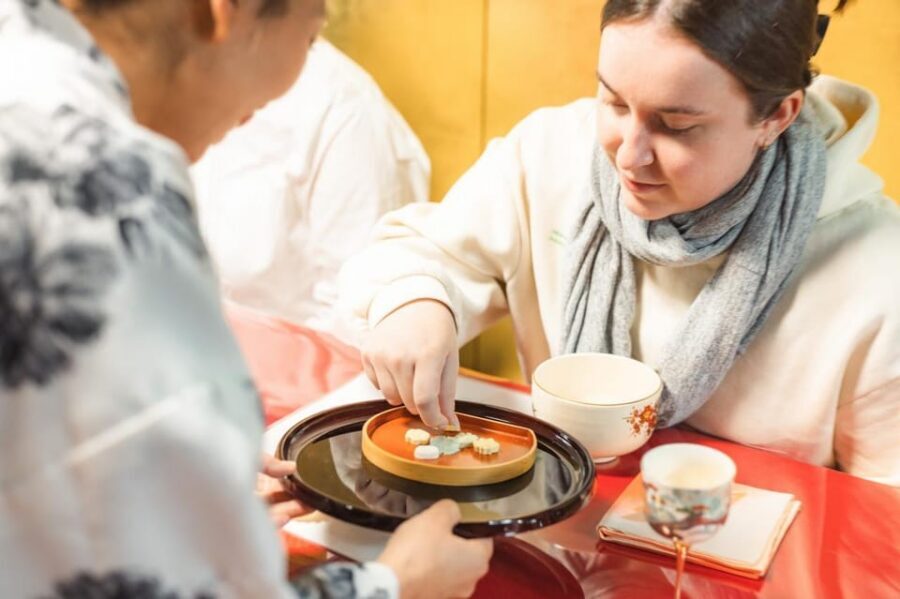
I’d book it if you want an authentic-feeling tea ceremony without the floor-sitting challenge. The chair setup makes it easier to enjoy the ritual, while the townhouse setting and garden purification keep it culturally grounded.
I’d also book it if you want hands-on culture in a short block of time. Between matcha-making, calligraphy, and flower arranging, you leave with something you made (and something you wrote), not just photos.
Skip it or choose carefully if:
- You want a strictly traditional floor-seiza style ceremony (this one is designed around chairs).
- You need wheelchair accessibility (this isn’t suitable for wheelchairs).
- You don’t want to deal with southern Kyoto logistics and short train transfers.
If your goal is a meaningful Kyoto experience you can enjoy even on a busy itinerary, this one fits well.
FAQ
Is the tea ceremony done sitting on the floor?
No. This experience is designed for you to sit comfortably on a chair instead of on the floor.
How long does the Kyoto tea ceremony last?
The duration is 90 minutes.
What is included in the price?
You’ll get the tea ceremony experience, traditional sweets, welcome drinks (sake or juice), calligraphy, and a keepsake item with your name written in Japanese kanji or hiragana. The program also includes latte art using thick tea and a flower arranging experience. Kimono rental is included only if you choose the option.
Do I get to make matcha myself?
Yes. You’ll make your own creamy, frothy matcha using a bamboo whisk.
Can I take photos and videos during the ceremony?
Yes. You’ll have time for photos and videos in the townhouse/garden setting, with props like umbrellas and folding fans, plus a katana-style sword.
Is the instruction in English?
Yes. The instructor is English.
Does the experience offer kimono rental?
Yes, kimono rental is available if you select the option.
If I choose kimono, when should I arrive?
If you choose the kimono option, you should arrive 30 minutes before the experience begins.
Is there hotel pickup or drop-off?
No. Hotel pickup and drop-off are not included.
Can I get a refund if my plans change?
You can cancel up to 24 hours in advance for a full refund.
Is this wheelchair accessible?
No. The experience is not suitable for wheelchair users.