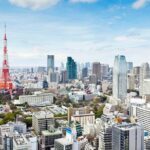
Tokyo can overwhelm fast. A local route fixes that.
This 7-hour, 10-stop Tokyo walkthrough is built for first-timers who want order in the chaos: shrines, street scenes, a fish market area, Tokyo Station, and the old-meets-new finale in Asakusa, with a guide handling the metro puzzle for you.
I really like that the guide work is hands-on and practical. A guide like Sam brings the meaning of temples and shrines into plain English, and he also shows you how to use public transport so you feel less lost later.
I also like the small group size. With a maximum of 5 travelers, the day feels controlled and your guide can keep you moving. One catch: this is fast-paced and you will be on your feet a lot, so truly comfy shoes and solid stamina matter.
In This Review
- Key things to know before you go
- Tokyo feels manageable when a local runs the metro
- Meet at Yoyogi Station: how the day gets organized
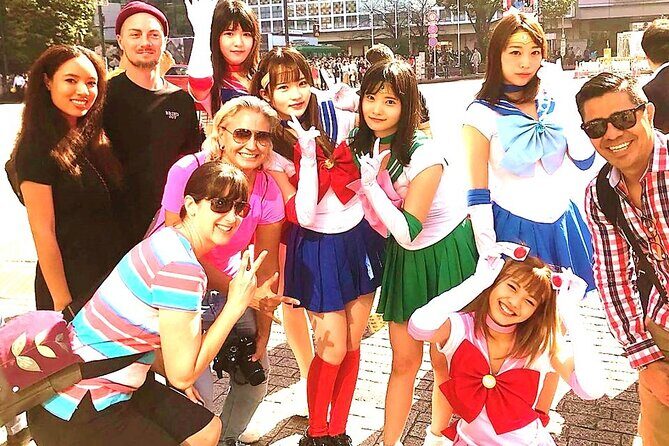
- Meiji Jingu and Harajuku: calm shrine grounds, loud fashion
- Hachiko and Shibuya Crossing: one block that teaches Tokyo energy
- Tsukiji Hongwanji Temple plus the fish market area
- Imperial Palace walk-by, Marunouchi, and Tokyo Station
- Akihabara: a quick taste of Japanese subculture streets
- Senso-ji and Asakusa Shrine: old Tokyo and a satisfying finale
- Price and logistics: what $78.18 gets you
- Pace, walking, and who this suits best
- The guide advantage: more than a sightseeing checklist
- Should you book this Tokyo Full Course Tour?
- FAQ
- How much does the Tokyo Full Course Tour cost?
- How long is the tour, and what time does it start?
- Where is the meeting point, and where does the tour end?
- Is admission included for the attractions?
- Is lunch included?
- Do I need a transportation IC card?
- Are transportation and food covered in the price?
- How big is the group?
- What happens if the weather is bad?
- Is the tour refundable if I cancel?
Key things to know before you go
- Small-group day with a max of 5 travelers, which helps with tight timing and train transfers.
- Free entry at most stops on the route (shrines/temples listed as ticket free, plus walk-bys).
- Metro-first planning because Tokyo transport is complex even for locals.
- Tsukiji is not just photos: you hit Hongwanji Temple area, the traditional fish market area, and a sushi lunch option.
- Street-to-skyline range: from Meiji Jingu calm to Shibuya crossing energy to Akihabara subculture streets.
- You stay with the host the whole time—if you drift off, the tour cannot search for you.
Tokyo feels manageable when a local runs the metro
Tokyo is huge, and the sights are spread out. This tour tackles that reality by using a guided route that strings together the city’s big hitters in one same-day plan, instead of making you bounce between neighborhoods alone.
What makes it work is the focus on timing and movement. The route is built around what you can realistically see in about 7 hours, and the guide explains how to ride trains and subway like you belong there.
And because the day mixes spiritual places, street scenes, and classic landmarks, you get more than one “Tokyo version.” You get the Tokyo people live with every day.
You can also read our reviews of more tours and experiences in Tokyo.



Meet at Yoyogi Station: how the day gets organized
You start at Yoyogi Station (1-34 Yoyogi, Shibuya) at 9:30 am. The day ends in Asakusa, at Asakusa Station area (the tour lists 1-1-3 Asakusa).
There is a mobile ticket involved, which makes the start simpler once you find the meeting spot. Also, the tour is designed to start on time—late arrivals are not allowed to join, and there are no refunds for that.
One detail I like: everything is oriented around public transportation. They explicitly recommend you have a transportation IC card ready, like SUICA/PASMO, and you should have cash for meals and any transport costs you’ll pay yourself.
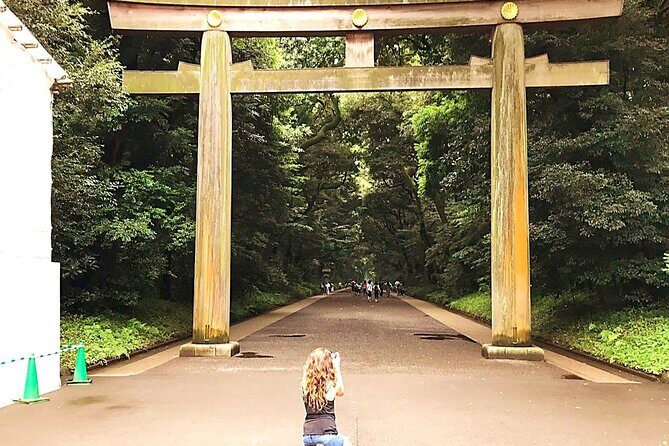
Meiji Jingu and Harajuku: calm shrine grounds, loud fashion
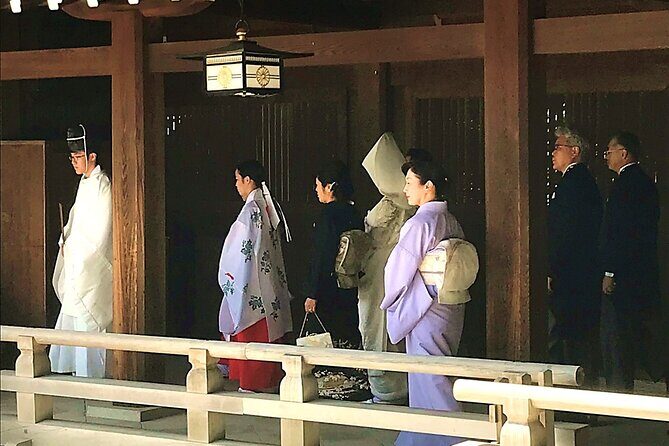
The day opens at Meiji Jingu (Meiji Jingu Shrine). The stop is about 30 minutes, and the admission is listed as free. This is your reset moment: a large shrine setting gives you a breather before the city noise ramps up.
After that you head toward Harajuku, with an option to check out the fashion street area for about 30 minutes. It is a quick hit, so you should treat it like a “look and absorb” stop, not a long browsing session.
Here is why this pairing works: you move from a reverent, nature-adjacent space into a neighborhood known for youth culture and style. Even in a short time, it shows you Tokyo’s contrast without feeling like you are hopping randomly.
Hachiko and Shibuya Crossing: one block that teaches Tokyo energy
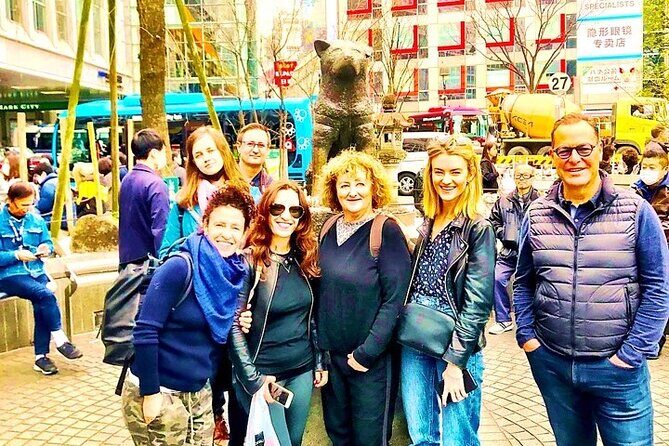
Next comes Shibuya, starting with Hachiko (the “Hachi” dog) for about 30 minutes. It is a short photo-and-stroll stop, but it matters because it anchors Shibuya in something human, not just neon.
Then you get Shibuya Scramble Crossing for another 30 minutes. This is your real-time lesson in how Tokyo moves: dense crowds crossing in organized chaos. You do not need to “know” anything in advance; your job is to watch how the flow works.
One practical tip: plan to stand still and watch first, then take your photos. When you rush to walk into the crowd, the experience turns into dodging elbows. Let the crossing teach you first.
Tsukiji Hongwanji Temple plus the fish market area
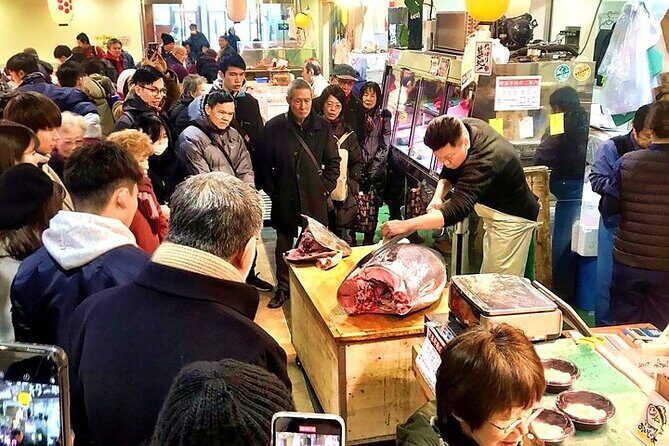
Tsukiji is built in layers here. You first visit Tsukiji Honganji (Hongwanji) Temple for about 30 minutes with free admission. Then you head into the Tsukiji fish market area for about 30 minutes.
Between those parts, the tour includes a meal stop at a sushi restaurant before visiting the temple area. The price is listed at about 13 USD, and food is not included in the tour price, so expect to pay for your lunch yourself.
Why I like this structure: it keeps Tsukiji from becoming just a sightseeing stamp. A market area is a living place with smells, textures, and movement. Adding the temple stop gives the day more balance and adds meaning to what you are seeing.





Imperial Palace walk-by, Marunouchi, and Tokyo Station
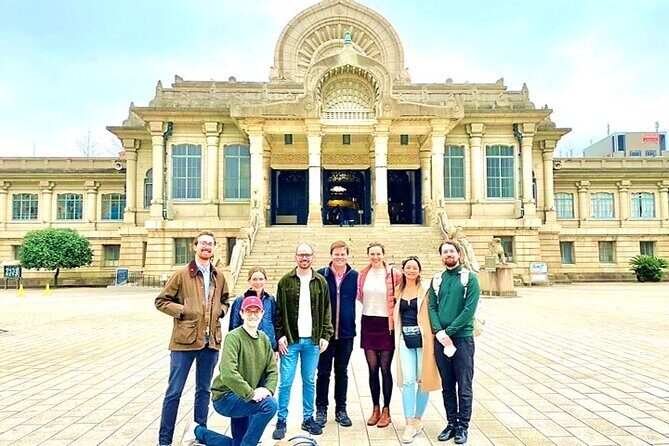
After Shibuya and Tsukiji, the route shifts into classic Tokyo central-city territory.
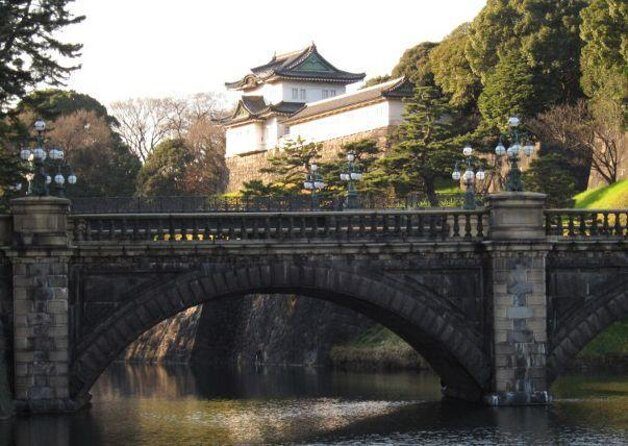
You walk outside the Imperial Palace area for about 30 minutes. The admission is listed as free, and this is a “look, orient, and appreciate” stop rather than something deep-and-ticketed.
Then you hit Marunouchi (about 30 minutes), described as the center of economy. This is where you see how Tokyo’s business core sits right next to major tourist zones.
The next stop is Tokyo Station (Marunouchi Ekimae Hiroba) for about 30 minutes. It is a strong way to end the “big landmark” arc of the day because Tokyo Station is one of those places that feels like a hub of everything—people, trains, and future plans.
If you like architecture, you will probably enjoy the station area. If you just want to keep moving, it still works because it stays efficient and keeps you on schedule.
Akihabara: a quick taste of Japanese subculture streets
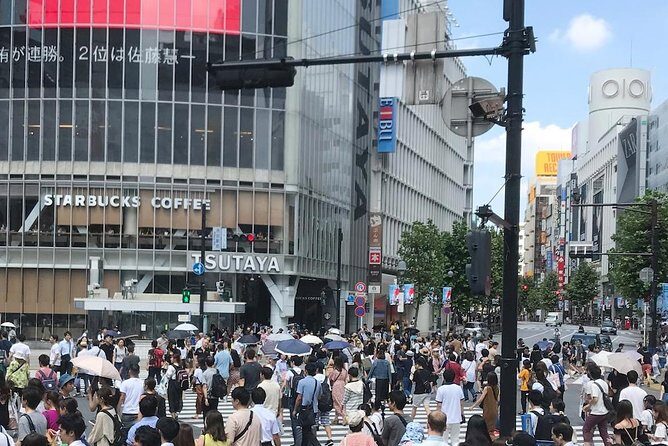
Then it is Akihabara for about 30 minutes. The stop is positioned as a Japanese subculture street experience.
Because the time here is limited, I suggest you do one thing: decide what you want to notice. Is it electronics storefronts, character culture, themed shops, or the general energy of the block? If you try to “see everything,” the stop will feel too short.
Akihabara is also one of those places where the guide’s local sense helps. You can ask for the best streets to walk for your interests without wasting time wandering.
Senso-ji and Asakusa Shrine: old Tokyo and a satisfying finale
You end with the heart-of-the-city old-school Tokyo vibe.
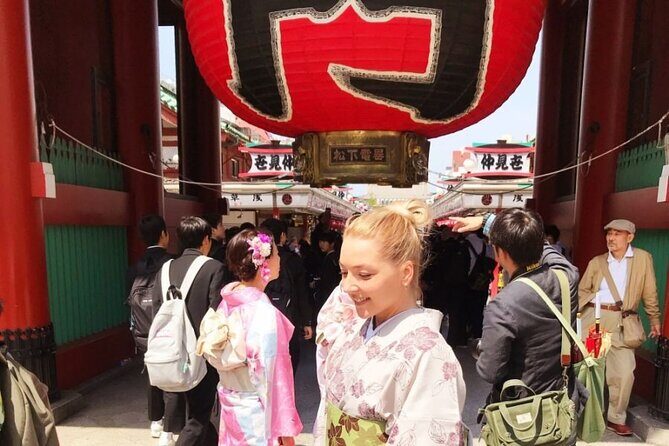
First is Senso-ji Temple for about 30 minutes. It is noted as the oldest Buddhist temple in Tokyo and one of Japan’s most popular tourist spots. Admission is listed as free, and the time is set up so you can see the main approach and get the feel of the area.
Then you visit Asakusa Shrine (also about 30 minutes, with free admission). This is your closer. Asakusa tends to feel less like a single photo stop and more like a neighborhood you could keep wandering if you had another day.
One thing to plan for: this section usually means more foot traffic. If you are tempted to stop suddenly for a photo, do it with awareness so you do not block the flow of people behind you.
Price and logistics: what $78.18 gets you
The tour price is $78.18 per person, and it includes the tour fee and consumption tax. That is the part you cannot compare apples-to-apples with a self-guided day, because what you are really buying is routing, timing, and a guide who knows how to move through Tokyo efficiently.
What is not included is just as important:
- Transportation expenses (you pay your own train/subway rides)
- Food and beverage expenses (your sushi lunch option is about 13 USD)
They recommend you have cash ready and to use an IC card like SUICA/PASMO. In practice, that means you can travel with less friction, and you avoid the quick scramble of buying tickets one by one.
Also, the tour uses a mobile ticket, which helps with entry at the start. And the group cap at 5 travelers is a real value point. In a city where crowds can swallow your attention, a smaller group means your guide can keep the day from slipping off schedule.
Pace, walking, and who this suits best
This tour is built for a full day on public transport and on foot. The tour calls for moderate physical fitness, and the reviews you can read about this experience repeatedly flag walking as the main challenge.
So here is my honest guidance: if you hate walking days, pick a different plan. If you can handle a steady pace for several hours, you will likely feel rewarded because the day covers a lot of ground and key landmarks.
The guide style also matters. Names like Sam and Takashi show up in examples of how guides keep things organized and clear, with good English preparation in at least some departures. That is exactly what you want when the route includes multiple neighborhoods and you need to understand where you are going and why.
One caution from the tour rules: you must follow the host. If you separate yourself from the group, the tour cannot look for you, and you should not assume you can just catch up later.
The guide advantage: more than a sightseeing checklist
The tour is not only about “where to stand for photos.” You also get explanations about history, culture, society, values, and local etiquette, plus how everyday people take public transport.
That matters because Tokyo can feel like a set of attractions on a map. With a guide framing the meaning, you start to connect the dots: why shrines and temples matter, how neighborhoods developed, and how people act in public spaces.
Even the built-in lesson structure helps. You are practicing transit skills on the same day you are seeing the city’s biggest names. That is the difference between visiting and learning your way around.
If your Tokyo visit is short and you want a fast “get oriented” day, this route fits that need well.
Should you book this Tokyo Full Course Tour?
Book it if you want a 10-stop, guided day that mixes major landmarks with neighborhood flavor, and you are happy to walk and use the subway with your guide’s help. The small group limit and free-entry nature of many stops make it strong value for a first-time Tokyo itinerary.
Skip it if your plan is mostly about slow wandering, long sit-down time, or minimal walking. This is efficient, and efficiency means fewer slow pauses.
Finally, go in prepared: SUICA/PASMO, some cash for lunch, and shoes that forgive a lot of steps. If you do that, you will leave with a clearer picture of Tokyo than you would from bouncing between spots on your own.
FAQ
How much does the Tokyo Full Course Tour cost?
The tour costs $78.18 per person.
How long is the tour, and what time does it start?
The duration is about 7 hours, and it starts at 9:30 am.
Where is the meeting point, and where does the tour end?
You meet at Yoyogi Station (1-34 Yoyogi, Shibuya) and the tour ends at Asakusa Station area (Asakusa Sta. 1-chōme-1-3, Asakusa, Taito City).
Is admission included for the attractions?
Many stops are listed with admission ticket free, including Meiji Jingu, Tsukiji Honganji temple, the Imperial Palace walk outside, Senso-ji Temple, and Asakusa Shrine.
Is lunch included?
Food and beverages are not included in the tour price. There is a sushi restaurant lunch stop in the Tsukiji area listed at about 13 USD.
Do I need a transportation IC card?
Yes. The tour recommends preparing an IC card such as SUICA or PASMO in advance.
Are transportation and food covered in the price?
No. Transportation expenses and food and beverage expenses are not included.
How big is the group?
The tour has a maximum of 5 travelers.
What happens if the weather is bad?
This program requires good weather. If it is canceled due to poor weather, you are offered a different date or a full refund.
Is the tour refundable if I cancel?
No. This experience is non-refundable and cannot be changed for any reason.