Tokyo can feel like a maze on day one. This full-course day tour makes it manageable by stitching together 15 major sights and practical local know-how, from shrine calm to neon streets.
I like the way the route is built for efficiency: you move between neighborhoods by metro and JR/rail, then walk the best parts. I also like that the guide is English-speaking and born-and-raised, so the tips are about real daily life, not just facts on signs.
One thing to consider: the day is about walking hard (plan on around 20,000 steps), and it’s not a good fit for people with mobility limits, back problems, pregnancy, or low fitness.
In This Review
- Key points before you go
- Your 10-hour route: from Yoyogi to Asakusa by foot and metro
- Meiji Jingu Shrine to Harajuku: temple calm, then youth energy
- Hachiko and Shibuya Crossing: iconic photos plus smarter street sense
- Tsukiji Hongan-ji and the Outer Market: architecture and food planning
- Imperial Palace grounds and Marunouchi: a calmer Tokyo core
- Akihabara and Ueno Park: pop culture one direction, samurai history the other
- Ameyoko to Sensō-ji and Asakusa Shrine: street life to sacred old Tokyo
- The real value: etiquette, transport skills, and guides who keep the day flowing
- Price and value: what $90 buys, and what you should budget extra
- Who should book this Tokyo full-course day (and who should skip it)
- Should you book this tour or DIY the day?
- FAQ
- Is transportation included in the tour price?
- Are there entrance fees for the sights on this tour?
- Is lunch or dinner included?
- Will the guide help with vegetarian or vegan options?
- How much walking should I expect?
- What should I bring to join the tour?
- Is the tour suitable for kids?
- What’s the cancellation policy?
Key points before you go
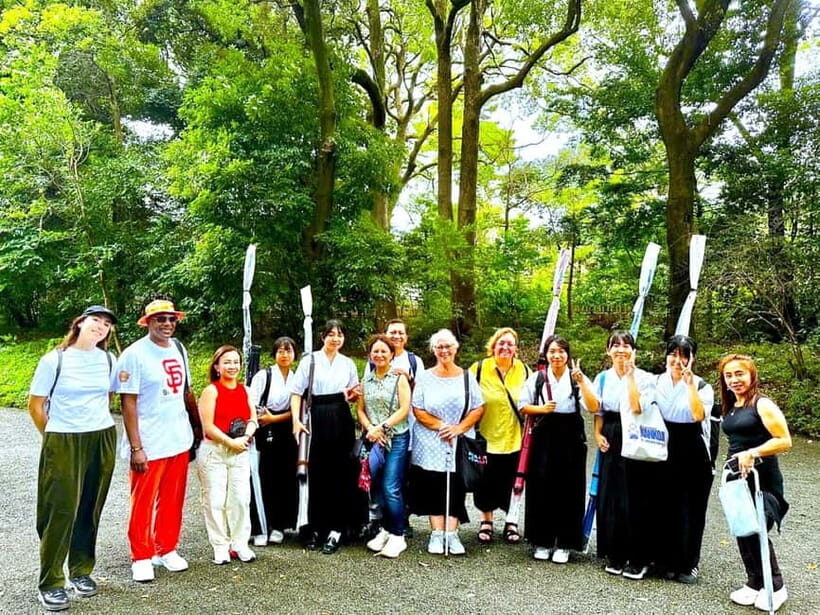
- Small group (up to 7): easier pacing, more personal attention, and fewer lost moments.
- Free entry sites: you get a lot of landmarks without entrance-fee budgeting.
- Konbini-to-temple contrast: you’ll see everyday Tokyo culture as well as classic sights.
- Guide-guided etiquette: you learn how to ride trains, queue properly, and move with the crowd.
- Food orientation: the tour points you to strong lunch/dinner options, including vegetarian and vegan choices.
- Rain-ready planning: you’ll keep moving even if the weather flips, with the expectation you bring gear.
Your 10-hour route: from Yoyogi to Asakusa by foot and metro
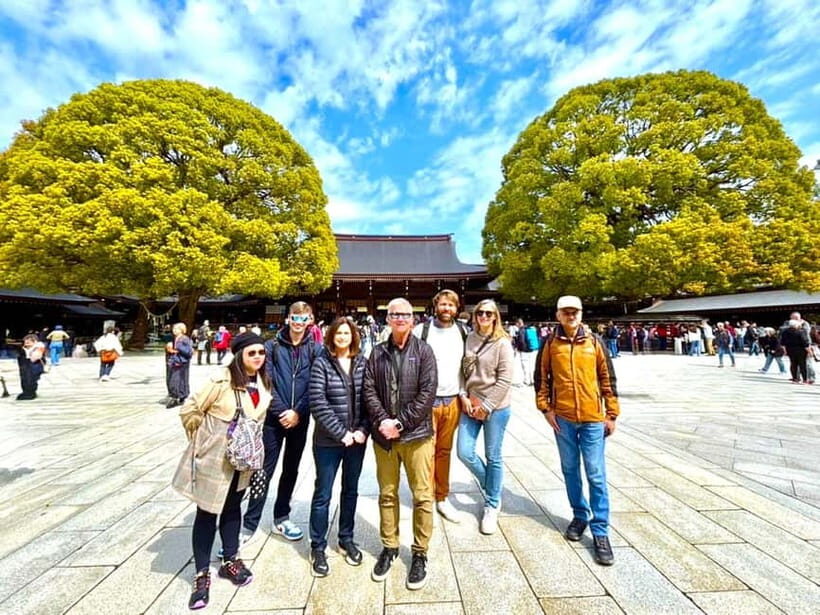
This is a first-day-in-Tokyo style of tour. You start at JR Yoyogi Station (West exit) and spend the day hopping neighborhood to neighborhood, mostly on foot, with metro/rail rides to reset your legs. The big idea is simple: you get to see a lot without spending your limited time deciphering train routes and street directions.
The pace is guided and structured, not leisurely. Many stops are short (10–30 minutes), so you’ll get highlights rather than a slow, museum-style experience. That’s great if you’re here for your first sweep of Tokyo and you’d rather come back later with a clearer sense of where things are.
To make the day work, you’ll want the right basics ready before you meet your guide:
- Comfortable, sporty shoes (this is non-negotiable)
- A pre-charged transport IC card (Suica/Pasmo/Icoca)
- Cash in JPY for places that only take cash
- A rain layer or umbrella, because the tour keeps moving
You can also read our reviews of more tours and experiences in Tokyo.



Meiji Jingu Shrine to Harajuku: temple calm, then youth energy
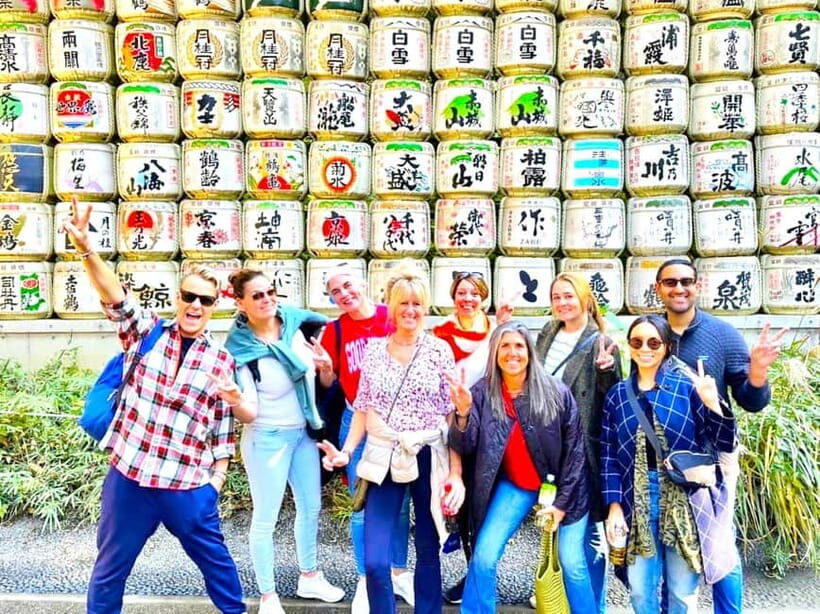
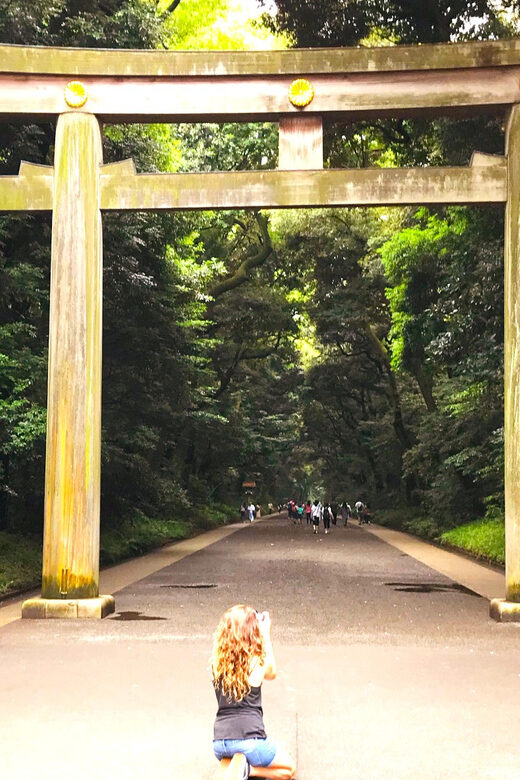
The day opens with Meiji Jingu Shrine, with about 30 minutes there. The draw is the sudden change in mood: you move from the city’s motion into a forested space that feels quieter and slower. It’s a strong way to start because you immediately learn what locals respect about etiquette and quiet movement in sacred areas.
After that, the tour shifts to Harajuku for another 30 minutes. This is where you see Tokyo’s fashion-forward street culture and the spirit of trend cycles. Even if you’re not shopping, walking through Harajuku helps you understand how Tokyo expresses youth identity in public space—without needing a guide to translate the street style.
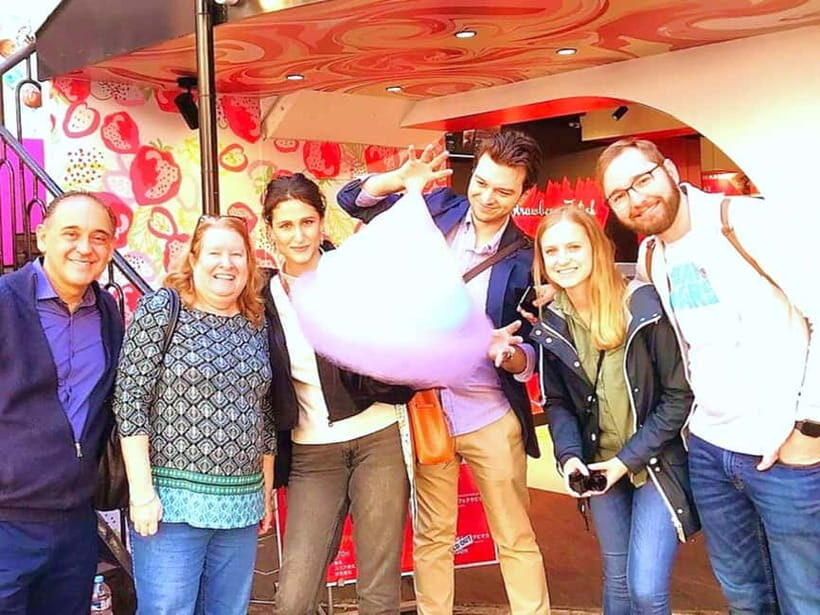
At some point you’ll also get a taste of konbini culture, including Seven-Eleven. This is one of those small stops that pays off later. Once you know what to look for—snacks, drinks, and how people move in and out of stores—you can navigate Tokyo more like a local on your own.
Hachiko and Shibuya Crossing: iconic photos plus smarter street sense
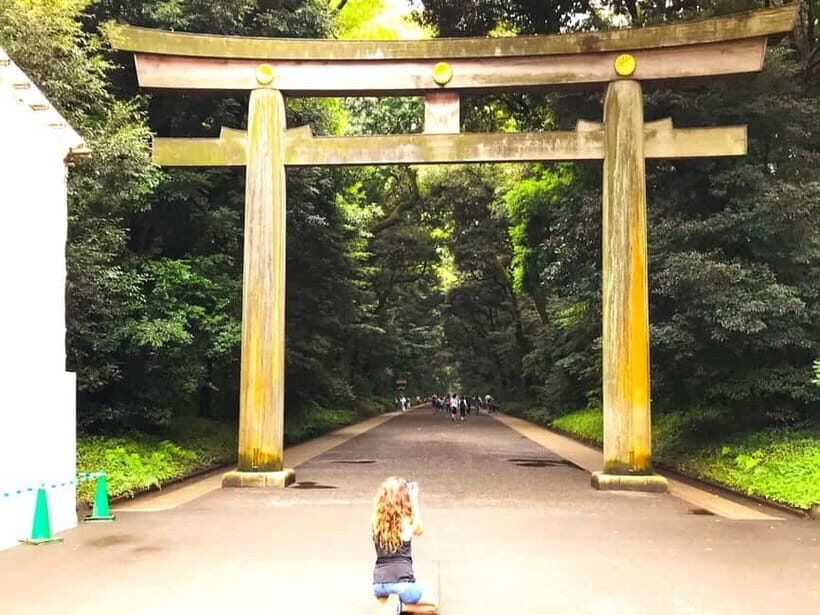
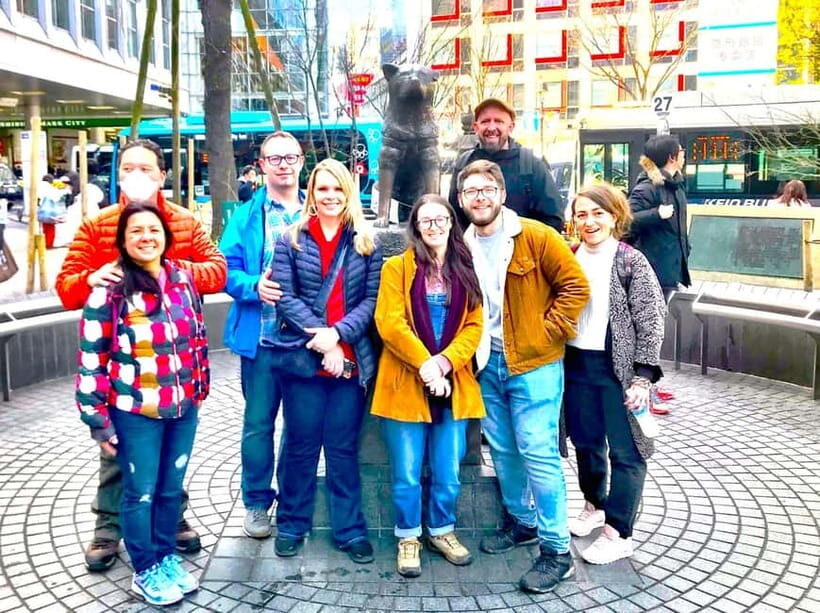
Next up: Hachikō Statue in Shibuya, about 10 minutes. This stop works because it’s not just a photo moment. Your guide explains why the dog is such a big cultural reference point, which makes the statue feel less like a random tourist target and more like a story you can carry to other places in Japan.
Then it’s on to Shibuya Scramble Crossing for around 10 minutes. Yes, it’s famous. But with a guide, you don’t just stand there guessing where to stand for the best view. You get help timing your photos with real crowd movement and understanding how to cross without turning it into chaos.
After these Shibuya highlights, you’ll take the metro for about 30 minutes to reach the next part of the day. That ride matters more than it sounds: it’s where you get built-in route confidence, so when you travel afterward, you’ll remember the logic of the system.
Tsukiji Hongan-ji and the Outer Market: architecture and food planning
Tsukiji starts with Tsukiji Hongan-ji Temple, around 30 minutes. The standout here is visual: the temple’s architecture and stained-glass look far more striking than most quick-photo stops. It’s also a good moment to slow down, since the rest of the day swings between crowds and fast-moving neighborhoods.
Then you move into Tsukiji Outer Market for about 1.5 hours. This is where you’ll feel the food-focused side of Tokyo. You can expect stalls with seafood and everyday ingredients, plus snack-level tasting and browsing. Since lunch at Tsukiji is not included, the guide’s role is practical: you’ll be steered toward places that make sense for your tastes, and you’ll get help finding options if you want vegetarian or vegan choices.
One budgeting tip: this is a cash-friendly zone in parts, so having JPY ready helps you avoid the frustration of finding a shop you can’t use. You’ll also want to keep snacks light if you plan to eat a fuller meal later.
Imperial Palace grounds and Marunouchi: a calmer Tokyo core
After Tsukiji, you head toward the Imperial Palace area (about 15 minutes). You walk through grounds connected to the former Edo Castle, with the prominent stone walls that shape the area’s look. It’s a quick hit rather than a long stay, but it gives your brain an important reference point: Tokyo isn’t only neon and shopping—there’s also an official, structured rhythm.
Then comes Marunouchi for another 15 minutes, followed by Tokyo Station Square for about 15 minutes. Marunouchi is where you see sleek office towers meet older civic form, and Tokyo Station is the emotional centerpiece for rail travelers. The station’s red-brick look is a classic, but the real value is orientation: once you’ve seen it with your guide, you’ll understand why Tokyo rail travel can feel easier than you expect.
You’ll also take a train ride (about 10 minutes) to reach the next big section: Akihabara.






Akihabara and Ueno Park: pop culture one direction, samurai history the other
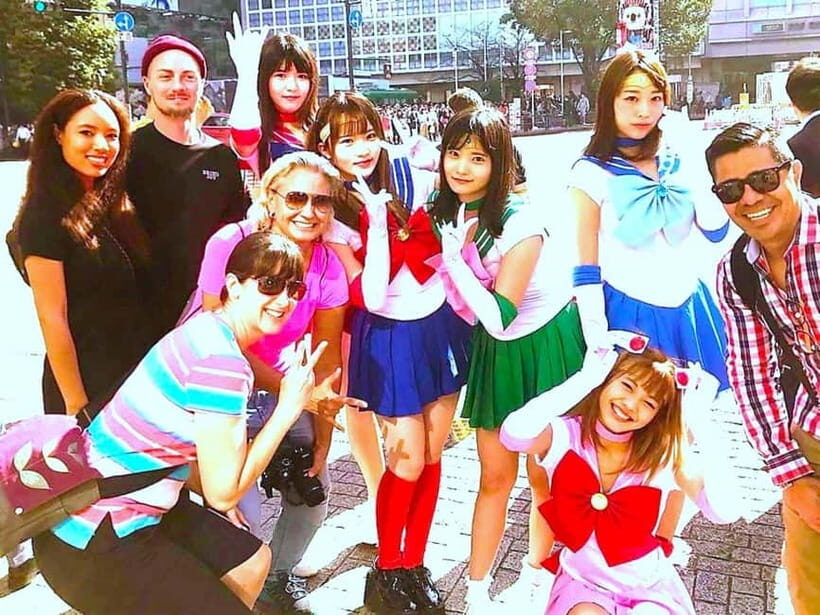
Akihabara gets about 30 minutes. If you like anime, games, gadgets, or Japan’s pop-culture packaging, this is one of the most efficient places to spend time in a single day. Even if you don’t buy anything, just walking through helps you understand how seriously Tokyo treats its fandom scenes—down to the signage, shop categories, and energy in the streets.
Then you continue to Ueno Park for about 30 minutes. Ueno is a contrast zone: you’re back in a “park as cultural hub” setting with history that stretches beyond shopping. The tour positions it as a place where art museums and samurai-related history sit close enough to connect in your mind.
The key benefit of doing Akihabara and Ueno in the same day is that you don’t get stuck in only one Tokyo mode. You come away with a more complete picture.
Ameyoko to Sensō-ji and Asakusa Shrine: street life to sacred old Tokyo
After Ueno, you’ll hit Ameyoko Street (Ameya-Yokocho) for about 15 minutes. This stretch adds back some grit and shopping momentum after the calmer park vibe. It’s also a great place to notice how Tokyo markets feel different from country to country: the energy is dense, and the food/snack culture is a big part of it.
Then the day shifts into old Tokyo spirituality with Sensō-ji Temple for about 30 minutes. Sensō-ji is the kind of landmark where the details matter: you see the layered layers of activity, incense and ritual space, and the way people move through with purpose.
Right after, you visit Asakusa Shrine (about 10 minutes). It’s a quieter add-on within the same spiritual area, and it’s a good place to reset your senses before you finish.
Your tour ends at Asakusa Shrine. There’s also a goal celebration at an izakaya mentioned in the tour concept. Dinner is not included, but the idea is that you’ll have an easy, friendly option to keep the day going with local-style food and conversation.
The real value: etiquette, transport skills, and guides who keep the day flowing
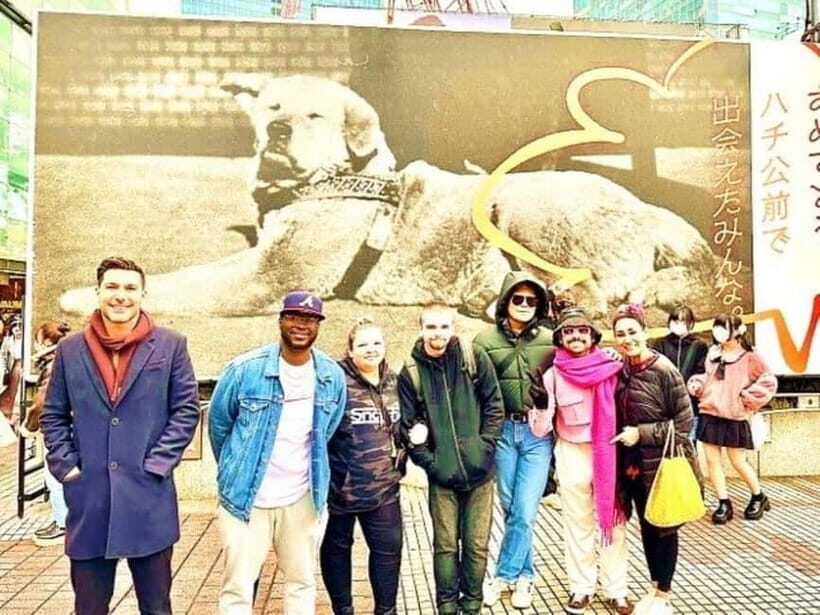
Where this tour earns its money is in how it teaches you to move. Tokyo is doable, but only after you learn a few habits. Your guide focuses on public transport etiquette and how daily life actually works, like where to stand, how to move through crowds, and how to ride without stress.
The guide experience is backed by real patterns in the reviews. Several guests specifically praised the guides for clear English and for staying considerate of pace. Yasuko comes up in multiple reviews for being informative and friendly, with one comment highlighting that she adjusted to individual needs and made sure everyone felt good during the walks. Michiko gets praised for deep city know-how and keeping a steady pace, and there’s even a note about helping a guest hail a taxi for the trip back to their hotel.
You’ll also want to follow the group rules closely. You stay with your guide at all times, and the tour asks you to avoid arriving late—late arrivals can’t join the tour once it departs.
Practical reminder: the tour does include short metro/rail rides throughout the day. That means you should treat your IC card as your daily Tokyo key, not something you forget in your pocket until you’re stuck at the gate.
Price and value: what $90 buys, and what you should budget extra
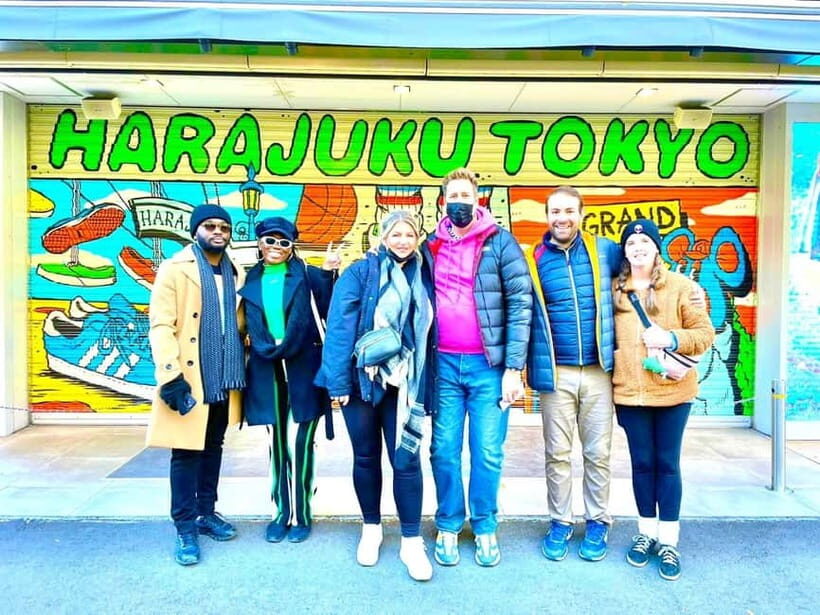
At $90 per person, this is a strong value if you compare it to the alternative: buying train rides, figuring out a route, and paying for lots of separate guide time. The key reason it works is that the tour’s attractions are described as free to enter, so you’re not paying entrance fees for each stop.
What’s included:
- The professional guide fee
- Taxes
What’s not included:
- Transportation fares (estimated around 1,500 JPY / about $10)
- Food and drinks (lunch/snacks/dinner; lunch at Tsukiji and dinner at an izakaya are referenced, but not included)
- Any purchases you make at shops
So the real budgeting equation is: you’re paying for direction, pacing, and local guidance, while you cover your own meals and transit. For many first-timers, that’s the sweet spot. You get the structure of a tour with the flexibility to choose what you eat.
Also, plan for cash. When you carry some JPY, you avoid losing time at shops that only take cash.
Who should book this Tokyo full-course day (and who should skip it)
This tour is a good fit if:
- It’s your first day in Tokyo and you want orientation fast
- You want a single, efficient sweep of Shibuya, Tsukiji, Tokyo Station, Akihabara, Ueno, and Asakusa
- You like both classic landmarks and everyday culture (like konbini/snack life)
- You want someone to teach etiquette and transport habits so you can travel more confidently later
- You’d benefit from a small group setup where your guide can keep an eye on pacing
It’s not a good fit if:
- You have mobility issues, back problems, or you’re pregnant
- You have low fitness and won’t enjoy long walking days
- You’re traveling with a cold (the tour notes it’s not suitable)
- You need wheelchair access or baby strollers
Should you book this tour or DIY the day?
Book this tour if you want a guided day that makes Tokyo feel logical. With a small group, an experienced English guide, and a route that covers major landmarks plus practical local habits, the value is in reducing confusion. You also get a ready-made framework for where to return later on your own.
Go DIY instead if you already know Tokyo transit well, or if you want a slower day where you can linger at fewer stops. This tour is built for movement and highlights, not long stays.
If your goal is to see a lot of Tokyo efficiently while learning how to travel like a local, this one is an easy yes.
FAQ
Is transportation included in the tour price?
No. Transportation fares for metro and JR train are not included, and the estimate given is about 1,500 JPY (around $10).
Are there entrance fees for the sights on this tour?
The tour describes all attractions as free to enter, so entrance fees are not expected for the listed stops.
Is lunch or dinner included?
No. Food and drinks are not included. Lunch at Tsukiji, snacks, and dinner at an izakaya are referenced as parts of the day, but you’ll pay for them separately.
Will the guide help with vegetarian or vegan options?
Yes. Vegetarian and vegan options are stated as always available, and the tour includes recommendations for restaurants and eateries.
How much walking should I expect?
The tour asks for sporty shoes and mentions walking about 20,000 steps during the day.
What should I bring to join the tour?
Bring comfortable shoes, cash (JPY), and a public transport ticket such as a pre-charged Suica, Pasmo, or Icoca for metro travel.
Is the tour suitable for kids?
It’s not suitable for children under 13. Under 18s must be accompanied by an adult, and under 13s require a private tour.
What’s the cancellation policy?
You can cancel up to 7 days in advance for a full refund. After that, the tour notes that no refunds apply in certain cases, including late arrival and other listed situations.