REVIEW · TOKYO
Tokyo Ikebana, Japanese Traditional Flower Arrangement Experience
Book on Viator →Operated by Attractive JAPAN · Bookable on Viator
Paper-thin precision meets living flowers in Tokyo. This beginner Ikebana class is a hands-on way to learn a Japanese tradition tied to samurai-era aesthetics, then build your own arrangement step by step using seasonal local blooms. You’ll also get time for photos and a quick “how to think” framework you can reuse later.
I especially like two things: the lesson mixes short explanations with getting your hands working fast, and the experience is genuinely low-stress because everything is provided. One possible consideration is that it’s only about 1 hour 10 minutes, so if you’re hoping for lots of repeat practice, plan to continue on your own afterward.
In This Review
- Key Takeaways Before You Go
- Tokyo Ikebana in 1 Hour: What Makes This Class Worth Your Time
- A Start at 一葉式いけ花本部 in Nakano
- Your 70-Minute Ikebana Lesson Plan
- The Core Ikebana Ideas You’ll Practice Right Away
- Seasonal Flowers and Making It Look Balanced
- Instructor Feedback and Small-Group Comfort
- Materials Provided, Photos Included: What You Can Actually Take Home
- Price and Value: Is $67.28 a Good Deal?
- Who This Works For (and When to Skip)
- Should You Book Tokyo Ikebana? (My Practical Call)
- FAQ
- How long is the Tokyo Ikebana experience?
- Where does the experience take place?
- Is this class good for beginners?
- Do I need to bring flowers or tools?
- What is the group size?
- What ages can participate?
- Is it easy to get there using public transportation?
- Do I receive a mobile ticket?
- Can the instructor meet you at your hotel?
- Is the booking refundable if I cancel?
Key Takeaways Before You Go
- Beginner-friendly instruction that adjusts to your level, not the other way around
- All materials supplied, so you can show up light and worry-free
- Local seasonal flowers used for your arrangement, which makes it feel current
- Small group size (up to 10), so your instructor can actually check your work
- Photo time built in, so you can remember angles, not just the final look
Tokyo Ikebana in 1 Hour: What Makes This Class Worth Your Time
Ikebana is not just putting flowers in a vase. It’s design with meaning: line, angle, negative space, and material beauty all matter. In practice, that means you’ll learn how to make flowers look intentional instead of accidental.
I like that this class doesn’t assume experience. It starts with fundamentals and then gets you arranging. You’re not stuck watching for the whole hour, which is a big deal if your Japanese is limited or you just don’t want a long lecture.
You also get a useful cultural context: the tradition is discussed as a Japanese art form that samurai once practiced. That framing helps you understand why the class talks about form and philosophy instead of only “where to cut.”
You can also read our reviews of more tours and experiences in Tokyo.



A Start at 一葉式いけ花本部 in Nakano
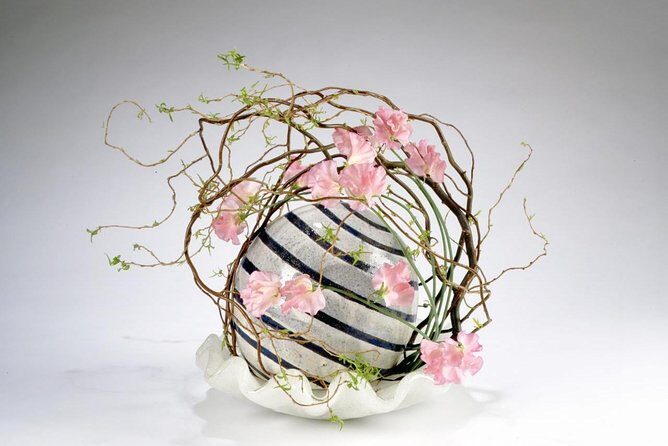
The class meets at 一葉式いけ花本部, 4-chōme-20-5 Nakano, Nakano City, Tokyo 164-0001. It’s in a normal neighborhood part of Tokyo (Nakano), which can be a nice change from the usual “tourist-only” areas. The upside: you’ll likely find it easy to get there on public transit because the location is described as being near public transportation.
If you’re staying elsewhere, there’s also an option that can simplify your day: the instructor can be sent to your Tokyo hotel. That’s not always necessary, but it’s a smart choice if you hate the idea of squeezing one more train transfer into an already full itinerary.
Your 70-Minute Ikebana Lesson Plan
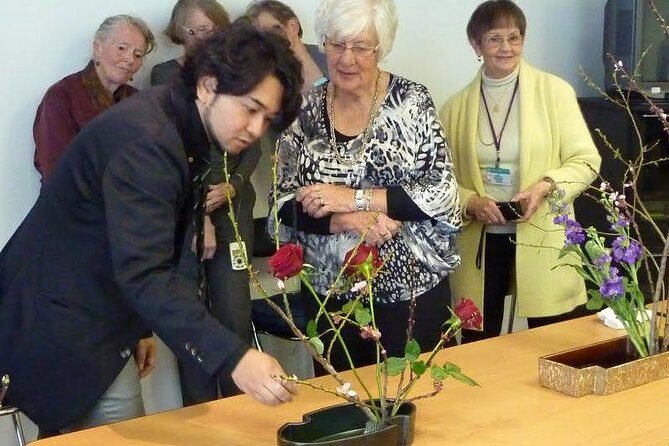
This is a compact class—about 1 hour 10 minutes—and that timeline shapes what you should expect. You’ll learn basics, create one arrangement, get feedback, and take photos, all within that single session.
Here’s how the time typically flows:
- You start at the school location and settle in with the materials and tools.
- You learn the core ideas of ikebana—what to look for in stems, how to think about angles, and how to show the beauty of the plant and vase.
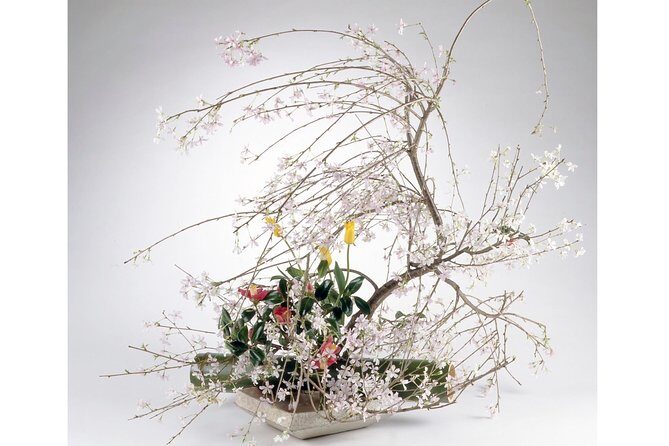
- Then you make your own arrangement using seasonal flowers.
- Your instructor checks what you made and offers practical advice for improvements.
- You finish with photo time so you can capture your arrangement from the angles you worked hard to create.
The class ends back where it starts, so you’re not dealing with a multi-stop schedule. That’s helpful in Tokyo, where “one simple plan” can beat “three complicated hops.”
The Core Ikebana Ideas You’ll Practice Right Away
The most important idea in ikebana is bringing out the charms of the materials—plants, vase, and the space around them. Instead of treating the vase as a container, ikebana treats it like part of the composition.
In this class, you’ll learn what looks attractive in terms of:
- Style and angle (which direction a stem “wants” to go)
- Balance of combinations (how to pair elements so they feel right together)
- Form and movement, so the arrangement reads as a line and a gesture, not just a pile of blooms
What makes this beginner-friendly is the way instruction is described: the instructor teaches to your level. So you won’t be expected to already know how to evaluate a stem or how to “see” the final look. You’re given a framework first, then your hands build the arrangement.
If you’re someone who usually buys bouquets and calls it done, this is where ikebana feels like a real skill. Flowers change appearance dramatically once you start using structure, spacing, and intentional angles.
Seasonal Flowers and Making It Look Balanced
Your arrangement uses local flowers that are in season. That matters more than it sounds. When blooms are truly seasonal, you get a wider range of textures and shapes, and the class ends up teaching you how to work with what the season offers—not a one-size-fits-all recipe.
Also, ikebana can be done with flowers from all over the world, which is why it’s popular beyond Japan. But in this class, the seasonal local approach makes your final arrangement feel connected to where you are—Tokyo in that specific time of year, not a generic craft kit.
You’ll also have the chance to take a lot of photos after you finish. That’s not a small detail. Ikebana is very angle-sensitive, so seeing your arrangement from multiple perspectives helps you understand what worked and what you’d adjust next time.






Instructor Feedback and Small-Group Comfort
This class caps at 10 travelers, and that small size is a big quality signal. It means you’re more likely to get hands-on correction rather than only vague encouragement. After you build your arrangement, your instructor will look at what you made and give advice on how to improve it.
Based on what’s shared about instructors in past sessions, you may work with teachers such as Naohiro Kasuya or Mrs. Shimakawa. The teaching style described is patient and supportive, with clear explanations of the process and how the principles translate into your arrangement. In one case, an instructor even pointed out a nearby ikebana show happening the next day—useful if you want to turn one class into a mini culture streak.
One practical note: the program is designed for people 6 years and over, and children 12 and under must be accompanied by a parent. If you’re traveling with kids who like hands-on crafts, this can be a fun way to do something Japanese that’s not just watching from the sidelines.
Materials Provided, Photos Included: What You Can Actually Take Home
The stress-free part is real: you don’t need to bring anything. The class provides flowers and equipment, and you’ll get guidance on how to use the materials.
Here’s what you can take home besides the final arrangement:
- A clearer sense of what makes an ikebana design feel intentional
- Confidence that you can start an arrangement at home without guessing every step
- A better appreciation for the way Japanese design thinks about line, space, and proportion
And because photos are built into the session, you’re not relying on memory. You can reference your own pictures later when you try rearranging at home with local flowers.
Also, the instructor reviews your work at the end. That feedback is useful even if you’re not planning to become a practicing ikebana student. It helps you understand what to change if the next vase looks “off” in your eyes.
Price and Value: Is $67.28 a Good Deal?
At $67.28 per person, this isn’t the cheapest activity in Tokyo. But when you look at what’s included—materials, instruction, and time for photos—the value starts making sense.
For context, you’re paying for:
- Structured beginner teaching (not just free-form crafts)
- A guided arrangement using seasonal local flowers
- Instructor review and advice on how to improve
- Everything you need supplied, so you don’t waste time hunting tools or buying supplies
You’re also getting a small group setup (max 10), which often costs more than you’d expect when you’re dealing with hands-on Japanese arts classes. In practice, this price feels fair if you want something genuinely Japanese and tactile, not just an inexpensive souvenir workshop.
If you’re on a tight schedule, the short duration helps. You’re not committing an entire afternoon, and you can fit it between other Tokyo highlights.
Who This Works For (and When to Skip)
This class is a great fit for:
- Beginners who want a real structure, not vague tips
- People who love flowers but want to understand the design principles
- Travelers who like a small, calm activity rather than a big group tour
- Anyone who wants a Japanese cultural activity that ends with a tangible result
It may be less ideal if:
- You want long practice time with multiple arrangements
- You’re looking for a broad sightseeing component in the same booking (this is focused on the class itself)
- You dislike traveling to a neighborhood location (Nakano) unless you use the hotel-instructor option
One more practical consideration: the session is designed for ages 6+, so if your group includes younger kids, confirm the accompanying parent requirement.
Should You Book Tokyo Ikebana? (My Practical Call)
I’d book this if you want a meaningful, beginner-friendly Japanese art experience with a clear outcome: you’ll learn the basics, make a seasonal arrangement, and get feedback and photos in about 70 minutes. It’s also a strong pick if you want something quieter and more reflective than the usual city tour pace.
I’d think twice only if you’re looking for a multi-hour workshop or a bigger “day plan.” This is a tight, focused class. If you treat it like that—one smart, creative block in your Tokyo schedule—it tends to land well.
One last tip: wear something comfortable for seated work and plan your day around that one location (or request the instructor to meet you at your hotel). You’ll get more enjoyment when you’re not rushing to catch trains right after your arrangement is finished.
FAQ
How long is the Tokyo Ikebana experience?
The class is about 1 hour 10 minutes.
Where does the experience take place?
The meeting point is 4-chōme-20-5 Nakano, Nakano City, Tokyo 164-0001, Japan at 一葉式いけ花本部. The activity ends back at the meeting point.
Is this class good for beginners?
Yes. It’s described as perfect for beginners, and the instructor teaches according to your level.
Do I need to bring flowers or tools?
No. Flowers and equipment are provided, and you do not need to bring anything.
What is the group size?
The experience has a maximum of 10 travelers.
What ages can participate?
The program is designed for people 6 years of age and over. Children aged 12 and younger must be accompanied by a parent.
Is it easy to get there using public transportation?
Yes. The location is described as being near public transportation.
Do I receive a mobile ticket?
Yes. The experience includes a mobile ticket.
Can the instructor meet you at your hotel?
Yes. The instructor can be sent to any hotel you stay in Tokyo.
Is the booking refundable if I cancel?
No. The experience is non-refundable and cannot be changed for any reason.