REVIEW · TOKYO
Tokyo: Japanese Archery (Kyudo) Experience
Book on GetYourGuide →Operated by Beautifuldaytours LLC. · Bookable on GetYourGuide
Kyudo here feels like real discipline. In Tokyo, you get to practice official Kyudo at an actual competition range, not a staged demo setup.
I really like that you are not stuck watching from the sidelines. The instruction is led by a DAN master, and the program is designed so you start shooting right away, even though many people in Japan wait months before they’re allowed to shoot at a target.
One thing to consider: this session is strict. Arrive late and you miss it, and you’ll also need to follow the facility rules (including limited photo/video).
In This Review
- Key things I’d highlight before you book
- Kyudo in an official Tokyo hall, not a short demo room
- Getting dressed: the dōgi uniform and bow fitting that actually matters
- The DAN master lesson: how your shooting motion gets explained in English
- 150 minutes of shooting: why you get dozens of attempts
- The Zen part you can feel: dynamic ZEN focus at the release
- Small group of 5: the difference between waiting and getting coached
- Logistics that can catch you off guard: meeting place, timing, and photos
- Price and value: is $122 fair for real Kyudo?
- Who should book this Kyudo experience, and who should skip
- Tips so your first session goes smoothly
- Should you book this Kyudo experience in Tokyo?
- FAQ
- How long is the Tokyo Kyudo experience?
- How much does it cost per person?
- What group size should I expect?
- Is this class beginner-friendly?
- Where do I meet, and is it near Tokyo Station?
- Can I participate if I don’t want to shoot?
- Is photography or video allowed inside the facility?
- What are the age and health requirements?
Key things I’d highlight before you book
- Official hall, real range: You train in a legitimate Kyudo venue with a proper shooting setup.
- Shoot on day one: Unlike the usual months-long path to target shooting in Japan, this program gets you shooting straight away.
- DAN master form coaching in English: The shooting motion is carefully explained, so you’re not guessing.
- Dozens of attempts in 150 minutes: Enough time to get reps, not just one lucky shot.
- Small group of 5: You can actually benefit from guidance instead of waiting your turn forever.
- Rules matter here: Photography/video is restricted, and late arrivals can’t join.
Kyudo in an official Tokyo hall, not a short demo room
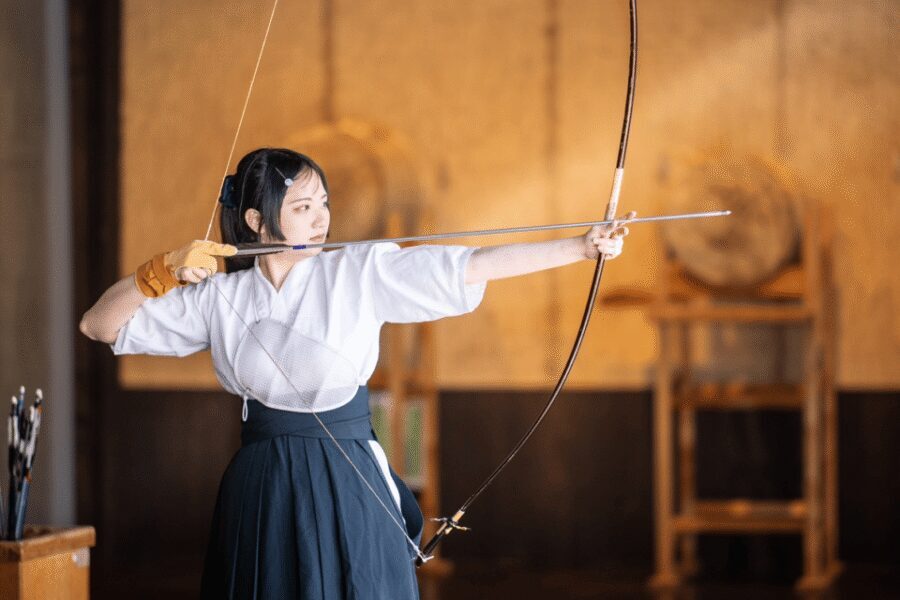
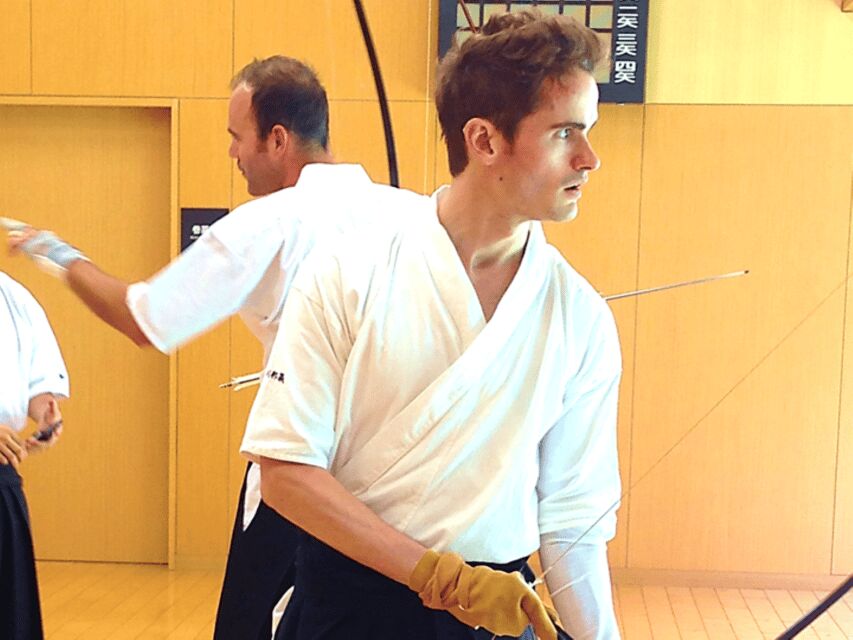
This is the kind of Kyudo experience that matters because the setting is real. You’re in an official Kyudo hall, and the range is a genuine competition range. That difference sounds simple, but it changes everything about your expectations.
In a staged, tourist-style setup, people often just get one demonstration and a token attempt. Here, you’re practicing in the same type of environment where form, distance, and control actually mean something. You also might find yourself practicing alongside regular archers, which helps the whole session feel grounded in the tradition rather than performed for visitors.
For me, the biggest win is confidence. When you shoot at a real range in a real hall, you understand what Kyudo feels like when it’s done with proper spacing and a real target setup. That makes your first day feel less like a souvenir and more like the beginning of a skill.
You can also read our reviews of more tours and experiences in Tokyo.



Getting dressed: the dōgi uniform and bow fitting that actually matters
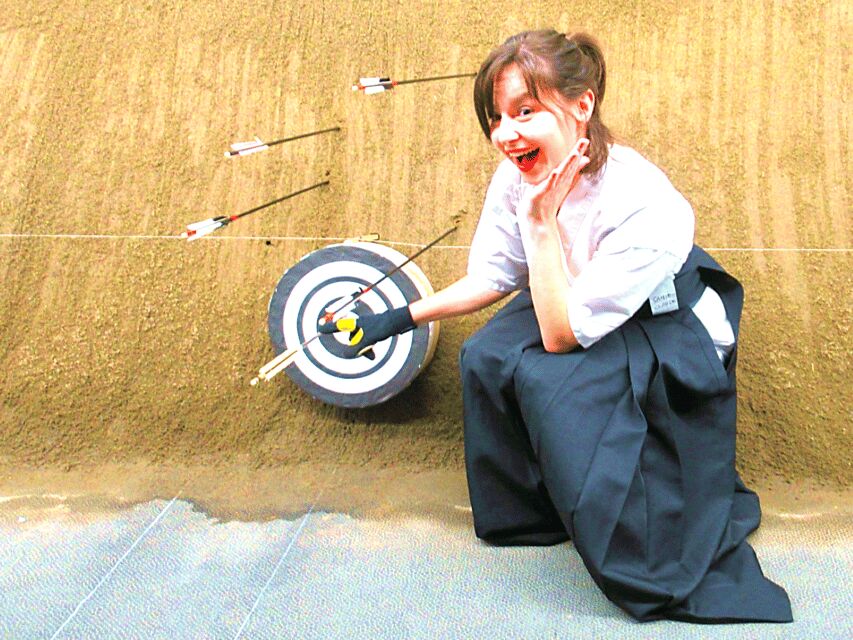
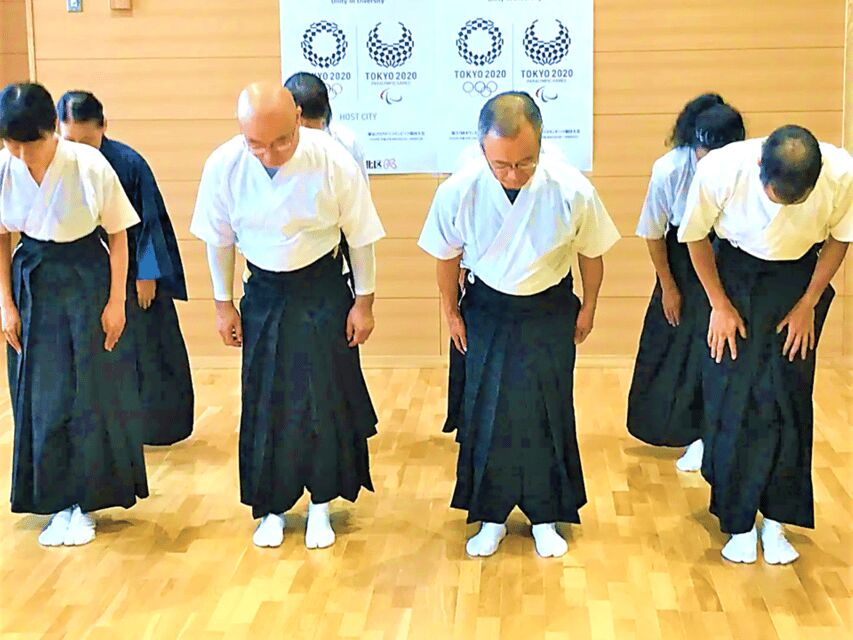
Kyudo has a look, and you wear it. You don’t just put on a costume; you put on a traditional Kyudo uniform (dōgi), and then you’re matched with a bow and arrows for your body.
That bow-and-arrows fitting is a big deal for beginners. Kyudo depends on balance and the right setup for your size, so having gear that fits you well helps you focus on the movement rather than fighting equipment. If you’re in good shape and flexible, you’ll also be able to hold the posture without feeling like the outfit is fighting your arms or shoulders.
There’s one practical consideration you should take seriously: the dōgi is designed for Japanese body types. If you have larger arms or your weight is over 150 kg, the uniform might not fit. In that case, you may need to participate in regular clothing.
Also note: the experience is not for wheelchair users, so plan on moving and standing comfortably for the session.
The DAN master lesson: how your shooting motion gets explained in English
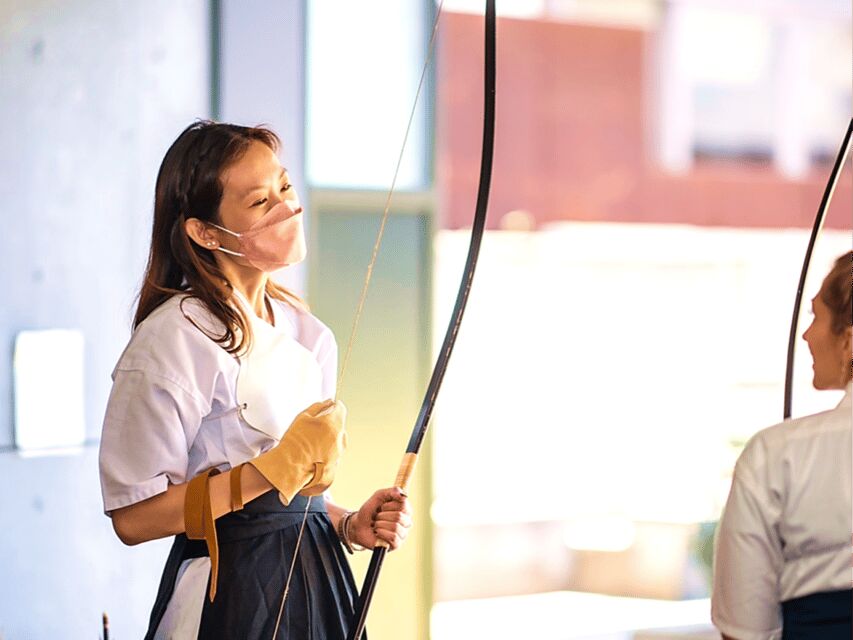
Kyudo is elegant, but the mechanics are precise. A big part of why this class works is the instruction style. Your motion is explained by a Japanese DAN master, and it’s carefully taught so you can understand the sequence even if you don’t speak Japanese.
Expect a focus on the whole shooting motion, not just the release. Reviews from recent sessions point to clear explanations about the clothing and the sport itself, then step-by-step guidance for shooting. One instructor described by name in the available feedback is Jun, noted for being attentive and engaged, and for teaching with enough energy that you stay motivated even when you miss.
Here’s what you should take from that: Kyudo isn’t “just aim and shoot.” It’s technique plus calm. The instructor’s job is to help you build the motion in the right order, so your body learns the pattern. When it clicks, your shot starts to feel more repeatable, even on your first day.
150 minutes of shooting: why you get dozens of attempts
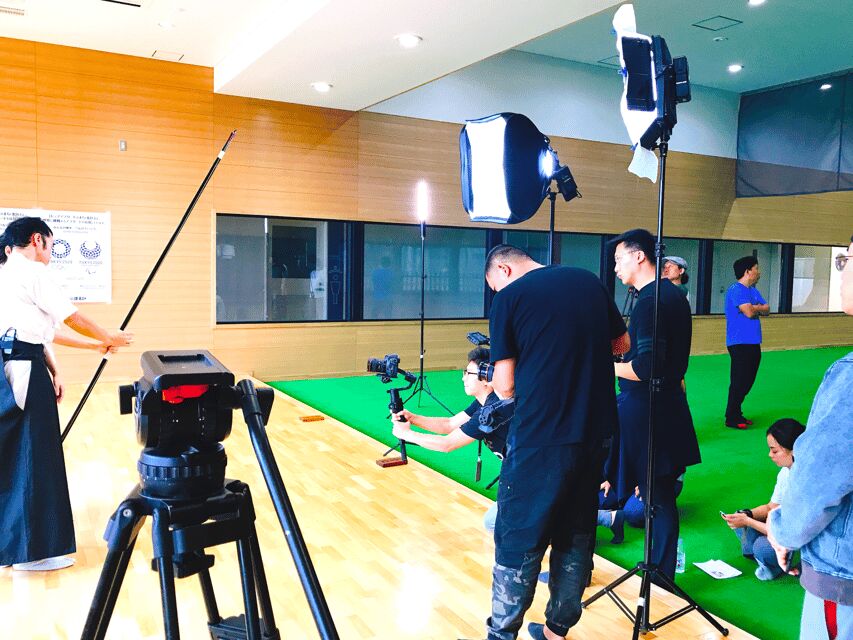
The session runs about 150 minutes, and you’re not rushed. You get enough time to try dozens of times, not just a small number of attempts.
That time is what turns Kyudo from intimidating into doable. Your first shots might be off-center, and that’s normal. You may not hit the target right away. But because you have repeated tries, you can adjust based on feedback and your own observations—without the stress of a single-shot experience.
You’ll get advice on improving your movement. The instructor will help you refine what you’re doing wrong and confirm what you’re doing right. In feedback from past participants, people specifically called out that they were able to shoot straighter with tips, and that sometimes the arrow even goes into the target area when luck meets correct form.
If you like hands-on practice, this format is the best kind of beginner-friendly. You don’t just “experience” Kyudo for an hour. You actually practice it.
The Zen part you can feel: dynamic ZEN focus at the release
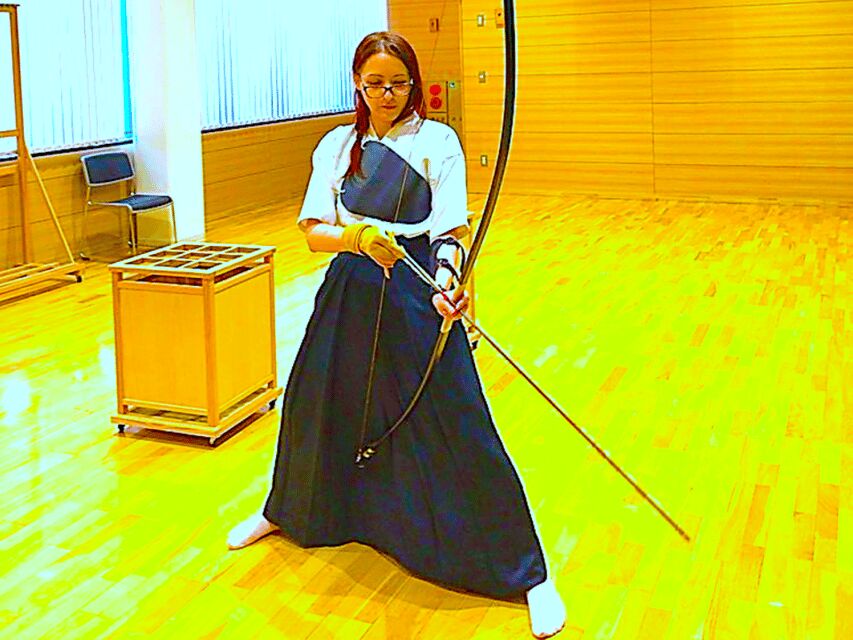
Kyudo is often described in Japan as a dynamic form of Zen meditation. That sounds poetic, but you’ll experience the idea physically.
The calm part starts with posture and breath. Your job is to keep your mind quiet while executing a controlled sequence. Then the moment the arrow leaves your hand, you get a very direct response to your movement. With Kyudo, you can’t hide behind sloppy technique; your release is the end of the chain.
Most people walk into Kyudo expecting to master accuracy. The real surprise is learning how much the motion and focus determine the result. Even when the arrow doesn’t land where you wanted, you can usually tell what part of the sequence changed. That makes it less about guessing and more about training awareness.
If you’re the type who likes mindful sports—things where form and attention matter—you’ll probably enjoy this more than you expect.






Small group of 5: the difference between waiting and getting coached
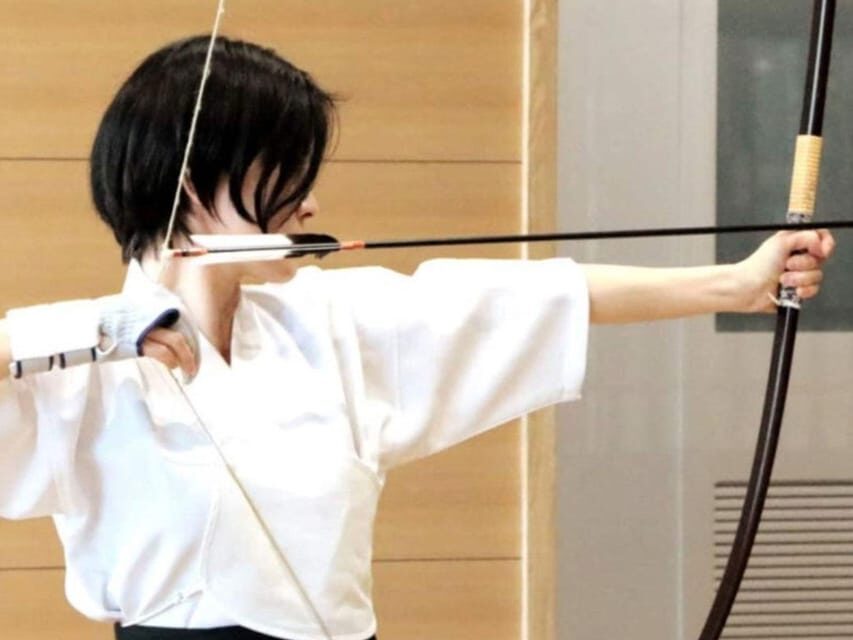
This is limited to 5 participants, which is exactly the size where coaching works.
With a small group, you’re less stuck waiting while others shoot. You can receive guidance when you need it, and the instructor can correct what you’re doing without the class turning into a production line.
It also makes the experience feel more personal. People in the available feedback described the instructor as patient and encouraging, with the energy to keep everyone engaged. That matters because Kyudo can feel slow and technical at first. When the instructor keeps the pace supportive, you stay willing to try again.
And because this is an actual hall with a real range, there’s no sense of chaos. Everyone follows the rules and stays focused, which also supports that quiet, concentrated mindset.
Logistics that can catch you off guard: meeting place, timing, and photos
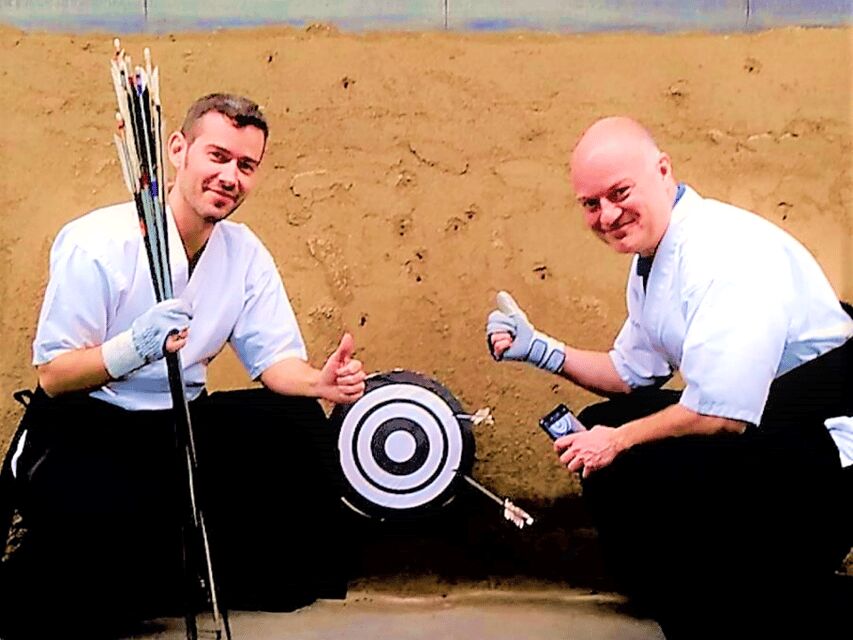
Plan like you’re showing up to a serious practice session, not a casual attraction.
First, your meeting point is not at Tokyo Station. The facility changes depending on the day, and after you reserve, you’ll be told the meeting place a few days before the event. If you’re late, you cannot join. The experience also departs on time, so build in buffer time.
Second, photography and video are restricted inside the archery facility. You’ll need to follow the guide’s directions.
Finally, the rules are clear: intoxication isn’t allowed, and unwell participants won’t be permitted. If you’re sick, skip it that day, since there’s no refund noted for those cases.
If you’re the type who likes to wander close to your schedule, this one requires a little more discipline. But that discipline helps make the training environment work.
Price and value: is $122 fair for real Kyudo?
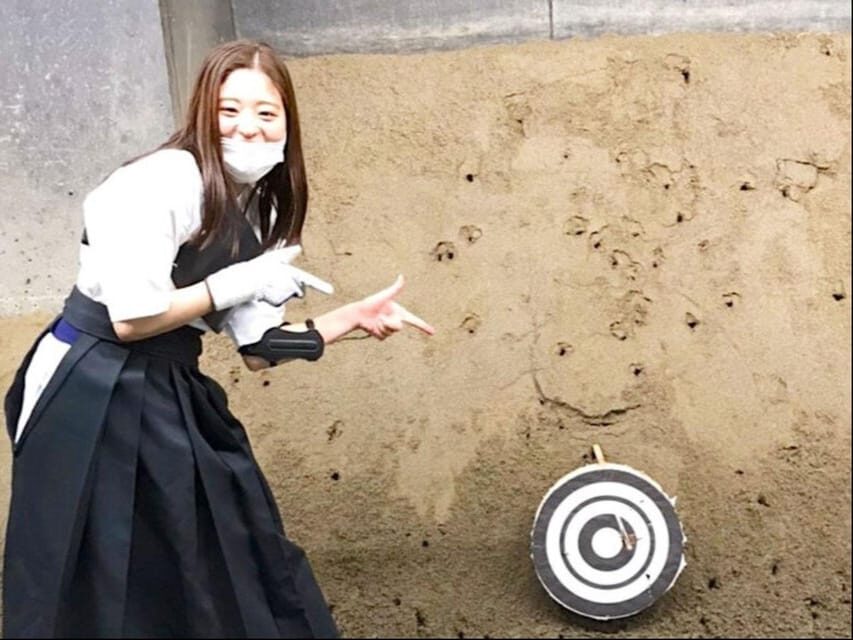
At $122 per person for about 150 minutes, you might wonder if it’s a lot. I think the value comes from what’s included and what you’re actually doing.
You’re paying for:
- the experience fee
- the facility usage fee
- rental for a complete set of tools (so you aren’t sorting gear on your own)
And most importantly, you’re paying for a real Kyudo hall and a real competition range, plus instruction by a DAN master in English. That combination is what most “try archery” experiences in Tokyo don’t deliver. Many offer a short intro with limited practice and a staged environment. Here, you get real training conditions and repeated shooting time.
Also, the small group size supports value. If you’re only one of a handful of people, you’re more likely to benefit from corrections, instead of just doing shots and hoping you improve.
Who should book this Kyudo experience, and who should skip
This is a strong choice if:
- you’re 13 years or older
- you want a more authentic Japanese martial arts experience
- you like structured coaching and repetition
- you’re comfortable standing and moving during the session
- you want enough time to shoot many times, not just once or twice
It’s not a good fit if:
- you’re under 13
- you use a wheelchair (it’s not suitable)
- you have a cold or are unwell
- you’re likely to have trouble with dōgi fit (especially if your arms are large or your weight is over 150 kg, since the uniform may not fit)
One more practical note: if you want to enter the venue without participating in Kyudo, there’s an additional fee you must request in advance. People who haven’t paid won’t be admitted.
Tips so your first session goes smoothly
Kyudo rewards preparation. Here are the things that help right away, based on how the session is run:
- Arrive early and stay on time. Late means no participation.
- Expect to learn the full motion, not just release. Give attention to the form sequence the instructor explains.
- Go in ready for misses. You’re likely not perfect on your first day, and that’s part of the learning curve.
- Follow the photo/video rules. If you want to record, ask what’s allowed instead of guessing.
- Plan for clothing fit. If you’re concerned about dōgi sizing, think about whether regular clothing participation would work for you.
And if you’re worried you’ll feel awkward: the pace and coaching are built for beginners. People come away feeling motivated to practice more, not just satisfied with a one-off activity.
Should you book this Kyudo experience in Tokyo?
I’d book it if you want the real Kyudo setting—official hall, real competition range, and enough time to shoot dozens of arrows with English coaching. The format makes it beginner-friendly without watering it down.
Skip it if strict timing and facility rules are stressful for you, or if you’re not feeling well. Also pass if you’re counting on wheelchair access, since it’s not suitable.
If you want a Tokyo activity that feels authentic and gives you something practical to take home—focus, posture awareness, and technique you can compare against later—this is the one.
FAQ
How long is the Tokyo Kyudo experience?
The experience lasts about 150 minutes.
How much does it cost per person?
The price is listed as $122 per person.
What group size should I expect?
It’s a small group limited to 5 participants.
Is this class beginner-friendly?
Yes. The program is designed to be enjoyable even for people new to Kyudo, and the DAN master explains the motion carefully in English.
Where do I meet, and is it near Tokyo Station?
The meeting point is not Tokyo Station. The specific facility can change by day, and the meeting place is shared after reservation a few days before the experience.
Can I participate if I don’t want to shoot?
If you want to enter the venue without participating in Kyudo, you must pay an additional fee in advance. If you haven’t paid, you won’t be admitted.
Is photography or video allowed inside the facility?
Photography and video recording are restricted. You need to follow the guide’s instructions.
What are the age and health requirements?
You must be at least 13 years old. People who are unwell or under the influence of alcohol will not be permitted to participate.