Tokyo turns into a camera-ready puzzle.
This 2.5-hour Tokyo photography workshop takes you through skyscraper districts with a real focus on how to see the city: steel-and-glass architecture, quiet side streets, and dramatic interior lines at the Tokyo International Forum.
I especially like the way the instructor coaches composition on the move. You get practical guidance while you’re actually shooting, not just listening about cameras. I also like that it’s a small group, capped at six, so you’re more likely to get personal feedback rather than being lost in a crowd.
One thing to consider: this experience runs on foot and you’ll likely walk about 2 km, plus it needs good weather to run. If you’re hoping for lots of sitting breaks or you hate walking in Tokyo’s big-city rhythm, plan for that.
In This Review
- Key Takeaways Before You Go
- Why This 2.5-Hour Tokyo Photo Walk Works
- Meeting at Shinbashi: Your Start Point and How the Day Flows
- Shiodome Siosite: Steel-and-Glass Architecture and Framing Practice
- Ginza Back Alleys: Street Photography With Lines, Patterns, and People
- Tokyo International Forum: Dramatic Interior Challenges
- The Coaching: Composition, Timing, and Camera Settings You Can Reuse
- Price and Value: What $158.52 Buys You in Tokyo
- Who This Workshop Is Best For
- Should You Book This Tokyo Photography Workshop?
- FAQ
- How much is the Tokyo Metropolis photography workshop?
- How long is the tour and how much walking is involved?
- Where do I meet the guide in Shimbashi?
- Where does the tour end?
- What areas of Tokyo will we photograph?
- Is it suitable for beginners?
- What happens if the weather is bad?
Key Takeaways Before You Go
- Small group size (max six): more time for your questions and quick feedback.
- Shiodome Siosite in morning light: steel-and-glass views designed for framing practice.
- Ginza street photography with real street life: back alleys, reflections, and everyday movement.
- Tokyo International Forum interior: a setting built for dramatic angles and visual challenges.
- Hands-on teaching from a local pro: composition, timing, and camera settings in practical moments.
- Ends in Marunouchi area: you’re positioned to continue exploring by train.
Why This 2.5-Hour Tokyo Photo Walk Works
Tokyo is full of iconic sights, but seeing the city well with a camera is a different skill. This workshop is built around teaching you how to look: how to frame buildings, how to use lines and reflections, and how to turn everyday scenes into photos with a point of view.
The route keeps you in modern Tokyo neighborhoods—Shiodome, Ginza, and Yurakucho—so you can focus on architecture and street scenes without wasting time on long transit hops. You’ll spend enough time at each spot to try different angles, not just snap and move on.
And the teaching style matters. Guides named Stephane and Lukasz (and other instructors) are described as friendly, patient, and practical—giving advice on camera settings, timing, and how to craft a story from what’s around you.
You can also read our reviews of more tours and experiences in Tokyo.



Meeting at Shinbashi: Your Start Point and How the Day Flows
You start at SL Square (Shimbashi Station West Entrance Square) near the station’s Steam Locomotive, with a 10:00 am start time. That’s convenient because Shinbashi is easy to reach from a lot of Tokyo, and you won’t be scrambling to find the group.
The whole tour runs about 2 hours 30 minutes and includes an average walking distance of roughly 1.3 miles (2 km). That’s a manageable amount for most people, but it’s enough walking to feel like a real Tokyo stroll rather than a short photo stop.
You end near Anthony Caro’s Barcelona Ballad in Marunouchi (and the Yurakucho area is also well set up for train connections). Translation: you’re not stuck far from transit once the workshop ends.
Shiodome Siosite: Steel-and-Glass Architecture and Framing Practice
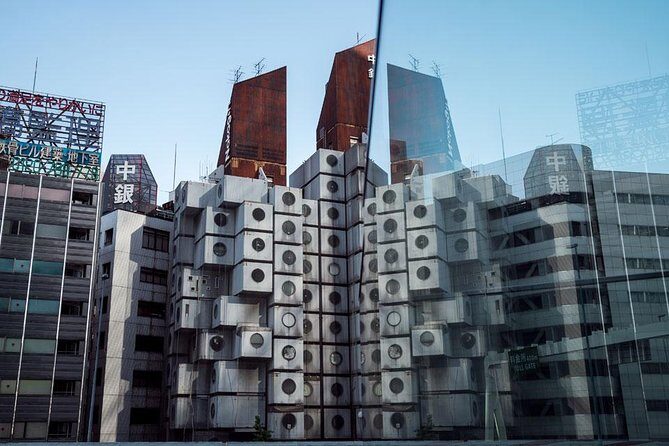
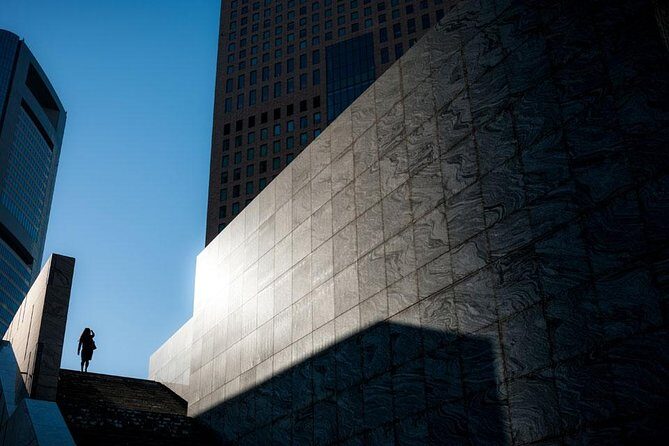
Your first major photo time is in the Shiodome business district, centered around Shiodome Siosite. This stop is about photographing skyscraper districts by morning light, which matters because reflections and highlights can make glass towers look crisp and dimensional instead of flat.
This is where the workshop starts teaching the basics of how to see. You work on composition skills—specifically framing a scene—so instead of aiming at the tallest building, you learn to decide what belongs in the photo.
You’re also taught to use your surroundings to create a story. That means thinking beyond the facade: how people and activity relate to the architecture, how the environment guides your eye, and how to avoid photos that are technically fine but visually empty.
What you’ll likely love here is the simple fact that Shiodome gives you structure: clean lines, dramatic edges, and plenty of angles for practicing line and reflection ideas.
Ginza Back Alleys: Street Photography With Lines, Patterns, and People
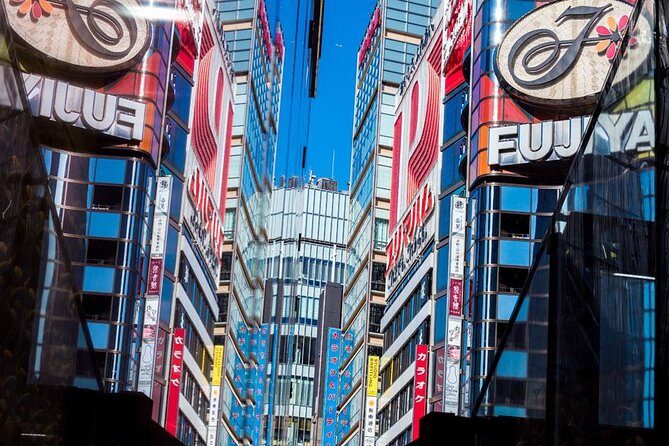
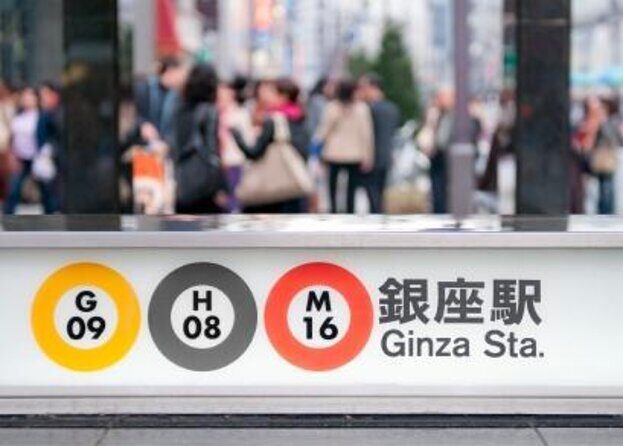
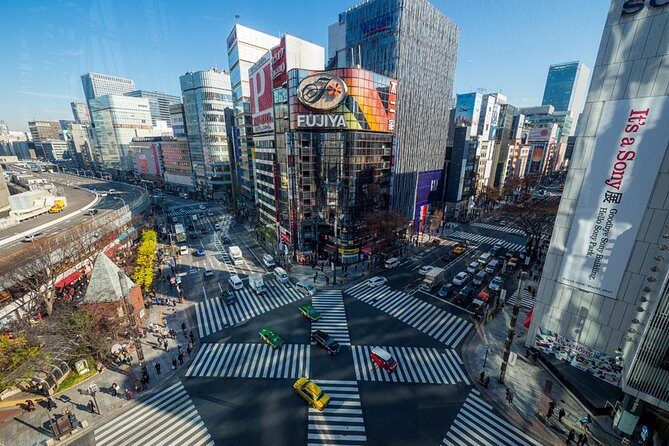
Next you head into Ginza, one of the most photogenic places in Tokyo if you focus on details. This portion leans into architecture and street photography, with time spent around tiny back alleys and smaller pockets of street life you might miss if you only stick to the main avenues.
This isn’t only about buildings. You’ll encounter people doing their day-to-day work—like cooks, wait staff, and salarymen—so you can practice photographing human scale alongside modern city design. In other words, you’re not just shooting Tokyo as a machine; you’re shooting Tokyo as a place where life happens under the glass towers.
Ginza also rewards photographers who enjoy geometric thinking. If you’re chasing lines, patterns, and reflected light, this is a great match. In past experiences with instructors like Exel and Stephane, the feedback is that guides are careful about positioning so you get good angles without blocking pedestrians.
The drawback to keep in mind: Ginza is busy, so if you get stressed by crowds, you’ll want to keep your expectations realistic and focus on what your guide helps you find, not what you wish was quieter.
Tokyo International Forum: Dramatic Interior Challenges
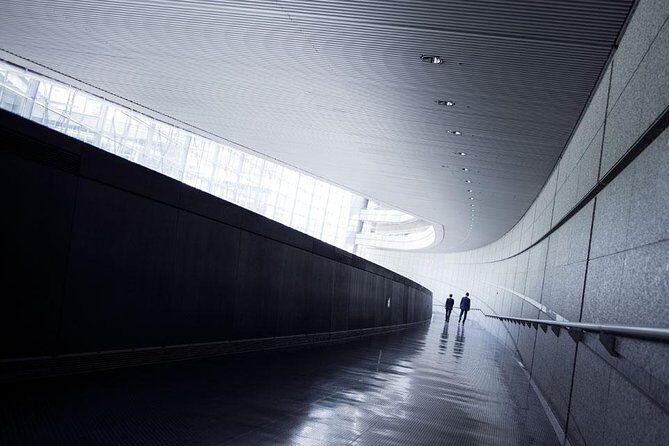
The final major photography stop is Yurakucho, centered on photographing inside the Tokyo International Forum. This is one of the most useful contrasts in the whole day: earlier stops focus on exterior skyscraper views, and this one pushes you into interior architecture and controlled visual composition.
Inside, you’ll run into more photographic “challenges”—the kind that force you to think about angles, framing, and how light behaves in a building. It’s also a different kind of subject: instead of shooting what’s immediately visible from the street, you’re asked to work within the Forum’s interior geometry.
This is where the workshop’s instruction often clicks for beginners and improves skills for more advanced photographers. You practice translating architecture into images with a clear mood: clean lines, strong perspective, and carefully chosen framing.
A practical plus: you can easily continue by train from the broader Yurakucho area once the workshop ends, so the day doesn’t feel like it traps you in one neighborhood.




The Coaching: Composition, Timing, and Camera Settings You Can Reuse
The best part of this type of Tokyo photography workshop is the teaching that transfers to your next walk. Here, you’re not only told what to shoot; you’re taught how to decide.
Based on the guidance described in prior sessions, the instructor focus tends to include:
- Composition: framing a scene so it reads clearly, not just filling the viewfinder with buildings.
- Timing: when to shoot so light and movement help your photo.
- Camera settings: practical adjustments based on what you’re photographing.
- Storytelling: using environment and people to give the image a point of view.
- Photo feedback: checking images and explaining how to improve the next attempt.
In guides like Lukasz and Stephane described as enthusiastic and very approachable, the pattern is consistent: they’re patient with amateurs and still give thoughtful advice to serious shooters. One review-style theme is that they explain things in a way you can actually apply right away, then help you troubleshoot on the spot.
If you’re brand new, you’ll likely appreciate that this workshop doesn’t treat you like you should already know photography jargon. If you’ve been shooting for years, you still get new ways to look at modern Tokyo architecture—especially around lines, reflections, and finding angles you wouldn’t stumble upon alone.
Price and Value: What $158.52 Buys You in Tokyo
The price is $158.52 per group (up to 2), for about 2.5 hours with a professional photography instructor. That pricing structure is important: it’s not automatically “per person,” so it can be a strong deal if you travel as a pair.
You’ll also be getting more than basic sightseeing. The stops are built around photography themes—steel-and-glass exteriors, street-level architecture details, and interior architecture challenges. That focus helps you squeeze real learning out of a short Tokyo schedule.
Another value factor: admissions at the key stops are listed as free, which removes a common cost barrier for workshops that include a venue. Also, the group limit of six supports the “hands-on” feel, which is usually what justifies the cost for a photography class in a major city.
If you’re traveling solo, this can still be worthwhile because you get small-group coaching. But the value peaks if you bring a friend or partner and split the group price.
Who This Workshop Is Best For
I’d point this workshop at anyone who wants to photograph Tokyo architecture and street life but feels stuck in “auto mode” or in the habit of shooting whatever looks impressive.
It’s also a good match if you:
- Want a structured route in modern districts like Shiodome and Ginza.
- Like the idea of learning composition, not just collecting souvenir photos.
- Enjoy walking while photographing, since the route is about 2 km on average.
- Have a basic camera already and want help with settings and timing.
If you hate crowds, you might still manage it, but Ginza can be busy. If you’re only interested in very old Tokyo or quiet countryside scenes, this tour is more focused on modern Tokyo design.
Should You Book This Tokyo Photography Workshop?
Book it if you want a short, skill-focused way to see Tokyo’s architecture up close—especially if you value hands-on coaching and want images that look intentional, not accidental. The small group size makes it easier to ask questions and get feedback, and the route hits three strong photography environments: exteriors in Shiodome, street geometry and people in Ginza, and interior structure at the Tokyo International Forum.
Skip it (or wait for a better fit) if walking a couple of kilometers in a busy city is a deal-breaker for you, or if you’re visiting during a time when weather might be unreliable. This experience requires good weather, and if it can’t run, you’ll be offered another date or a full refund.
FAQ
How much is the Tokyo Metropolis photography workshop?
It costs $158.52 per group, up to 2 people, and the duration is about 2 hours 30 minutes.
How long is the tour and how much walking is involved?
The tour is approximately 2 hours 30 minutes, with an average walking distance of about 1.3 miles (2 km).
Where do I meet the guide in Shimbashi?
Meet at SL Square (Shimbashi Station West Entrance Square) near the Steam Locomotive at Shinbashi station. The start time is 10:00 am.
Where does the tour end?
The tour ends at Anthony Caro’s Barcelona Ballad in Marunouchi, Chiyoda City.
What areas of Tokyo will we photograph?
You’ll photograph Shiodome (Shiodome Siosite), Ginza, and Yurakucho, including the interior of the Tokyo International Forum.
Is it suitable for beginners?
Yes. The workshop is described as perfect for both novices and more advanced photography lovers, and most travelers can participate.
What happens if the weather is bad?
This experience requires good weather. If it’s canceled due to poor weather, you’ll be offered a different date or a full refund.