REVIEW · KYOTO
Full day Kyoto Walk in Fushimi, Arashiyama, Monkey, and Kinkakuji
Book on Viator →Operated by Japan Tour Adventure · Bookable on Viator
One Kyoto day, four famous moods. This full-day walk strings together Fushimi Inari, Arashiyama, a real monkey encounter, and the Golden Pavilion without you having to build an itinerary or fight your way through transit. A bilingual guide handles the navigation, pacing, and on-the-ground explanations so you spend your energy looking, not figuring out where to go next.
I like two things most: first, the experience covers the big-ticket stops with included admission to Tenryu-ji, Monkey Park Iwatayama, and Kinkakuji, so you are not juggling extra planning on the fly. Second, the guides (I’ve seen names like Remi/Remy, Tom, and Christophe) tend to be entertaining and practical, with commentary that helps the sites make sense—and one review even called out crowd-avoiding timing. The main drawback to plan for is physical: it’s a walking day, and the Monkey Park has a steep uphill hike (15–20 minutes), so it’s not a great fit if you have knee or leg issues.
In This Review
- Key Things That Make This Day Tour Work
- Why This Kyoto Walk Feels Efficient (and not just busy)
- Starting at Fushimi Inari: Meeting the Fox at Kitsunezo
- Fushimi Inari Taisha: Thousands of Torii and a Shrine With Momentum
- Arashiyama Bamboo Forest + Tenryu-ji: Zen Gardens Next to the Drama
- Arashiyama Time on the Main Street and Togetsukyo Views
- Monkey Park Iwatayama: Wild Macaques, One Steep Climb
- If you do not want the monkey park
- Kinkakuji Golden Pavilion: Gold Leaf and the Pond Reflection
- Guide Power: How Remi, Tom, and Christophe Improve Your Day
- Walking, Trains, and IC Cards: The Practical Stuff That Saves You Stress
- Price and Value: What You’re Really Paying For
- Should You Book This Kyoto Walk in Fushimi, Arashiyama, Monkey Park, and Kinkakuji?
- FAQ
- How long is the Kyoto full day tour?
- Where do I meet the guide?
- What’s included in the ticket price?
- Is transportation included?
- Is lunch included?
- Do I have to visit Monkey Park Iwatayama?
- How difficult is the hike to Monkey Park?
- What time should I arrive at the meeting point?
- What is the cancellation policy?
Key Things That Make This Day Tour Work
- A tight route through Kyoto’s most recognizable neighborhoods: Fushimi, Arashiyama, and Kinkakuji in one day
- Tickets for the paid highlights are included: Tenryu-ji, Monkey Park, and Kinkakuji
- Small-group pacing (about up to 12, capped at 10 per listing details) keeps the day feeling manageable
- Monkey Park is optional in a practical way: you can skip it and rejoin in Arashiyama at a set time/location
- Real local walking + public transit means you experience neighborhoods like a visitor, not a bus bubble
Why This Kyoto Walk Feels Efficient (and not just busy)
This tour is built for people who have one day in Kyoto and want the headline sights, done in the order that makes sense. The duration is listed as about 8 hours, and it can run roughly 30 minutes before or after the estimated time. That matters because Kyoto does not move at a predictable pace—lines, crowds, and train connections can all shift—so you want a tour that expects that reality.
The other efficiency trick is the guide’s job: you meet at a specific spot, then the day becomes a sequence of guided transitions rather than a scavenger hunt. It’s a walking tour using public transportation, not a bus route. That sounds simple, but in practice it means the day feels more connected to how Kyoto actually works: stations, short transfers, and walking between sights.
Group size also matters. This is not private. It can be up to 12 people in a shared format, and the cap is listed as 10 travelers in the experience details. Either way, you should expect a small group where the guide can keep track of everyone and give you enough breathing room to stop, look, and take photos.
You can also read our reviews of more walking tours in Kyoto


Starting at Fushimi Inari: Meeting the Fox at Kitsunezo
Your morning begins right where Kyoto’s Inari story starts: at the fox statue called Kitsunezo near JR Inari Station. The timing is important. You’re asked to arrive 15 minutes early, because other groups mean the guide can’t wait if you are late—and late arrivals cannot join and are not refunded.
Once you’re grouped up, the day shifts quickly into shrine mode. Fushimi Inari is one of those places where the details matter: the whole experience is shaped by movement up and through thousands of torii gates. Even if you do not climb all the way, the feeling comes from walking the approach in the same flow the shrine is designed for.
Tip: wear shoes you can trust for a lot of steps. This tour is not just “see and leave.” It’s built around walking.
Fushimi Inari Taisha: Thousands of Torii and a Shrine With Momentum
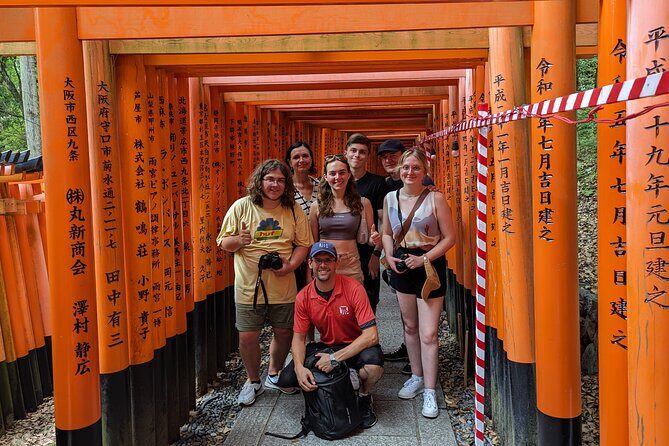
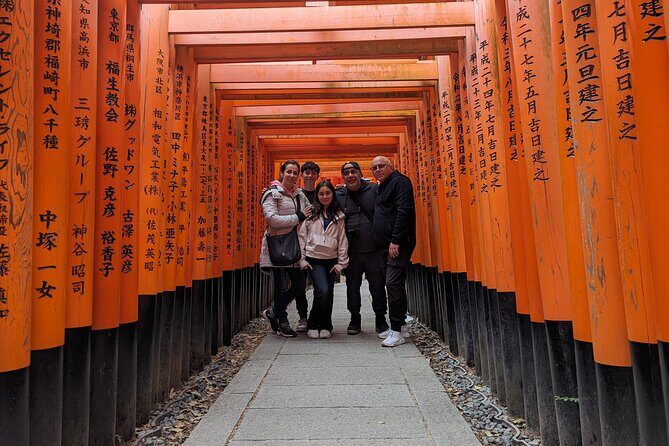
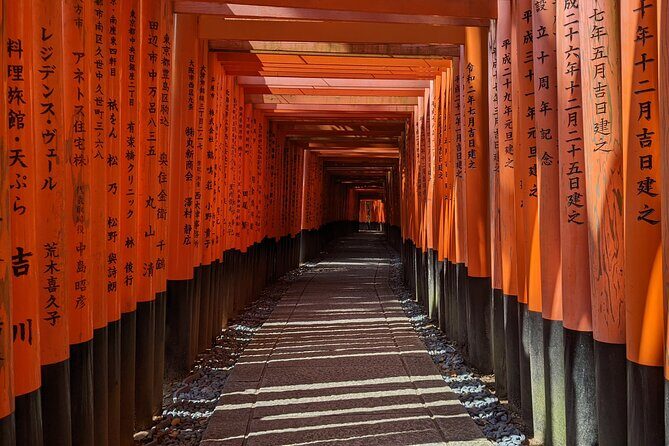
The tour spends about 1 hour 30 minutes at Fushimi Inari-taisha, and the big draw is obvious: those vermillion torii gates winding up Mount Inari. What’s less obvious—until someone points it out—is how layered the place feels even before you reach the higher paths. You’ll notice shrine architecture, the rhythm of gates, and the way viewpoints change as you move.
Since admission is listed as free, you are not paying extra to access the main experience. That means your time is the real “cost,” and having a guide helps you make that time count. Instead of trying to guess what matters most, you’re there to see the core shrine atmosphere first, then move on while the day still has plenty of energy left for Arashiyama and Kinkakuji later.
If you like spiritual sites but hate wandering in circles, this is a good fit. The day moves with purpose.
Arashiyama Bamboo Forest + Tenryu-ji: Zen Gardens Next to the Drama
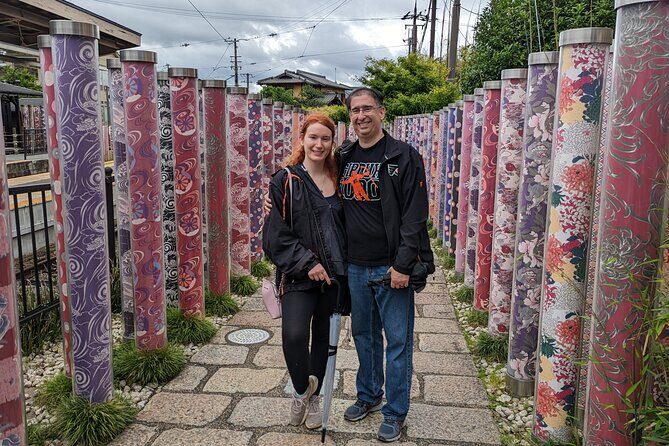
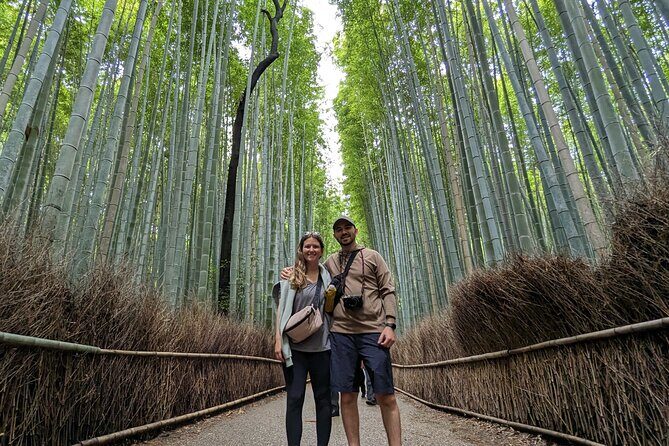
After Inari, the mood changes fast. You head to Arashiyama Bamboo Forest for about 1 hour 20 minutes. This is one of those Kyoto scenes that looks like it belongs in a movie, but the real magic is physical: the stalks are tall, the path funnels you forward, and the whole place feels cool and quiet compared with the streets.
Just next door is Tenryu-ji, a UNESCO World Heritage Site and one of Kyoto’s significant Zen temples. You get about 40 minutes there, and the entrance ticket is included. Even in a shorter visit, Tenryu-ji is worth it because Zen temples are not about doing everything quickly—they’re about noticing what you’re surrounded by: the gardens, the layout, and how the space encourages pauses.
One practical angle: Tenryu-ji is included, so you’re not stopping mid-day to figure out pricing, timing, or ticket lines. Your guide’s pacing helps keep this segment from turning into a “next, next, next” checklist.
Arashiyama Time on the Main Street and Togetsukyo Views
You then get about 45 minutes in Arashiyama to explore the area around the main street. This is one of the better parts of the structure because it gives you room to breathe. You’re not forced into constant movement.
Lunch is optional but supported. You can either use the time for free exploration or join the guide for a lunch slot at a restaurant where you can skip the line. That’s a real value-add in Kyoto, where meal queues can be longer than you expect. The tour also notes time to rest while eating, which matters on a full-day itinerary.
Then you’ll cross Togetsukyo Bridge for the river view. It’s a straightforward stop, but it gives you a change of scenery and a good photo moment—Kyoto often works best for pictures when you mix temple details with broader river-and-bridge angles.
A few more Kyoto tours and experiences worth a look

Monkey Park Iwatayama: Wild Macaques, One Steep Climb
This is the part of the day that needs the most honest prep. Monkey Park Iwatayama gets about 1 hour 10 minutes, and the entrance ticket is included. But the access includes a short hike of 15–20 minutes on a steep path. The tour explicitly warns you to wear comfortable shoes and be in reasonable physical condition—and it also says this tour is not recommended for people with leg/knee problems.
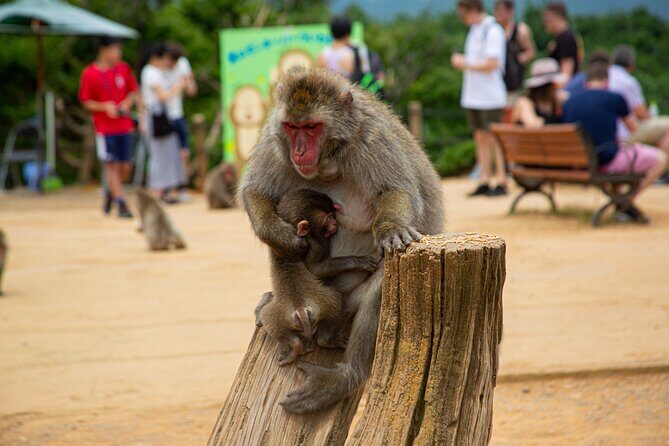
The payoff is the iconic scene: you’ll reach the top area and get sweeping views plus a fun encounter with Japanese macaques. In reviews tied to this tour experience, people mention taking lots of great photos and enjoying the monkey time—so if animals are your thing, this stop is often the emotional highlight of the day.
If you do not want the monkey park
Good news: you do not have to do it. The tour notes that if you do not wish to go, you’ll have free time around Arashiyama with a specific meeting time/location to catch up with the group returning from Monkey Park. That’s a big deal because you can keep the day balanced—temples and bamboo if that’s what you want—without making it awkward.
Still, make sure you’re clear on the meeting point instructions the guide provides that day.
Kinkakuji Golden Pavilion: Gold Leaf and the Pond Reflection
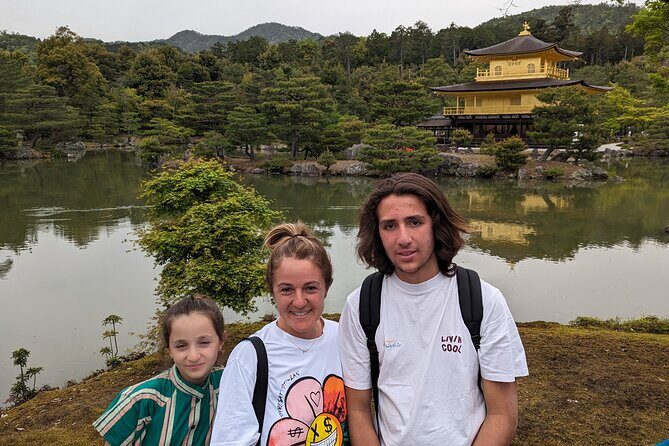
You end with Kinkakuji Temple, also known as the Golden Pavilion. You get about 2 hours, and the entrance ticket is included. The temple’s most famous feature is clear: the top floors are covered in gold leaf, and the reflection in the surrounding pond is a huge part of the visual experience.
This is also where the day’s timing becomes important. The description notes that the reflection can be mesmerizing, especially in the afternoon. Since the tour is designed as a full-day arc, you’re arriving with enough daylight and momentum for Kinkakuji to land properly.
Photography lovers usually love this stop, because it offers both close-up details (the gilded architecture) and classic wider compositions (the pond reflections). You’re also given time to slow down here—2 hours is generous compared to the earlier segments.
After Kinkakuji, the tour ends when you get back to Kyoto Station, or you can leave directly after the last stop if you prefer.
Guide Power: How Remi, Tom, and Christophe Improve Your Day
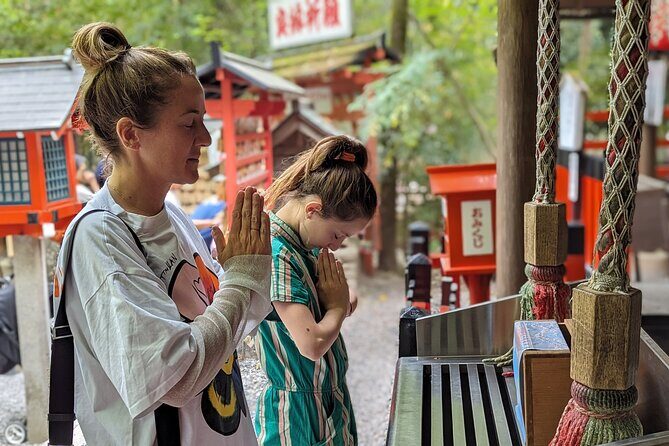
A “highlights” day can turn into noise if the guide is just reading off plaques. Here, the reviews and the structure point to the opposite: you get a guide who is local and bilingual, and who uses the walking time for real explanation.
I’ve seen names like Remi/Remy and Tom, plus mention of Christophe in responses, which tells me this is a team-run experience rather than a rotating random script. The key value is that the guide helps you connect each place to Japanese culture and daily life—so Fushimi Inari is not just pretty torii, Arashiyama is not only bamboo photos, and Kinkakuji is not only gold.
One review also mentioned crowd-avoiding timing, which is exactly what you want on a one-day plan. Kyoto’s most famous sights pull in everyone, but timing and pacing can reduce how long you feel stuck.
Walking, Trains, and IC Cards: The Practical Stuff That Saves You Stress
This tour is a walking tour using public transportation. Transportation is not included. Instead, you’re meant to use an IC card, and Suica or ICOCA is recommended. If you’ve never used one in Japan, this is an easy way to avoid buying single tickets all day and to move quickly between stations.
A couple logistics notes that matter for your comfort:
- The day requires stamina. Even if you enjoy walking, you should expect long distances and repeated stair/sidewalk transitions.
- The guide will contact you through WhatsApp on departure time if you have not arrived, so download it beforehand.
- You should get to the meeting point 15 minutes early, because late arrivals cannot join.
Also, because this is a shared group, your day might feel slightly different depending on the crowd level that day. That’s normal. Kyoto isn’t predictable; your planning just needs to be flexible.
Price and Value: What You’re Really Paying For
The price is listed as $97.87 per person for a roughly 8-hour day tour. On its face, it can sound like “just a walking itinerary.” But the value calculation changes once you look at what’s included:
Included:
- Bilingual local guide
- Tenryu-ji entrance ticket
- Monkey Park entrance ticket
- Golden Temple entrance ticket
- Souvenir pictures downloadable from a private drive
- Mobile ticket
Not included:
- Transportation (IC card recommended)
- Lunch
- Food and drinks
- Shopping
So you’re not only paying for someone to lead you. You’re paying for a guide who manages timing, reduces confusion, and takes care of the paid entries that often slow people down when they self-plan. That’s especially valuable if you have limited time in Kyoto and you’d rather avoid figuring out tickets and routes between three different areas.
If you were doing this yourself, you’d likely pay entrance fees anyway, then spend time figuring out transit and pacing. The guide’s job is to replace that mental load with stories and a smoother day.
Should You Book This Kyoto Walk in Fushimi, Arashiyama, Monkey Park, and Kinkakuji?
Book it if:
- You have one full day and want major Kyoto icons without building an itinerary.
- You like a mix of shrines, Zen temples, bamboo scenery, and one fun animal encounter.
- You want included access for Tenryu-ji, Monkey Park, and Kinkakuji, plus photo souvenirs.
Skip or swap for something else if:
- You have knee/leg limitations or you know you cannot handle a steep 15–20 minute climb to Monkey Park.
- You strongly dislike monkey encounters; while there is an option to skip the park and rejoin later, the day is still structured around that full sequence.
Final practical note: this is a walking + transit day, not a sit-back bus tour. If you come with good shoes, an IC card, and the right expectations, this is an efficient way to get a lot of Kyoto in one go.
FAQ
How long is the Kyoto full day tour?
The tour is approximately 8 hours, with the actual timing able to vary by about 30 minutes before or after the estimated time.
Where do I meet the guide?
You meet at the fox statue called Kitsunezo at the entrance to Fushimi Inari Taisha Shrine, near JR Inari Station.
What’s included in the ticket price?
Included are a bilingual local guide, admission tickets for Tenryu-ji, Monkey Park Iwatayama, and Kinkakuji (Golden Temple), plus downloadable souvenir pictures and a mobile ticket.
Is transportation included?
No. Transportation using trains and buses is not included, and the tour recommends using an IC card like Suica or ICOCA.
Is lunch included?
No. Lunch is not included, though there is an option for a lunch time with the guide and skipping the line.
Do I have to visit Monkey Park Iwatayama?
No. If you do not want to go, you can have free time around Arashiyama and rejoin the group at a set meeting time/location.
How difficult is the hike to Monkey Park?
Access to the top includes a short hike of about 15–20 minutes through a steep path, so comfortable shoes and reasonable physical condition are required.
What time should I arrive at the meeting point?
You should arrive about 15 minutes early. Late guests cannot join the tour and are not eligible for a refund.
What is the cancellation policy?
You can cancel up to 24 hours in advance for a full refund. If you cancel less than 24 hours before the start time, the amount paid is not refunded. If the minimum number of travelers is not met, you’ll be offered a different date/experience or a full refund.