REVIEW · TOKYO
Tokyo: Shinjuku Nightlife & Secret Backstreets Walking Tour
Book on GetYourGuide →Operated by Local Guide Stars · Bookable on GetYourGuide
Shinjuku at night is chaos with a plan. I love the way local guides steer you into secret backstreets and help you read Kabukicho’s neon with context, from its former red-light history to the small-corridor world of Golden Gai. The one catch: you’re walking for 90 minutes in rain or shine, so bring gear and comfy shoes.
I also like that the guides have real street-level instincts. I’ve seen names like Sota and Rinna praised for answering questions and tailoring the walk to what you care about, whether that’s food, photo spots, or Japanese etiquette. And yes, you’ll pick up a vending machine drink recommended by the guide, plus a look at those machines that feel like slot-game contraptions.
You start at the Shinjuku Station East Exit area at the Police Box (the meeting spot is the Shinjuku Station East Exit Police Box, and the guide holds a sign that says Local Guide Stars). Shinjuku is huge, so give yourself a couple extra minutes to find the right exit and regroup fast.
In This Review
- Key things I’d circle before you book
- Meeting at Shinjuku Station’s East Exit Police Box
- Guided intro near the station: getting oriented fast
- Omoide Yokocho: the lane-of-memory atmosphere
- Kabukicho: neon density and 300-plus choices
- Tokyu Kabukicho Tower (30 minutes): a higher look at the maze
- Golden Gai: tiny bars, big personality
- Hanazono Shrine at night (15 minutes): calm after the lights
- Backstreets, foot time, and pacing: how the route feels
- The vending-machine drink: included, weird, and very Tokyo
- What makes these guides work: more than facts and photos
- Price and value: why $22 can make sense in Tokyo
- Who should book this Shinjuku night walk
- Should you book the Tokyo: Shinjuku Nightlife & Secret Backstreets Tour?
- FAQ
- Where is the meeting point?
- How long is the tour?
- Does the tour run in rain?
- What’s included in the price?
- What languages are offered?
- Is the tour wheelchair accessible?
- Can I cancel and get a refund?
Key things I’d circle before you book
- A short, efficient 90-minute introduction to Shinjuku’s nighttime personality
- Guides who steer you off the main drag into alleys most people skip
- Golden Gai + Omoide Yokocho on one walk so you get the contrast between lanes and lanes
- Tokyu Kabukicho Tower time (30 minutes) for a higher-angle look at the district
- Hanazono Shrine at night for a calmer pocket after the neon
- One vending-machine drink included with a guide’s recommendation
Meeting at Shinjuku Station’s East Exit Police Box
Your walk begins at the Shinjuku Station East Exit Police Box: 新宿警察署 新宿駅東口交番 (Shinjuku, Shinjuku-ku, Tokyo). This matters more than it sounds. Shinjuku can swallow you whole—wrong exit, wrong street, and suddenly your group is halfway through the night.
Look for a guide holding a sign that says Local Guide Stars. I like this setup because it’s simple: one visible marker, one meeting point, and you’re off.
You can also read our reviews of more walking tours in Tokyo
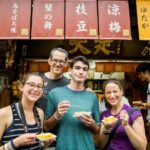
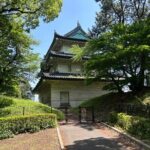
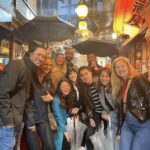
Guided intro near the station: getting oriented fast
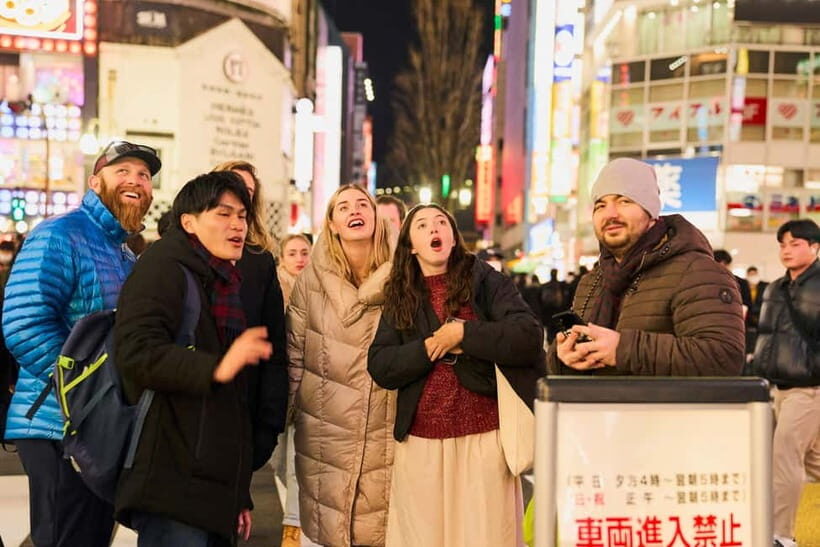
Right after you meet, there’s a short guided segment (about 10 minutes). Think of it as your mental warm-up. Your guide will usually frame what you’re about to see—how Kabukicho shifted over time into the entertainment district people recognize now, and why Shinjuku feels different after dark.
If this is your first night in Tokyo, this is gold. You’re learning the patterns: where crowds tighten, where they thin, and where you can safely take photos without getting in anyone’s way.
Omoide Yokocho: the lane-of-memory atmosphere
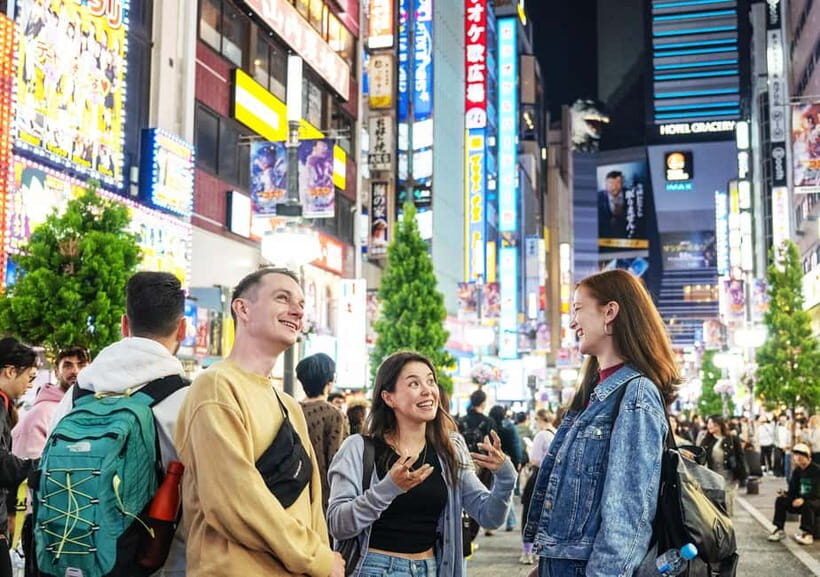
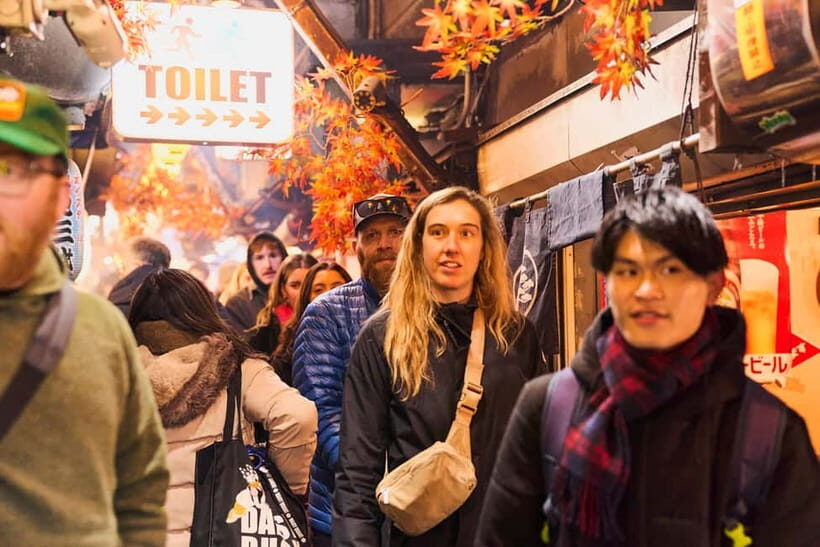
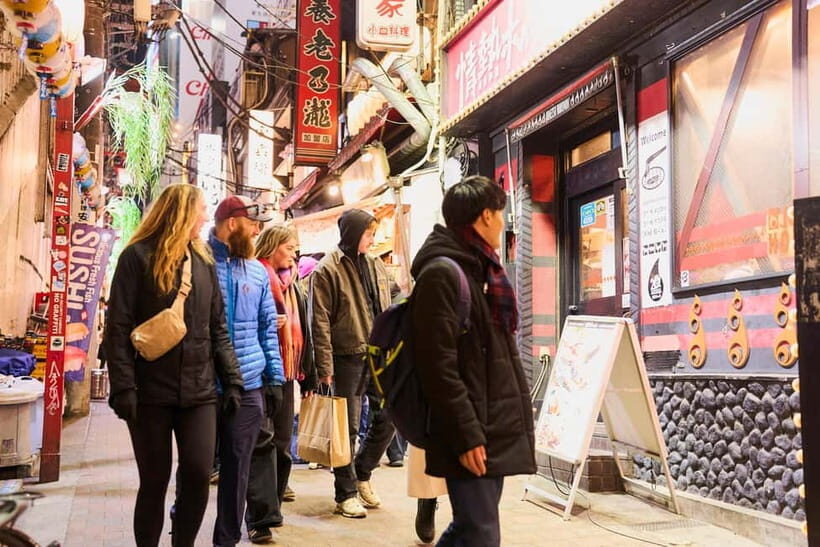
Next up is Omoide Yokocho (about 10 minutes). This is the kind of place that makes Tokyo feel layered: narrow lanes, lots of small signs, and the sense that people come here not just to eat, but to belong for a while.
What you’ll get on this stop is more than scenery. Your guide can explain what you’re looking at—how these tiny spaces work, how nightlife culture is organized differently than in Western cities, and how locals behave when they’re mid-conversation rather than posing for a camera.
One practical tip: if you’re the kind of person who wants a snack, Omoide Yokocho is where you’ll feel tempted. Try to resist ordering too fast if you’re still hungry later—your guide will point you toward options suited to the rest of the route.
Kabukicho: neon density and 300-plus choices
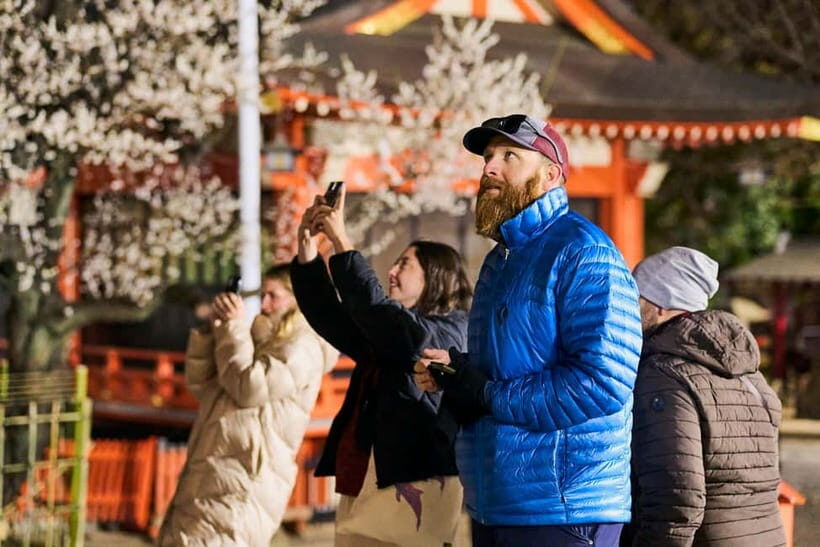
Then you head through Kabukicho (about 10 minutes). This area is packed with energy and options—your tour’s framing includes the scale: a dining and nightlife zone with roughly 300 restaurants and bars.
Here’s what I think is valuable: Kabukicho looks chaotic, but it’s not random. With a guide, you learn to spot categories—late-night bites, small bar interiors, and the difference between walk-by “street theater” and where you actually want to settle for a meal.
Your guide also ties it to the area’s past. Kabukicho’s story includes a former red-light district era, and the tour uses that history to explain why the district evolved into the entertainment hub it is today. You’re not just watching neon—you’re reading a city that changed shape.
Tokyu Kabukicho Tower (30 minutes): a higher look at the maze
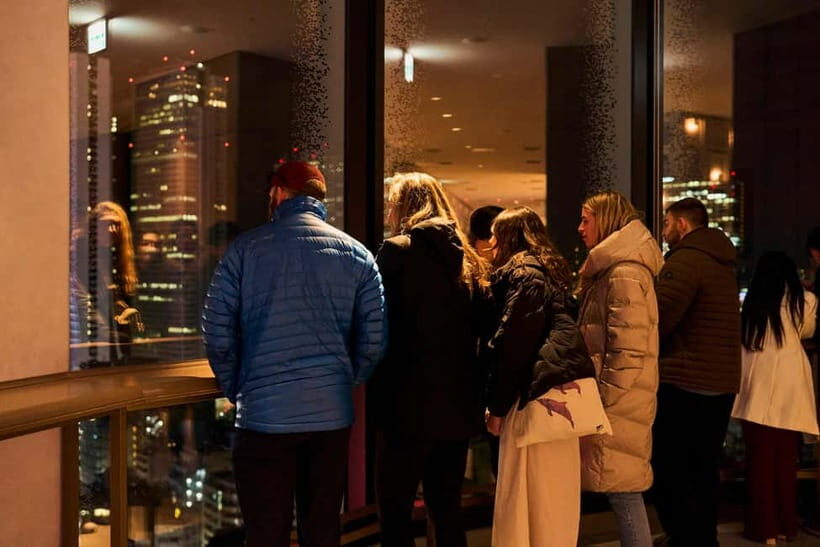
At about the halfway mark, you visit Tokyu Kabukicho Tower for 30 minutes. A stop like this is a smart counterweight to all the street-level walking. Up top, you get a clearer picture of how the district connects—big streets, side alleys, and how crowds move.
Some tours built around this stop have included an observation-deck moment, and it makes sense. From higher ground, you can connect what you saw at street level to what’s really going on behind the scenes.
Practical note: use this time to catch your breath, take a few photos, and reset your feet. You’ve still got Golden Gai and Hanazono Shrine to enjoy afterward.
You can also read our reviews of more nightlife experiences in Tokyo


Golden Gai: tiny bars, big personality
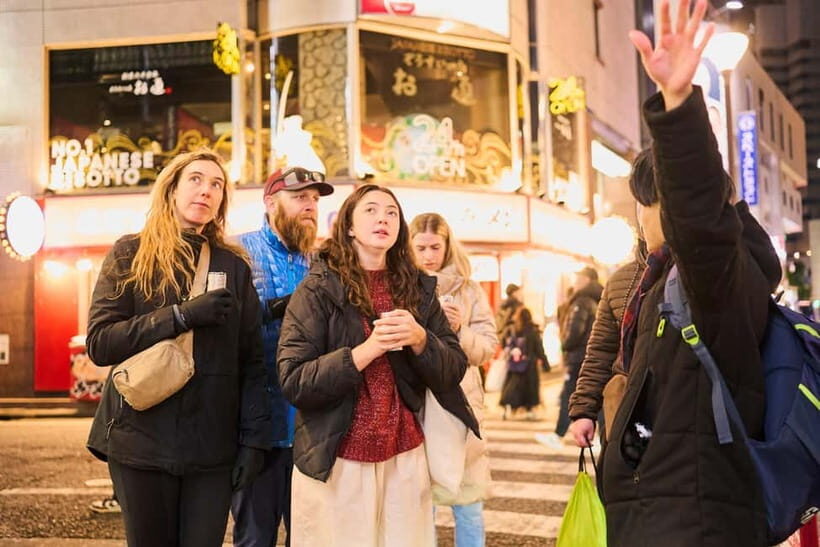
Golden Gai gets about 10 minutes on the route, and that short time works because the point is focus. This is where you see how Tokyo can shrink something down to a pocket-size experience: narrow lanes and small bar fronts where the vibe feels intimate even when it’s busy.
The best part here is the context your guide brings. Golden Gai isn’t just “cool bars.” It’s a social system: small venues, local rhythms, and the idea that nightlife can be about conversation and atmosphere more than big venues and loud stages.
If you’re into photos: this is where you’ll want to pause. Neon reflections, little lanterns, and alley angles make great night shots—just keep moving enough to respect foot traffic.
Hanazono Shrine at night (15 minutes): calm after the lights
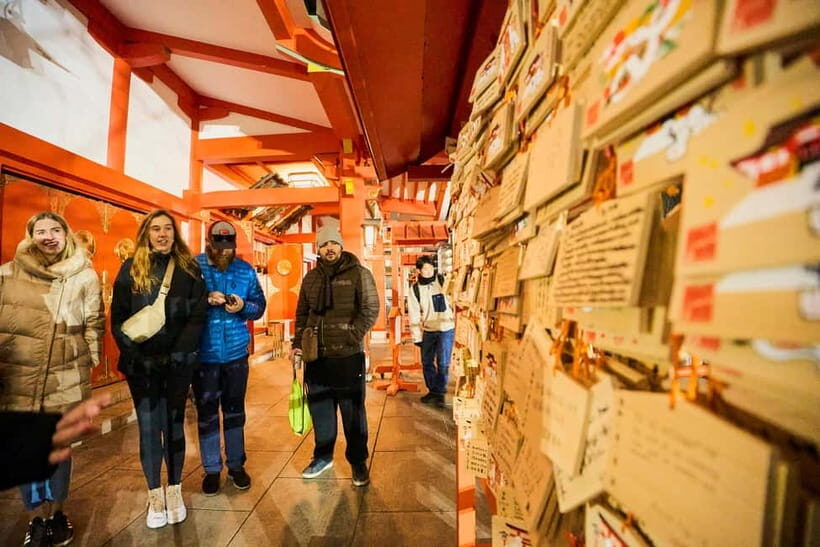
Then you reach Hanazono Shrine for about 15 minutes. This stop is a deliberate change of pace. Shinjuku’s energy doesn’t vanish, but you feel the shift: a quieter pocket where the night still has mood, just not the same noise.
Why I love this part of the tour: it shows another face of Tokyo at the same hour you’re seeing clubs and late-night streets. A shrine at night gives you contrast. And contrast is often what makes a first-time neighborhood tour click.
Your guide can also explain what you’re seeing—how shrines fit into everyday life and why the tone changes when you step into shrine space. Even if you don’t know the terminology, you’ll understand the mood.
Backstreets, foot time, and pacing: how the route feels
The walk back is short (about 5 minutes). Before that, you’ve covered several distinct micro-worlds in 90 minutes: station area intro, Omoide Yokocho, Kabukicho, Tokyu Kabukicho Tower, Golden Gai, and Hanazono Shrine.
So, what’s the pacing really like? Reviews often mention guides keeping people together in a busy place—good group control matters in Shinjuku. One thing to be aware of: one set of feedback cited time management as something that could be smoother. In other words, you should expect a schedule that’s guided and efficient, not super slow and leisurely.
Practical gear check:
- Wear comfortable shoes. You’re on foot the whole time.
- Bring an umbrella or raincoat. The tour runs rain or shine.
- Dress warm if you’re doing this in colder months—night air in Shinjuku can feel sharp fast.
The vending-machine drink: included, weird, and very Tokyo
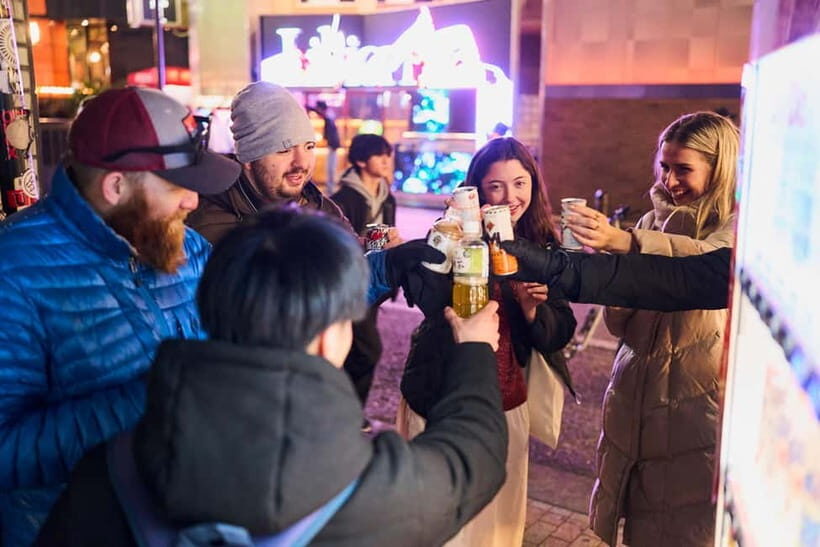
A highlight here is the vending machine moment. Your tour includes one vending machine drink recommended by the guide. That’s a fun, low-pressure way to try something without needing a menu translation mission.
Also, your route includes a look at vending machines with slot machine-style features—Tokyo loves turning “buying a drink” into a tiny game. It’s silly in the best way, and it’s a great conversation starter with your guide about daily habits.
One caution from real-world feedback: at least one person reported that the vending-machine drink wasn’t provided as described. I can’t promise every guide handles it identically, so if this is a must-have for you, I’d treat the included drink as part of the experience you should confirm early with your guide during the walk.
What makes these guides work: more than facts and photos
The thing I value most in this kind of tour isn’t just “where to go.” It’s how you learn to navigate once you’re on your own.
Many guides mentioned by name in feedback share similar strengths:
- Sota is praised for kindness, knowledge, and sharing spots you wouldn’t find wandering.
- Akira and Kawa are praised for answering questions carefully and giving practical advice on what to avoid.
- Hannah is noted for good English and keeping the group together in a busy area.
- Mao, Ai, and Sue come up when people talk about making first-timers feel comfortable and talking at a pace that works.
- Naoto (and others like Chihiro) gets credit for explaining history and small details that help the neighborhood make sense.
Another pattern: some guides tailor explanations to the group’s interests. One example: a guide named Kawa was said to ask about interests and adjust the explanations accordingly. If you like learning while walking, that flexibility is worth a lot.
Price and value: why $22 can make sense in Tokyo
This tour is priced at $22 per person for 90 minutes. In Tokyo, that’s not a huge amount for a guided walk through several “name-recognizable” night zones plus a tower visit.
Here’s where the value usually lands for me:
- You’re paying for local guidance through places that can feel overwhelming.
- You get practical recommendations you can use later in your trip.
- You get one vending machine drink included as part of the fun.
- You get multiple stops that would otherwise take planning to string together.
The only way price feels bad is if you’re the type who only wants to arrive, take photos, and leave. This tour is best when you want the why behind the where.
Who should book this Shinjuku night walk
This tour is a strong fit if:
- You want a first-night orientation to Shinjuku’s nightlife without getting lost.
- You like history, but you prefer it explained in a way that helps you understand what you’re seeing.
- You want food and drink ideas, not just landmarks.
- You’re traveling solo or as a small group and want someone to steer the schedule.
It might be less ideal if:
- You hate walking at night or you’re dealing with mobility limits beyond what you can manage on foot.
- You want a long sit-down food experience. This route is movement-heavy.
On accessibility: the tour is listed as wheelchair accessible. If that matters for you, consider checking details with the operator ahead of time, since Shinjuku streets and sidewalks can still vary street to street.
Should you book the Tokyo: Shinjuku Nightlife & Secret Backstreets Tour?
If you want Shinjuku to feel less like random neon and more like a readable neighborhood, I think this tour is a solid buy. The mix hits the right notes: Omoide Yokocho’s lane energy, Kabukicho’s scale and story, Golden Gai’s tiny-bar vibe, Tokyu Kabukicho Tower for perspective, then Hanazono Shrine for a night-time calm reset.
My honest caution is simple: you should be ready for walking and weather. Also, if the vending-machine drink is important to you, don’t be shy about checking with your guide at the start so you know how it will work for your specific group.
FAQ
Where is the meeting point?
You meet at Shinjuku Station East Exit Police Box (新宿警察署 新宿駅東口交番), located at 3-38-1 Shinjuku, Shinjuku-ku, Tokyo.
How long is the tour?
The tour lasts 90 minutes.
Does the tour run in rain?
Yes. It runs rain or shine, so bring an umbrella or raincoat when it rains.
What’s included in the price?
The tour includes a walking tour with a local guide and one vending machine drink recommended by the guide.
What languages are offered?
The live guide provides the tour in English and Japanese.
Is the tour wheelchair accessible?
Yes, it’s listed as wheelchair accessible.
Can I cancel and get a refund?
Yes. Free cancellation is available up to 24 hours in advance for a full refund.