REVIEW · TOKYO
Tokyo: Mount Fuji, Gotemba & Hakone Day Trip by Luxury Bus
Book on GetYourGuide →Operated by 株式会社PC-TAKU · Bookable on GetYourGuide
One day, three icons of Japan. I really like how this tour gets you up close to Mount Fuji from the fifth station and then pivots to Hakone’s geothermal world. It’s the kind of day that makes the camera do its own work.
I also appreciate that the group stays organized and on schedule, so you’re not wandering around Tokyo for hours before you even start seeing views. The only real downside: the pace is brisk, and some stops are short, so this is not the pick for slow, lingering travel or deep sightseeing.
In This Review
- Key points worth knowing
- Mount Fuji Fifth Station: the closest stop you’ll get in a day
- Gotemba Premium Outlets: 210 stores and a coupon reality check
- Hakone Ropeway and Owakudani: geothermal views and black egg time
- Lake Ashi and the Hakone Shrine Torii: the scenery payoff
- Timing, pace, and what you should plan around
- Value for $70: what you get versus what you’ll pay extra
- Guides and drivers: the difference between chaos and calm
- Who this day trip is best for
- Should you book this Tokyo to Mount Fuji, Gotemba & Hakone day trip?
- FAQ
- Where do I meet and when does the tour depart?
- How long is the day trip?
- Which parts of the itinerary include tickets?
- Are meals included?
- Is the Hakone Pirate Ship cruise included?
- What stops are included besides Mount Fuji?
- What if Mount Fuji fifth station access is canceled?
- What if the Hakone Cable Car is closed due to bad weather?
- Do I get time to shop at Gotemba Outlets?
- Is this tour wheelchair accessible?
Key points worth knowing
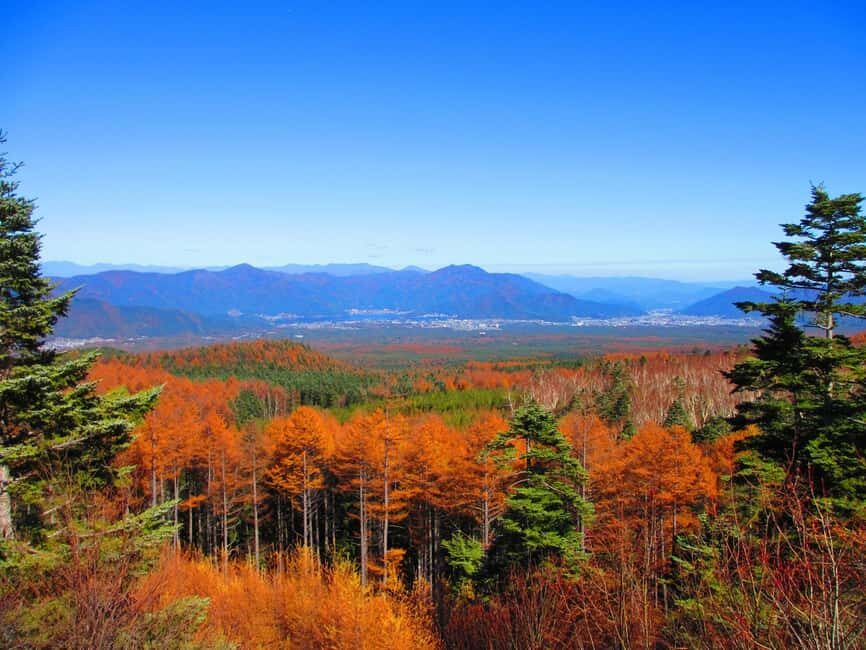
- Mount Fuji fifth station time: about 40 minutes at the closest-access stop, with cool air and big photo angles.
- Gotemba Outlets’ scale: about 210 stores, plus a provided shopping coupon (not a free-for-all, but helpful).
- Hakone’s geothermal hit: a quick window at Owakudani with time for sighting and trying the local black eggs.
- Ropeway + Lake Ashi views: cable-car time early, then Lake Ashi scenery with the Torii Gate of Hakone Shrine visible from the area.
- A day run by professionals: the best part tends to be the calm control of the schedule, even when traffic happens.
- Not everything is included: meals are on your own, and the Pirate Ship cruise is not part of the package.
Mount Fuji Fifth Station: the closest stop you’ll get in a day
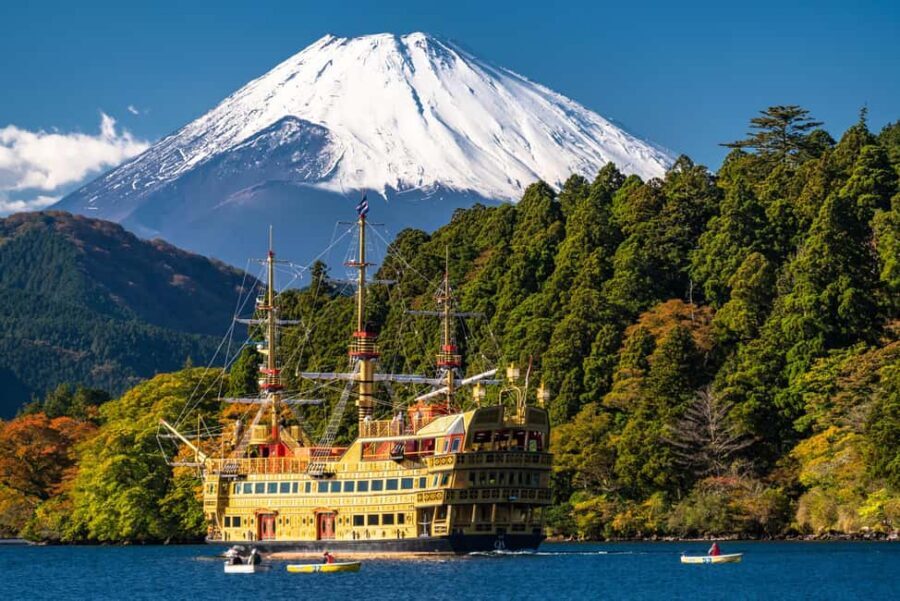
If Mount Fuji is on your Japan checklist, the fifth station is where the mountain starts feeling real up close. From the bus route and the short walk around this higher-altitude area, you get that classic Fuji look with thinner air and cooler conditions. Even when visibility is only decent, the big shape of the peak still lands.
This stop is timed tightly (about 40 minutes). That’s enough for the essentials: quick orientation, a few solid photo tries, and a stroll to catch different angles. If you come hoping to do a long hike, plan to return later. If you want a satisfying Fuji moment without sacrificing the rest of the day, this is a good trade.
A practical note: Fuji weather is a chaos manager. If the Fuji Subaru Line closes due to conditions, the Fuji portion is replaced with Oshino Hakkai. That’s not a downgrade so much as a pivot to a different kind of scenery and atmosphere. Either way, you’ll still spend time outside, not just looking at Fuji from a distance.
A few more Tokyo tours and experiences worth a look

Gotemba Premium Outlets: 210 stores and a coupon reality check
Gotemba Outlets is the giant shopping stop here, and it’s built for people who actually enjoy shopping. You get about 105 minutes of break time for browsing, walking around, and using the provided coupon (typically 5–15% off). The sheer size matters: the outlet is described as the largest in Japan, with around 210 brand stores.
Here’s the balanced take: the outlet stop is convenient if you want Western brands, Japanese casual fashion, and everyday gear in one place. It also helps you fill the day between mountain and Hakone without needing another train hop.
But you shouldn’t expect a relaxed shopping marathon. With roughly an hour and a half, you’re choosing priorities fast. One common sentiment from the experience is that the outlet visit can feel quick, and it can be hard to make smart buys if you try to cover every store. I’d treat it like a target hunt: pick the categories you care about (jackets, sneakers, gifts, basics) and decide that before you arrive.
Lunch is not included here, so you’ll likely eat on your own during your break or afterward depending on how you pace the shopping.
Also watch the calendar. For certain high-traffic dates in 2025, the tour notes that Gotemba Premium Outlets won’t be visited (July 19–20, August 9–10, October 11–12, and November 1–2, 22–23). If you’re booking for one of those windows, expect the itinerary to shift.
Hakone Ropeway and Owakudani: geothermal views and black egg time
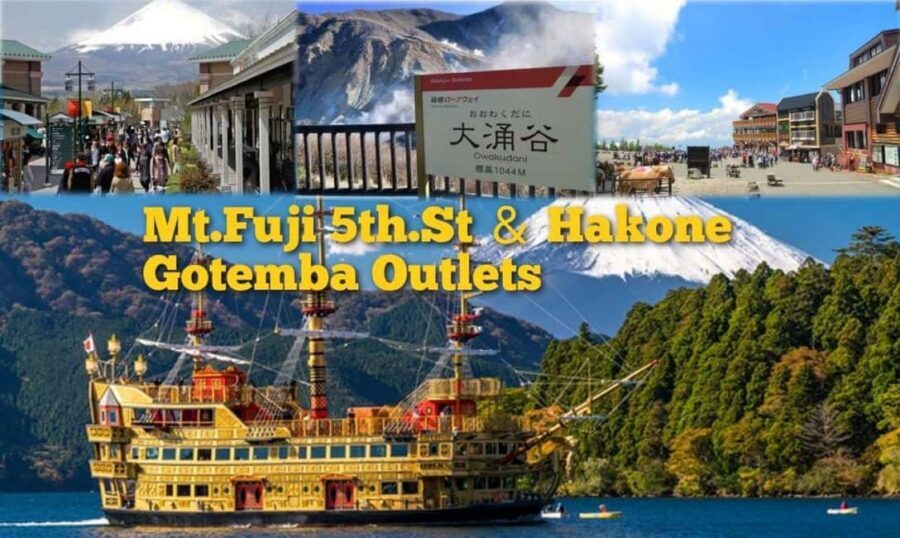
Hakone is where this trip earns its keep. The day doesn’t just show you views from afar. It takes you into the geothermal area, where the scenery feels more dramatic and more unusual than a typical sightseeing loop.
You start with the Hakone Ropeway (cable car ride for about 30 minutes). That ride matters because it gives you a different perspective as you move toward Owakudani. You’ll see more than a flat view from the road, and that helps break up the day after Fuji and the shopping stop.
Then comes Owakudani Valley, a short visit (about 20 minutes on the itinerary). The plan includes time for sighting around the geothermal landscape and trying the local black eggs. This is one of those Hakone traditions that’s easy to sample and easy to remember. You don’t need a long lesson to enjoy the moment; you just need to be there while you’ve got time.
If the cable car is closed due to bad weather, the tour switches to bus transport instead, and the cable car fee is not refunded. The good news is that you still move through Hakone, so you’re not stuck in one place all day. The trade-off is that ropeway views may be reduced that day.
Lake Ashi and the Hakone Shrine Torii: the scenery payoff
After Owakudani, the day continues with scenic bus riding through Hakone. Lake Ashi is part of the payoff. You get about 30 minutes for sightseeing, plus you’ll also enjoy views along the way from port areas—especially the iconic Torii Gate of Hakone Shrine, which you can typically see from the Lake Ashi area.
This part works because Lake Ashi is visually different from both Fuji and Owakudani. The mood cools down. The water and the shoreline lines give you that classic Hakone feeling, with mountains framing the lake. If Fuji was cloudy, Lake Ashi can still give you rewarding scenery. If Fuji was clear, Lake Ashi becomes the calm follow-up to a dramatic morning.
One important heads-up: the Pirate Ship cruise is not included. If you’re hoping to do the full on-the-water experience, you’ll need to pay separately. Even without the cruise, the Torii Gate view and the short sightseeing window are still worth it, especially when you’re working with a one-day schedule.
Timing, pace, and what you should plan around
This is a 12-hour day trip with a morning start in Shinjuku. Meeting is at 7:15, and departure is 7:30 from the sidewalk in front of Shinjuku Center Building. That early start is part of the strategy: it’s how you fit Fuji, outlets, and Hakone into one coach day.
The pacing is the central trade-off. You get a lot of variety, but not a lot of time per stop. Fuji is about 40 minutes. The outlets are about 105 minutes. Owakudani is very short. Lake Ashi gives you about 30 minutes. This is why the tour feels like a highlight reel, not a slow tour of one region.
Also plan for food reality. Meals are not included, so you’ll need to budget for lunch and any snacks you want. Having water with you matters, and comfortable shoes are a must. Even a short walk between viewpoints can eat up energy if your shoes are wrong.
One more situational factor: the itinerary notes that the order or specifics may change due to unforeseen circumstances. That’s normal for a shared tour with road closures and weather variability. I’d mentally accept that the day is run by conditions, not by perfection.
A few more Tokyo tours and experiences worth a look




Value for $70: what you get versus what you’ll pay extra
At around $70 per person, this package can feel like good value if you compare it to the cost of piecing together the same day with trains, tickets, and guided logistics.
What’s included is the big stuff:
- Mount Fuji fifth station visit
- Gotemba Outlets visit
- Hakone Owakudani visit
- Hakone Ropeway (cable car) ticket
- Bus transport with scenic views
What’s not included:
- Meals
- Pirate Ship cruise admission
So you’re mainly paying for time efficiency and the bundled transport. If you want maximum independence, you can build your own itinerary. But if you want a one-day structure that gets you from Shinjuku to Fuji and then down into Hakone without planning gymnastics, this pricing makes sense.
The best value shows up if you’re the type who actually uses the included time well. If you treat every stop as a quick hit, you’ll come away feeling like you got your money’s worth. If you need long stays for photos, shopping, or soaking up a single area, you may feel the schedule squeeze.
Guides and drivers: the difference between chaos and calm
A day like this can go two ways: smooth and controlled, or stressful and scattered. The experience here tends to aim for controlled.
The tour notes a Japanese-English driver, and the ride quality matters on long routes. One example from the guide style that came up is bus driver Masa being professional and careful, especially when traffic got messy due to an accident. When that happens, you want someone who stays steady and keeps the schedule as safe as possible.
Your guide can vary by departure, and names mentioned in the experience include Yasu, Shi-san, Kenji-san, and Seiko-san. Across those examples, the common thread is that the guide helps you understand what you’re looking at and keeps everyone moving through the stops.
I’d treat the guide as part of the value. If you ask a clear question—when to take photos, what to prioritize, how to handle short time windows—you’ll get a smoother day and fewer awkward surprises.
Who this day trip is best for
This tour is a good fit if you:
- Have limited time in Tokyo and want Fuji and Hakone in one day
- Prefer a guided schedule over assembling trains and tickets yourself
- Want a mix of views and quick cultural stops, plus the option to shop at Gotemba
It’s less ideal if you:
- Need long stays in one place
- Rely heavily on mobility support. The details mark the tour as wheelchair accessible, but it also says it’s not suitable for people with mobility impairments, so you should double-check your situation before booking.
- Have respiratory issues. The itinerary includes geothermal areas, and this tour is explicitly marked not suitable for respiratory issues.
Should you book this Tokyo to Mount Fuji, Gotemba & Hakone day trip?
If you want the highlights of Fuji and Hakone without spending your whole trip planning transportation, I’d say yes, with eyes open. The Fuji fifth station and Owakudani are the big emotional wins here, and Lake Ashi gives you that classic scenic payoff. The outlets stop is optional in spirit—use your time with a plan, because the schedule doesn’t allow wandering forever.
Book it if you’re comfortable with a long day, short stop windows, and meals-on-your-own. Skip it (or at least consider alternatives) if you need slow travel, deep time at one attraction, or the Pirate Ship cruise experience.
If the weather threatens Fuji, expect changes like a swap to Oshino Hakkai. That flexibility is part of how this trip survives real-world conditions.
If you want, tell me your travel month and whether you care more about Fuji views or Hakone geothermal stuff. I can suggest what to prioritize so the day fits your style.
FAQ
Where do I meet and when does the tour depart?
Meet at 7:15 at the sidewalk in front of the main entrance of Shinjuku Center Building, and depart at 7:30.
How long is the day trip?
It runs for 12 hours.
Which parts of the itinerary include tickets?
The Hakone Ropeway (cable car) ticket is included.
Are meals included?
No. Meals are not included, and lunch is at your own expense.
Is the Hakone Pirate Ship cruise included?
No. Admission to the Hakone Pirate Ship cruise is not included.
What stops are included besides Mount Fuji?
You’ll visit Gotemba Premium Outlets and Hakone Owakudani, and you’ll also see Lake Ashi.
What if Mount Fuji fifth station access is canceled?
If the Fuji Subaru Line is closed due to weather conditions, the fifth station visit is canceled and the itinerary changes to Oshino Hakkai.
What if the Hakone Cable Car is closed due to bad weather?
If the cable car is closed, the tour takes the bus instead. The cable car fee is not refunded in that case.
Do I get time to shop at Gotemba Outlets?
Yes. You have break time for shopping and walking, and a shopping coupon is provided.
Is this tour wheelchair accessible?
The tour is listed as wheelchair accessible, but it is also marked as not suitable for people with mobility impairments. If mobility is a concern for you, it’s worth confirming before booking.