REVIEW · KYOTO
Kyoto, Nara and Osaka private up to 9 pax picked up from Kyoto
Book on Viator →Operated by Amazing Kyoto Experience · Bookable on Viator
Three cities, one smooth day in Kansai. This private Kyoto-to-Nara-and-Osaka plan mixes big-name sights with quieter spots, and it’s designed around hotel pickup and drop-off so you can actually enjoy the day instead of spending it hunting trains. I like that you get private time with a guide who can steer you toward calmer temples, and you’re also set up for food breaks like dessert stops and match.
The two best parts for me are how the schedule balances iconic Kyoto with off-the-main-road temple energy, and how the guide support feels personal even when the day is full. The stops include famous Fushimi Inari with its torii-gate mountain path, plus very different temple gardens and layouts like moss scenes and rock compositions, and those are paired with practical breaks for snacks.
One thing to consider: the tour length can feel like a full day. The experience is listed as about 7 hours, but the 3-city example is described as a 12-hour day, so you’ll want to confirm which exact option timing you’re booked into and plan your energy for a lot of moving around.
In This Review
- Key things to know before you go
- Kyoto pickup to end in Osaka: how this day really feels
- Kyoto temple power: Fushimi Inari and the mountain torii walk
- The Kyoto quiet side: moss garden, rock arrangements, and an older temple story
- Rengeji Temple (moss garden calm)
- Myomanji Temple (tiny rocks, big pattern)
- Koryu-ji Temple (a story tied to Korean-rooted roots)
- Golden Pavilion time: Kinkakuji, then tea-and-arts Koetsuji
- A sweet break in Kyoto: Nakamuraken dessert stop
- Matsuo Shrine koi pond moment: a neighborhood-scale stop
- Nara in one rhythm: Todai-ji, deer crackers, and match in serenity
- Todai-ji Great Buddha Hall (big statue energy)
- Nara Park deer with crackers
- Secret temple and match tasting
- Osaka finish: Dotonbori street energy and Abeno Harukas views
- Dotonbori: walk and eat local dishes
- Abeno Harukas observatory
- Price and value: why private makes sense for a 3-city day
- How to use this tour well: pacing, photos, and comfort
- Final thoughts: should you book this Kyoto–Nara–Osaka private tour?
- FAQ
- Where does pickup happen?
- Is this tour private?
- How many people can be in the group?
- How long is the experience?
- Are entrance tickets included for the stops?
- Can I choose where the tour ends?
- Is there a mobile ticket?
- Is there an age restriction related to alcohol?
- What if I need to cancel?
Key things to know before you go
- Private up to 9 people: your group sets the pace, and it’s easier to ask for photo stops and timing tweaks.
- Kyoto’s quieter temple circuit: you’re not stuck only at the loudest gates and the biggest crowds.
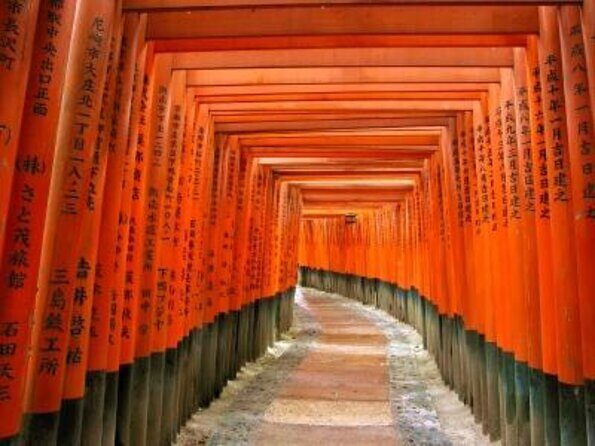
- Fushimi Inari in walking mode: the torii experience includes longer paths, bamboo, and a slower rhythm than a quick photo stop.
- Nara with the full trio: Todai-ji, Nara Park deer crackers, and a serene match tasting moment.
- Osaka as a food-and-view finish: Dotonbori street walking plus the height of Abeno Harukas for observatory time.
- Most admissions are free on the listed stops: the temple-heavy plan keeps costs from creeping up.
Kyoto pickup to end in Osaka: how this day really feels
This is the kind of tour that works best when you care about time. Kyoto, Nara, and Osaka are all close enough to do in one day in theory, but in practice you can lose hours to transit timing, transfers, and the walking that always sneaks up on you. With hotel pickup from Kyoto and a private vehicle plan, you’re handed a route that aims to keep you moving without turning the day into a rush marathon.
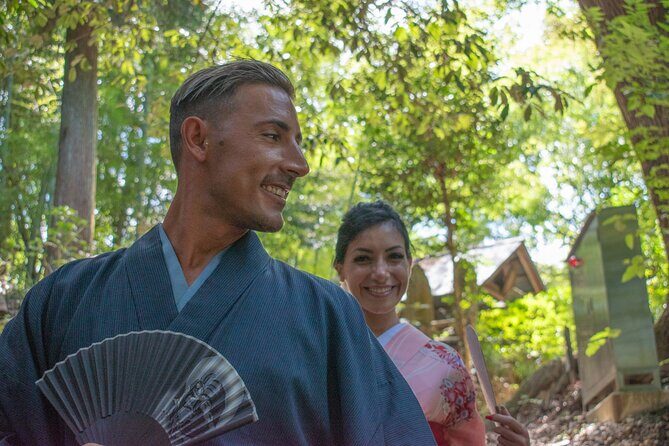
The private aspect matters more than you’d think. Up to 9 people means families and small friend groups can travel together, but it also means your guide can shape the flow—slowing down where the atmosphere is better, speeding up when you need to catch the next stop. If you’re traveling with kids, older relatives, or just want fewer stress moments, that flexibility is a real payoff.
One more practical point: drop-off flexibility. The experience notes that you can choose your drop-off location, so you can finish and then head straight to a dinner area instead of spending your evening commuting. That’s especially helpful in Osaka, where you’ll likely want to stay in the main neighborhoods.
You can also read our reviews of more private tours in Kyoto

Kyoto temple power: Fushimi Inari and the mountain torii walk
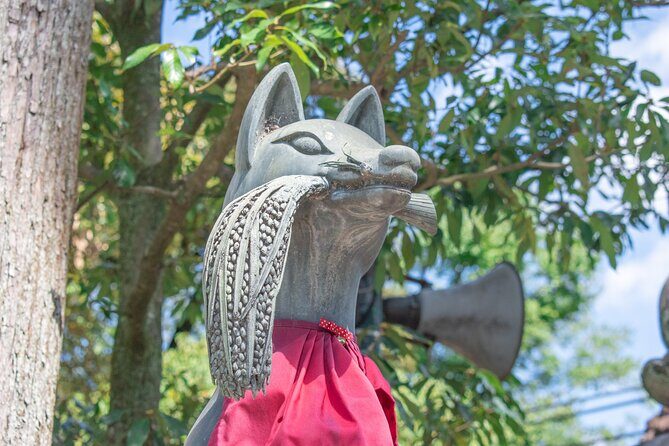
Fushimi Inari-taisha is the headline, and rightly so. You start with the iconic torii-gate scene—thousands of red gates—and then the experience expands beyond the first postcard view. The shrine grounds stretch up into a mountain area, and you’ll have a chance to notice a different mood: bamboo sections, quieter bird sounds, and the feeling that you’re walking through something that’s part shrine and part nature trail.
Why this stop works well on a private route: you’re not just arriving and doing a quick loop. The guide can help you time your walking, and with a private vehicle transfer, you can better manage the moments when crowds spike at famous gates.
A possible drawback: you should expect walking. Even with stops kept to a plan, Fushimi Inari is inherently a long-path experience. Wear comfortable shoes you can use for uneven stone and sloped paths, and bring a small water bottle if you run warm easily.
The Kyoto quiet side: moss garden, rock arrangements, and an older temple story
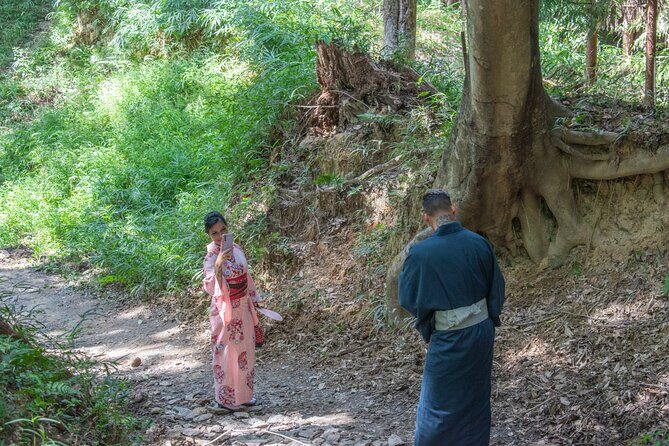
After Fushimi Inari, the tour shifts from big spectacle to calm, specific beauty—exactly the kind of contrast that makes Kyoto feel like more than just photos.
Rengeji Temple (moss garden calm)
Rengeji Temple is known for its moss garden look, and it has a reputation for being less visited because the location is more out of the way. That means you get a chance to slow down and actually look at the way the garden is arranged. One detail I’d pay attention to here is the interior space: there’s an open tatami mat floor area, which can change how you experience the garden depending on your seating angle and viewpoint.
Trade-off: because it’s less central, you might feel like it’s a detour. But that detour is the point if you want a calmer Kyoto moment instead of another stop that feels like a theme-park line.
Myomanji Temple (tiny rocks, big pattern)
Myomanji Temple centers on a garden design made with millions of tiny rocks arranged into a larger, intentional composition. You’re looking at it up close enough to notice the pattern work, and the description of the site connects it to Buddhism-related schism history in Japan. Even if you don’t go heavy on the background, you’ll still feel the practical beauty: it’s orderly, measured, and designed for lingering.
Trade-off: if you’re the type who likes constant motion, this portion may feel slower. But if you want to see how Kyoto temples organize space for contemplation, it’s time well spent.






Koryu-ji Temple (a story tied to Korean-rooted roots)
Koryu-ji Temple is a shorter stop but with a deeper cultural angle. It’s described as originally erected by the Hatashi people, said to have Korean-rooted ethnic origins in the 5th–6th century. The temple has a story of surviving a burn in the 8th century, which helps you understand that the place is not just scenery—it’s linked to survival and continuity.
This is the kind of stop where your guide’s explanations can make a big difference. If you ask simple questions, you’ll probably get more meaning out of it than you would with a solo walk-and-go.
Golden Pavilion time: Kinkakuji, then tea-and-arts Koetsuji
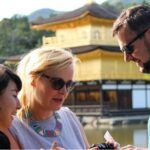
Kinkakuji, the Golden Pavilion, is one of those Kyoto stops you either love immediately or you’re not sure why everyone talks about it. In person, the key is context: it started as a villa associated with Shogun Yoshimitsu Ashikaga (1358–1408) and later became a temple. The building’s upper floors covered with gold leaf create the effect of light bouncing off a surface that feels almost unreal against the garden setting.
A drawback to plan for: this is a major sight, so even a private tour won’t erase the fact that it can be busy. Still, a good guide can help you manage timing and choose angles for photos.
Right after, Koetsuji Temple adds a different kind of artistry. It’s described as a former property of an art master involved in tea ceremony, calligraphy, and other arts. The garden and the presence of tea ceremony items make it feel more like a living workshop than a static monument. If you like the idea of Kyoto as an arts capital, this is the stop that connects that theme to something tactile.
A sweet break in Kyoto: Nakamuraken dessert stop
One of the smart ideas built into this day is scheduling a dessert stop. Nakamuraken is described as a local dessert shop with Kyoto-style sweets. Two examples given are mochi-style sweets like mochifu (with different textures than standard mochi) and shaved ice flavored with yuzu or match.
Why it’s valuable: when a day stacks temples and walking, a controlled snack break can keep your energy stable so you don’t get cranky mid-afternoon. Since the tour duration can stretch, these scheduled food stops help you avoid the common problem of hunting for something edible between major sites.
If you have dietary constraints, I’d still check with your guide on the spot. The information you get in advance might not list every option, and a private setting is exactly when you can ask practical questions.
Matsuo Shrine koi pond moment: a neighborhood-scale stop
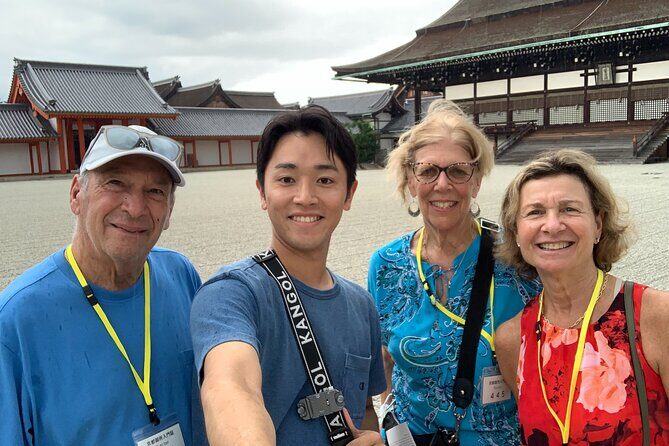
Matsuo Shrine is described as the biggest shrine connected with the Hatashi noble family and loved by nearby households. The tour notes a large koi fish pond where visitors can feed the fish.
This is a different type of Kyoto stop. Instead of grand architecture and signature gates, you get a neighborhood-scale ritual that can feel more lived-in. It’s also a nice change of pace after longer temple walks.
Nara in one rhythm: Todai-ji, deer crackers, and match in serenity
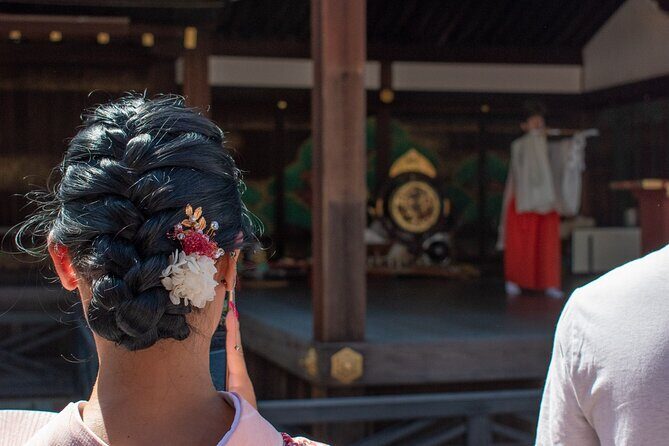
Once you transition to Nara, the vibe shifts from Kyoto’s architectural focus to Nara’s scale and animal-life moments.
Todai-ji Great Buddha Hall (big statue energy)
Todai-ji’s Great Buddha Hall is described as housing a massive statue. Even if you’re not a “temple-knowledge” person, this is a sight that hits you physically. Size changes how you interpret a room—sound carries differently, and you tend to look up more.
Nara Park deer with crackers
Then you get the classic Nara park scene: feeding deer with crackers. This is one of those experiences that sounds touristy until you’re standing there and realize how it works as a relationship moment between people and animals.
Practical note: keep your crackers secure and follow the rules your guide sets. In a busy park, it’s easy for excitement to move too fast.
Secret temple and match tasting
Finally, the Nara “secret temple” stop includes match tasting in a serene place. This is a smart pairing with Nara’s outdoors energy because the day closes with quiet and a taste-based cultural moment. If you like the idea of finishing with something simple and grounded—rather than only walking to the next photo—this stop is a strong reason to book.
Osaka finish: Dotonbori street energy and Abeno Harukas views
Osaka is often the part of the trip where people want to eat and not think too hard. This route gives you exactly that.
Dotonbori: walk and eat local dishes
Dotonbori is described as a walking and eating-focused neighborhood, with local dishes along the streets. This is a flexible section because it’s easy to order what sounds best when you’re hungry, and a guide can help you choose options that match what you’re in the mood for.
One consideration: since this is a street-food zone, plan for lots of sensory input—lights, crowds, and fast-moving foot traffic. It can be fun, but it’s not the quiet part of the trip.
Abeno Harukas observatory
Then the day gets a lift with Abeno Harukas, described as the highest sky skyscraper experience with an observatory. If you’re tired from temple walking, the observatory is a good “reward pause.” You can look out over the city, reset your legs, and take photos with a different perspective than ground-level streets.
Price and value: why private makes sense for a 3-city day
At $329.02 per person, you’re paying for convenience and guidance more than for admission fees. The listed stops include multiple temples with free admission tickets, so you’re not buying your way into value through entry costs. The real value is time saved and the structure of a route that hits three major cities without you doing logistics yourself.
Private tours can be pricey, but in a day that crosses regions, the cost can be easier to justify. You’re essentially paying to compress travel planning into a smooth itinerary, with hotel pickup and an end drop-off where you want to continue your night.
Also, group discounts are mentioned. If you have a small party, that can make the math work better than you’d expect—especially when you avoid the trap of each person paying separate fares and transfers.
How to use this tour well: pacing, photos, and comfort
This itinerary is temple-heavy at the start, then switches to dessert and shrine calm, then moves into animal-and-food days in Nara and Osaka. That means you’ll get the best experience if you plan your comfort.
- Wear shoes you trust. You’ll walk through torii paths, temple grounds, and park areas.
- Build in photo time mentally. The tour’s style makes room for sights like Fushimi Inari gates and Golden Pavilion angles, and a good guide can help you get cleaner shots.
- Use your guide for small decisions. If you care about which sweets to try at Nakamuraken or what match style you prefer in Nara, ask directly.
- Pace yourself for a long day. With the 3-city example described as up to 12 hours, treat this like a full-day outing even if the listing says about 7 hours.
Final thoughts: should you book this Kyoto–Nara–Osaka private tour?
I’d book it if you want a single-day plan that doesn’t make you juggle trains, transfers, and timing across three cities. It’s a good fit for groups up to 9, families who want hotel pickup and a guide to keep things running, and anyone who likes a mix of famous sites and calmer temple stops.
I’d think twice if you’re easily wiped out by long walking days or if you need strict timing because the tour length can vary depending on the exact option. Before you confirm, ask the provider to clarify the exact hours for your chosen version so you can plan dinner and rest.
If you want Kyoto’s icons plus quiet temples, then Nara’s deer-and-buddha moments, and finally Osaka’s food streets and skyline view, this is a strong one-day way to do it.
FAQ
Where does pickup happen?
Hotel pickup in Kyoto is offered, and you’re taken directly to the sites during the tour.
Is this tour private?
Yes. It’s a private tour/activity, and only your group participates.
How many people can be in the group?
The private tour is up to 9 pax.
How long is the experience?
The duration is listed as about 7 hours, and the 3-city example route is described as a 12-hour day—so it depends on the option you book.
Are entrance tickets included for the stops?
For the stops listed in the itinerary, admission ticket access is marked as free.
Can I choose where the tour ends?
Yes. It’s possible to choose any dropoff location so you can continue to restaurants after the tour.
Is there a mobile ticket?
Yes. The experience includes a mobile ticket.
Is there an age restriction related to alcohol?
Yes. The minimum age requirement for alcohol consumption is 18.
What if I need to cancel?
You can cancel for a full refund if you cancel at least 24 hours in advance. If you cancel less than 24 hours before the start time, the amount paid is not refunded.