REVIEW · TOKYO
Tokyo Mt. Fuji 5th Station Tour | 9-Guest Small Group
Book on GetYourGuide →Operated by Leda Japan · Bookable on GetYourGuide
Fuji in one relaxed day, not a summit saga. I really like that this tour gives you guaranteed Mt. Fuji 5th Station access at about 2,300m, plus the schedule is built around efficient, photo-friendly stops without feeling rushed. I also appreciate the max 9 guest setup with door-to-door pickup options in central Tokyo, so getting out of the city feels straightforward.
One thing to plan for: 5th Station access depends on weather and roads, and the tour runs on a strict departure time window, so being early matters.
In This Review
- Key things I’d circle on your planning map
- Tokyo hotel pickup and the long coach ride: setting yourself up for an easy day
- Mt. Fuji 5th Station at 2,300m: your real goal, and how to use your 50 minutes
- Oshino Hakkai UNESCO springs: the best place to slow down and handle lunch
- Fuji-Lawson and Hikawa Clock Shop: small photo stops that keep the day fun
- Fuji-Lawson photo stop at Kawaguchiko Station
- Hikawa Clock Shop
- Oishi Park in season: using flowers to frame Fuji without extra travel
- Small-group max 9 and multilingual driver-guide: why this feels calmer than DIY
- Price and value at about $56 for a 10-hour Fuji day
- What to bring for a smooth Fuji day (and what you’ll need to skip)
- Who this tour is best for (and who should look elsewhere)
- Should you book this Mt. Fuji 5th Station tour from Tokyo?
- FAQ
- Where is the meeting point if I choose the JR Tokyo Station option?
- How long is the tour?
- What time does the tour depart and when will I be back in Tokyo?
- Is the Mt. Fuji 5th Station visit guaranteed?
- How big is the small group?
- What’s included in the price?
- What should I bring, and are there rules on food or smoking?
Key things I’d circle on your planning map
- 2,300m Mt. Fuji 5th Station time that’s long enough to look, photograph, and wander
- Oshino Hakkai UNESCO spring pools with time to shop and handle lunch on your own
- Fuji-Lawson + Hikawa Clock Shop photo stops that keep the day fun between big sights
- Oishi Park seasonal blooms (cherry blossoms, lavender, or cosmos depending on the season)
- Small-group attention from a driver-guide with English/Chinese/Japanese support
Tokyo hotel pickup and the long coach ride: setting yourself up for an easy day
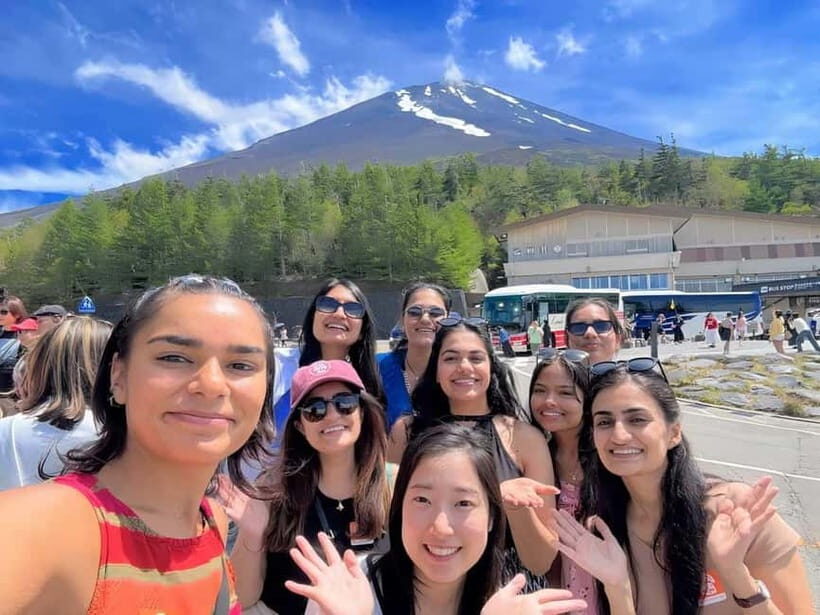
This is a classic “Tokyo-to-Fuji, done right” day trip. You’ll either meet at JR Tokyo Station (Marunouchi North Exit) or use the hotel pickup option. The pickup area is centered on the JR Tokyo Station zone and spread across central wards, so it’s designed for people staying in and around the busiest parts of Tokyo.
The day starts with an 8:00 departure, and the drive to the Fuji area takes about 2 hours. That sounds long on paper, but it works in your favor. You don’t burn energy figuring out trains and transfers, and you arrive with more daylight and less stress than you would trying to manage it alone.
One practical note: this is a shared tour with a punctual rhythm. They emphasize that the vehicle departs strictly on time, and latecomers can lose their spot. My advice is simple—arrive early enough that you’re not sprinting when you check the meeting map.
You can also read our reviews of more tours and experiences in Tokyo.



Mt. Fuji 5th Station at 2,300m: your real goal, and how to use your 50 minutes
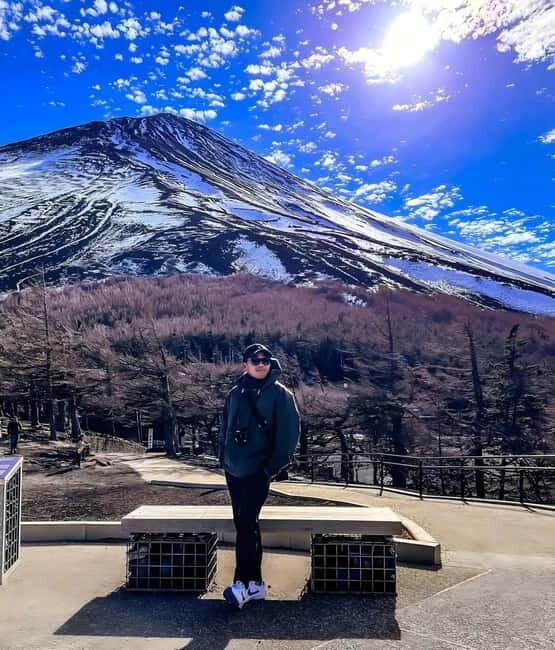
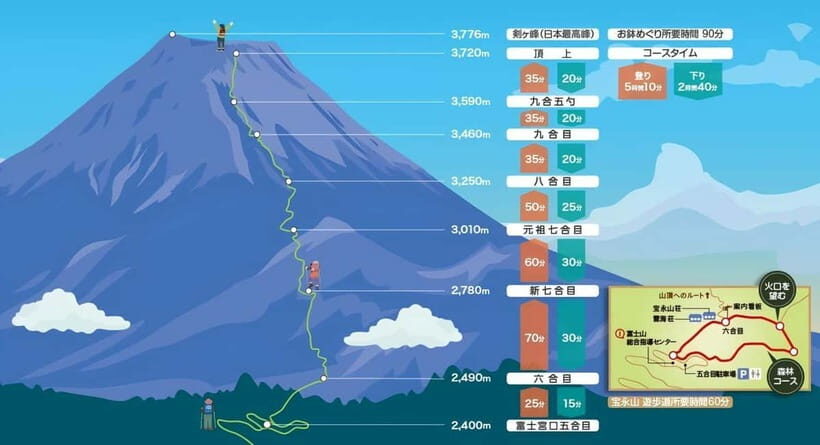
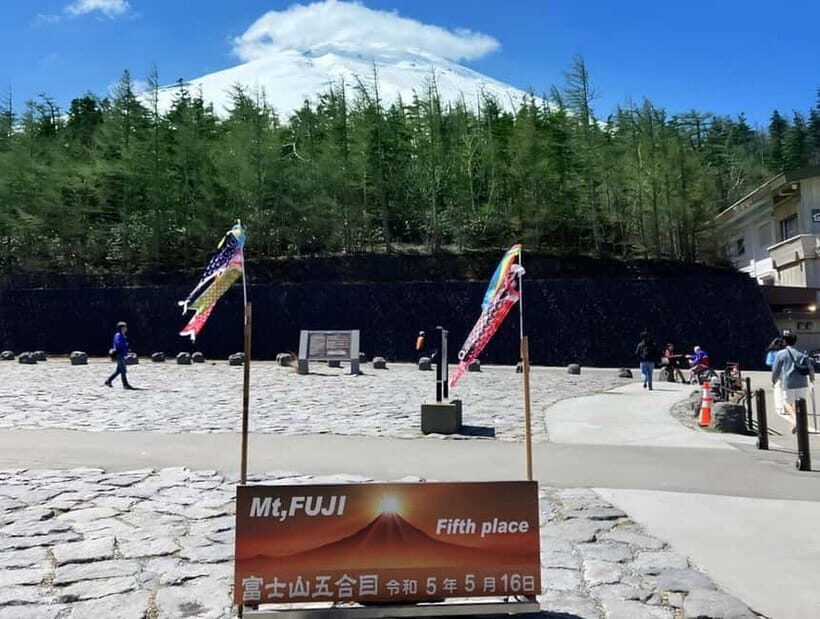
The heart of the day is your time at Mt. Fuji 5th Station at roughly 2,300m. You’ll get about 50 minutes there, which is a sweet spot for first-timers. It’s enough time to:
- take in the views and volcanic scenery,
- visit Komitake Shrine, and
- get those “I’m actually here” photos before conditions change.
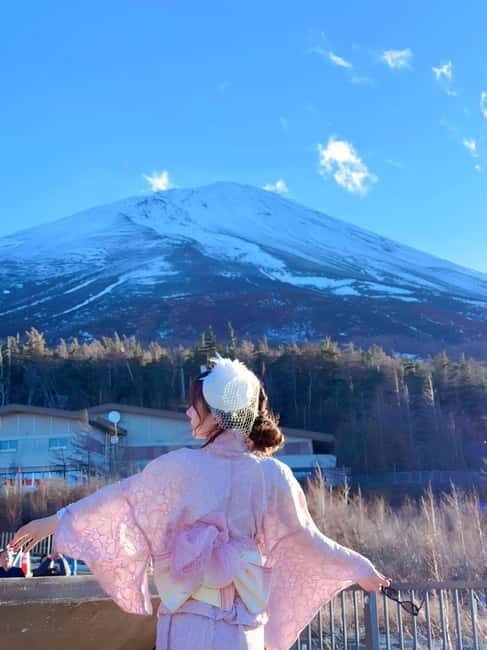
What you’re seeing at this height is different from what most Tokyo day-trippers imagine. It’s not the full summit, but it’s high enough that the terrain and sky feel dramatic. If clouds roll in, the day can still be worthwhile—because you can shift your attention to textures, signage, the shrine area, and the layered views over the Fuji Five Lakes region.
Here’s the key planning point: access to the station is weather- and road-dependent. If the roads close, the plan adjusts. In that case, you may spend more time around the Fuji Five Lakes area, with Lake Yamanaka mentioned as an alternate exploration option. You’ll still get the big Fuji-vista moments even if conditions aren’t ideal.
Also pay attention to timing. Your 5th Station window is early enough to make it worthwhile, but it’s not a full “all day on Fuji” plan. If you dream of summit hiking and long acclimatization, this isn’t that. If you want high-elevation views, shrine vibes, and photos without a grueling climb, it’s a very reasonable trade.
Oshino Hakkai UNESCO springs: the best place to slow down and handle lunch
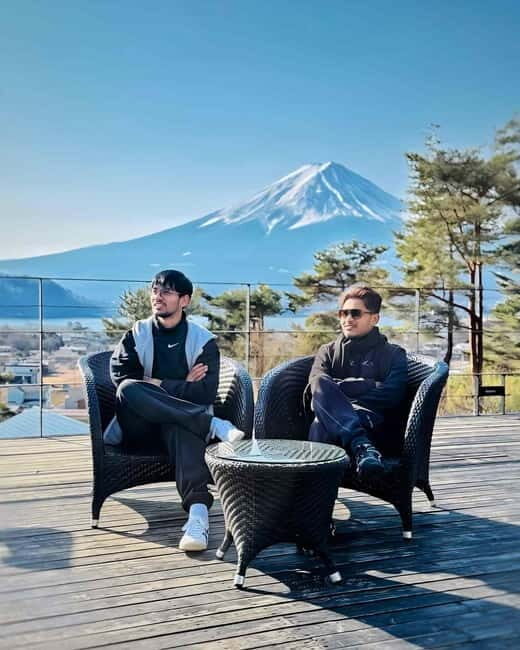
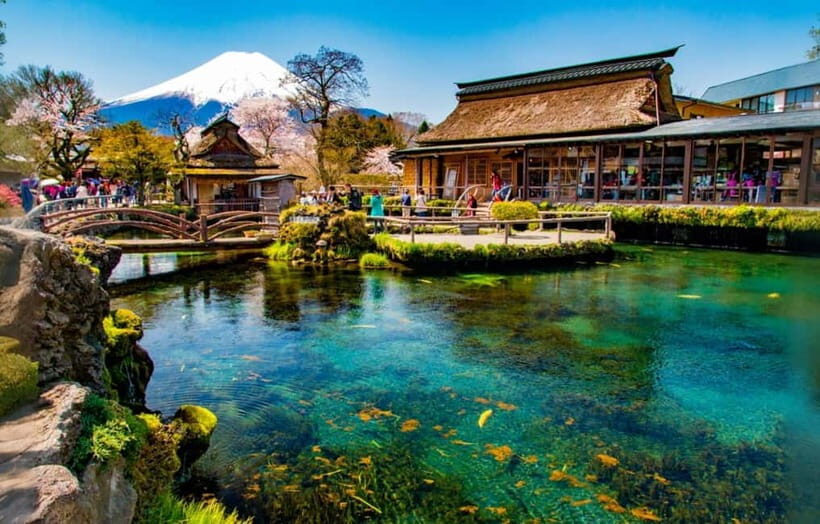
After the Fuji station, you head to Oshino Hakkai, with about 70 minutes on the ground. This is where the trip turns from “big mountain” to “Fuji magic at ground level.”
Oshino Hakkai is famous for its crystal-like spring pools fed by snowmelt from Mt. Fuji. When the light is right, those mirrors look almost staged. Even if the weather is less perfect, the area still feels special—because you’re walking among small ponds, stone structures, and the kind of countryside scene that’s hard to replicate in central Tokyo.
You’ll get time here for photos, shopping, and a lunch break (self-paid). The tour also mentions a food market element in the mix, so you’ll have options if you want something quick. Since meals aren’t included, I’d treat this as your “grab it and eat it” moment—rather than waiting for a sit-down restaurant you might not find near your photo spot.
One tip: don’t treat Oshino Hakkai like a checklist. You’ll enjoy it more if you wander. Take a few minutes to watch how the water moves and how the reflections shift as clouds pass. That’s the kind of detail you’ll remember later, even more than the widest photo.
Fuji-Lawson and Hikawa Clock Shop: small photo stops that keep the day fun
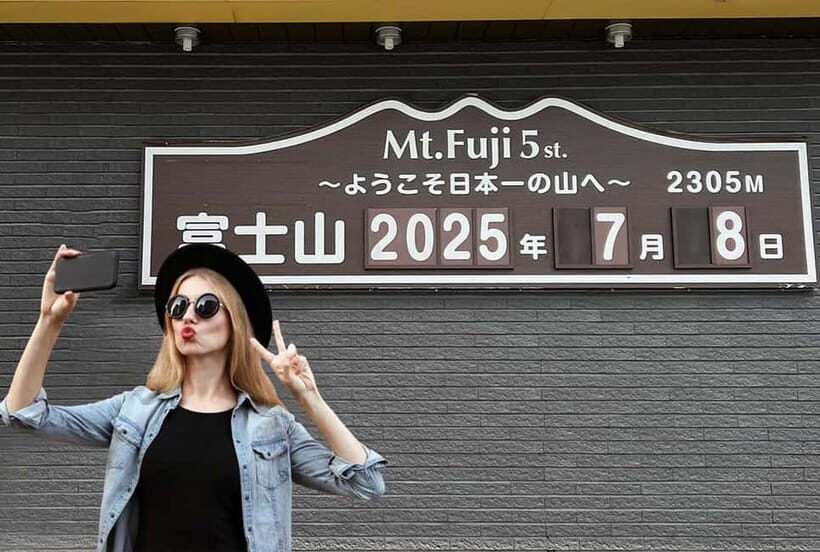
Not every Fuji day trip needs a strict, serious tone. This tour includes two quick stops that are basically designed for easy, satisfying photos.
Fuji-Lawson photo stop at Kawaguchiko Station
You’ll pause for about 20 minutes at LAWSON Kawaguchiko Station. The big draw is the viral-style Fuji-Lawson photo: the convenience-store backdrop with Mt. Fuji in frame. The time is short, so go with a clear game plan:
- stand where the view lines up,
- take a few angles,
- and don’t burn all your minutes checking every spot.






Hikawa Clock Shop
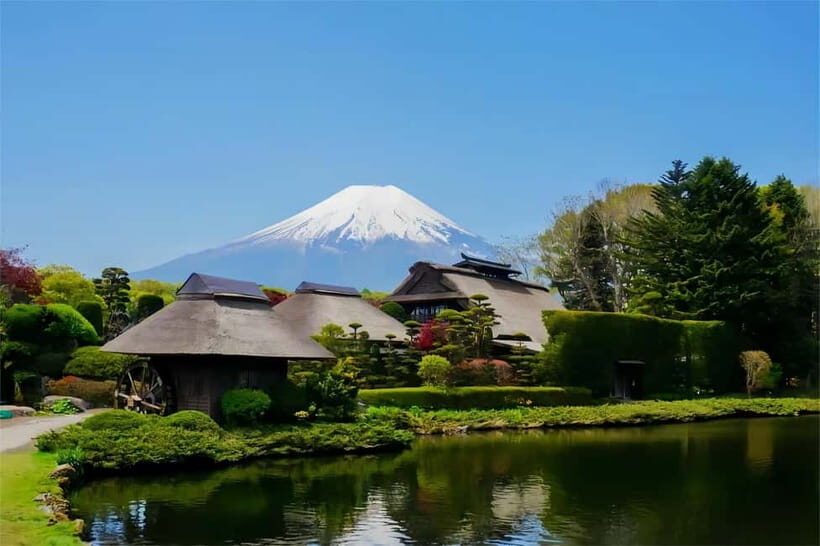
Then you get another 20-minute stop at Hikawa Clock Shop, known for traditional eaves and a picture-friendly setting with Fuji views. This stop works well because it’s not just one photo. You can walk a little, adjust angles, and use the architecture lines to frame the mountain.
I like these stops because they break up the day. After a more “natural” experience at the 5th Station and the spring pools, these are playful, quick wins. You end up with a mix of mountain drama and everyday Japan details.
Oishi Park in season: using flowers to frame Fuji without extra travel
The schedule also includes Oishi Park for about 50 minutes. This is a classic Kawaguchiko-area viewpoint, and it’s especially good when you want the postcard look—Fuji plus foreground flowers.
The tour calls out the seasonal mix:
- spring: cherry blossoms,
- summer: lavender,
- autumn: cosmos.
Even if your timing isn’t perfect, the key is that Oishi Park gives you a “layered” composition. You get foreground texture, midground paths, and the mountain in the background. That’s how your photos look more like they belong to a travel story instead of being just a background shot.
Be ready for weather. Parks are exposed. Bring warm layers even if Tokyo feels mild, and wear shoes you can walk in for a steady 50-minute stroll. This stop is also where you’ll appreciate not being stuck in a large crowd—you’ll have enough room to move and find your angle.
Small-group max 9 and multilingual driver-guide: why this feels calmer than DIY
A big reason I’d recommend this tour is that it’s built for people who want structure without a group scramble. It’s limited to max 9 participants, which changes the whole vibe. You’re not watching everyone else get swept off at different times. You’re getting clear timing, and you’re more likely to actually hear the plan over the chatter.
The driver-guide provides multilingual support in English, Chinese, Japanese, and Traditional Chinese. That matters when you’re dealing with transit timing, photo stops, and a road condition-dependent destination like the 5th Station.
What makes the logistics feel “locked in” is the communication style. After booking, you’ll be added to a WhatsApp group and sent a GPS-pinned meeting map plus vehicle details and reminders. By the evening before, you should have the meeting/pickup time and vehicle plate number.
On the guide quality side, past departures have highlighted drivers such as Monir, Ken, and Ali as particularly professional and helpful. The common thread in those comments: the driver gives strong orientation, then you’re free enough to explore on your own within each stop window.
Two practical realities to remember:
- You may not have a guide standing beside you the entire time at every stop; you’ll often get instructions and then roam.
- Everyone needs a dedicated seat, and luggage space is limited, so pack light.
Price and value at about $56 for a 10-hour Fuji day
At $56 per person for around 10 hours, this lands in the “good value if you care about convenience” category. You’re paying for:
- round-trip transportation from Tokyo,
- the small-group experience,
- a driver-guide with multilingual support,
- and fuel and toll fees.
What you don’t get included are meals and any optional entrance fees. That’s normal for day trips, but it’s worth planning for so the day doesn’t feel like an ongoing extra expense. If you treat lunch as your self-paid budget moment (especially at Oshino Hakkai), you’ll stay comfortable.
In plain terms: you’re buying time and ease. You’re not buying a guided summit climb. You’re buying a well-structured route that hits the classic Fuji stops without making you navigate the system.
What to bring for a smooth Fuji day (and what you’ll need to skip)
This kind of day trip runs on comfort and weather readiness. Here’s what the tour specifically asks you to bring:
- comfortable shoes (you’ll walk at multiple stops),
- warm clothing (Fuji area can feel colder),
- a camera (you’ll want it in your hands, not buried),
- water.
The rules also include no smoking and no food or alcoholic drinks in the vehicle. If you’re the type who likes sipping a bottled drink on the bus, plan to keep it out of the vehicle. Buy what you need at stops where it’s permitted.
One last practical thought: keep your WhatsApp active. The day runs on reminders, pinned maps, and vehicle identification. That’s what prevents confusion if crowds or traffic shift pickup timing.
Who this tour is best for (and who should look elsewhere)
This is a great fit for:
- first-time Fuji day-trippers from Tokyo who want 5th Station elevation without a climb,
- people who like a schedule but don’t want a rigid, hour-by-hour march,
- families and groups who benefit from small-group structure and clear photo-stop timing.
It’s not suitable for:
- pregnant women,
- people with back problems,
- wheelchair users.
So if you have mobility concerns, you’ll want to think carefully about bus travel and walking time at each stop. Also, kids under 3 can travel free but must sit on a guardian’s lap, which affects how easy the day feels.
Should you book this Mt. Fuji 5th Station tour from Tokyo?
If your goal is classic Fuji in one day—5th Station at ~2,300m, plus Oshino Hakkai, seasonal Oishi Park blooms, and photo stops—you should strongly consider booking. The small-group size and central Tokyo pickup options make it feel more manageable than DIY planning, especially when weather is a variable.
I’d pass or look for an alternate plan if:
- you need a flexible itinerary with long time at each location,
- you want a summit-style hiking experience,
- or you have mobility limitations that make bus day travel and walking difficult.
Otherwise, this is a smart way to turn a long day into a set of good, memorable moments: mountain views you can actually reach, spring-pool scenery that feels genuinely Japanese, and photo stops that make your camera roll look like you did something special—without doing anything exhausting.
FAQ
Where is the meeting point if I choose the JR Tokyo Station option?
The meeting point is JR Tokyo Station, Marunouchi North Exit. It’s at 1-chōme-9 Marunouchi, Chiyoda City, Tokyo 100-0005.
How long is the tour?
The tour duration is 10 hours.
What time does the tour depart and when will I be back in Tokyo?
Departure is listed as 8:00 from Tokyo, and the return/drop-off is approximately 6 PM.
Is the Mt. Fuji 5th Station visit guaranteed?
The tour describes it as a guaranteed Mt. Fuji 5th Station visit, but it also notes that 5th Station access is subject to weather.
How big is the small group?
The group is limited to max 9 guests.
What’s included in the price?
Included items are round-trip transportation from Tokyo, a multilingual (CHN/ENG) driver cum guide, and fuel and toll fees.
What should I bring, and are there rules on food or smoking?
Bring comfortable shoes, warm clothing, a camera, and water. Smoking isn’t allowed, and food and alcoholic drinks are not allowed in the vehicle.