REVIEW · TOKYO
TOKYO OishiPark, Oshino & KoedoKawagoe, Fuji Mount
Book on Viator →Operated by S.A. Tour · Bookable on Viator
Fuji and Edo in one day. This guided day trip strings together Lake Kawaguchiko views at Oishi Park, the famed eight ponds at Oshino Hakkai, and the nostalgic streets of Koedo Kawagoe.
I like the professional English/Chinese-speaking guide and air-conditioned ride that keep the day organized. I also like the hands-on timing: about an hour at Oishi Park, two hours at Oshino Hakkai, and three hours exploring Koedo Kawagoe.
One consideration: it’s a long coach day, and traffic can cut into visiting time when the roads get slow.
Key things I’d bet you’ll care about
- One-day Fuji hit: Oishi Park plus Oshino Hakkai gives you two very different Fuji-area experiences.
- World Cultural Heritage on the list: Oshino Hakkai is a World Cultural Heritage site (and a natural monument area).
- Seasonal photo chances: you may catch cherry blossoms, lavender, red leaves, or pink broom grass depending on timing.
- Edo nostalgia, not a theme park: Koedo Kawagoe is built around preserved Edo-period streets and buildings.
- Guided pacing: a set route means you spend less time figuring out transit and more time walking.
- Long road time: the bus portion is real, and traffic can shrink your time at each stop.
In This Review
- From Shinjuku at 8:00 to Fuji-side stops: how the schedule really feels
- Oishi Park on Lake Kawaguchiko: the Fuji-view payoff (and its one big condition)
- Oshino Hakkai: eight ponds, a thatched village, and a heritage-level stop
- Koedo Kawagoe, Little Edo: how to make a 3-hour town stop count
- Price and logistics: $85.02 is fair if you’re okay with bus time
- Season matters: when Fuji-area flowers and colors help your photos
- Guide quality and planning: why smooth transitions matter
- Practical tips for a long day that starts in Shinjuku
- Should you book this Tokyo day trip, Oishi Park, Oshino Hakkai & Koedo Kawagoe?
- FAQ
- Where is the meeting point for this tour?
- What time does the tour start?
- What is included in the tour price?
- What is the total duration of the tour?
- Which stops are included?
- Are entrance tickets included?
- Is food or drinks included?
- How big is the group?
- What format is the ticket?
- What happens if weather is bad or the tour can’t depart?
From Shinjuku at 8:00 to Fuji-side stops: how the schedule really feels
This tour starts early. You meet at Shinjuku L Tower (1-chōme-6-1 Nishishinjuku, Shinjuku City), with the pickup set at Shinjuku Station Exit 20 as of September 1, 2024. The start time is 8:00 am, and the total day runs about 10 hours with round-trip travel by air-conditioned vehicle.
You’ll be on the road for a lot of the day. That’s the trade. The upside is that you get a single guided package that covers three distinct places—Fuji-area nature, heritage ponds, and an Edo-style town—without hopping between trains and buses yourself.
The group size is capped at 45, with a minimum of 8 for departure. In plain terms, this is large enough that you won’t feel “private,” but small enough that you’re usually kept together at transitions.
Oishi Park on Lake Kawaguchiko: the Fuji-view payoff (and its one big condition)
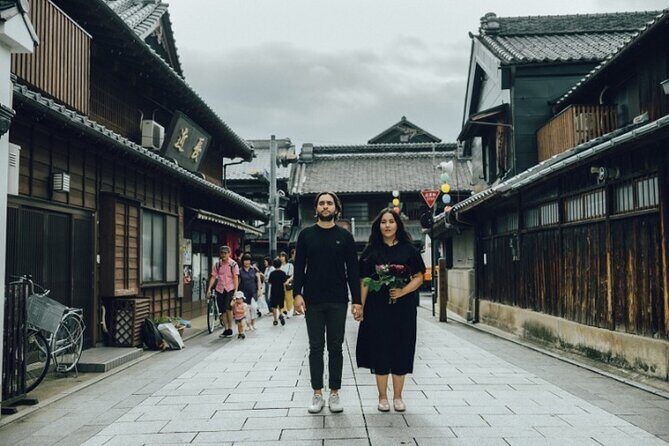
Your first stop is Oishi Park in the town of Oishi, on the northern shore of Lake Kawaguchiko. This is the kind of place where Fuji can look dramatically close—when the weather cooperates. You’ll also get views over the lake and the surrounding countryside.
You get about one hour here. That’s not a lot, so I’d use the time with a plan:
- Arrive ready to walk to the viewpoints quickly.
- If Fuji is visible, take photos early before clouds roll in.
- If it’s hazy, still spend your time—lake angles and seasonal color often look good even when the mountain is partly hidden.
One more detail that matters: the tour highlights seasonal beauty. Depending on when you go, you might see cherry blossoms, lavender, red leaves, or pink broom grass around the area. Since the tour is outdoors, your best bet is to dress for cool mornings and changing light.
Admission isn’t included for Oishi Park, so expect to pay your entry ticket separately if needed.
You can also read our reviews of more tours and experiences in Tokyo.



Oshino Hakkai: eight ponds, a thatched village, and a heritage-level stop
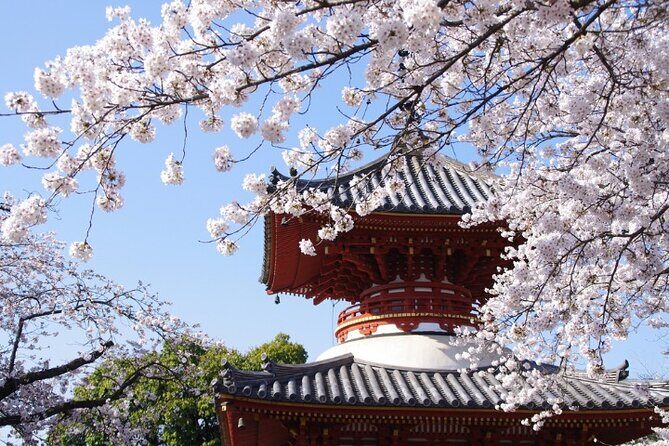
Next you’ll head to Oshino Hakkai, the eight spring-water ponds in Oshino, Yamanashi Prefecture. These ponds are fed by snowmelt from nearby Mount Fuji, and the area is considered one of Japan’s most picturesque natural landscapes tied to Fuji’s water cycle. The tour also frames Oshino Hakkai as a World Cultural Heritage site and a place with designated natural monument status.
You’ll have about two hours. That’s enough time to do the basics properly:
- Walk the pond area slowly and look for the differences in water color and tone from pond to pond.
- Take in the fact that the eight ponds are tied together by a single source (Fuji snowmelt), which is part of why the site feels so “system-like,” not random scenery.
- Spend time in the traditional village area with thatched-roof houses. It’s less about rushing for photos and more about getting a feel for rural daily life.
One practical note: the information provided with the tour says visitors can drink the water directly from the ponds. If you want to do that, follow what signage and staff indicate on the day. Even if the water is famous for clarity, you’ll still want to follow local rules.
Admission isn’t included for Oshino Hakkai, so budget for tickets and any optional purchases in the village shops.
Koedo Kawagoe, Little Edo: how to make a 3-hour town stop count
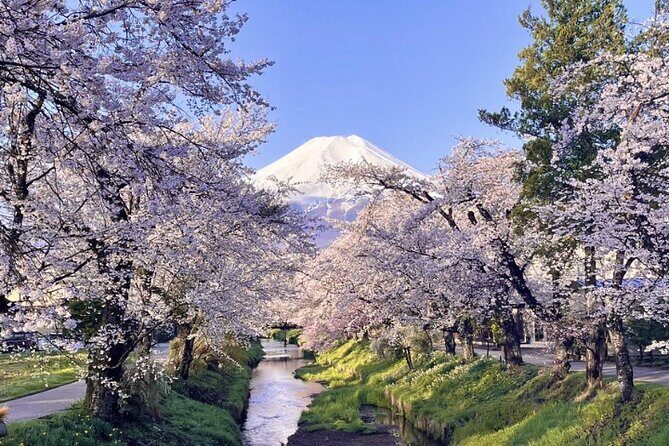
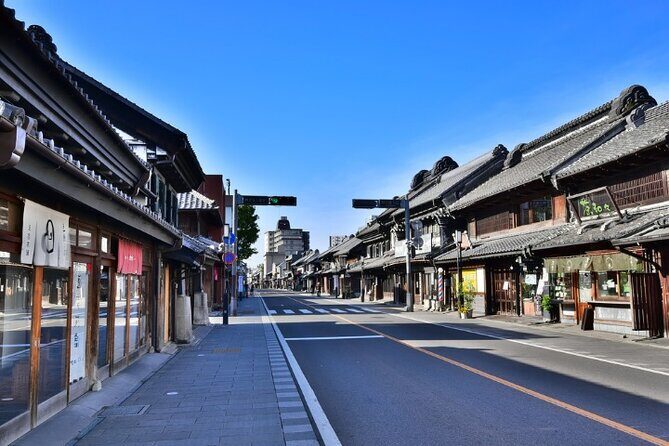
Then you’ll shift gears to Koedo Kawagoe in Saitama Prefecture, about 30 kilometers north of Tokyo. The nickname is Little Edo, and the reason is clear once you start walking: preserved Edo-period streets and buildings create that old-town rhythm.
You get about three hours here, which is a good amount for a town stop. It’s also the time you’ll want to manage your energy, because you’ll likely do more wandering on foot than at the first two stops.
Here are the anchor attractions the tour route highlights:
- Kawagoe Castle, built in the 16th century.
- Kitain Temple, with a collection of over 500 wooden statues of Buddha.
- The famous snack pull: Kawagoe yaki, a traditional sweet potato snack.
This town is ideal for slow browsing—small streets, storefronts, and the feeling of “strolling through another era.” Since this stop is listed as admission free in the itinerary, you’re mostly paying for what you choose to do and eat.
I’d treat this as your flexibility stop. If Oishi Park and Oshino Hakkai were mostly about set viewpoints, Koedo Kawagoe is where you can spend extra time where the streets pull you in.
Price and logistics: $85.02 is fair if you’re okay with bus time
At $85.02 per person for an about-10-hour day, this can be good value—if you’re the type who wants a guided plan and minimal navigation stress. You’re paying for:
- a round-trip, air-conditioned vehicle
- a professional English/Chinese-speaking guide
- a structure that strings together three worthwhile stops
A helpful extra clue: the tour uses a mobile ticket, which cuts down on paper fuss.
Now for the trade-off. The reviews included in the information you provided show two recurring complaints. One is that the coach ride can feel long and crowded, and you may not get much warning about motion sickness needs. The other is that traffic can stretch travel time so visiting time gets squeezed.
Here’s how I’d think about it:
- If you hate spending half the day inside a vehicle, you might feel shortchanged.
- If you’re fine with being in transit and you like the idea of seeing multiple targets in one go, this price can make sense.
Also note the tour depends on minimum participants (8) and runs with a maximum of 45. That’s common for day trips, but it explains why timing and vehicle logistics can vary by date.
Season matters: when Fuji-area flowers and colors help your photos
The tour specifically calls out seasonal highlights: cherry blossoms, lavender, red leaves, and pink broom grass. The key word here is seasonal. You won’t control the weather, but you can control your expectations.
If you’re going during a peak color window, you’ll get more “wow” per minute—especially at Oishi Park, where the lake-and-mountain framing can turn a standard photo into a standout one. If you’re outside a peak flowering period, you’ll still get great walking and views, just with less dramatic seasonal color.
Either way, plan for changing light. A clear morning can become a cloudy afternoon fast around the lake areas, so I’d time your photography for whenever visibility is best.





Guide quality and planning: why smooth transitions matter
This is the kind of day trip where guide competence changes the whole feel. When transfers run smoothly, you spend your time walking instead of waiting.
From the information you shared, the tour leadership has been praised by name, including Elli Wan and his team. That’s a good sign that coordination and instruction are taken seriously on at least some departures. You’ll also have a professional English/Chinese-speaking guide, which matters a lot in places like Oshino Hakkai where you’ll want to understand what you’re seeing while you’re actually there, not hours later.
Also, this route is a bundle of very different experiences. Good guidance helps you connect the dots: Fuji snowmelt becomes spring ponds. The same region’s history becomes an Edo-era town vibe. When that connection is explained clearly, the day feels more meaningful than a checklist.
Practical tips for a long day that starts in Shinjuku
Here’s what I’d do to make the day feel smoother:
- Bring motion-sickness help. The tour day can include long road time, and if you’re prone to nausea, plan early rather than waiting.
- Pack layers. You’ll likely move from Tokyo morning air to cooler lake-side conditions and back.
- Wear shoes you trust for walking. Koedo Kawagoe especially can mean lots of foot time on narrow streets and sidewalks.
- Have small cash ready for snacks and whatever you want to buy at each stop. The tour price covers the guiding and transport, not meals or drinks.
- Keep your photo timing flexible. If Fuji is partly hidden, don’t spend all your time staring at the same spot. Walk a bit and watch the view shift.
One more practical note: you’ll end back at the starting point. That’s convenient for planning, but it also means you’re committing to that full loop, so don’t schedule anything tight afterward.
Should you book this Tokyo day trip, Oishi Park, Oshino Hakkai & Koedo Kawagoe?
Book it if you want a guided way to hit three major icons in one day: Fuji-area views at Oishi Park, heritage ponds at Oshino Hakkai, and a walkable Edo-style town in Koedo Kawagoe. I especially think it’s a good fit if you’re short on time in Tokyo and you don’t want to piece together multiple transit connections.
Skip it or switch to an alternative if you’re very sensitive to long bus rides, or if you know you get motion sick easily. Traffic can be a real factor, and the day is long enough that squeezed stop time can feel frustrating.
If your priority is maximizing time at one place (for example, only Kawaguchiko sights or only heritage ponds), you might prefer a more focused trip. But if your goal is a well-structured sampler day—done with an air-conditioned vehicle and a guide—this one is a solid choice.
FAQ
Where is the meeting point for this tour?
You meet at Shinjuku L Tower, 1-chōme-6-1 Nishishinjuku, Shinjuku City, Tokyo 160-0023, Japan.
What time does the tour start?
The tour starts at 8:00 am.
What is included in the tour price?
Included are an air-conditioned vehicle, round-trip traffic, and a professional English/Chinese-speaking guide.
What is the total duration of the tour?
The tour is about 10 hours.
Which stops are included?
The itinerary includes Oishi Park, Oshino Hakkai, and Koedo Kawagoe.
Are entrance tickets included?
Not included are admissions for Oishi Park and Oshino Hakkai. Koedo Kawagoe is listed as admission free for that stop.
Is food or drinks included?
No. Beverages and meals are not included.
How big is the group?
The tour requires a minimum of 8 travelers and has a maximum of 45 travelers.
What format is the ticket?
This tour uses a mobile ticket.
What happens if weather is bad or the tour can’t depart?
The experience requires good weather. If it’s canceled due to poor weather, you’ll be offered a different date or a full refund. The tour also requires the minimum number of travelers to depart; if it doesn’t meet the minimum, you’ll be offered a different date/experience or a full refund.