REVIEW · TOKYO
Tokyo: Samurai Adventure! Authentic Sword Experience
Book on GetYourGuide →Operated by ICHIMILE Co., Ltd. · Bookable on GetYourGuide
Seeing samurai training up close is the hook here, and the best part is that you do hands-on practice with wooden practice swords in a controlled setting. I like the way the instructors build skills step by step, and I love the personal touch of meeting Dai-san and Kume-san and getting direct coaching. One thing to consider: this is a physical activity, so it’s not a good fit if you have back problems, vertigo, or any medical limitations that make movement risky.
This workshop puts you in a real training mood without turning it into an actual sword fight. You’ll start with warm-ups, learn basic grips and stances, then move into paired practice and demonstrations that feel like a movie scene. And yes, the photo moment is part of the package—so you leave with something more than a few blurry souvenir shots.
In This Review
- Why this Tokyo samurai workshop feels different
- Key things to know before you go
- Samurai Experience Photo Studio ICHI: the setting and meeting point
- Public vs private courses: which format fits your energy
- Public course: action-actor students + you in the mix
- Private course: history + tailored technique
- Warm-ups and basics: stance, grip, and safe sword handling
- The wooden sword practice: what you really do during the lesson
- Paired practice and samurai demonstration: where the movie feeling happens
- Photo session with your samurai: turning training into a keepsake
- Price and value: is $24 worth it in central Tokyo?
- Who should book (and who should skip this dojo workout)
- What to bring and how to show up prepared
- How to get the most from your class in under an hour
- Should you book this Samurai Adventure in Tokyo?
- FAQ
- Do I actually fight with a real sword?
- Is the lesson beginner-friendly?
- What kind of sword practice do I do?
- Can I choose between public and private lessons?
- Does the private course include cultural history?
- Are photos included?
- Do I need to wear special clothes?
- Is a samurai costume included?
- What languages are used during the workshop?
- Is it okay for someone with mobility or medical concerns?
Why this Tokyo samurai workshop feels different
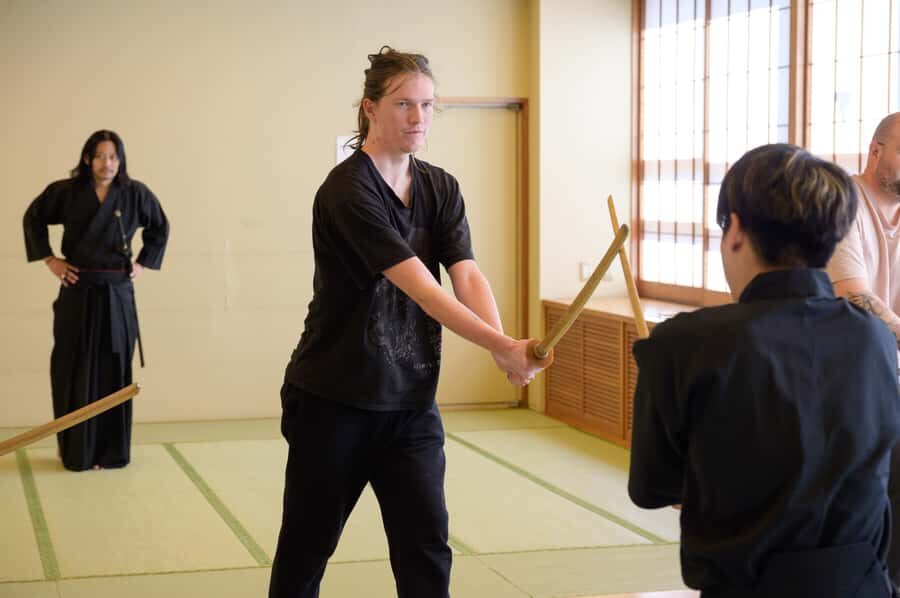
At its core, this experience is built around safety and authenticity at the same time. You’re taught by professional action actors, you practice the movements safely with trainers, and you watch skilled performers deliver techniques up close. The value is in the combination: history + live demonstration + your own try-at-it practice for a price that’s pretty reasonable for central Tokyo.
One possible drawback is that the lesson is intentionally short and tourist-focused, so you won’t become a swordsman in one sitting. But if your goal is to understand the basics, feel the rhythm, and interact with the instructors, you’ll likely come away impressed.
Key things to know before you go
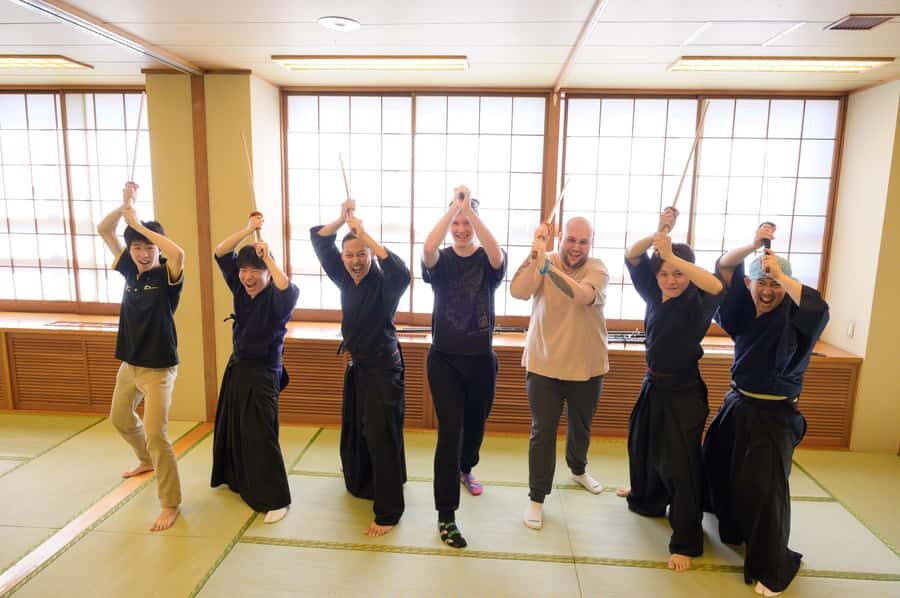
- Safe training with wooden practice swords so you can try real technique without actual fighting
- Dai-san and Kume-san are friendly, detailed instructors who guide you step by step
- Public course vs private course changes the vibe: observe Japanese actor-students or get tailored coaching
- Paired practice plus a strong samurai demonstration creates that action-movie energy
- Photos with the samurai make the experience feel complete, not just instructional
- Comfortable clothing and closed-toe shoes matter because you’re doing movement, not just watching
You can also read our reviews of more tours and experiences in Tokyo.



Samurai Experience Photo Studio ICHI: the setting and meeting point
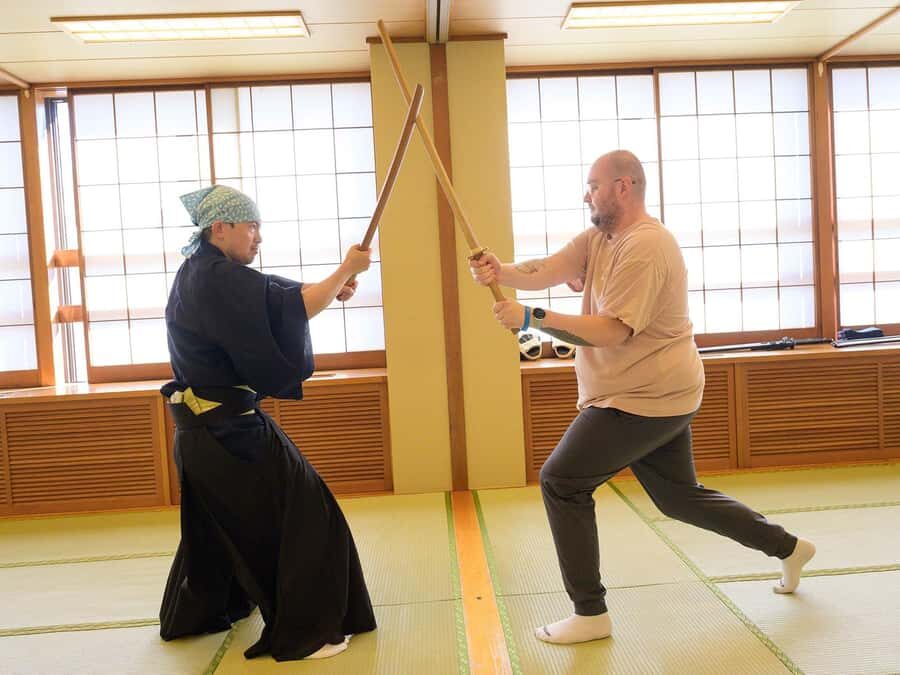
Your tour starts at Samurai Experience Photo Studio ICHI. It’s easy to find on Google Maps—search that exact name—and it’s in an area that’s straightforward from major Tokyo stops like Tokyo Station, Ginza, and Tsukiji.
In practice, what matters is that you begin at the studio. You’ll typically do the prep portion there, including getting ready for the session. One review mentioned that you dress up at the studio, then walk to a nearby building where the dojo training space is. That little “studio to dojo” shift helps you mentally switch from sightseeing mode to training mode fast.
The overall feel is very Tokyo: organized, close to transit, and built to be accessible for short visits. If you’re hopping between neighborhoods, this is the kind of activity that fits without eating your whole day.
Public vs private courses: which format fits your energy
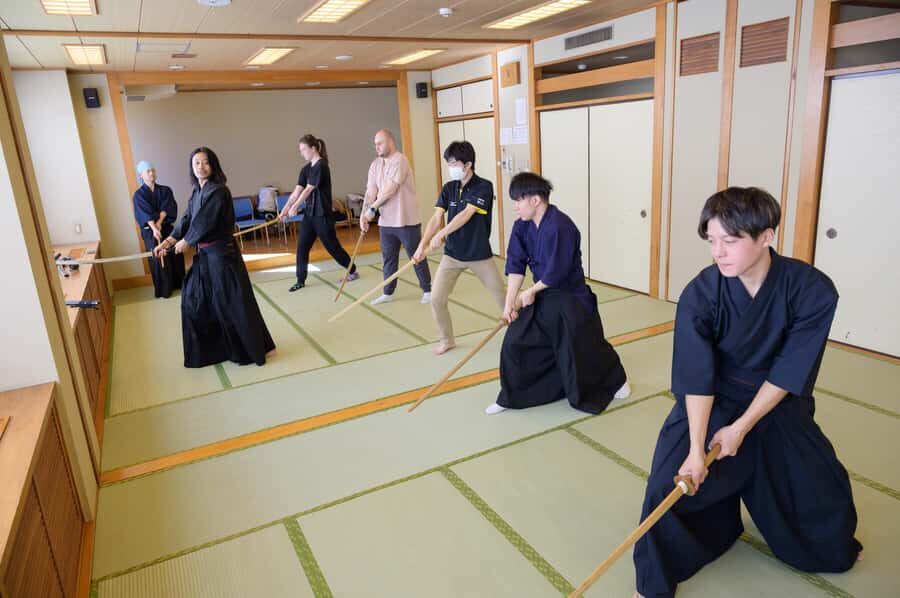
You can choose between a public course and a private course, and the difference is more than just cost—it changes who you interact with and how the instruction flows.
Public course: action-actor students + you in the mix
In the public option, you join a class where aspiring Japanese actors are learning samurai action. You’ll start by observing, then you practice alongside the group. This is a fun format if you like a social atmosphere, enjoy watching other people learn, and want your experience to feel like you’re part of something happening in real time.
It also means you might get a bit more language variety, since the workshop runs in Japanese and English. You can lean on the English side if you need it, but you’re likely to hear Japanese instructions as well.
A small note from experience shared by others: if the group is small, it can feel closer to a private lesson even when you didn’t book private. You can’t count on that, but it’s a nice reminder that sometimes the “public” class ends up feeling personal.
Private course: history + tailored technique
If you pick private, you start with a brief introduction to samurai history and culture. Then the action actor tailors the lesson to your level and goals. Private classes are especially popular with people who already know a bit of martial arts or who want more context and structure.
Choose this if you want:
- more individual correction on stance and grip
- a slower pace, based on your questions
- a more direct experience rather than a group learning flow
If you’re traveling as a duo and want it to feel like your own session, private is often the best move.






Warm-ups and basics: stance, grip, and safe sword handling
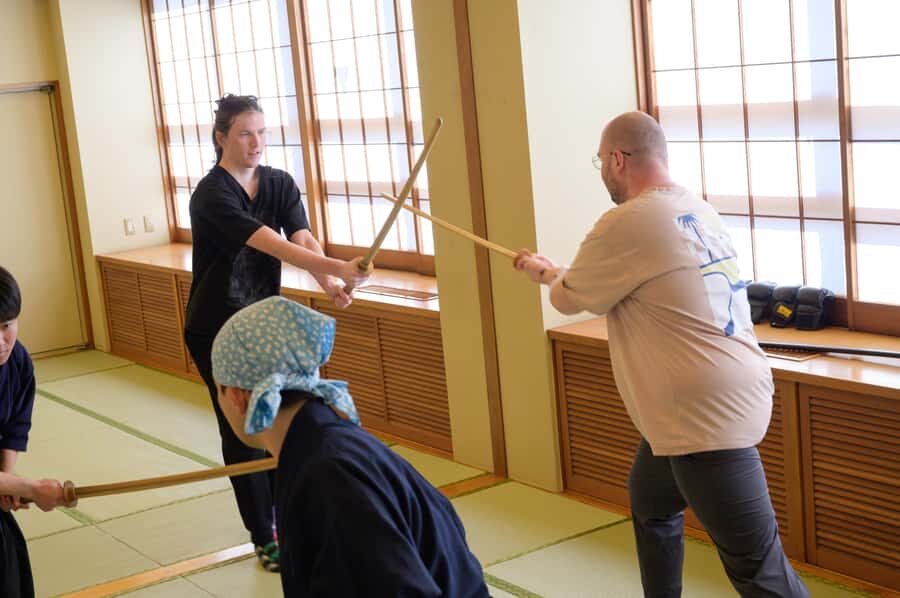
The workshop begins with warm-up exercises. That part might sound like filler, but it’s actually important because sword movements are all about body alignment—feet, hips, shoulders, and timing. If you’ve ever tried to mimic a martial arts move without warming up, you know how quickly it turns into stiff, awkward motion.
After warm-ups, the instruction focuses on fundamentals:
- how to grip properly
- how to hold the sword
- how to swing it with safe form
- basic stance and posture so your movement actually connects
Beginners are welcome. Since the instructors are professional action actors rather than traditional dojo teachers, the coaching tends to be very clear and practical. You’re learning choreography-like fundamentals that build into more realistic action scenes later.
And crucially: you will not engage in actual sword fighting. This is technique practice using practice swords, so your main task is learning the movements safely.
The wooden sword practice: what you really do during the lesson
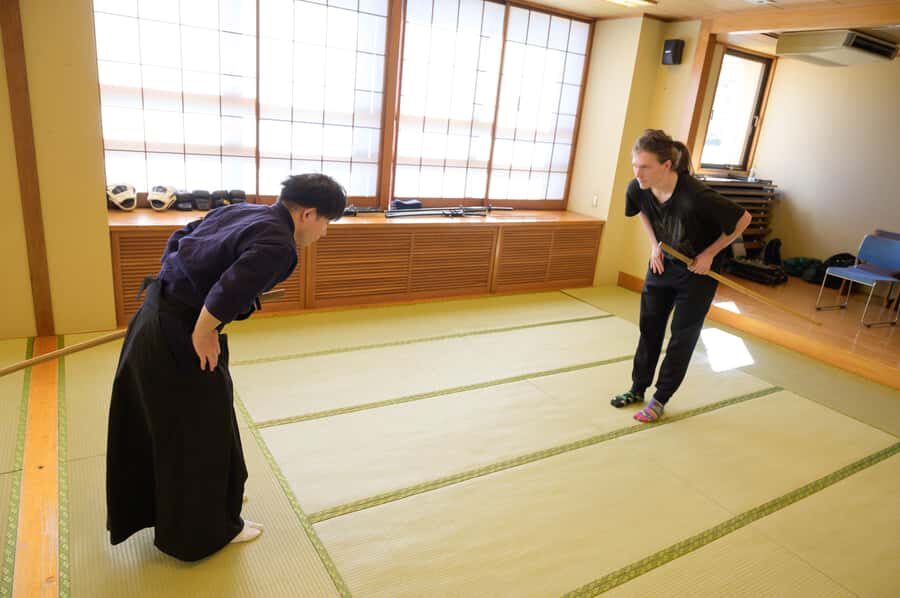
Once you’ve learned the basics, you move into hands-on practice with wooden swords. This is where the experience becomes memorable, because you’re no longer just watching.
The structure typically goes like this:
- you learn essential movements
- you practice strikes and defensive motions
- you build comfort with timing and spacing
The wooden swords keep things safe, but the movements still have weight and momentum. You’ll feel the difference between holding a pose and actually swinging through with control.
What you should pay attention to is form over force. The instructors’ job is to keep the session fun and safe, so you’ll get corrections that help you avoid wild, panicky motion. That’s part of why this activity earns such strong feedback—people seem genuinely able to participate without feeling intimidated.
Also, closed-toe shoes and comfortable clothes aren’t just rules. They protect your ability to move and pivot correctly.
Paired practice and samurai demonstration: where the movie feeling happens
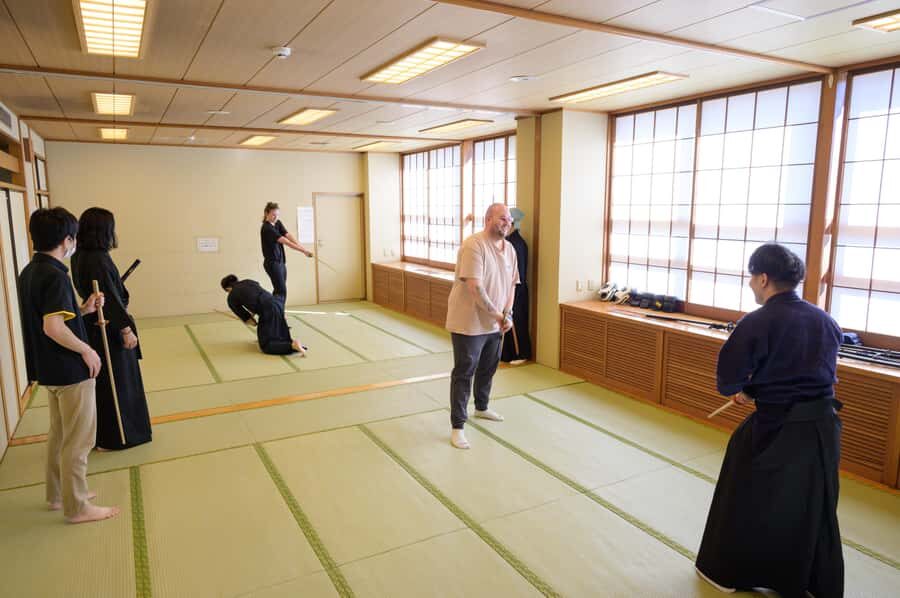
After the basics, you shift into paired practice with a professional samurai. This is the moment many people remember most, because you experience a scene-like flow—timing, spacing, and coordinated movement with another trained performer.
Even though it’s still safe and instructional, it feels like a higher level than the early technique drills. You get the sense of what samurai action looks like in motion, not just as a diagram or a still photo.
Then comes a powerful demonstration by the samurai. Watching this part matters because it gives context for everything you just practiced. When you see the full technique performed with control and confidence, your brain connects the basics to something larger.
This is also where the action-actor training style shines: the demo isn’t just technical—it’s built to communicate the character of the movement so you can appreciate it up close.
Photo session with your samurai: turning training into a keepsake
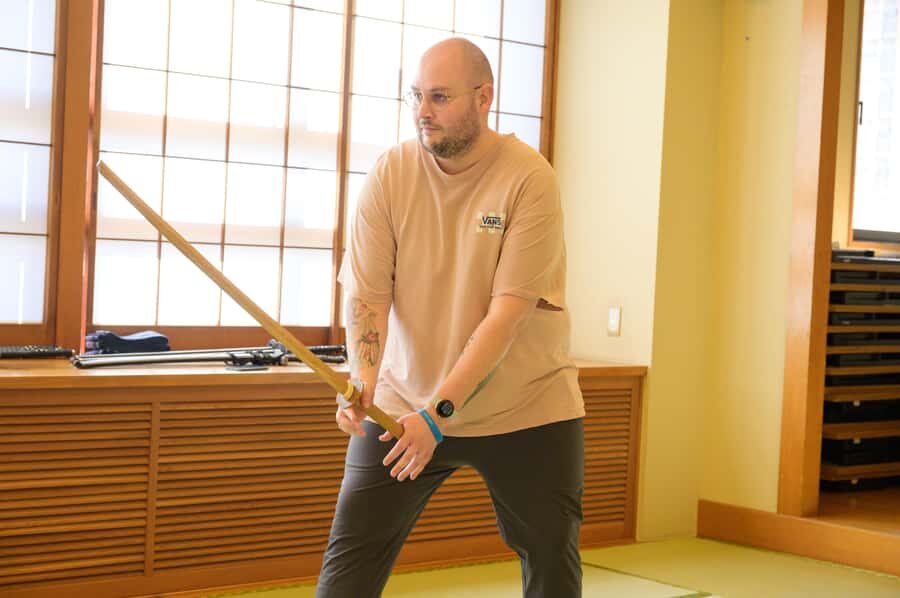
At the end, you get the chance for memorable photos with the samurai. This is included, and it changes the whole vibe from workshop to keepsake.
A few things make the photo moment feel more meaningful than typical tourist photos:
- you’ve already practiced basic movements, so you’re not standing there cold
- the session includes the samurai presence up close
- you can capture the outfit and the training mood together
Some people also mention trying on samurai clothing or a kimono as part of the experience flow. The important detail is that samurai costumes are available as an option, so ask or confirm what’s included for your specific session if clothing is a priority.
If you’re unsure about doing everything, simply observing can still be enjoyable. But the best photos usually come after you’ve participated enough to look like you understand what you’re doing.
Price and value: is $24 worth it in central Tokyo?
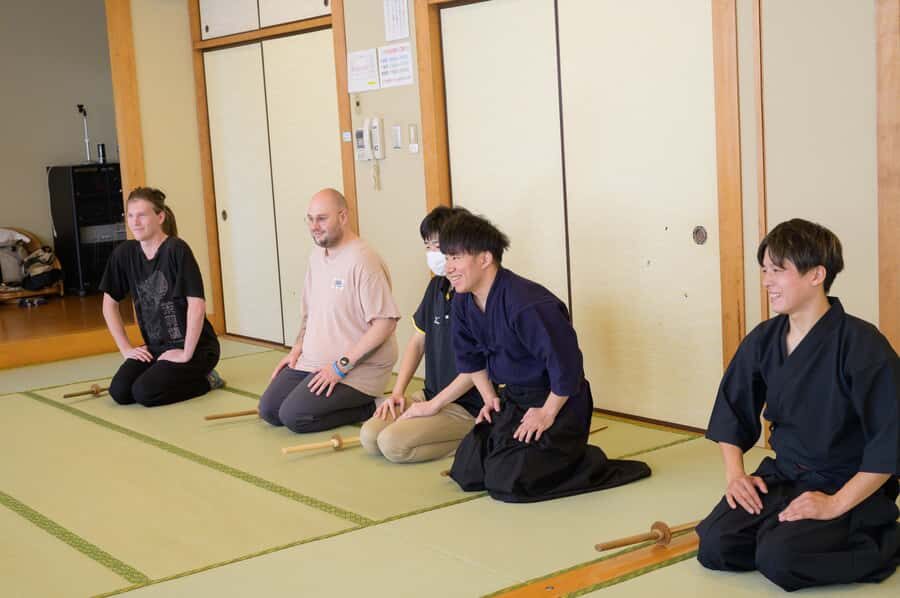
For $24 per person, this workshop offers a strong value mix for Tokyo. You’re paying for:
- instruction by professional action actors
- live samurai training demonstrations
- hands-on practice with wooden swords
- an included photo session
- a brief introduction to samurai history and culture
In a city where many paid activities are either purely cultural or purely hands-on, this one combines both. You’re not just watching someone do a performance. You’re learning basic technique, practicing it, and then seeing what it looks like when done by a skilled professional.
The key value point for most people is that the hands-on part feels real without being dangerous. That’s worth paying for, especially if you’re a beginner who wants the experience without the stress of mastering technique on your own.
Who should book (and who should skip this dojo workout)
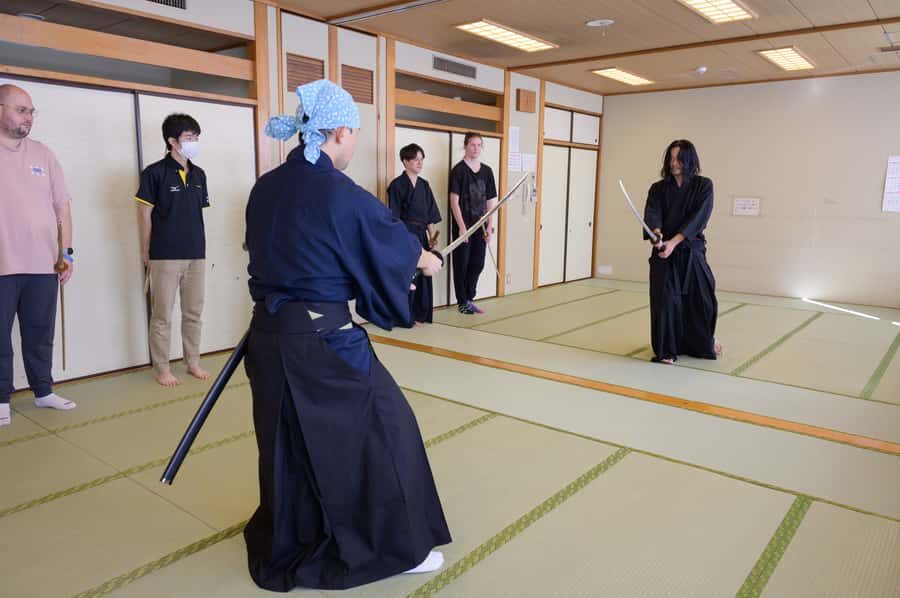
This is best for people who want a fun, physical, beginner-friendly introduction to samurai sword movements and training culture. It’s also ideal if you like interactive classes and want a clear structure: warm-ups, basics, practice, paired action, demo, photos.
It’s likely a poor fit if you:
- are pregnant
- have back problems
- have vertigo
- have pre-existing medical conditions that could be affected by physical movement
- use a wheelchair or need electric wheelchair access
Also, this activity isn’t for anyone expecting a quiet, seated museum visit. You’ll be standing, moving, and gripping a practice sword, so plan accordingly.
What to bring and how to show up prepared
The rules are simple, but they matter.
Bring:
- comfortable clothing
- closed-toe shoes suitable for physical activity
Not allowed includes high-heeled shoes, smoking, drones, and alcohol or drugs. So come prepared to treat this like a proper training session, not a casual street performance.
Timing tip: arrive 15 minutes early. That gives you a buffer for setup so you don’t feel rushed before learning begins.
Language note: the workshop runs in Japanese and English, so you’ll have a way to follow along even if your Japanese is limited.
How to get the most from your class in under an hour
You’ll enjoy it more if you approach it with the right mindset. Think practice, not performance. Your goal is to learn the movements clearly and safely, not to recreate a perfect martial arts video.
A few ways to make it land:
- Pay attention to stance and grip early. If those are off, everything later feels harder.
- Ask questions if something feels unclear. Instructors tend to be helpful and detailed.
- Watch the demonstration with new eyes after you’ve practiced. The “why” clicks faster then.
- Don’t rush the pairing part. Control first, speed later.
Also, if you need a break, you might find water offered during the lesson flow. If you’re someone who gets tired easily while moving, that little support can help.
Should you book this Samurai Adventure in Tokyo?
Book it if you want:
- a short, memorable Tokyo experience that mixes culture and movement
- beginner-friendly sword basics using wooden practice swords
- a fun group or private class with instruction from action professionals like Dai-san and Kume-san
- included photos that turn effort into a real keepsake
Skip it if you need a totally seated, low-movement activity, or if any of the health and mobility limits listed above apply to you.
If your trip has you craving one “I did something” experience beyond temples and neighborhoods, this one is a solid choice. For $24, it’s hard to beat the combo of hands-on practice, close-up demonstration, and photo payoff in the heart of Tokyo.
FAQ
Do I actually fight with a real sword?
No. You do not engage in actual sword fighting. You learn the movements safely using practice swords.
Is the lesson beginner-friendly?
Yes. Beginners are welcome, and instructors guide you through basics like stance and grip before moving into practice.
What kind of sword practice do I do?
You practice basic strikes and defensive moves using wooden practice swords provided during the workshop.
Can I choose between public and private lessons?
Yes. You can pick a public course, where you join a class and interact while aspiring Japanese actors learn, or a private course, where instruction is tailored to your level and goals.
Does the private course include cultural history?
Yes. The private course includes a brief introduction to samurai history and culture before the tailored training.
Are photos included?
Yes. A photo session with the samurai is included at the end.
Do I need to wear special clothes?
You should wear comfortable clothing and closed-toe shoes suitable for physical activity.
Is a samurai costume included?
Samurai costume use is available as an option, but the base included items don’t promise a costume in the details provided.
What languages are used during the workshop?
The workshop is offered in Japanese and English.
Is it okay for someone with mobility or medical concerns?
The experience is not suitable for wheelchair users and electric wheelchair users, and it’s also not recommended for people who are pregnant, have back problems, have vertigo, or have pre-existing medical conditions.