REVIEW · TOKYO
Tokyo: Samurai Experience with a real sword
Book on GetYourGuide →Operated by H.I.S. Co Ltd(TIC) · Bookable on GetYourGuide
A real katana changes how you see samurai. This Tokyo session blends kimono and hakama dress-up with hands-on sword work, including a Shiden-ryu-style demo and an actual sword-to-sword fight. You’ll also get a video and photos so the moment follows you home.
What I like most is the focus on real practice: you learn basics first, watch the iai and swordsmanship demonstration, then join in with drills and a controlled combat sequence. The other big win is the take-home keepsake, since your action is recorded as you cut objects with a genuine samurai sword and present yourself for photos.
One consideration: this activity is not suitable for wheelchair users or pregnant women, and it’s also a hands-on, full-session experience where you’ll want to arrive ready to move and follow safety rules.
In This Review
- Key things worth knowing before you go
- From McDonald’s West Exit to Samurai Training: Finding the start in Tokyo
- Kimono and hakama dressing: the look, the rules, and the payoff
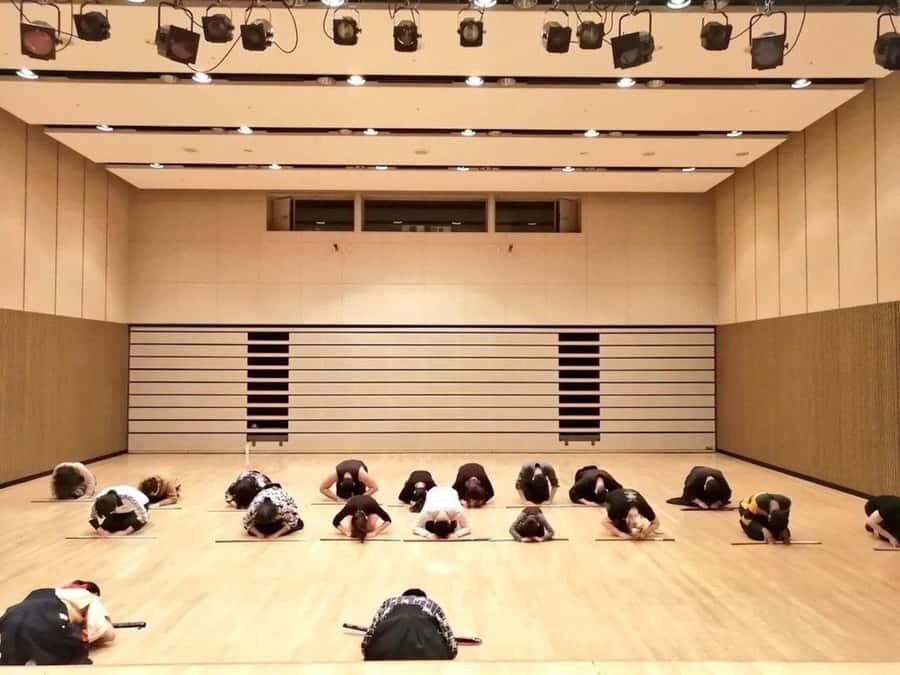
- Zarei etiquette and Shiden-ryu basics: the respectful start before the sword play
- Sword handling, forms, and Uchikomi: getting from basics to a controlled fight
- The cutting moment with a real sword: video, safety, and the 12+ rule
- Video and commemorative photos: how the souvenir is produced
- Time management: how the 2 hours typically flow
- Price and value: what $102 really buys you in Tokyo
- Practical tips so you can focus on the sword (not logistics)
- Who this is best for (and who should skip it)
- Should you book this Samurai with a real sword experience?
- FAQ
- How long is the Tokyo Samurai Experience with a real sword?
- What is the price per person?
- Where is the meeting point?
- What should I bring?
- Do I need to bring a drink?
- Is the sword cutting part available for all ages?
- What is included in the experience?
- Is there video and photos taken during the session?
- What languages are offered?
- Who should not book this activity?
Key things worth knowing before you go
- Kimono and hakama dressing is part of the training, not just a photo-op
- Shiden-ryu demonstration sets the tone, then you jump to hands-on sword skills
- Zarei (seated etiquette) is included, so you learn manners, not only motion
- Uchikomi drills and a sword-to-sword segment make it feel like training, not a show
- Real-sword cutting is available for participants aged 12+ with video recording
- Video and commemorative photos are provided, so you don’t leave empty-handed
From McDonald’s West Exit to Samurai Training: Finding the start in Tokyo
The experience begins at a specific, easy-to-follow landmark: after you exit the ticket gates, take the west exit and head downstairs to the ground floor where you’ll find McDonald’s. Look for staff holding a meeting board.
That matters more than you might think. In Tokyo, one wrong turn can cost you 20 minutes, and this tour asks you to arrive early. Plan to get there at least 20 minutes before your scheduled start so you can check in, get oriented, and avoid that last-minute stress that makes everyone act weird.
One more practical point: the meeting location may vary based on the date within Tokyo. You’ll be notified if anything changes, so keep an eye on your confirmation messages.
You can also read our reviews of more tours and experiences in Tokyo.



Kimono and hakama dressing: the look, the rules, and the payoff
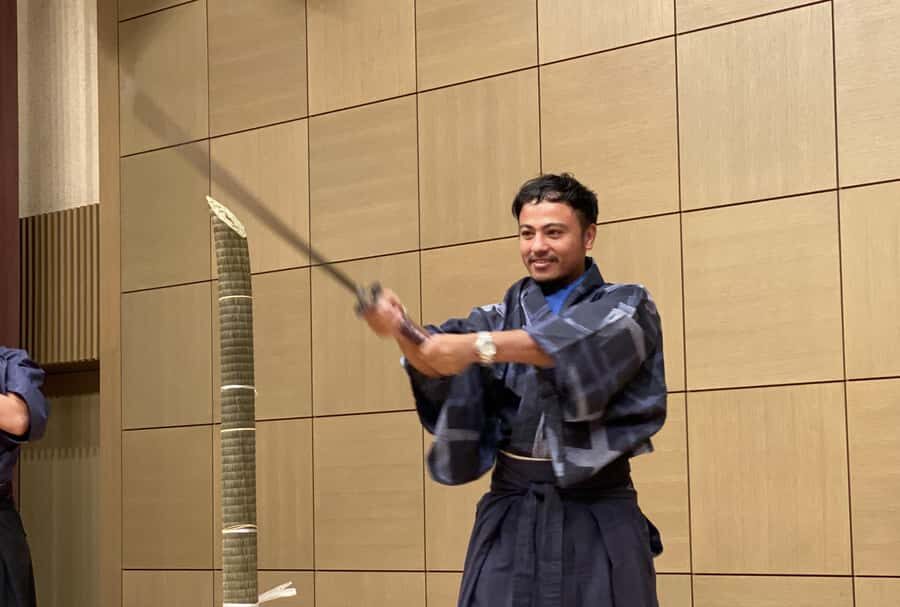
You don’t just wear costume-style clothing. You’ll dress in a traditional kimono and hakama as part of the program, then go through etiquette and sword training while properly set up.
Why that’s valuable: the clothing forces you to adjust posture and movement. That’s part of how Japanese martial arts training teaches control and awareness. You’ll likely spend some time getting dressed and set before the sword work begins, which also means the session feels complete. You get the full sequence, from appearance to action, rather than a quick costume change and then you’re out the door.
What I suggest you do on your end:
- Wear comfortable base clothes you can move in before dressing
- Bring a change of clothes so you’re not stuck in damp or rumpled stuff afterward
- Bring water, since this is a 2-hour physical activity with safety checks
Also, the program isn’t framed as a passive museum stop. You’ll be doing real drills, so comfortable clothing is part of your success.
Zarei etiquette and Shiden-ryu basics: the respectful start before the sword play
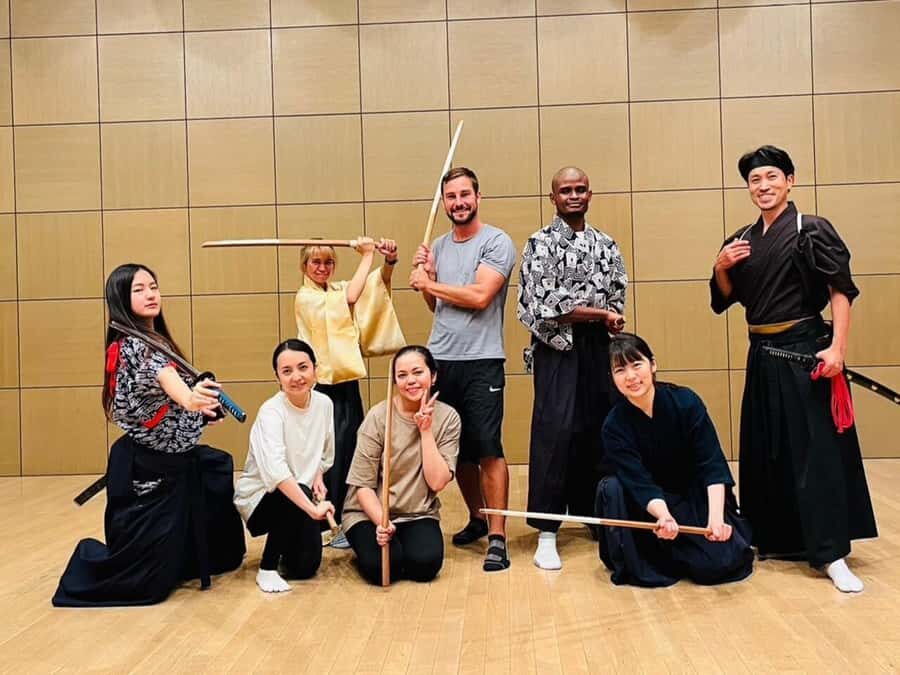
Most sword experiences skip the manners and jump straight to flashy motion. This one starts with structure. You’ll be introduced to rules and samurai etiquette, including Zarei (seated etiquette).
Then comes a demonstration of technique by Shiden-ryu. You’ll watch iai and swordsmanship basics before you try. That’s a smart order because iai is about control: drawing, aligning, and responding with intention. When you learn the basics in the right sequence, the later practice makes more sense.
What you’re really learning here is not just how to swing a sword. You’re learning how to behave with one: timing, stance, and the kind of calm focus that makes the sword work look precise.
You’ll also be taught sword handling techniques. That typically includes how to hold and position the weapon safely and how to prepare for the drills that come next.
Sword handling, forms, and Uchikomi: getting from basics to a controlled fight
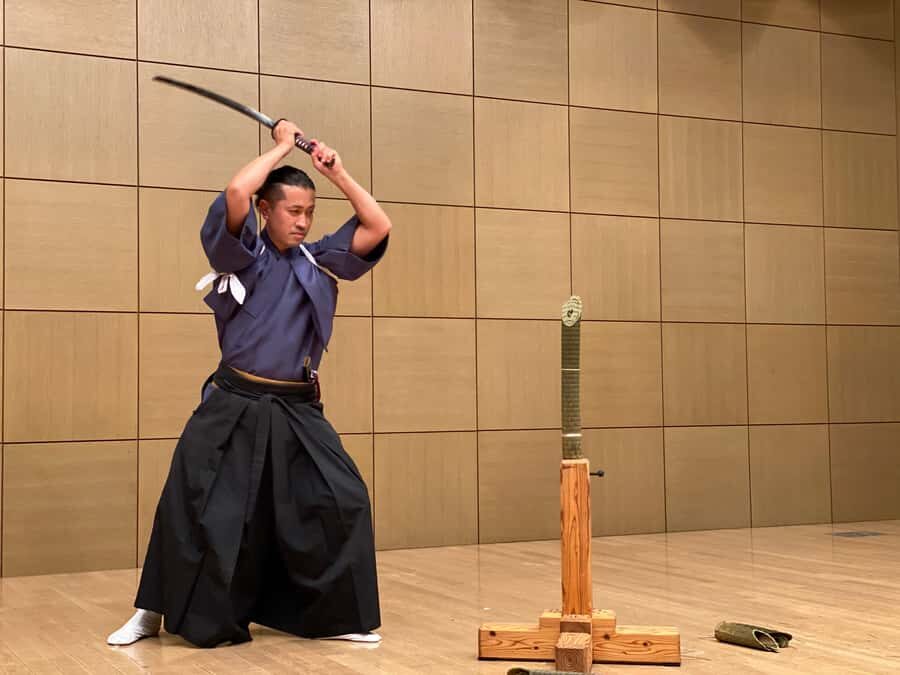
After dressing and instruction, the program moves into forms and movement practice, then transitions into interactive combat training.
Here are the major training beats you should expect:
- Sword handling techniques you can actually repeat
- Samurai forms and movements to build basic muscle memory
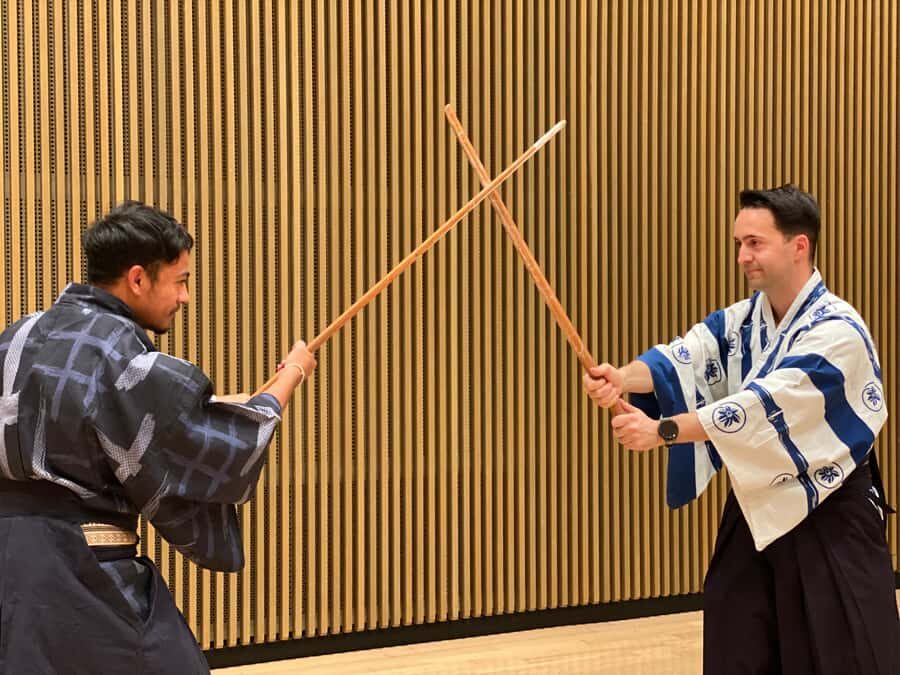
- Sword-to-sword combat drills (Uchikomi)
That Uchikomi piece is the part many people are here for. It’s where the experience stops being only educational and starts being physical and interactive. In a well-run session, it won’t feel like chaos. You’ll follow the coach’s cues, use the safe practice setup, and work through the movements with guidance.
Why this is better than a pure performance: you’re not just watching the samurai story. You’re practicing the logic behind the techniques. And because you start with etiquette and handling basics, the fight segment feels connected to what you learned, not random.
A couple of practical expectations:
- You’ll need to listen carefully to safety instruction.
- You’ll likely practice in a way that’s staged and controlled, so you can focus on form and timing rather than speed.
The cutting moment with a real sword: video, safety, and the 12+ rule
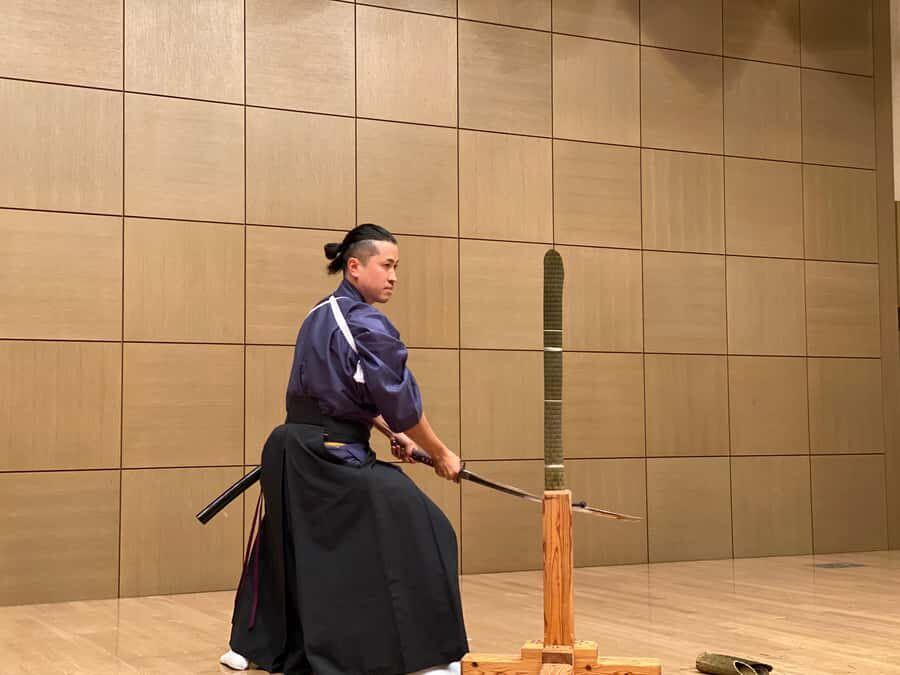
The highlight, in plain terms, is cutting objects with a genuine samurai sword, with video recording available. This is the moment you’ll remember most because it’s the clearest proof you’re doing something real.
Important rule: cutting objects with a real sword is available for participants aged 12 and above. If you’re traveling with younger kids, you can still do much of the session, but the cutting portion won’t be for them.
From a value perspective, the cutting segment is what separates this from the cheaper kimono photo experiences. You’re paying for actual instruction and actual sword work, not just a costume look.
To make that cut moment go smoothly:
- Follow the coach’s safety stance and grip instructions.
- Don’t rush. Good form beats bravado.
- Bring the right items so you’re not distracted, like water and a drink with a secure lid.
Even if you’re not a martial arts person, the process is set up so you get a guided try. The goal is to get you to complete the action safely and with enough technique to feel proud of it.






Video and commemorative photos: how the souvenir is produced
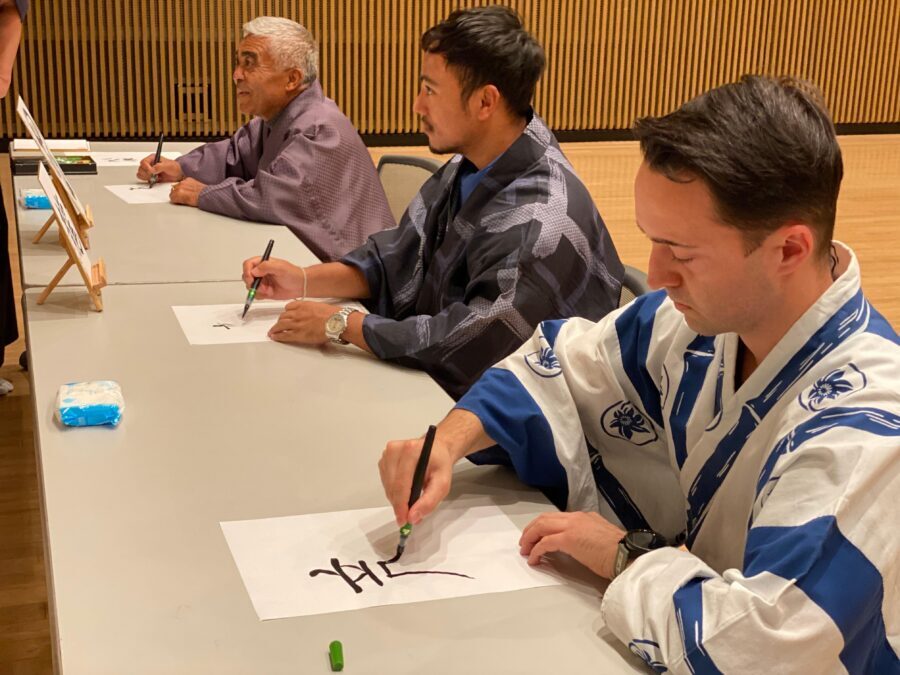
You’ll capture your experience on video as you go through the key moments, especially around cutting objects with the real sword. There’s also a commemorative photo session.
Why that souvenir matters: it turns a 2-hour activity into a lasting story. The sword is one thing, but the photos and video help you remember the full chain: dressing, etiquette, the demo-to-practice transition, and the final action.
The program includes photography charges and the presentation and video recording. In other words, you shouldn’t need to scramble for a camera setup or ask someone to film while you’re holding a weapon.
If you’re the type who wants proof that you did it, this is a big plus. If you don’t care about souvenirs, you might still want to go because the video also acts like a personal progress record of your form and timing.
Time management: how the 2 hours typically flow
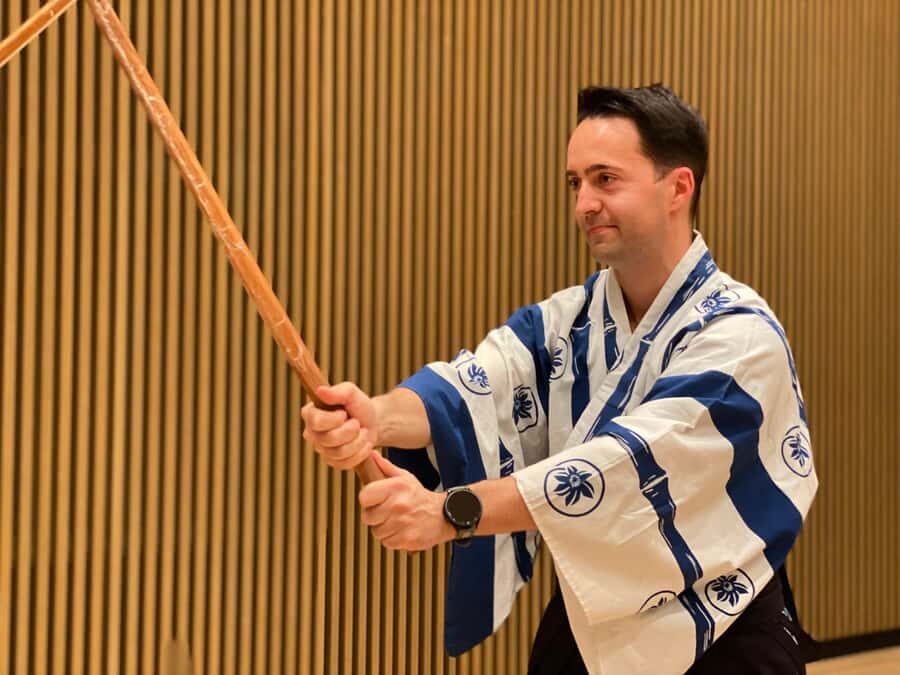
This tour runs about 2 hours, so the pace is tight. You’re not floating around for a half-day. You’re walking in, dressing, learning, practicing, and finishing in one smooth run.
A typical flow includes:
- Reception and kimono dressing
- Introduction to samurai etiquette (Zarei)
- Sword handling techniques
- Samurai forms and movements
- Sword-to-sword combat (Uchikomi)
- Presentation and video recording
- Cutting objects with a real sword with video recording available
- Zarei (seated etiquette)
- Commemorative photo session
- Changing clothes and conclusion
The main takeaway for your planning: build buffer time around it. You’ll want to eat beforehand or afterward without rushing. And because you’re doing physical work and a change of clothes, plan something low-key in the hours around your booking.
Price and value: what $102 really buys you in Tokyo
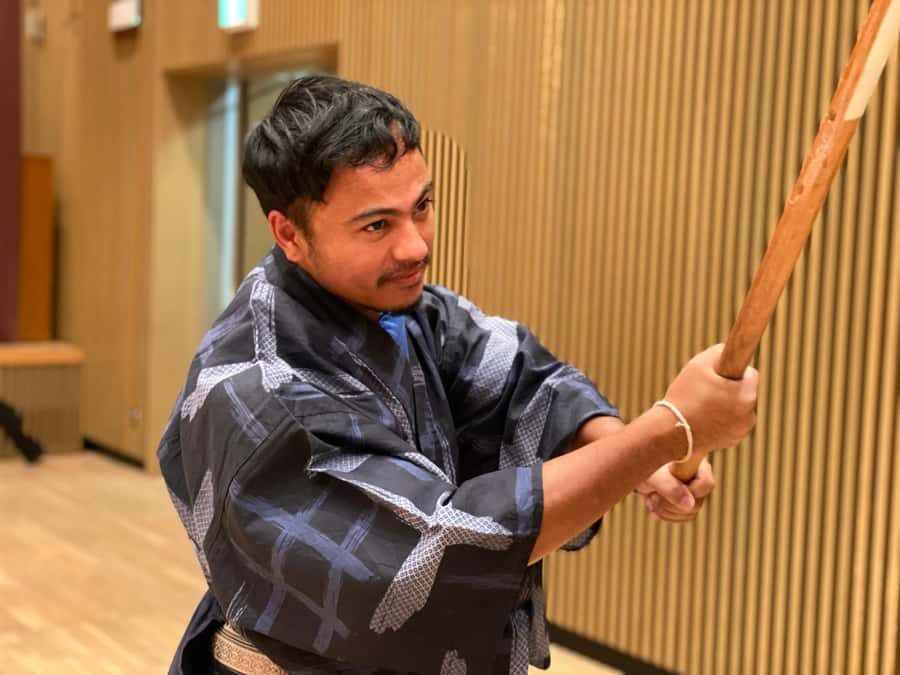
At about $102 per person for a 2-hour session, this isn’t a budget add-on. You’re paying for several things at once:
- A professional coach and English-speaking staff
- Venue and experience fees
- Photography and video recording
- Real-sword instruction and supervised practice, including cutting
If your goal is a quick kimono photo, you’ll likely find cheaper options. But if your goal is to handle a real katana and do cutting plus sword-to-sword drills, the value shifts. You’re buying a guided training session with safety structure and a proper souvenir package, not just a rental and a backdrop.
In Tokyo, that mix is what makes it feel worthwhile. You get the cultural presentation, yes, but also the hands-on practice component that most other experiences don’t provide.
Practical tips so you can focus on the sword (not logistics)
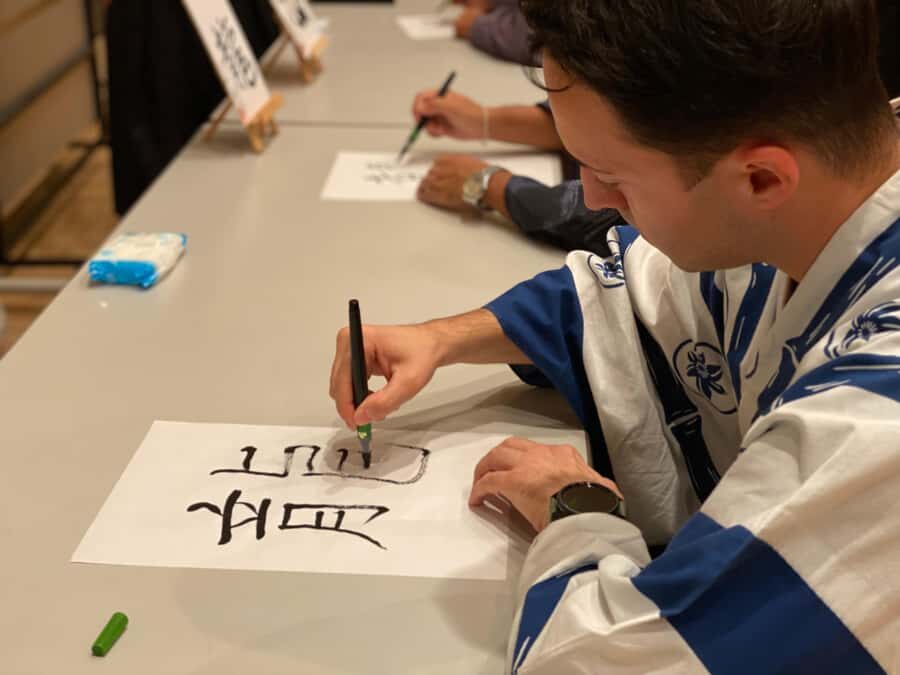
A few details will help your session go smoother:
- Provide your height and weight during the reservation form. This matters for fitting and safety setup.
- Bring a change of clothes and water.
- Bring a drink with a secure lid.
- Wear comfortable clothes you can move in during the training portion.
- Arrive 20 minutes early at the meeting point.
The program also lists “not allowed” items: no smoking and no alcoholic drinks in the vehicle. If you’re coming straight from lunch, skip the beer plan and keep it simple until after the session.
Finally, don’t try to show up like it’s a casual class. This is structured, with etiquette and safety. The more calmly you follow instructions, the more fun you’ll have.
Who this is best for (and who should skip it)
This is ideal if you want:
- A real Tokyo activity tied to samurai culture, not just a costume stop
- Hands-on instruction in sword handling and etiquette
- The thrill of seeing your cut and action recorded on video
It may not be ideal if you:
- Use a wheelchair (not suitable)
- Are pregnant (not suitable)
- Want a purely observational experience (this is training and participation)
If you’re traveling with teens, the cutting rule (12+) is encouraging. Just make sure everyone in your group understands the activity is physical and requires attention.
Some departures include extra moments beyond the sword segment, like a calligraphy break and a small meal, based on reported experiences. Even if those aren’t the headline, they add warmth and give the day more texture than only drills.
Should you book this Samurai with a real sword experience?
Book it if you want the real thing: kimono dressing, etiquette lessons, Shiden-ryu demo, sword handling, uchikomi-style training, and a real-sword cutting moment with video and photos included. The price makes sense when you compare it to the cost of a photo-only experience plus the fact that you’re getting supervised, take-home recorded action.
Consider skipping if you need high accessibility options, or if you’re looking for something mostly seated and observational. Also be honest about the 2-hour pace. This is active and focused, and it works best when you’re ready to follow directions and move.
If that sounds like your kind of Tokyo day, this is a strong choice.
FAQ
How long is the Tokyo Samurai Experience with a real sword?
The experience lasts about 2 hours.
What is the price per person?
The price is listed as $102 per person.
Where is the meeting point?
Meet after exiting the ticket gates, go out the west exit, and go down to the ground floor where you will find McDonald’s. Staff will be holding a meeting board.
What should I bring?
Bring a change of clothes, water, and comfortable clothes.
Do I need to bring a drink?
Yes. You should bring a drink with a secure lid.
Is the sword cutting part available for all ages?
Cutting objects with a real sword is available for participants aged 12 and above.
What is included in the experience?
It includes a professional coach, English-speaking staff, experience fees, venue fee, and photography charge, plus reception, kimono dressing, etiquette instruction, sword handling, forms and movements, sword-to-sword combat drills, presentation and video recording, cutting objects with video recording available, Zarei, a commemorative photo session, and changing clothes.
Is there video and photos taken during the session?
Yes. You’ll receive a video and photos as part of the souvenir from the experience.
What languages are offered?
The instructor and staff are listed as English.
Who should not book this activity?
It is not suitable for wheelchair users or pregnant women.