REVIEW · TOKYO
Small Group Tour Mount Fuji and Lake Kawaguchi from Tokyo
Book on Viator →Operated by Tourist Japan · Bookable on Viator
Mount Fuji changes with every viewpoint you stop at. This small-group day trip layers iconic Fuji spots—Chureito Pagoda, Lake Kawaguchi, Oshino Hakkai, and the 5th Station—into one smooth, guided loop.
Two things I like a lot: the small group size (max 15) keeps it friendly and easy to ask questions, and the guides bring the kind of care that actually helps you enjoy the day (practical tips, route tweaks for families, and even comfort help like heat-warmers in cold weather). One catch to plan around: visibility is weather-dependent, especially at the 5th Station, and the day includes some walking with an optional climb of about 400 steps.
In This Review
- Key things to know before you go
- Starting From Tokyo: the 7:50 a.m. meeting and ride rhythm
- Arakurayama Sengen Park: Chureito Pagoda views plus an optional stair test
- Oishi Park by Lake Kawaguchi: the best spot to slow down and watch Fuji
- Oshino Hakkai: ponds, thatched houses, and a calmer Fuji side
- Mt. Fuji 5th Station: higher air, bigger views, weather reality check
- Fujiyoshida lunch and shopping: use the free time well
- Transfers, pacing, and how the guide can change your day
- Value for $99.50: what you’re really paying for
- Who this tour suits best (and who might not)
- Should you book the Small Group Tour to Mount Fuji & Lake Kawaguchi?
- FAQ
- How long is the Mount Fuji and Lake Kawaguchi tour?
- What time does the tour start, and where do I meet?
- What group size should I expect?
- What’s included in the price?
- Are meals and drinks included?
- Are entrance tickets included?
- Will I definitely see Mount Fuji?
- Is there a lot of walking or stairs?
- What is the cancellation and refund policy?
Key things to know before you go
- Small group of up to 15: a better vibe than big bus tours, and easier pacing at viewpoints.
- Morning start (7:50 a.m.) from Lad’s de Wine Shimbashi: you’ll be out of Tokyo early enough to beat crowds in places like Arakurayama.
- Multiple “Fuji angles”: Chureito Pagoda, Oishi Park by Lake Kawaguchi, then higher views from the 5th Station.
- A real culture stop, not just photos: Oshino Hakkai’s ponds and thatched houses.
- Moderate physical demands: you should be able to handle climbing (about 400 steps optional).
- Some extras cost extra: meals aren’t included, and several sites list admission tickets as not included.
Starting From Tokyo: the 7:50 a.m. meeting and ride rhythm
Your day starts at Lad’s de Wine Shimbashi, Minato City, Shinbashi (address: 1-chōme 154 相鉄フレッサイン新橋日比谷口別館1階). Meet-up is set for 7:50 a.m., and the tour runs about 10 hours total, ending back at the same location.
You’ll travel by an air-conditioned vehicle with an English-speaking guide. The tour also uses a mobile ticket, which is handy when you’re juggling trains, coffee, and a backpack that suddenly feels too small.
This timing matters more than you’d think. Arakurayama and the Fuji viewpoints can get packed fast, and the early start gives you a better shot at clear views. Still, build flexibility into your mental schedule: heavy traffic during weekends or peak Japanese holiday periods can push the return time later.
You can also read our reviews of more tours and experiences in Tokyo.



Arakurayama Sengen Park: Chureito Pagoda views plus an optional stair test
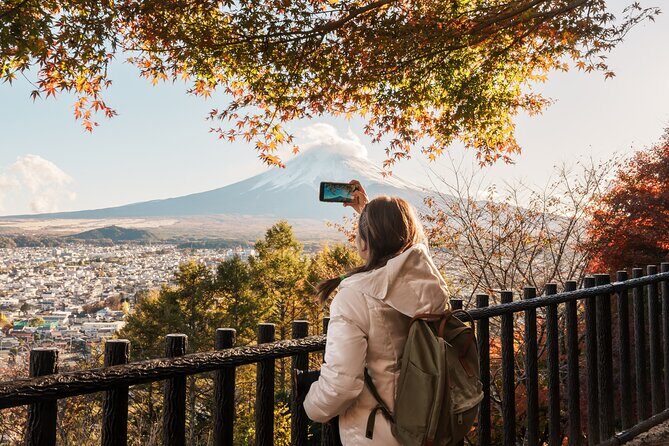
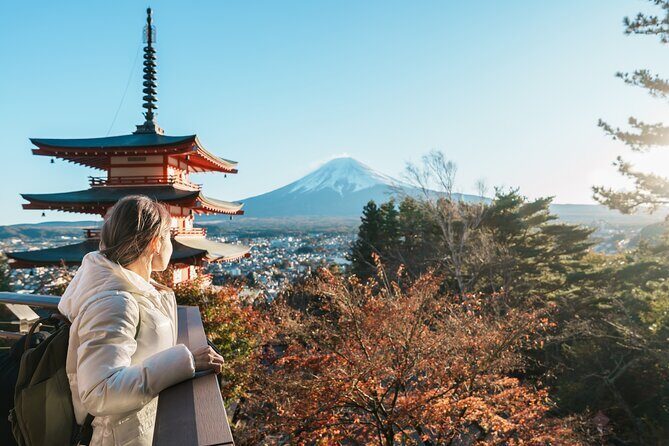
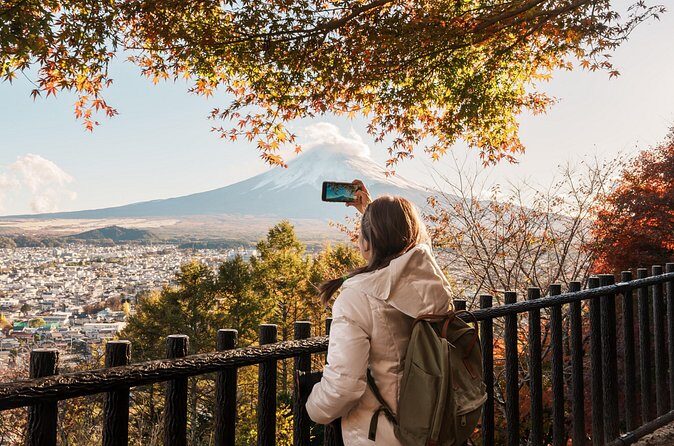
Your first major stop is Arakurayama Sengen Park, which is home to the Chureito Pagoda and the Arakura Fuji Sengen Shrine. You’ll spend about 2 hours here, and the climb/viewpoint approach can involve a stair route—around 400 steps are optional.
Here’s why this stop is worth it. Chureito Pagoda is one of those places where the photo is only half the fun. Up close, you feel the little steps and lanes, the shrine atmosphere, and the way Fuji sits in the background when weather cooperates. If you’re traveling with family or you want a lighter pace, you can treat the stair climb as optional and still enjoy plenty of viewpoints.
Admission is not included for this stop, so it’s smart to keep some cash or a card ready. And if you don’t see Fuji clearly at this point, don’t panic. You’ll have more chances later at Lake Kawaguchi and the 5th Station.
Oishi Park by Lake Kawaguchi: the best spot to slow down and watch Fuji
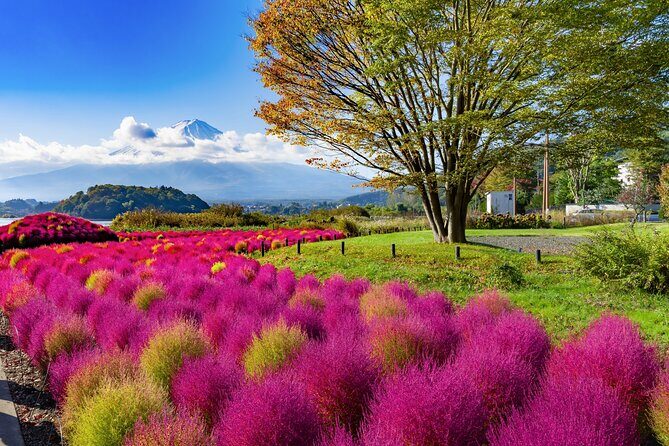
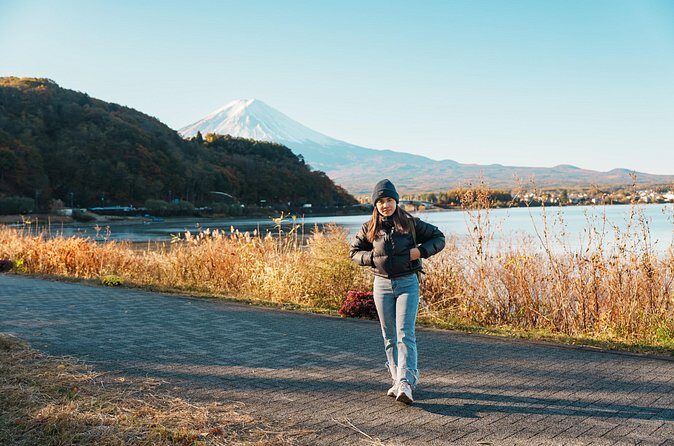
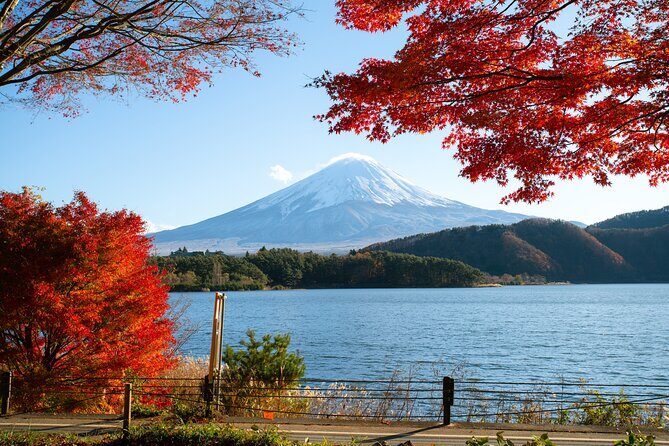
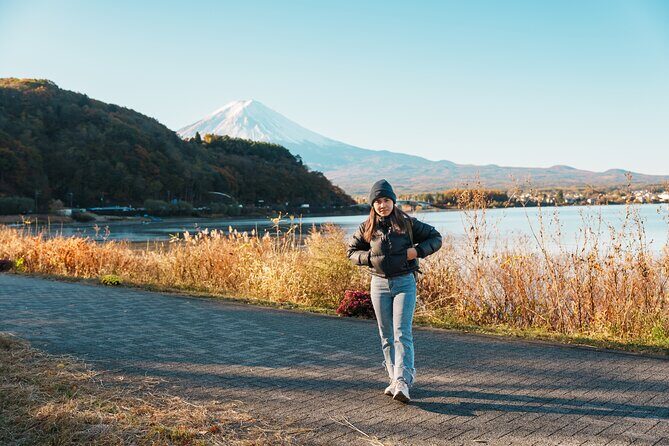
Next you head to Oishi Park for about 2 hours of scenic time at Lake Kawaguchi with Mount Fuji in the view. This is where the day shifts from “get the shot” energy to more of a breathing pace—walk around, find a good angle, and take in how Lake Kawaguchi frames Fuji.
This is also where I’d expect you to be grateful for the guide’s local instincts. In past experiences like these, guides often share tips on what to try nearby and where to find good value food while you’re waiting for the light and clouds to move. The key point: at Oishi Park, timing and patience can matter as much as the viewpoint itself.
Admission tickets are listed as not included, so plan on paying at the site if needed. If the weather is clear, Oishi Park is one of the strongest “calm + classic” moments on the itinerary.
Oshino Hakkai: ponds, thatched houses, and a calmer Fuji side
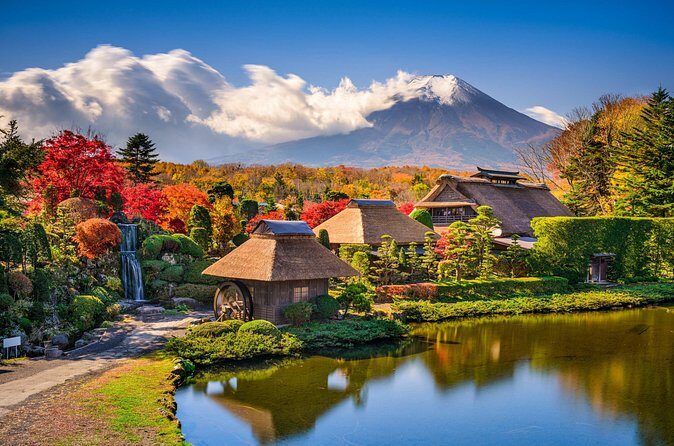
After the lakeside views, you’ll go to Oshino Hakkai for about 1 hour. This stop is about crystal-clear spring ponds and thatched houses, in a landscape that feels more like a preserved village than a theme park.
Why it’s valuable: you’re not just stacking photo stops. Oshino Hakkai helps you understand how Mount Fuji shapes daily life through the water systems people rely on. Even if your Japanese is basic, the setting is easy to read—small paths, water features, and the contrast between the historic look and the mountain’s constant presence.
If you’re short on time, use this hour to do two things: look at the ponds and then walk to one or two angles where the village feels most “Fuji-adjacent.” Admission is listed as not included, so again, keep an eye on fees at entry.
Mt. Fuji 5th Station: higher air, bigger views, weather reality check
Then you’ll head to Mt. Fuji 5th Station for about 1 hour. This is the big height marker on the route, built for panoramic views—but the tour is upfront: weather can strongly affect visibility.
If Fuji is clear, this is your “wow” moment. If it’s cloudy or visibility is poor, treat it like a weather-dependent observatory rather than a guaranteed photo stop. You can still enjoy the altitude feeling, the views that may open briefly between clouds, and the sense that you actually went higher than the basic sightseeing crowd.
Admission isn’t included for this stop either. Also, remember that the day already includes some walking. If you’re winded from earlier stairs at Arakurayama, take it slow here and don’t force a big summit-style effort. This tour’s goal is broad coverage, not a full climb.






Fujiyoshida lunch and shopping: use the free time well
Your final scheduled stop is Fujiyoshida for about 1 hour. You’ll have time for lunch and then souvenir shopping in traditional shops. This portion is marked as free (no admission fee), which is a nice shift after earlier ticketed locations.
In this one-hour block, you’ll want a simple plan:
- Decide on lunch first, before shops start competing for your attention.
- Pick one or two souvenir categories you actually want (snacks, Fuji-themed goods, or local crafts), then stop.
This isn’t a long shopping stretch, so you don’t want to wander for 45 minutes and end up with decision fatigue. A good guide can help you find “what’s worth it” versus what’s mostly filler, and tours like this often include exactly that kind of practical recommendation during the free time.
Transfers, pacing, and how the guide can change your day
A big part of the value here is how the itinerary stays functional in real life. The route includes five main stops plus travel time. The good news: the day is structured, so you’re not spending your morning figuring out buses and train connections.
The real-life wrinkle: sites may be changed due to weather, heavy traffic, or other factors. The tour also notes that during busy holiday periods and peak seasons, the return time may be delayed. That’s not a flaw—it’s the rule of Japan’s roads when everyone decides to do the same scenic loop.
Where the guide makes a difference is in the small corrections. I’ve seen accounts of guides adjusting the plan on the spot for families, suggesting food options, and keeping the mood calm even when weather was hit-or-miss. If you care about a day trip that feels cared for rather than rushed, this is the kind of operator style that tends to work.
Value for $99.50: what you’re really paying for
At $99.50 per person for a roughly 10-hour day, you’re paying for the biggest practical advantages:
- A real local guide (English-speaking)
- Round-trip transfers from Tokyo in an air-conditioned vehicle
- Access to several top Fuji-area sights without figuring out logistics
What’s not included also matters for value. Meals and drinks aren’t included, and multiple stops list admission as not included. That means your actual total cost will depend on how you snack and what you pay at entry gates.
Still, the trade-off is strong. If you try to do this solo, you’ll likely spend time piecing together trains, rental car planning, and navigation—time you could spend at Oishi Park or Oshino Hakkai instead. This tour bundles that work into a day that stays focused on the highlights.
Who this tour suits best (and who might not)
This is best for you if:
- You’re a first-timer to the Fuji area and want classic stops in one trip.
- You prefer a small group (max 15) over large bus crowds.
- You enjoy a mix of photo viewpoints and cultural sightseeing.
It may not suit you as well if you want a fully flexible, slow-moving experience. The itinerary is built to cover multiple places in one day, so you’ll have set durations at each stop.
Also check your comfort with movement. The tour notes moderate physical fitness and mentions an optional climb of about 400 steps. If stairs make you uncomfortable, you can still enjoy most of the area without treating it like a challenge. Just go in with the mindset that the day includes walking.
Should you book the Small Group Tour to Mount Fuji & Lake Kawaguchi?
I’d book it if you want a high-effort, high-coverage day without doing transportation math. The combination of Arakurayama, Lake Kawaguchi at Oishi Park, Oshino Hakkai’s spring ponds, and the 5th Station gives you multiple chances at clear views and a more complete sense of the Fuji region than a single viewpoint day.
Skip it if you need guaranteed mountain visibility or if you strongly dislike walking. Weather is the main factor you can’t control, and the tour’s own notes reflect that reality.
If you can handle an early start and a bit of stair climbing as optional, this is a solid way to see a lot of Fuji in one day—guided, organized, and small enough to feel human.
FAQ
How long is the Mount Fuji and Lake Kawaguchi tour?
It runs for about 10 hours (approx.).
What time does the tour start, and where do I meet?
The start time is 7:50 a.m., and you meet at Lad’s de Wine Shimbashi in Tokyo (Minato City, Shinbashi, 1-chōme154 相鉄フレッサイン新橋日比谷口別館1階).
What group size should I expect?
This tour has a maximum of 15 travelers.
What’s included in the price?
The tour includes an air-conditioned vehicle and an English-speaking tour guide, with a mobile ticket.
Are meals and drinks included?
No. Meals and drinks aren’t included, and you’ll have free time for lunch in Fujiyoshida.
Are entrance tickets included?
Admission tickets are not included for Arakurayama Sengen Park, Oishi Park, Oshino Hakkai, and Mt. Fuji 5th Station. Fujiyoshida time is listed as free.
Will I definitely see Mount Fuji?
No. Weather can affect visibility, especially at the Mt. Fuji 5th Station stop.
Is there a lot of walking or stairs?
There is a significant amount of physical activity. The tour mentions climbing about 400 steps as optional, and it asks for moderate physical fitness.
What is the cancellation and refund policy?
You can cancel for a full refund up to 24 hours before the experience starts. If the tour is canceled due to poor weather, you’ll be offered a different date or a full refund.