REVIEW · TOKYO
Tokyo Samurai Experience
Book on Viator →Operated by MagicalTrip Inc. · Bookable on Viator
Samurai practice meets real Tokyo street life. This tour strings together kimono and sword basics with a Kagurazaka walk that actually helps you read the neighborhood like a local, and I really like how the day includes vegetarian lunch so you’re not scrambling for food halfway through. One thing to consider: vegan and gluten-free lunch options are not offered, so plan around that if you have strict dietary needs.
I also like the pacing. In about four hours you get a flower-market start, two Kagurazaka segments, then a focused training hour at Samurai Theater Tokyo, with a guide who leans on stories instead of a guidebook. Since the group tops out at 7 people, the experience feels personal rather than rushed.
The last reason I’d put this on your list is that Tokyo can get too “checklist-y,” and this one slows you down on purpose. You’ll see the streets where samurai once lived and you’ll spend time in the calmer Kagurazaka area instead of only bouncing around the big-name districts.
In This Review
- Key Highlights You’ll Feel in Your Bones
- Aoyama Flower Market at Iidabashi: A Soft Start Before the Swords
- Kagurazaka Samurai Streets: Learning to Read the Neighborhood
- Samurai Theater Tokyo: Kimono, Movement Basics, and Katana Skills
- Lunch in Kagurazaka: Traditional Japanese Food With Real Restraint
- Kagurazaka Walking #2: Seeing Samurai Streets After You Learn the Moves
- Price and Value for a 4-Hour Tokyo Combo at $166
- Logistics That Actually Matter: Mobile Ticket, Timing, and Meeting Point
- Who Should Book This Samurai Experience?
- Should You Book the Tokyo Samurai Experience?
- FAQ
- How long is the Tokyo Samurai Experience?
- Where do I meet the guide for the tour?
- What’s included in the Samurai Theater Tokyo part?
- Is lunch included, and do you offer vegetarian options?
- Do I get to choose food during the tour?
- How large is the group?
- Do I need a paper ticket?
Key Highlights You’ll Feel in Your Bones

- Small group (max 7), so you get attention during the samurai basics session
- Kimono rental included as part of the Samurai Theater Tokyo experience
- Vegetarian lunch is available, plus you can choose one traditional food or sweet
- Kagurazaka walking segments both before and after training to connect story to place
- Certified MagicalTrip guide who leads with local context and street-level explanations
- Free admission stops at the flower market and Kagurazaka wandering portions
Aoyama Flower Market at Iidabashi: A Soft Start Before the Swords
Most Tokyo tours slam you with temples, trains, and crowds right away. This one begins lighter, at the Aoyama Flower Market near JR Iidabashi Station. You meet at the flower market area inside the JR Iidabashi Station complex, specifically in front of the West Exit, and you should see it on your right when you come out.
This first stop is short—about 10 minutes—and it’s there for more than photos. Flower markets give you a quick sensory “calibration.” Even if you’ve been in Tokyo for days, stepping into a flower-focused pocket helps you shift from transport-mode into sightseeing-mode. It also sets a calm rhythm before you head into the more theatrical, structured part of the samurai experience.
Practical tip: arrive a bit early, not to be safe from chaos (though Tokyo can be busy), but so you’re not trying to find the exact spot with a fully formed plan in your head. This meeting is inside the station area, so a few minutes of buffer helps.
You can also read our reviews of more tours and experiences in Tokyo.



Kagurazaka Samurai Streets: Learning to Read the Neighborhood
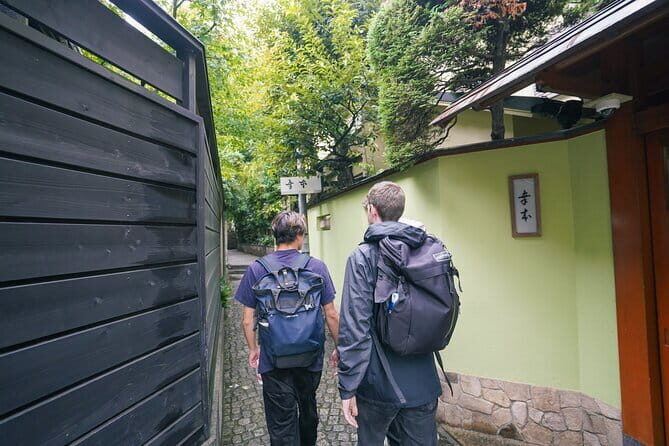
After the market, you move into Kagurazaka, a district where history shows up in the layout: narrow lanes, old-style storefronts, and places that feel tucked back from the main Tokyo flow. You start the Kagurazaka portion from Iida Station and explore with your guide for about 20 minutes.
This is where the tour does something smart. Instead of dumping dates and names, it focuses on what the neighborhood is telling you now. You’ll pass historic temples and shrines and connect them to the idea that samurai once lived in this area. That’s the key: the tour helps you connect place to story, so you’re not just walking through pretty streets—you’re learning what to notice.
What I like about doing this segment before training is simple: your samurai experience lands better when your brain already has context. You’re primed to see martial culture as part of daily life, not just something performed in a show hall.
Possible drawback: if you expect a long, detailed museum-style history lecture, this portion is intentionally short. The tradeoff is time for hands-on training and lunch. If you like movement and story, it works. If you want a deep academic history session, you’ll still get value, just not an all-day timeline.
Samurai Theater Tokyo: Kimono, Movement Basics, and Katana Skills
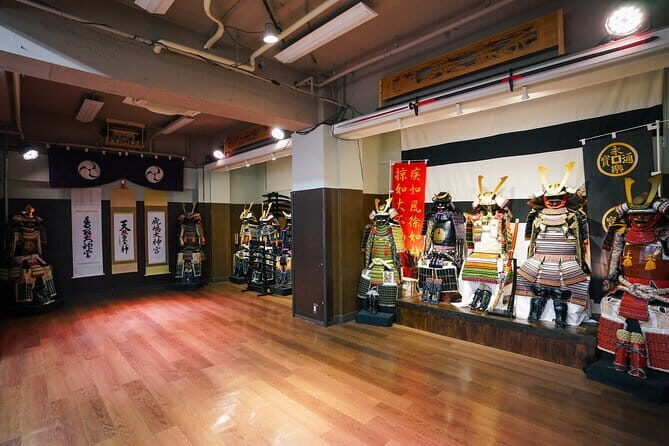
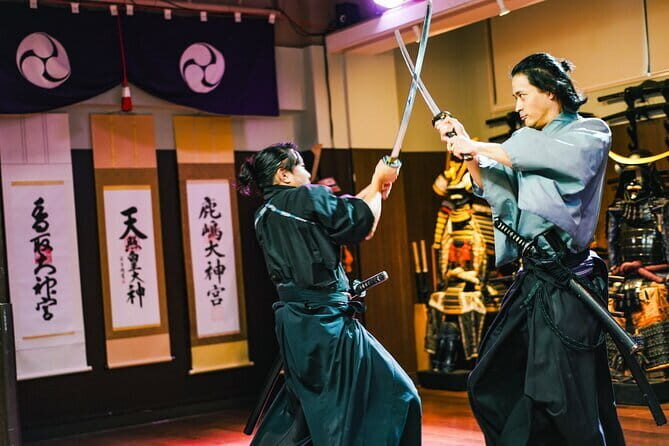
Next comes the centerpiece: Samurai Theater Tokyo, where the tour switches from walking to doing. Here you get about 1 hour of a guided samurai experience with kimono rental.
This part is led by professional instructors, and the focus is practical: you learn the basics of samurai fighting and movements. The idea isn’t to turn you into a trained swordsman. It’s to give you the core physical vocabulary—stance, timing, and how movements connect—so you understand what you’re seeing when sword culture is performed.
And yes, you’ll wear the kimono during this segment. That matters more than people expect. Clothing changes your posture and your awareness. Even if you’re not a “costume person,” kimono wear during training adds realism. It’s also fun in a very normal-travel way: you look like you belong in the story for a while.
From a visitor’s standpoint, this is also where the tour’s small-group size pays off. With up to 7 participants, it’s easier for instructors to spot common issues in stance or movement and correct you. Big groups tend to turn these sessions into show-and-tell. A small group helps you actually participate.
One more thing to keep in mind: sword culture has a safety-first vibe in training spaces. The experience is designed to teach movements rather than overwhelm you. You’ll likely get comfortable fast, especially if you stay loose and follow directions.
Lunch in Kagurazaka: Traditional Japanese Food With Real Restraint

After training, you refill with a traditional Japanese lunch in a cozy wooden restaurant tucked away in Kagurazaka. This is one of the best parts of the day because it anchors everything you’ve done so far in everyday life.
Time-wise, lunch takes about 1 hour 40 minutes. That’s generous. It means you can eat without racing to the next stop and you have enough slack to ask questions of your guide while things slow down.
Dietary note (important): a vegetarian option is available, but vegan and gluten-free options are not available. So if your restrictions are strict, plan accordingly before you book. Vegetarian here likely means you can expect a meal built around non-meat ingredients, but gluten-free cannot be guaranteed.
You’ll also get one traditional food or sweet during the tour. You can choose one, which is a nice touch. It turns lunch into a mini cultural sampler rather than just eating the main course and moving on.
If you’re traveling with dietary needs, I’d treat the meal plan like part of your schedule, not an afterthought. Check your dietary category and decide early whether vegetarian works for you. That one choice can be the difference between feeling relaxed and feeling stressed.
Kagurazaka Walking #2: Seeing Samurai Streets After You Learn the Moves
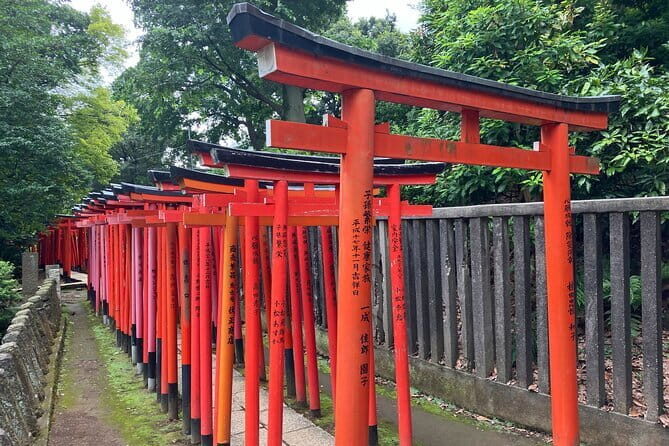
Then the tour gives you a clever second pass through Kagurazaka—another 20 minutes where you walk around again and deepen the connection between the physical training and the streets you’re seeing.
You’ll revisit the idea of historic samurai streets, and your guide will take you toward spots where samurai once lived. It’s during this second segment that the day starts to click, because you’ve now learned movement basics and you’ve dressed in kimono. Even if you don’t feel like a “sword person,” you’ll notice how the neighborhood feels different with that context in your head.
This is also a great time to ask your guide follow-up questions you didn’t have before. For example, you can ask how martial culture fit into everyday life or what parts of the area signal that history today. The tour’s structure basically gives you two chances: first to orient yourself, then to interpret what you see.
Small travel win: these shorter outdoor segments help you avoid the common Tokyo problem where you only visit places that are famous. Kagurazaka is less about headline landmarks and more about how a district feels. That’s exactly the kind of sightseeing that benefits from repeating it after a themed activity.






Price and Value for a 4-Hour Tokyo Combo at $166

Let’s talk money, because at $166.04 per person you want to know what you’re really buying.
You’re paying for four value drivers packed into about 4 hours:
- A certified MagicalTrip guide leading you through multiple parts of the day
- Kimono rental plus a 1-hour samurai training session with instructors
- Traditional lunch with a vegetarian option and the ability to choose one food or sweet
- A small-group format (max 7 travelers) that keeps the training interactive
If you try to recreate this on your own, you’d spend time coordinating reservations, finding a kimono rental spot, and lining up a class that actually teaches basics in a structured way. Even if you find parts of it, the “all-in-one flow” is hard to duplicate—especially with the Kagurazaka walking pieces that tie the theme to real streets.
One more angle: reviews show a 5/5 rating with 100% recommended, and that’s usually a sign the experience delivers as promised. No guarantee, but it does suggest consistency in the guide and program execution.
So is it cheap? No. But it’s not overpriced for what’s included: training, kimono, lunch, and guided storytelling, all in a compact schedule.
Logistics That Actually Matter: Mobile Ticket, Timing, and Meeting Point
This tour is designed for easy on-the-ground use.
- You’ll receive a mobile ticket (so don’t plan to rely on a paper printout).
- The experience runs about 4 hours total.
- The start point is very specific: Aoyama Flower Market at JR Iidabashi Station, near the West Exit inside the station complex.
Also, you might notice that this experience tends to be booked ahead (on average 62 days). That usually means popular time slots fill up, especially around peak travel seasons and weekends. If you’re traveling at a high-demand period, book earlier rather than waiting for a price-drop that may never come.
Who Should Book This Samurai Experience?
This is a great fit if you want a Tokyo day with:
- Hands-on fun that isn’t just a photo stop
- A guided walk that connects storytelling to neighborhood layout
- A plan that includes lunch so you’re not scrambling mid-day
- A smaller group experience where instruction is possible
It’s also ideal if you’re the type who likes theme-based travel but still wants something grounded—Kagurazaka’s streets and shrines, not just a stage show.
Where it might not be the right match:
- If you need vegan or gluten-free lunch, you’ll likely be disappointed because those options are not available.
- If you’re looking for a long, academic history seminar, the Kagurazaka segments are short by design. You’ll learn the essentials through place and story, not through hours of lecturing.
Should You Book the Tokyo Samurai Experience?
Yes—if your travel style matches the structure. I’d book it if you like a clear plan, hands-on learning, and a guide who makes the day feel cohesive instead of random stops stitched together. The best part is the way it pairs Kagurazaka street viewing with kimono and movement basics at Samurai Theater Tokyo, then circles back for a second walk so the theme lands.
I’d pause before booking if your dietary needs are vegan or gluten-free, since the lunch options are limited to vegetarian. If vegetarian works for you, this tour is strong value because you get training, kimono, and a real lunch in one small-group session.
FAQ
How long is the Tokyo Samurai Experience?
The tour is approximately 4 hours total.
Where do I meet the guide for the tour?
You meet at Aoyama Flower Market, near JR Iidabashi Station West Exit, in the station area.
What’s included in the Samurai Theater Tokyo part?
You get samurai experience instruction plus kimono rental for about 1 hour at Samurai Theater Tokyo.
Is lunch included, and do you offer vegetarian options?
Yes. Lunch is included and vegetarian options are available. Vegan and gluten-free options are not available.
Do I get to choose food during the tour?
Yes. You can choose one traditional food or sweet during the tour.
How large is the group?
The tour has a maximum of 7 travelers.
Do I need a paper ticket?
No. The tour uses a mobile ticket.