REVIEW · TOKYO
Tokyo: Spring Hitachi Seaside & Ashikaga Flower Park Tour
Book on GetYourGuide →Operated by JTOURSTORY · Bookable on GetYourGuide
Spring flowers, with a sea-blue horizon. This day trip is built for big seasonal color: Hitachi Seaside Park turns Miharashi Hill into a blue field, then you roll straight into Ashikaga Flower Park for famous wisteria blooms. It’s a comfortable bus outing that keeps the logistics simple, even when traffic gets loud.
I love how the day gives you two very different kinds of spring beauty. At Hitachi, the view works like a photo on purpose, with blue nemophila blending into sky and distant ocean. At Ashikaga, the showpiece is the wisteria overhead, including a long white wisteria tunnel you can walk through.
One drawback to plan for: the time in each park is limited. If you’re the type who wants to wander every path, you may feel like you want more time at both Hitachi Seaside and Ashikaga.
In This Review
- Key highlights worth getting excited about
- Why This Day Trip Works: Two Parks, One Easy Bus Schedule
- Hitachi Seaside Park and Miharashi Hill’s 5.3 Million Blue Nemophila
- Mibu Michi no Eki Stop: Quick Local Flavors and Bandai Character Time
- Ashikaga Flower Park: Great Wisteria Cascades and the ~80-Meter White Tunnel
- Guide and Timing: English Support, 10-Hour Vehicle Limits, and Peak-Season Reality
- Transport and Route Flow: What the 11.5-to-12.5 Hours Feels Like
- Price and Value: How $98 Adds Up for Two Iconic Flower Parks
- What to Pack and How to Move Through These Parks Without Stress
- Who This Tour Suits Best (and Who Might Want a Different Plan)
- Should You Book This Tour?
- FAQ
- How long is the Tokyo to Hitachi Seaside and Ashikaga Flower Park tour?
- What’s included in the tour price?
- Are meals included?
- Where does the tour start?
- How much time do I get at each attraction?
- What happens if the weather or traffic is bad?
- Can I cancel, and is there a time limit?
Key highlights worth getting excited about
- Miharashi Hill’s 5.3 million blue nemophila for that rare sky-and-sea spring panorama
- Iconic spring photos in two major parks without juggling train changes
- Free time at Mibu Michi no Eki for local dishes and dessert breaks
- Ashikaga’s Great Wisteria displays plus a ~80-meter white tunnel walk
- English and Korean guide support to keep the schedule moving smoothly
- Real-world timing help when weather and peak-season traffic change plans
Why This Day Trip Works: Two Parks, One Easy Bus Schedule
This tour is designed for one thing: getting you out of Tokyo fast, then delivering two headline flower parks in the same day. You depart from Tokyo/Shinjuku by bus, and you’re not stuck planning routes, transfers, or ticket logistics across multiple stations.
The pacing is the core bargain. You’ll get a focused window at each site (instead of spending half the day commuting), plus guided help on where to go and how to move with the group. That matters in Japan during spring peak bloom periods, when public transit can be crowded and timing gets tight.
Also, the tour is built around seasonal “wow factor” scenery. Hitachi is all about the effect of one flower across a huge slope. Ashikaga is about wisteria in sculpted forms, with tunnels and cascading blooms.
You can also read our reviews of more tours and experiences in Tokyo.



Hitachi Seaside Park and Miharashi Hill’s 5.3 Million Blue Nemophila
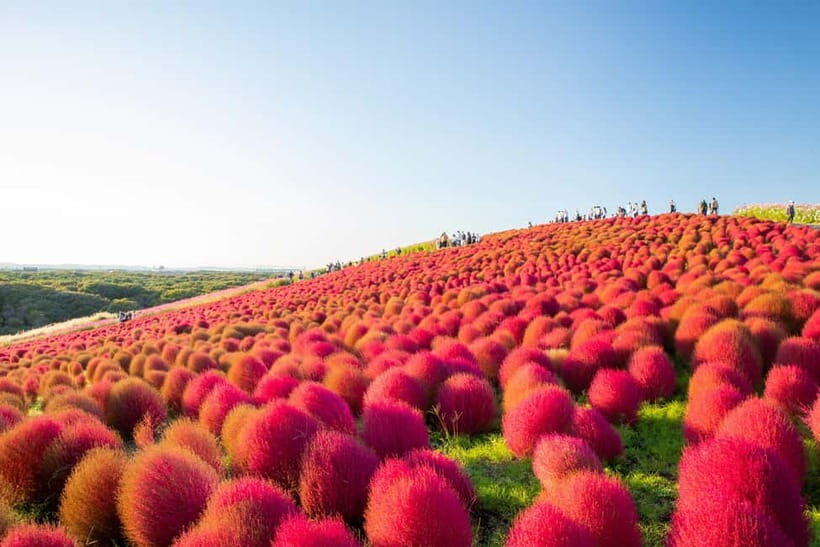
Hitachi Seaside Park is where spring turns theatrical. During the nemophila season, Miharashi Hill becomes a sweeping field of blue—about 5.3 million blossoms spread across the hillside. The trick is the setting: the flowers sit low and wide, while the sky and distant ocean sit high and far. The result looks unreal because your eye keeps blending “flower” with “horizon.”
You’ll have about 2 hours for photo stops, sightseeing, and free time at Hitachi. That’s enough time to do the main viewpoint loop and get your photos, but it won’t feel like a full-day hike. In fact, some visitors have wanted extra time to walk the gardens and take longer routes. If you like to linger, wear shoes that handle uneven park paths and plan to move at a relaxed-but-steady pace.
A practical way to think about Hitachi is this: your first 30 to 45 minutes should be for viewpoints and the big-photo angles. After that, use the rest of the time to meander and enjoy smaller scenes, like sections where the blue tones feel denser or where you catch ocean-sky alignment from different angles.
If spring timing is perfect, you can get the full nemophila impact. Even in cases where blooms are nearing the end, the area still photographs beautifully because the slope is so visually dominant.
Mibu Michi no Eki Stop: Quick Local Flavors and Bandai Character Time
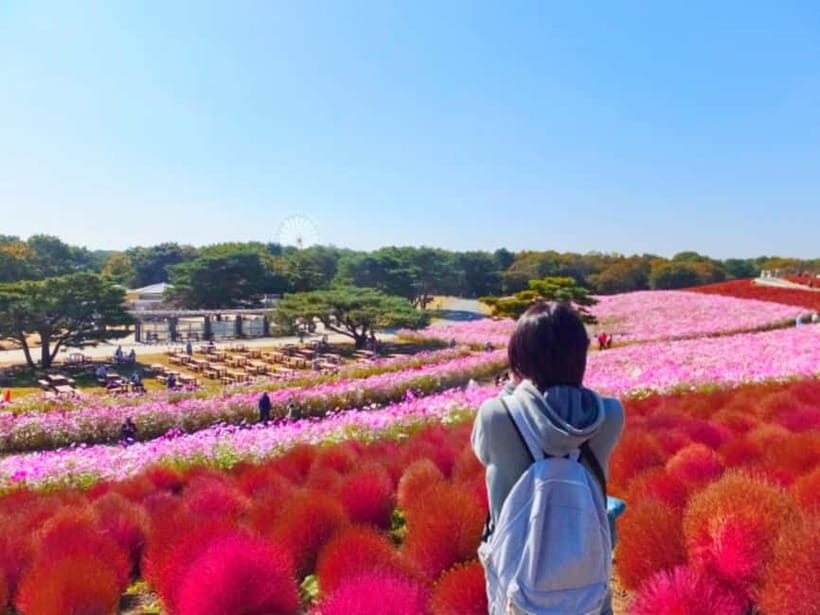
Between the two major parks, you’ll stop at Mibu Michi no Eki (a roadside station). This is one of those Japan-style breaks that keeps the day from feeling like nonstop sightseeing.
You’ll get a short visit window—about 40 minutes—with photo stop time and free time. The big benefit is choice. You can grab different dishes and dessert rather than being locked into one set meal. This is a good moment to refuel in a way that feels local, not cafeteria-style.
Another fun detail here: there’s a chance to meet famous Bandai characters. It’s not a theme park stop, so don’t expect a full entertainment program, but it’s enough to add a light, memorable twist to a flower day.
Because meals aren’t included, treat this stop as your chance to decide what you want to eat today. If you’re traveling with kids, this is also often the easiest moment to keep everyone happy without forcing a long restaurant sit-down.
Ashikaga Flower Park: Great Wisteria Cascades and the ~80-Meter White Tunnel
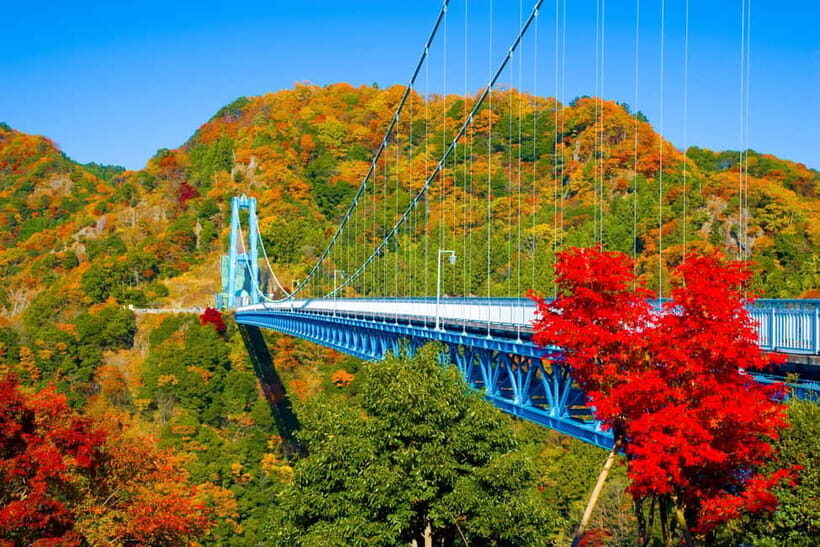
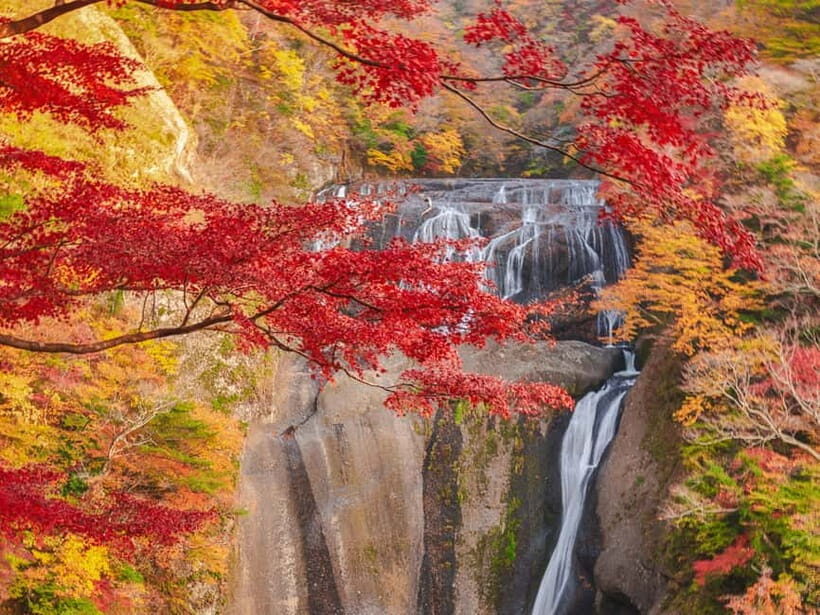
Ashikaga Flower Park is the headline act in the afternoon. This is the place most people picture when they hear wisteria in Japan—large wisteria trees with blooms that cascade like curtains overhead.
You’ll have about 110 minutes at Ashikaga, including photo stop, visiting, and free time. That may sound like plenty until you walk under it. The wisteria effect creates a “keep moving because the view changes constantly” feeling, so time compresses fast. Some people end up wishing they had the whole day here, and honestly, that reaction is understandable.
What you’re looking for:
- The Great Wisteria displays, where the purple blossoms create a waterfall-like cascade effect.
- The white wisteria tunnel, about 80 meters long. Walking through it is one of those rare experiences where the scenery wraps around you in a controlled, dreamlike way.
If you care about photos, you’ll want to use your first chunk of time to reach the tunnel and the main wisteria clusters. After that, slow down for the quieter corners and the different angles from along the paths.
Also, remember you’re on a schedule. The bus ride and the other stop add up. So if your only goal is to see wisteria from every possible angle, you may feel slightly rushed. If your goal is to see the iconic wisteria highlights, you’ll likely find the timing perfect.
Guide and Timing: English Support, 10-Hour Vehicle Limits, and Peak-Season Reality
The guide is part of what makes the day trip feel easy. You’ll travel with an English and Korean speaking guide, which matters a lot on a long day when signs are in Japanese and you want clear next steps.
Guides also handle the messy parts of real travel:
- The tour notes that vehicles can’t operate for more than 10 hours under Japanese law, so the plan may shift to stay within that boundary.
- The itinerary is subject to traffic and weather, and stay times can depend on on-site conditions.
That’s not a fun detail, but it’s a smart one. Spring weekends can be chaotic, and your schedule can slide when roads get packed. In at least some peak periods, guides have been efficient about keeping the group moving and leaving on time.
The practical takeaway for you: stay flexible. If the day runs slightly differently because of weather or congestion, don’t panic. The tour is designed to still deliver the two major flower parks plus the roadside stop.






Transport and Route Flow: What the 11.5-to-12.5 Hours Feels Like
The total duration is listed at 690 to 750 minutes, which is roughly 11.5 to 12.5 hours. That’s a long day, and it’s mostly bus time plus sightseeing blocks.
Here’s how the day tends to feel in segments:
- You start in Tokyo/Shinjuku and ride to the first park (around 2.5 hours).
- You get about 2 hours at Hitachi Seaside.
- Then a shorter transfer (about 1 hour) to Mibu Michi no Eki for around 40 minutes.
- Lunch is available at a local restaurant after that segment, but meals are not listed as included.
- Next comes the transfer to Ashikaga (about 1 hour).
- You spend about 110 minutes at Ashikaga.
- Finally, you return to Tokyo/Shinjuku (around 110 minutes).
Long bus days can be tiring, so build your comfort in advance. Bring a light layer if you get cold on the bus, and consider hydration and a small snack for between meals. Since meals aren’t included, your best food strategy is to plan to buy at the roadside station and use the included lunch stop as a place to pay for what you want.
Price and Value: How $98 Adds Up for Two Iconic Flower Parks
At $98 per person, this is priced like a “pay for convenience” day trip. The value improves because several big-ticket items are included:
- Transportation by bus
- An English and Korean speaking guide
- Admission tickets
What’s not included is meals and personal expenses. So you’ll likely spend extra for lunch and snacks.
Still, compare it to doing this solo:
- You’d have to figure out how to get between Tokyo and two separate far-flung parks.
- You’d spend time coordinating timing around bloom seasons.
- You’d handle ticket purchase and movement across multiple large sites.
This tour removes most of that friction. For many people, that’s worth more than it sounds. Especially if it’s your first spring in Japan and you want the iconic parks without the stress of a self-guided day plan.
If you’re the type who enjoys independent travel and doesn’t mind logistics, you might prefer to go on your own. But if you want the flower highlights with built-in guidance and transport, the $98 price feels reasonable for what’s included.
What to Pack and How to Move Through These Parks Without Stress
Because this day centers on outdoor flower displays, your packing should support walking and photography:
- Comfortable shoes with good grip (park paths can be uneven)
- Light layers (spring weather can shift during the day)
- A small bag for water and any purchased snacks
- Your camera or phone charger plan, since you’ll want repeat photos under changing angles
Timing-wise, you’ll cover two major parks plus a roadside station. Your best approach is to treat both parks like “main sights first, then wander.” If you try to do everything, you may end up running. If you focus on the big moments—Miharashi Hill views early, then Ashikaga tunnel and main wisteria—you’ll feel satisfied even with the time limits.
Also note the tour can adjust timing based on conditions. If that happens, the guide’s job is to keep the day functional. Your job is to stay flexible and avoid getting stuck waiting in one spot for too long.
Who This Tour Suits Best (and Who Might Want a Different Plan)
This tour fits best when you want:
- Iconic spring flower scenery in a single day
- Less planning and fewer transport decisions
- A guide to help the day stay organized in English or Korean
- A clear highlight route through Hitachi Seaside and Ashikaga
You might want a different plan if:
- You’re a serious hiker or someone who wants long, slow garden time
- You hate long bus rides
- You prefer fully independent pacing at attractions
It’s also a solid choice for families who want a structured day. The roadside station break adds variety, and the Bandai character chance gives kids something besides flowers.
Should You Book This Tour?
If you want the classic spring “wow” in Japan—blue nemophila plus wisteria tunnels—without turning your day into a logistics puzzle, I think this one is an easy yes. The included admission tickets and guided transport make the price feel fair, and the highlight sequence is well matched to a day trip.
Just go in knowing the tradeoff: this is not a slow, all-day wander. You’ll get the iconic sights, then you’ll move on. If that sounds like your kind of spring day, book it. If you want to sink hours into the gardens, you may feel like you could spend more time at both Hitachi and Ashikaga.
FAQ
How long is the Tokyo to Hitachi Seaside and Ashikaga Flower Park tour?
The tour duration is listed as 690 to 750 minutes, depending on the starting time and conditions on the day.
What’s included in the tour price?
Transportation, an English and Korean speaking guide, and admission tickets are included.
Are meals included?
Meals are not included. You’ll have a stop at Mibu Michi no Eki for food and dessert, and there is a lunch stop at a local restaurant, but you should plan to pay for what you eat.
Where does the tour start?
You can start from one of two Starbucks meeting points: Starbucks Coffee – Shinjuku L Tower, Tokyo, or Starbucks Coffee – Tokyo Station. The exact meeting point may vary depending on your booked option.
How much time do I get at each attraction?
Hitachi Seaside Park includes about 2 hours. Mibu Michi no Eki is about 40 minutes. Ashikaga Flower Park is about 110 minutes.
What happens if the weather or traffic is bad?
The itinerary can be adjusted based on real-time traffic and weather. Stay times at spots may also depend on on-site situations, and return drop-off times may be delayed during peak traffic.
Can I cancel, and is there a time limit?
Free cancellation is available up to 24 hours in advance for a full refund.