REVIEW · TOKYO
Tokyo Sumo Practice Watching & Visit Town from Samurai era
Book on Viator →Operated by Ken's tour · Bookable on Viator
Sumo in the morning feels oddly intimate. You get real sumo practice access at Shikoroyama-beya, then shift into Edo-era Tokyo by visiting Kiyosumi Teien and the Fukagawa Edo Museum with Ken.
I love how Ken uses fluent English to turn training into clear culture, not random spectacle. I also like the chance at a photoshoot with sumo wrestlers, which makes the morning feel personal, not just observational.
One thing to consider: because stable entry involves special permission and you’re on a set schedule, this is best for people who want the experience as guided, not for those chasing a fully freeform agenda or super-deep match analysis.
Small group (max 15) keeps it human
Ringside viewing at Shikoroyama-beya with special permission
Ken’s explanations make sumo and Tokyo history click
Chance to take photos with sumo wrestlers
Kiyosumi Teien gardens add calm after the intensity
Fukagawa Edo Museum recreates Edo street life with sound and lighting
In This Review
- A Morning Sumo Session You Can Actually Understand
- Meeting at Kiyosumi-shirakawa: Start Where Real Tokyo Breathes
- Shikoroyama-beya Ringside Viewing: The Part You’ll Remember
- Ken’s Sumō Storytelling: Culture Comes With the Close-Up View
- Kiyosumi Teien: A Quiet Walking Forest After the Ring
- Fukagawa Edo Museum: Walk an Edo Street That Moves
- Photoshoot Chance: How to Get Great Shots Without Being That Person
- Price and Value: Is $123.79 Worth It?
- Who This Tour Fits Best (And Who Might Skip It)
- My Practical Take: Planning Your Day Around This 3.5 Hours
- Should You Book This Sumo Practice + Samurai-Era Town Tour?
- FAQ
- What time does the tour start, and how long does it last?
- Where do you meet, and where does the tour end?
- What does the $123.79 price include?
- Is the sumo stable visit actually allowed, or is it outside viewing?
- Will you have time for Kiyosumi Teien and Fukagawa Edo Museum?
- How big is the group, and is it age-friendly?
- What’s the cancellation rule?
A Morning Sumo Session You Can Actually Understand
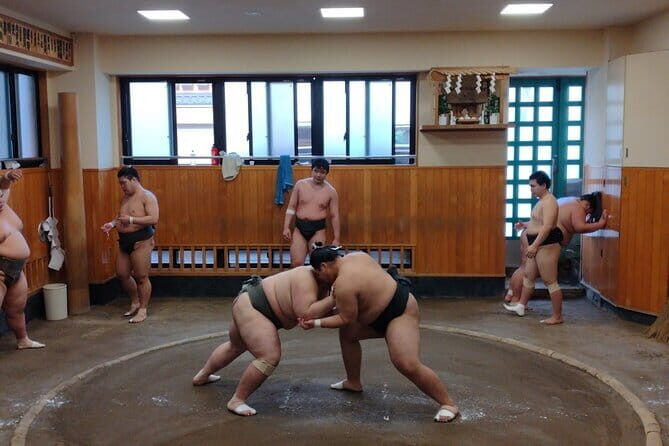
Most Tokyo tours show you temples, streets, and views. This one starts with something tougher to fake: watching how sumo wrestlers train when nobody is pretending it’s a show.
At Shikoroyama-beya sumo stable, you can watch practice from close to the ring. You’re not just looking at a building from far away. This tour is designed around seeing the routines up close while your guide puts the meaning behind what you’re seeing. Practice has a rhythm—warm-ups, repeated movements, and that focused intensity that feels physical in a way video never does.
And because this includes stable access that requires special permission, it has that rare quality of being more than a sightseeing stop. You’re stepping into a part of sumo life that most visitors never get near.
Meeting at Kiyosumi-shirakawa: Start Where Real Tokyo Breathes
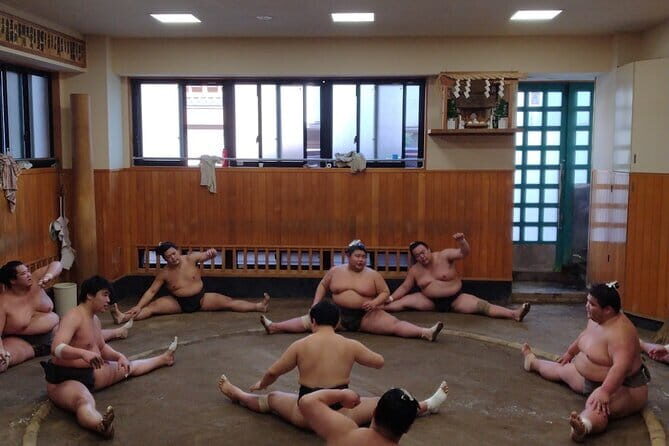
You begin at Kiyosumi-shirakawa Station (1-chōme-6-13 Shirakawa, Koto City). The meeting point is at ground level of the B1 exit, and you meet your guide there before walking together to start the tour.
The big practical win is timing. This starts at 8:30 am, and it lasts about 3 hours 30 minutes. That means you can still have the rest of your day for neighborhoods, food, and whatever you planned next.
It also helps that the tour is near public transportation. You’re not forced into a long transfer or complicated logistics just to see practice. For first-time Tokyo visitors, it’s a clean way to get value early without burning the whole morning on transit.
You can also read our reviews of more tours and experiences in Tokyo.



Shikoroyama-beya Ringside Viewing: The Part You’ll Remember
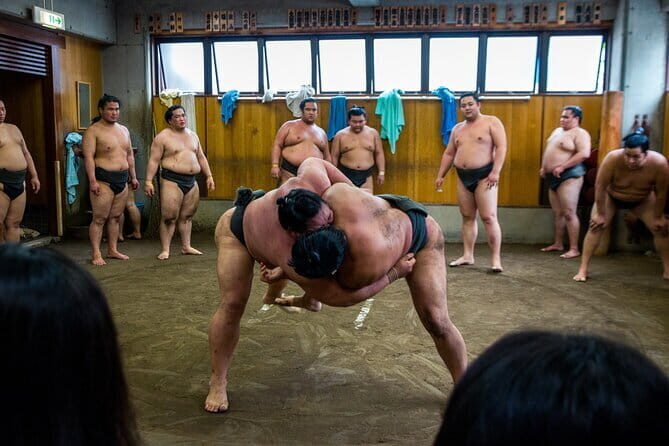
The heart of this experience is the time at Shikoroyama-beya stable, where you can watch real sumo practice from the ringside.
This is where the tour earns its keep. Seeing sumo in person is one thing. Understanding how practice works—and why it looks the way it does—comes from having an experienced guide with you. You’re there for the training routines and the atmosphere, and you get help noticing details you’d otherwise miss.
The guide’s role matters because sumo isn’t only about strength. It’s also about discipline, tradition, and the way wrestlers prepare mentally and physically. When the guide explains what you’re looking at, the whole session makes more sense and feels less random.
You should also plan mentally for intensity. Even during practice, it doesn’t feel casual. Movements are sharp. The space is close. It’s the kind of moment where you stop thinking about your camera and start paying attention.
Ken’s Sumō Storytelling: Culture Comes With the Close-Up View
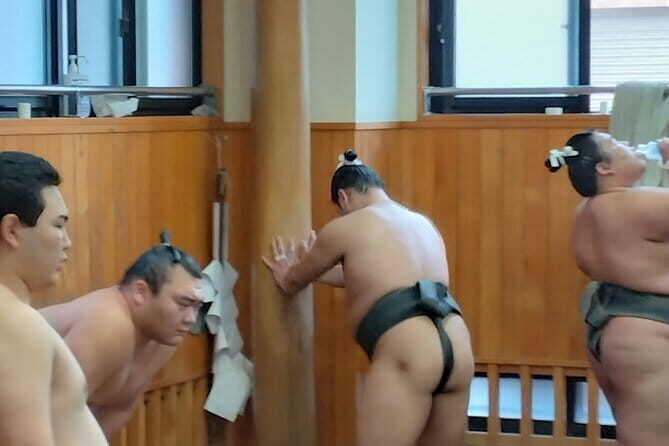
Ken’s the guide behind this tour, and the overall vibe is organized and patient. The big theme is clarity: Ken speaks fluent English and answers questions in a way that actually helps you connect the dots.
I like that the explanations focus on sumo history and culture, not just rules and names. You’re walking away with context you can use the next time you see sumo mentioned in Japanese life—whether that’s in Tokyo street culture, media, or the way traditions are handled with seriousness.
One note if you’re the type who wants a lot of technique-by-technique breakdowns. The experience is guided and cultural, but it’s not positioned as a full-on sumo textbook. If you want extra detail on more recent competitions or a handout-style summary, plan to bring questions. Ask Ken directly during the session, and you’ll likely get the kind of practical explanation that makes the morning stick.
Kiyosumi Teien: A Quiet Walking Forest After the Ring
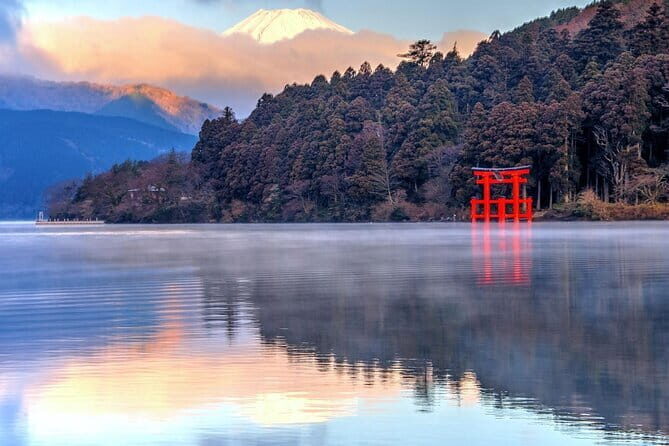
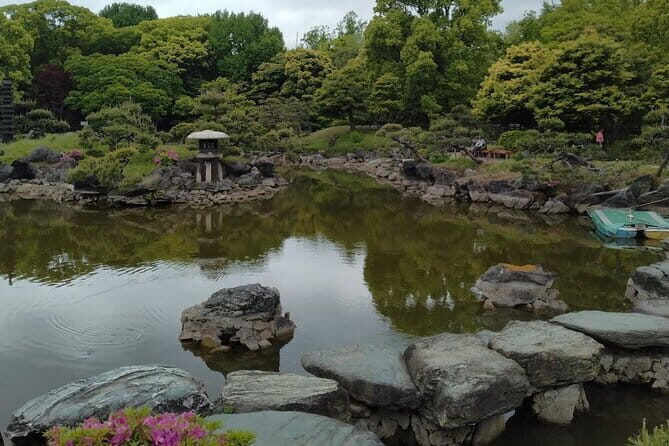
After the energy of the stable, the tour shifts gears to Kiyosumi Teien. This is a Japanese garden with that signature feeling of quiet order. The description even calls it a walking forest garden, and that’s exactly the vibe.
You get about 50 minutes here, and the purpose isn’t to rush through pretty spots. It’s to slow down and see how the garden shapes movement. Your senses get a reset: less focus on impact, more on form, spacing, and the way nature is intentionally framed.
From the garden side, the tour’s appeal shows up in what people love in it—koi and seasonal beauty like cherry blossoms. If you’re traveling during warmer spring weeks, this stop can feel especially memorable because the garden becomes more than background scenery. It becomes a pause with meaning.
If you’re someone who enjoys gardens but gets bored by fast museum-style checklists, this stop is a nice balance. You’ll feel like you toured Tokyo instead of ticking boxes.
Fukagawa Edo Museum: Walk an Edo Street That Moves
Then it’s time for time travel—Fukagawa Edo Museum.
This place recreates a life-size reproduction of the townscape of Tokyo at the end of the Edo period. That’s a big deal because it’s not just model buildings or a single exhibit room. You can walk through the recreated street environment and get a sense of how everyday life fit together.
The experience uses sound and lighting to create changes of the day. That means it doesn’t sit there as a static scene. It shifts in atmosphere while you’re inside, so you feel more like you’re passing through an era than standing next to a display.
You’ll also see everyday tools placed inside each house. That detail helps the setting feel lived-in rather than staged. And because your guide is with you, you get help reading the environment—what you’re seeing and why it matters for understanding how Tokyo evolved.
You get about 1 hour for this stop, which is enough time to actually absorb it if you take it at a steady pace.






Photoshoot Chance: How to Get Great Shots Without Being That Person

This tour includes a chance to do a photoshoot with sumo wrestlers. That’s a major highlight for anyone who came to Tokyo hoping to see sumo and also bring home something more than wide-angle building photos.
The key is to treat it like a respectful moment, not a free-for-all. The stable visit runs on permission and careful handling, so you’ll want to listen to Ken and follow instructions on when and where photos are allowed.
If you care about getting good images, come ready. Wear comfortable clothes and shoes, and be mentally ready for close quarters. It’s much easier to get a clean shot when you’re standing steady and paying attention to the timing your guide gives you.
Price and Value: Is $123.79 Worth It?
At $123.79 per person, this tour sits in the midrange for Tokyo guided experiences. The value comes from what you’re buying, not just the hours.
You’re paying for:
- A professional guide from start to finish
- Admission fees for all locations
- A small group size (maximum 15 travelers)
- And the rare part: stable access with special permission, plus ringside viewing
Private transportation isn’t included, so you’ll handle your own getting there. But the tour is near public transit, and it starts at 8:30 am, which makes it easier to plan around without a whole day wasted on transfers.
If you’re a first-time visitor and you want sumo plus a Tokyo neighborhood feel—garden calm and Edo street context included—this price makes sense. If you already know sumo deeply and just want solo exploration, a guided format may feel less necessary. But for most people, the combination of access, structure, and interpretation is the reason it feels like a win.
Who This Tour Fits Best (And Who Might Skip It)
This works especially well for you if:
- You want to see real sumo practice, not only the idea of sumo
- You like guided context that turns cultural tradition into something you can follow
- You want a morning tour that covers multiple cultural stops without feeling rushed
- You enjoy photos but also want the experience to make sense, not just look good
It might be less ideal if:
- You only care about watching tournaments, not practice
- You want a fully technical deep dive into every aspect of modern sumo competitions
- You hate any schedule at all, because this experience depends on fixed timing and stable access
For planning style, it’s a great pick for people who like structured mornings and then freedom later. You get a strong Tokyo hit early, and you’re set up for a flexible afternoon.
My Practical Take: Planning Your Day Around This 3.5 Hours
You start at Kiyosumi-shirakawa at 8:30 am, and you’re done back at the meeting point. That makes the tour easy to slot in early. Think of it like a guided chapter: practice first, then calm gardens, then Edo street life.
Because there’s walking involved—starting with a walk together from the station and continuing through the garden and museum—you’ll be happier in comfortable shoes. Also, bring a calm pace mindset. The garden and museum stops reward attention, not speed.
Finally, arrive with a curious mindset. This tour is at its best when you treat Ken’s explanations like part of the experience, not an optional add-on. If you’ve got questions about sumo tradition or how Tokyo’s culture ties into Edo-era life, this is the moment to ask.
Should You Book This Sumo Practice + Samurai-Era Town Tour?
If you want sumo with meaning, and you’d rather see tradition in action than watch from behind a screen, I’d book it. The combination is the reason: ringside practice access, Ken’s fluent English explanations, plus Kiyosumi Teien and the Fukagawa Edo Museum recreation that makes Edo Tokyo feel tangible.
I’d hesitate only if you’re chasing a tournament atmosphere or you’re expecting a purely self-guided museum day. This is a guided cultural morning with a specific schedule, and it’s designed for people who like structure.
If your goal is an authentic Tokyo experience most visitors skip, this hits that target.
FAQ
What time does the tour start, and how long does it last?
The tour starts at 8:30 am and runs for about 3 hours 30 minutes.
Where do you meet, and where does the tour end?
You meet at Kiyosumi-shirakawa Station at ground level of the B1 exit. The tour ends back at the meeting point.
What does the $123.79 price include?
The price includes a professional guide and admission fees to all locations visited. All fees and taxes are included. Private transportation is not included.
Is the sumo stable visit actually allowed, or is it outside viewing?
You can watch sumo practice from the ringside of the sumo stable. The tour notes that special permission is required to enter the sumo stable.
Will you have time for Kiyosumi Teien and Fukagawa Edo Museum?
Yes. After the sumo stable viewing, you visit Kiyosumi Teien (about 50 minutes) and then Fukagawa Edo Museum (about 1 hour).
How big is the group, and is it age-friendly?
The tour has a maximum of 15 travelers. There are no restrictions listed for age, height, or weight for the included activities.
What’s the cancellation rule?
Free cancellation is available up to 24 hours in advance for a full refund. If you cancel less than 24 hours before the start time, the amount paid is not refunded.