REVIEW · TOKYO
Tokyo Tours in Spanish (Asakusa – Skytree Tower- Akihabara)
Book on GetYourGuide →Operated by Tours Tokyo By Betokyo · Bookable on GetYourGuide
Tokyo gets easier when someone else maps it. What makes this tour special is how it takes the stress out of a Spanish-guided day across Tokyo’s big neighborhoods, with a small group size so you’re not just herded along. I especially like that you get practical help finding places and understanding what you’re seeing, not just a list of stops.
I also love the way the guides handle the language barrier. You’ll get explanations as you go, plus real-life tips for using Tokyo like a local. One thing to plan for: you pay your own city transport, and entrance fees to viewpoints or temples are not included.
In This Review
- Key Things That Make This Tour Work
- Spanish-Guided Tokyo: Why the Small Group Matters
- Starting Points: Hotel-Lobby Pickup and the Fastest Way to Get Oriented
- Asakusa On Foot: Culture, Temple Areas, and Getting Better Photos
- Skytree Tower Viewpoints: How to Plan for Optional Tickets
- Akihabara Shopping and Photo Stops: A Day That Feels Like Tokyo, Not a Checklist
- The Real Time Budget: 8 Hours, Local Transit, and Comfortable Pacing
- Price and Value: What $103 Gets You (and What You Still Pay)
- Who Should Book This Tour in Spanish
- Should You Book This Tokyo Spanish Tour?
- FAQ
- Is the tour guide available in Spanish?
- Where does the tour start?
- How long is the tour?
- Is this a small group tour?
- Is local transportation included?
- Are food and drinks included?
- Are entrance fees included for temples or viewpoints?
- Can I cancel for a full refund?
Key Things That Make This Tour Work
- Hotel-lobby or clear meeting points: you start on the right foot and waste less time
- Spanish guide throughout: you won’t miss the meaning behind the sights
- Small groups (up to 10): more questions, fewer “where is everyone?” moments
- 8 hours of walking with optional extra time: enough time to actually enjoy each area
- Guides with 15+ years in Tokyo: long familiarity shows in the pacing and advice
- Local-transport style travel: you practice how Tokyo works, even though tickets cost extra
Spanish-Guided Tokyo: Why the Small Group Matters
Tokyo can feel like a video game you didn’t download. Signs, crowds, transfers, and lines. This is where a good format helps. The tour starts either in your hotel lobby (if there’s a pickup) or at a set meeting point, so you’re not trying to coordinate in a sea of people. That alone can save your day.
The tour is designed for all ages, but it is still a walking tour. In real terms, that means you’ll move through several neighborhoods and do a good chunk of time on foot. The payoff is you see Tokyo the way it actually feels: streets, everyday rhythms, and those small moments that make photos look better than the usual postcard framing.
I also like the guide-to-group ratio. With a small group limited to 10 people, you’re less likely to get stuck watching the back of someone’s camera while your brain tries to translate everything later. In the Spanish-speaking experience, you get full explanations throughout the tour, which is exactly what makes it worth your time.
From the reviews, the guides’ personalities come through clearly. People highlighted guides like Ana, Beto, and Huit for being friendly and for sharing tips that go beyond the stops. That’s the difference between a “sightseeing walk” and a day that helps you understand how Tokyo works after you leave.
You can also read our reviews of more tours and experiences in Tokyo.



Starting Points: Hotel-Lobby Pickup and the Fastest Way to Get Oriented
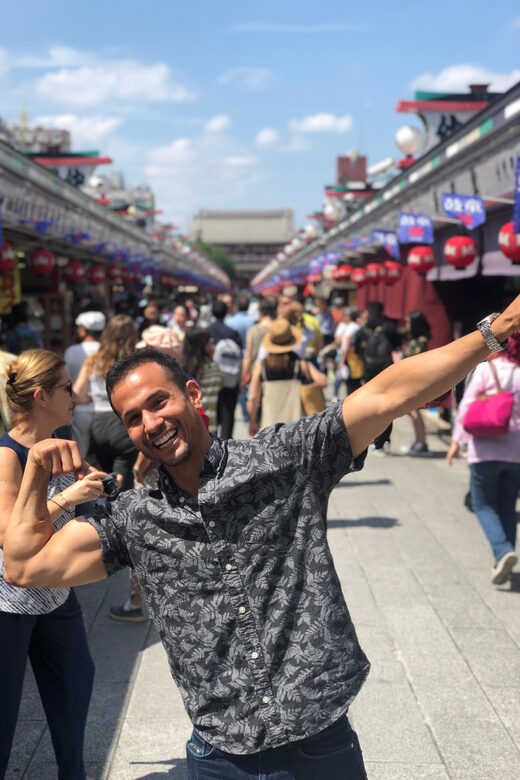
You start the tour where it’s easiest: meeting in your hotel lobby or at a meeting point. This matters more than it sounds. Tokyo navigation is doable, but doing it before you’ve had breakfast and coffee is where plans go sideways. By starting from a known location, you can focus on the day instead of logistics.
Once you’re together, you head out using local transportation. City transport is not included, so you’ll pay your own train/bus fares. Still, you’ll learn how the guide thinks about moving through the city: where to board, how to avoid unnecessary backtracking, and how to travel efficiently across neighborhoods.
If you like structure, this will feel reassuring. If you like freedom, it still gives you room—because you’re not getting lost. The tour is built for people who want explanations in Spanish, and for people who don’t want the heavy mental load of figuring out everything alone.
Practical tip for you: wear comfortable shoes. Not fancy shoes. Not “cute but painful” shoes. The tour is 8 hours long, and walking time is the whole point. Bring a light layer too. Tokyo weather can change fast, and you’ll want to adjust without slowing the group.
Asakusa On Foot: Culture, Temple Areas, and Getting Better Photos
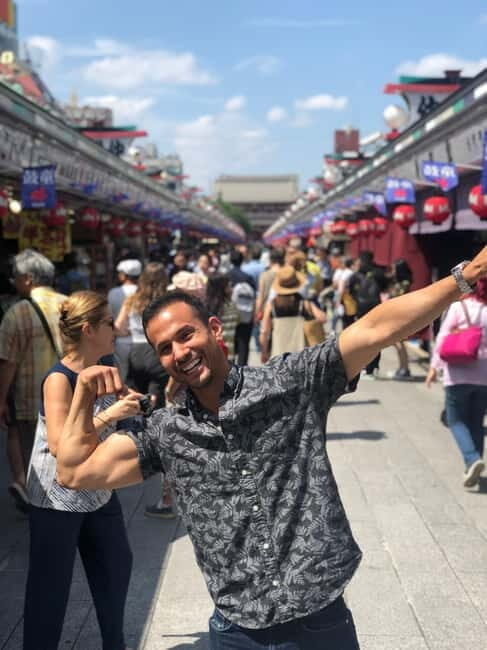
The tour’s first big neighborhood is Asakusa. The key value here isn’t just being in a famous area. It’s how the guide helps you make sense of what you’re seeing as you move through temple-related areas and the kind of streets where people slow down and look around.
The tour includes guidance through places where you might encounter temples. Entrance fees to temples are not included, so if a stop includes an optional ticketed area, you’ll need to decide on the spot. The upside: you’re not forced into spending extra money, and you can choose what’s meaningful to you.
Also, this tour is aimed at helping you enjoy Tokyo without constantly worrying about language or directions. That’s especially helpful in older, more traditional-feeling districts, where signage can feel less “tour friendly” than the major transit hubs.
From the reviews, I picked up a pattern: guests loved the explanations and the practical tips that make the sights click. That’s what you want early in the day. If you understand how to read what you’re seeing, every photo becomes easier. You’re not just snapping. You’re capturing context.
One more practical angle: Asakusa is a great place to do a “slow start.” You can get your bearings, ask questions early, and get used to the pace of the group. If you’re traveling with kids or older adults, this type of structured but flexible neighborhood introduction can be a relief.
Skytree Tower Viewpoints: How to Plan for Optional Tickets
Next comes Skytree Tower. Tours like this usually turn a major landmark into a moment of perspective. You’ll get to the tower area as part of the day, and you’ll likely have access to viewpoint options.
Here’s the important part for your budget: entrance fees to viewpoints are not included. So you’ll want to think ahead. Do you want the skyline view from inside, or are you happy with the area around the tower? If you’re the type who always goes for the top, you should set aside extra money. If not, you can still enjoy the landmark and keep your spending under control.
This stop is also a chance to reset mentally. After walking neighborhoods, a major landmark gives your legs and your mind a change of tempo. You can take photos, listen to the guide’s context, and decide whether you want to add any optional ticketed viewpoint time.
Another value point: a guide who knows Tokyo doesn’t just take you to the photo spot. They help you understand what you’re looking at and where the best opportunities for pictures tend to be. The goal is fewer wasted moments and fewer “we’re here but what do we do now?” pauses.
Akihabara Shopping and Photo Stops: A Day That Feels Like Tokyo, Not a Checklist
The tour finishes in Akihabara. This is where the day often turns into something more playful—shopping, browsing, and photo moments that feel built for modern travelers.
The reviews mention shopping and passing by Instagram-style photo spots. That fits Akihabara’s energy: people come here with cameras, and it’s easy to get distracted by all the visible details. The guide helps you do that without losing the thread of the tour.
You’ll also appreciate the Spanish narration here. If you’re curious about how everyday life, local culture, and tradition mix with the more tech-forward side of Tokyo, the guide’s explanations are what tie everything together. One review specifically praised a guide for explaining culture, traditions, religion, and everyday ways of life, which is the kind of context that makes a late-day neighborhood feel more meaningful.
Shopping time is usually where people either love a tour or feel rushed. A small group helps a lot because you can ask quick questions without slowing down the whole line. Still, remember: it’s a walking tour with an 8-hour block. You won’t have infinite time in each neighborhood, so decide your “must buys” early.
If you’re a souvenir hunter, keep an eye on how much you carry. Tokyos’ neighborhoods can involve lots of walking between shops and side streets. Bring a small bag you can close securely, and plan to snack if you get hungry—food and drink are not included.





The Real Time Budget: 8 Hours, Local Transit, and Comfortable Pacing
This tour runs for 8 hours. That’s long enough to cover multiple areas without feeling like you’re just passing through. It’s also long enough that your personal stamina matters.
The tour uses local transportation, but transport tickets aren’t included. So your day budget should include transit costs in addition to the tour price. The good news is you’re not guessing routes or timing connections while tired. The guide handles the flow.
Another point I like: if there’s an extension, there is no extra charge. That’s a small detail, but it often changes the experience. It means the tour isn’t trying to squeeze everything into a hard stop. You’re more likely to leave with the feeling of having done the day properly.
Keep in mind the pacing: since it’s a walking tour, your day will be active. You’ll want to wear comfortable shoes and keep water handy. Food and drink aren’t included, so plan simple breaks. If you skip meals, the tour stops being fun fast.
From a value perspective, a well-paced 8-hour guided neighborhood day can replace multiple “solo planning” sessions. Instead of spending your best energy figuring out transport and opening hours, you spend it enjoying Tokyo with context.
Price and Value: What $103 Gets You (and What You Still Pay)
At $103 per person for an 8-hour Spanish guided experience, the value comes from what’s included rather than just the headline price.
Included:
- A Spanish-speaking guide throughout
- Meeting at your hotel lobby (sometimes) or a meeting point
- City travel using local transportation with the guide (your fares are separate)
- Entrance and viewpoints/temples may be part of the route, but tickets are not included
Not included:
- City transportation fares
- Food and drink
- Entrance fees to viewpoints or temples
So how do you judge value? Ask yourself what you’re buying: not just access to places, but the ability to understand them in Spanish while someone else manages the flow of the day. If you’re comfortable reading the city on your own, you might feel it’s a luxury. But if you want a Spanish narration and a guide who can help you avoid getting lost in Tokyo’s sheer size, it starts to feel like a smart purchase.
Also, small group size matters here. With fewer people, the guide can spend more time answering questions and adjusting pacing. That’s hard to replicate with casual walking plans.
Based on the tone of the feedback, the best value is when you want more than photos: you want tips for your overall trip and explanations that help you enjoy the city after the tour ends. Guides like Ana and Beto are repeatedly praised for being friendly and for sharing practical advice, which is exactly the kind of value that doesn’t show up in a simple itinerary bullet list.
Who Should Book This Tour in Spanish
This tour is a strong fit if you:
- Want Tokyo Tours in Spanish and don’t want to rely on basic English only
- Prefer a small group (up to 10) rather than a crowded bus tour
- Like walking and want a structured day that still feels like Tokyo
- Value cultural explanations, not just landmark selfies
- Need help with orientation so you can focus on enjoying the city
It may be less ideal if you:
- Don’t like walking long distances
- Want a fully ticketed package (because transport fares and entrance fees aren’t included)
- Plan to spend most of the day in one place and do minimal movement
If you’re traveling with mixed ages, the walking format can still work, since it’s designed for people of all ages, as long as everyone has comfortable shoes and realistic expectations about time on foot.
Should You Book This Tokyo Spanish Tour?
If you want a day that’s easy to follow, guided in Spanish, and paced for real enjoyment across Asakusa, Skytree Tower, and Akihabara, I’d say this is worth booking. The biggest strengths are the hotel-lobby start, the small group feel, and guides with long Tokyo experience who can explain what you’re seeing while you’re actually in it.
Book it if you’re the type who likes asking questions and getting tips you can use later. Skip it only if you already know Tokyo well enough to plan your own route comfortably, or if you prefer a totally self-paced itinerary with no walking commitment.
If you want Tokyo without the constant stress of directions and translation, this tour does exactly that.
FAQ
Is the tour guide available in Spanish?
Yes. The guide provides Spanish throughout the tour.
Where does the tour start?
The tour starts by meeting in the hotel lobby (sometimes) or at a meeting point.
How long is the tour?
The duration is 8 hours.
Is this a small group tour?
Yes. The group is limited to 10 participants.
Is local transportation included?
Local transportation is used, but transportation in the city is not included.
Are food and drinks included?
No. Food and drink are not included.
Are entrance fees included for temples or viewpoints?
No. Entrance fees to viewpoints or temples are not included.
Can I cancel for a full refund?
Yes. You can cancel up to 24 hours in advance for a full refund.