REVIEW · TAKAYAMA
Traditional Japanese Tea Ceremony at Master’s Private Tea Room
Book on Viator →Operated by Hisa Takayama Private Tour Guide · Bookable on Viator
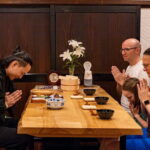
Tea tastes better in an old house. This private Japanese tea ceremony happens in a still-intact Machiya townhouse, with seasonal fruits and sweets served in a master’s private tea room. You’ll also meet Bob-san, the friendly host who keeps things practical and calm.
I especially like two things here: the Machiya architecture itself and the real instruction on making green tea and matcha. The townhouse is more than a set—it’s been cared for for generations, including a surprising past life when the main house and clinic were used together.
One consideration: it’s not a quick stop, and it costs $97.73 per person for about 2 hours, so you’ll want to book early. Demand is real; the typical booking window is around 99 days in advance.
In This Review
- Key highlights
- A Takayama Tea Ceremony Worth Slowing Down For
- Stepping Into Machiya: The Long Narrow House Idea
- The Clinic Connection: A House with a Main House and Work Life
- What Bob-san Shows You: Green Tea and Matcha, Done Clearly
- Inside the Tea Room: How the Experience Usually Unfolds
- Duration and Timing: Two Hours That Don’t Feel Like a Tutorial
- Price and Value: Is $97.73 for a Tea Ceremony Too Much?
- Getting There: A Central Meeting Point That’s Easy to Use
- Who This Tea Room Experience Fits Best
- Should You Book This Traditional Japanese Tea Ceremony?
- FAQ
- FAQ
- How long is the Traditional Japanese Tea Ceremony at Master’s Private Tea Room?
- What is the price per person?
- Where do I meet for the tour?
- Is this a private tour or shared with others?
- Do I get a mobile ticket?
- When is it available?
- How soon will I receive confirmation after booking?
- Are service animals allowed?
- Is there free cancellation?
- What’s the typical booking lead time?
Key highlights
- Intact Takayama Machiya you can see and understand, not just pass by
- Bob-san’s green tea and matcha instruction you can follow step by step
- Seasonal fruits and sweets paired with the tea experience
- A townhouse once used as an obstetrics and gynecology clinic, with a “main house + clinic” layout
- Private format so your group stays together in the tea room
- Mobile ticket and a location that’s near public transportation
A Takayama Tea Ceremony Worth Slowing Down For
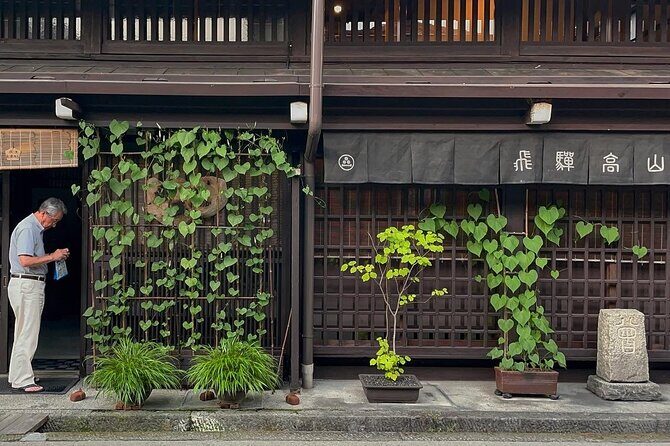
Takayama is the kind of place where the best memories are often quiet ones. This tea ceremony is exactly that. You’re not racing between landmarks. You’re spending time in a traditional merchant-house style space and learning how tea is made and served in a way that feels intentional.
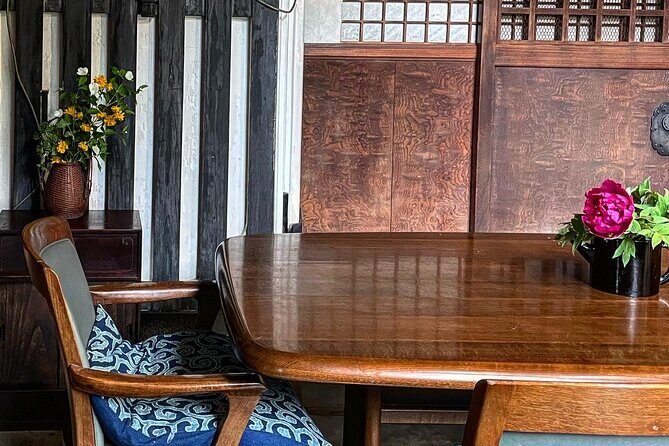
What makes this experience click is the setting. The tea happens inside a Machiya townhouse that still shows how people lived and worked. That matters, because in Japan you can find “traditional” rooms that are mostly theater. Here, the building itself helps you understand the culture you’re tasting.
And then there’s the human factor. In the feedback, Bob-san comes up again and again as a warm, capable host. If you’re the type who likes questions and wants things explained clearly, this format is a good match.
You can also read our reviews of more private tours in Takayama

Stepping Into Machiya: The Long Narrow House Idea
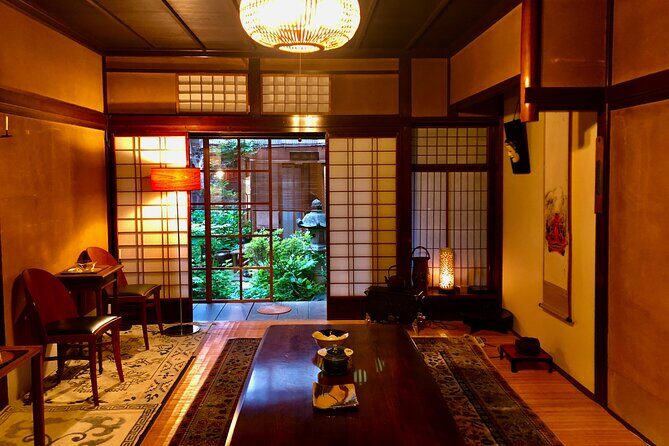
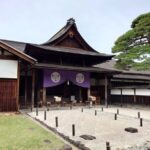
Machiya are Edo-period merchant houses. The key detail is the shape. They’re long and narrow, which sounds odd until you’re standing near the entrance and realizing how the space flows.
That layout is useful for you as a visitor. It creates natural pacing. You move from a tighter entry feel into wider living and work areas, and the house helps you understand why the building was designed that way in the first place. Instead of getting lost, you get guided by architecture.
Also, the craftsmanship matters. Hida craftsmen used strong, high-quality materials and shaped them into practical structures that are still sturdy after more than 200 years. In plain terms: this isn’t a fragile set you have to tiptoe around. You’ll likely be able to focus on what’s in front of you—woodwork, room structure, and the overall flow—without constant worry.
For value-minded travelers, this is one of the better ways to spend a couple hours in Takayama. You get cultural context plus tea, all in the same place. No “tea plus five minutes of standing around.”
The Clinic Connection: A House with a Main House and Work Life
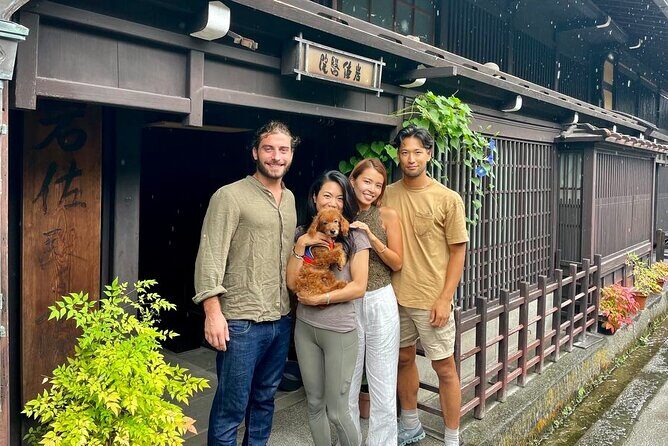
Here’s the twist that makes this particular Machiya feel real. Your townhouse was formerly run as an obstetrics and gynecology clinic. The main house and the clinic functioned together, and that combination is described as unique and harmonious.
Why should you care? Because it turns the building from pretty to meaningful. Machiya weren’t just decorative homes. They were family workplaces. When you learn the clinic part, you start noticing how the rooms might have served multiple purposes: receiving, caring, cooking, living. Even if you never see every historical detail explained, the idea changes how you look at the space.
This kind of context also helps you enjoy the tea ceremony more. Tea isn’t floating in space. It’s part of everyday culture—rituals shaped by how people actually lived.
If you like homes with stories, this is the reason the experience scores so highly. It gives you something to remember beyond the taste of matcha.
What Bob-san Shows You: Green Tea and Matcha, Done Clearly
Tea ceremony can sound formal and complicated. This one is taught in a way that feels approachable. The standout in the experience feedback is Bob-san’s hosting: friendly and kind, with clear guidance on making green tea and matcha.
That’s a big deal for practical travelers. When you get instruction, you’re not just watching someone else do the ritual. You’re learning what you can repeat later—at least the basics of preparation and care. Even if you never become a tea-obsessed hobbyist, you’ll leave with a stronger sense of what makes a good cup taste balanced.
The focus also includes tasting. You’ll enjoy Japanese tea alongside seasonal fruits and sweets. This pairing matters because seasonal fruit and sweets aren’t random add-ons. They shape the flavor story of the session, and they give you another angle on how the Japanese approach seasonality.
Also, the private nature changes the dynamic. In a small, private setting, it’s easier to ask quick questions and get direct answers without the feeling of being rushed.
Inside the Tea Room: How the Experience Usually Unfolds
You should think of this as a guided session with a few main phases. You start in the Machiya space, then move into the tea-room portion where the ceremony takes center stage. The point isn’t to sprint through steps. The point is to understand the rhythm.
Expect to spend your time learning and tasting rather than standing on a timeline. The duration is about 2 hours, so it’s long enough for instruction and enjoyment without dragging.
Here’s what you can plan for conceptually, based on what the experience is designed to deliver:
- Architecture first, then tea. You’ll get time to understand the Machiya house and its unique past (including the clinic connection).
- Tea instruction second. Bob-san shows you how to make green tea and matcha, with guidance that makes it easier to follow.
- Seasonal sweets and fruits alongside tea. You’ll get pairing moments, so your taste experience isn’t one-note.
If you worry that tea ceremonies are too slow, this is still built to be engaging. The teaching angle keeps you involved. If you love calm, detailed traditions, this also works because the setting supports that mood.

Duration and Timing: Two Hours That Don’t Feel Like a Tutorial
It’s about 2 hours, and that duration is a sweet spot. Short enough to fit into a busy day in Takayama, long enough to actually learn something and enjoy the tasting without feeling like you’re being squeezed.
The schedule has a listed Monday window of 9:00 AM to 6:00 PM. The experience is offered across a longer date range, but the key practical point is simple: pick a time that won’t steal your energy from other parts of the day.
Also, because it’s private (only your group participates), you don’t have to worry about matching your pace to a larger group. That can make the experience feel smoother and more personal.
One more practical note: the tour uses a mobile ticket. That usually makes check-in easier on the day.
Price and Value: Is $97.73 for a Tea Ceremony Too Much?
Let’s talk about the money honestly. At $97.73 per person for about 2 hours, this isn’t the cheapest thing you’ll do in Japan. But it’s also not just paying for a cup of tea.
You’re paying for several things at once:
- A private experience format
- Instruction on green tea and matcha (not just watching)
- The setting: a still-intact Machiya townhouse with a real past life
- Seasonal fruits and sweets included in the session
When you compare it to typical half-day activities, $97.73 can look high. When you compare it to learning experiences, it starts to make more sense—especially because you get cultural context plus hands-on guidance in one sitting.
The best way to judge value is this: if you want tea trivia, you can probably find free tastings. If you want a structured lesson inside a meaningful traditional house, then the price starts to feel fair.
And in this case, the overall rating and strong recommendation signal that people think it’s worth it. The key is that the host experience—Bob-san’s friendliness and clear teaching—isn’t an afterthought.
Getting There: A Central Meeting Point That’s Easy to Use
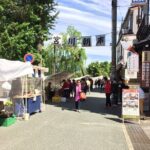
The meeting point is at 2-chōme-147 Morishitamachi, Takayama, Gifu 506-0823, Japan. The activity is listed as near public transportation, which is helpful in Takayama, where walking and local transit often do most of the heavy lifting.
If you’re using a phone map, save the address exactly. Machiya streets can be easy to recognize visually once you’re nearby, but it’s still worth not making your first minutes of the day a scavenger hunt.
Since this is a private activity, I’d also plan to arrive a touch early. In an old house, timing matters more than you think. You want your first impression to be calm.
Who This Tea Room Experience Fits Best
This is a great fit if you:
- Want authentic cultural context rather than a quick photo stop
- Like structured learning you can actually use, like making tea steps at home
- Prefer quieter experiences over big crowds
- Enjoy food pairings, especially when they’re tied to season
It may be less ideal if you:
- Only have a few minutes and hate sitting for 2 hours
- Prefer large-group social tours with lots of mixing
- Want a high-energy, sightseeing-heavy day
If you’re traveling as a pair or a small group and you want something uniquely Takayama, this lands in a strong sweet spot.
Should You Book This Traditional Japanese Tea Ceremony?
I’d book it if you’re the kind of person who notices details: the shape of a house, the way tradition is taught, and the small shifts in taste. This experience gives you all three. You also get Bob-san’s instruction, which is a big part of why the session feels satisfying rather than staged.
Skip it if your priority is stacking as many sights as possible. This is for slowing down, not sprinting through.
One last practical nudge: because the average booking window is around 99 days in advance, don’t wait for a last-minute plan. Tea rooms can fill up, and you don’t want to be making substitutions on the day.
FAQ
FAQ
How long is the Traditional Japanese Tea Ceremony at Master’s Private Tea Room?
The duration is approximately 2 hours.
What is the price per person?
The price is $97.73 per person.
Where do I meet for the tour?
The meeting point is 2-chōme-147 Morishitamachi, Takayama, Gifu 506-0823, Japan.
Is this a private tour or shared with others?
It’s a private tour/activity. Only your group will participate.
Do I get a mobile ticket?
Yes, it uses a mobile ticket.
When is it available?
The listed opening hours include Monday from 9:00 AM to 6:00 PM.
How soon will I receive confirmation after booking?
Confirmation is received within 48 hours of booking, subject to availability.
Are service animals allowed?
Yes, service animals are allowed.
Is there free cancellation?
Yes. You can cancel for a full refund up to 24 hours in advance of the experience’s start time.
What’s the typical booking lead time?
On average, it’s booked about 99 days in advance.