REVIEW · TOKYO
An Enchanted Evening with Geisha – A Rare Experience in Tokyo
Book on Viator →Operated by 津の守 · Bookable on Viator
Geisha at your table beats sightseeing. The evening is built around up-close ozashiki performances in Tsunokami’s Arakichō setting, with photo opportunities and room to ask questions. One thing to keep in mind: geisha may not speak English, so you’ll lean on gestures and your translation app.
I like that it feels social but not chaotic. You get a welcome drink of your choice, light snacks, and a guided sense of what to do and when, all while you sit comfortably on zabuton cushions or low chairs on tatami. Just don’t show up barefoot, because you’re expected to respect the tatami setup.
In This Review
- Key things you should know before you go
- Tsunokami in Arakichō: the kind of Tokyo evening you can’t fake
- How the ozashiki evening works (so you know what to expect)
- Your Thursday at Tsunokami: timing, show sessions, and the room flow
- The star of the night: geisha performance close-up
- Conversation, questions, and the iki culture vibe
- Photos, drinks, snacks, and tatami comfort tips
- Price and value: is $133 actually a good deal?
- Who this is best for (and who should reconsider)
- Planning your Tokyo night: getting there and making it smooth
- Should you book An Enchanted Evening with Geisha?
- FAQ
- How long does the experience last?
- Where does the experience take place?
- What’s included in the ticket price?
- Is the welcome drink alcoholic?
- What snacks are included?
- Can I take photos during the experience?
- What seating is provided, and do I need special shoes?
- Is tipping included?
- What if I cancel?
- Do the geisha speak English?
Key things you should know before you go
- Small group energy: capped at 20 people, so the mood stays personal.
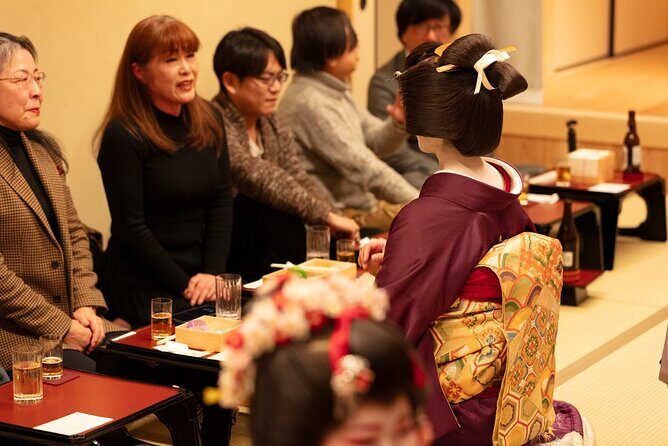
- Geisha come to you: they visit your seat and entertain you, rather than you only watching from afar.
- Questions are welcome: you’re encouraged to talk and learn the “how” behind the tradition.
- Photography time is built in: you’ll get moments to take pictures with the geisha.
- Drink and snack included: your fare covers 1 drink plus light snacks like nuts, ham, and pickles.
- Tatami etiquette matters: you’ll sit on tatami, so wear shoes you can remove neatly (and skip going barefoot).
Tsunokami in Arakichō: the kind of Tokyo evening you can’t fake
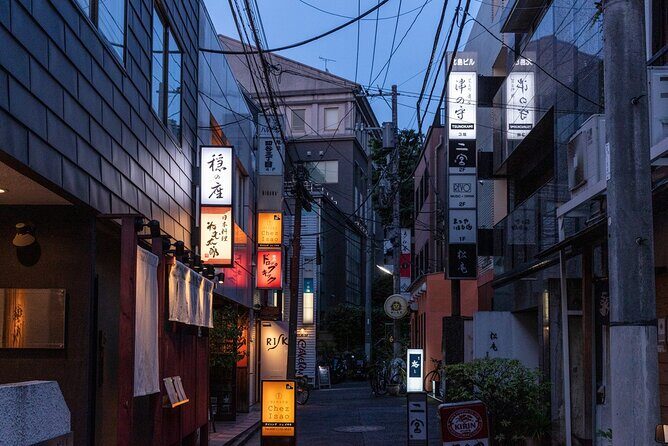
Tokyo has tons of shows, but this one is different in feel. Instead of a performance machine built for crowds, you’re in a traditional room atmosphere where geisha entertainment happens close enough to notice small timing details and the careful pacing between songs and movement. The venue name you’ll see is 津の守 (Tsunokami), in Arakichō, Shinjuku.
What I love most is how the evening is set up for interaction. The experience isn’t only visual. It’s also conversational and educational, with guidance on how to enjoy the moment without turning it into a “look, but don’t touch” situation. Even if your Japanese is limited, you’re not left totally out in the cold.
The other big plus is practical: the basics are handled for you. You’re given seating, you get a welcome drink plus snacks, and the night has a clear structure with show sessions (Thursdays only). That matters because Tokyo nights can be long and confusing when you’re trying to juggle trains, directions, and schedules. Here, the core experience is already the plan.
The one caution I keep for myself: language. The setting is authentic, which usually means English isn’t guaranteed. In real life, that’s not a deal-breaker, but you should be mentally ready to communicate with simple questions, smiles, and your phone.
You can also read our reviews of more evening experiences in Tokyo


How the ozashiki evening works (so you know what to expect)
This isn’t a “walk in, sit down, watch 60 minutes straight” type of event. The night is organized around ozashiki-style hosting, meaning you’re seated and entertained in a way that feels like you’re part of the room, not just an observer outside the circle.
Here’s what that typically means for your evening rhythm:
- You’re seated with free seating options like zabuton cushions and low chairs.
- Geisha visit your seat rather than staying at a single stage area.
- Short performance windows happen during the session time, so it doesn’t feel like you’re trapped watching one long segment.
- Conversation is encouraged. You can ask questions and learn about the tradition through back-and-forth, not just lectures.
- Photo moments are included. You’re not hoping the host “might” allow it. It’s part of the experience flow.
Also, you’ll have on-site supports that make the evening smoother: there’s guidance on how to enjoy, plus restroom access and WiFi on board. That’s quietly helpful if you need to check a translation app or map, especially since this is a small, timed event.
Your Thursday at Tsunokami: timing, show sessions, and the room flow
The experience runs every Thursday, from 16:00 to 22:00. Showtime performances are slotted in 20-minute blocks at 17:00, 19:00, and 21:00. Your admission is listed as about 2 hours, and in practice that means you should think of the full visit as a longer evening window around the main show.
That structure is useful for two reasons:
- It gives time for the hosting vibe—getting settled and comfortable on tatami.
- It lets the room breathe between performance moments, so the experience doesn’t feel rushed.
If you’re the type who hates waiting, you might worry about downtime. But the trade-off is worth it. You’re in the atmosphere. The point isn’t only the 20-minute performance window. It’s the full hosted evening, including how geisha interact once you’re seated.
And size matters here. The group limit is 20 travelers, which usually keeps the room from feeling like a line. The best evenings feel like you’re being personally hosted, not processed.
The star of the night: geisha performance close-up
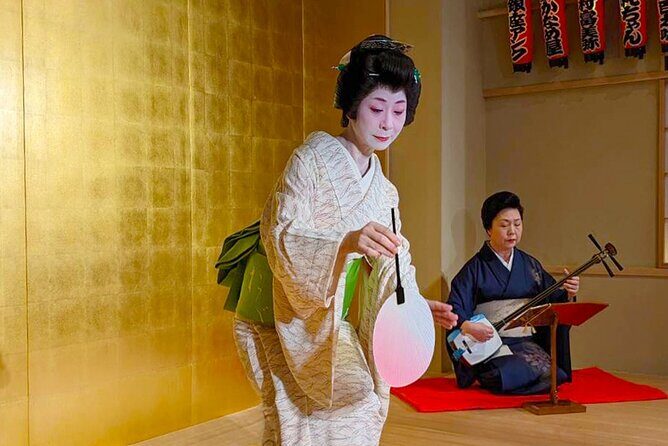
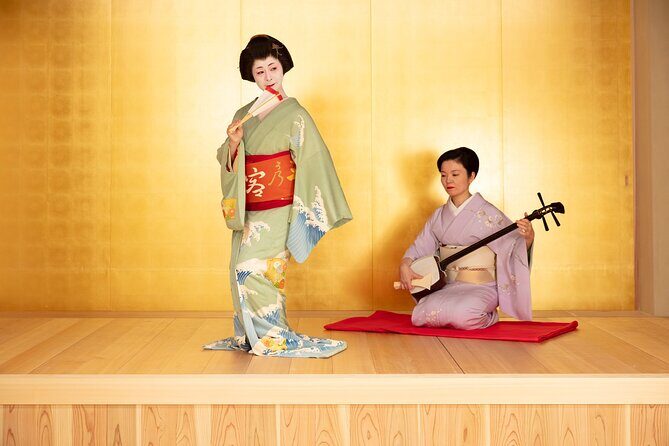
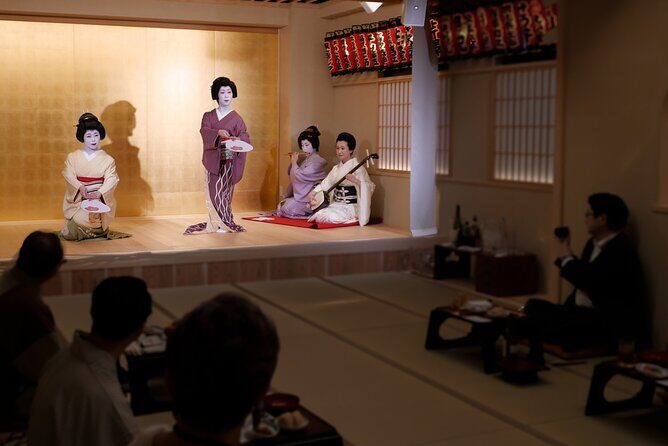
The main event is captivate-me entertainment: dance and musical performances by geisha, presented up close. Because you’re seated within the ozashiki setting, the performances feel more like something happening for you and the room, instead of something happening far away on a bright stage.
What’s special is that you’re not stuck at a distance. Geisha are designed to interact—visiting seats, responding in the flow of the evening, and sharing the charm that goes with iki culture. Even if you don’t understand every word, you’ll get the rhythm through the gestures, pauses, and how the music and movement land.
One more thing I appreciate: the experience explicitly encourages questions. That’s where it stops being a passive show. You’re invited to participate in learning how the tradition works day-to-day, not just absorbing “pretty and polite” visuals.
Conversation, questions, and the iki culture vibe
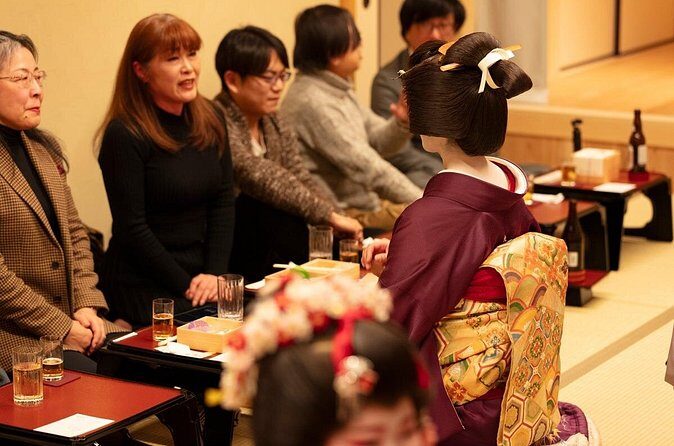
Let’s talk about the “learning” part, because it can be either fun or frustrating depending on your expectations. This is not presented like a classroom. It’s presented like conversation. You’ll get guidance on how to enjoy, and you’re encouraged to ask questions while you’re in the setting.
If you’re worried about communication, don’t overthink it. You can keep it simple. Ask about the performance, clothing, or what a certain moment means. Use short phrases and your translation app. You’ll be surprised how far politeness and curiosity get you in Japan.
From what I’ve seen in similar situations, the biggest barrier isn’t interest—it’s language. One practical idea: have 3 or 4 ready-to-go questions in English and translate them on your phone. That keeps you from freezing when a moment opens up.
Also, don’t expect a lecture. Expect a lived cultural conversation happening inside a hosting environment. That’s the point.






Photos, drinks, snacks, and tatami comfort tips
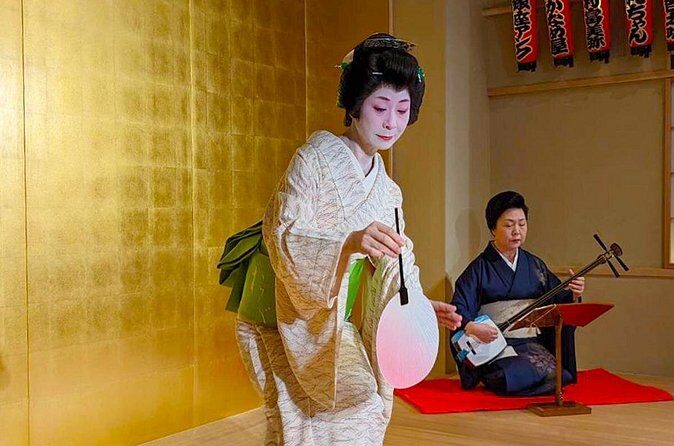
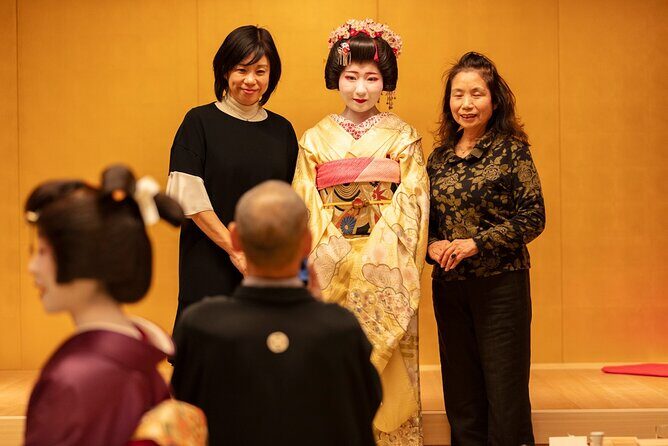
This experience is built to check the “I want to remember this” box without making it feel like you’re constantly filming. You’ll have photo opportunities with geisha, and you’ll be guided enough that you’re not fumbling awkwardly while people are performing.
The welcome drink is included, and you can choose your drink. There are also non-alcoholic options included, so you’re not forced into alcohol just to take part. Since additional drinks are available too, you can decide if you want to keep it light or go all-in.
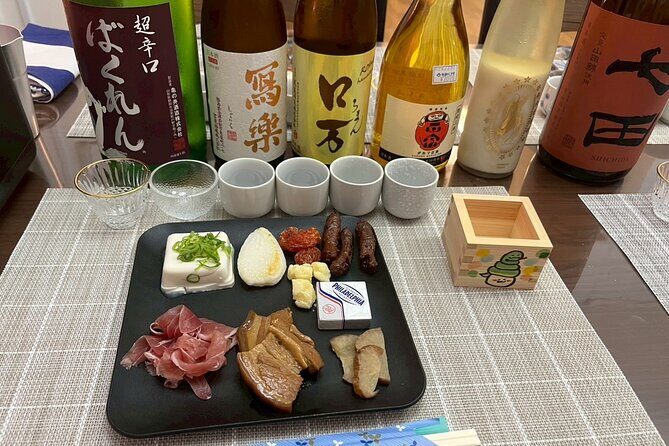
The snacks are simple and meant to keep you comfortable during the seated portion. You can expect light items such as nuts, ham, and pickles. It’s not a full meal, so if you’re hungry, eat beforehand. Your goal here is enjoyment, not a dinner rescue mission.
Now the tatami detail: you’ll sit on tatami flooring. The instruction is clear—avoid entering barefoot. That’s not just a rule. It’s part of respecting the room. Practical move: wear slip-on shoes you can remove quickly, and consider bringing a clean pair of socks.
Price and value: is $133 actually a good deal?
At $133 per person, this isn’t a cheap impulse purchase. So here’s how I judge the value.
You’re paying for:
- An intimate, seated geisha entertainment experience (not a mass stage show)
- Up-close interaction with geisha who visit seats
- Included basics that many other cultural shows charge extra for: 1 drink, snacks, and photo opportunities
- Guidance on etiquette and how to enjoy the evening
- A small group cap (max 20), which helps the experience feel personal
If you try to recreate the same experience on your own, the hard part isn’t just finding a venue. It’s finding something that’s structured for guests, includes etiquette guidance, and ensures you actually get the interaction and photo moments. That structure has value.
So for me, $133 makes sense if you want a real hosted cultural evening in Tokyo, not just photos outside a building. If you’re only after a quick, passive performance and don’t care about interaction, you might find cheaper options. But if you’re the kind of traveler who loves learning through participation, this price fits the experience.
One more planning note: it’s usually booked about 24 days in advance on average. If you want a specific Thursday session vibe, don’t wait until the last minute.
Who this is best for (and who should reconsider)
This works especially well for you if:
- You want an authentic-feeling evening with geisha, not just another sightseeing stop.
- You enjoy cultural interaction and don’t mind a little language friction.
- You’d like a structured experience that includes drink, snacks, and photo time.
- You’re traveling as a solo guest, couple, or small group and want a calmer setting.
It might be less ideal if:
- You hate any chance of language barriers and need everything explained in English on the spot.
- You’re only interested in a long, uninterrupted show format.
- You’re expecting a big venue spectacle. This is designed for closeness, not scale.
Also, keep in mind that session time is Thursday only and tied to specific show windows. That means your schedule in Tokyo has to play along a bit.
Planning your Tokyo night: getting there and making it smooth
The meeting point is 3 Arakichō, Shinjuku City, Tokyo 160-0007, Japan, and the activity ends back at the meeting point. The venue is near public transportation, which is a big advantage in Tokyo, where “near” can mean a short walk and not a full ordeal.
Since the performances run within a set Thursday window, I recommend you treat this like a real appointment. Give yourself buffer time to arrive, settle, and remove shoes smoothly.
A couple of practical “make it easier” moves:
- Bring your phone with a translation app ready before you sit down.
- Decide in advance what you’ll order for your drink so you don’t slow down if the language is tricky.
- Plan a light snack before you go, since the included snacks aren’t a full meal.
And if you end up in a smaller group than expected, that’s when the experience can feel even more personal. The room is set up for small seating plans, so you’ll be grateful you didn’t come expecting a huge crowd experience.
Should you book An Enchanted Evening with Geisha?
Book it if you want a respectful, hosted, up-close geisha evening in Tsunokami’s Arakichō setting. The combination of geisha visiting your seat, question-friendly conversation, included drink and snacks, and photo opportunities makes this feel like more than a show.
Pass, or at least shop carefully, if you need guaranteed English explanations or you only want a “watch from a distance” experience. This is authentic hosting, so part of the fun is adapting in real time.
If you’re the kind of traveler who likes cultural details you can actually participate in, this is exactly the sort of Tokyo night that turns into a story you’ll tell later.
FAQ
How long does the experience last?
The experience is listed as lasting about 30 minutes to 2 hours. Admission is noted as 2 hours, and the Thursday sessions run on scheduled performance times.
Where does the experience take place?
It takes place at 津の守 (Tsunokami) in Arakichō, Shinjuku, Tokyo, starting at 3 Arakichō, Shinjuku City, Tokyo 160-0007, Japan.
What’s included in the ticket price?
Geisha performance, geisha visiting your seat, photo opportunities with geisha, guidance on how to enjoy the experience, and 1 drink plus snacks. Fees and taxes are included too.
Is the welcome drink alcoholic?
A drink of your choice is included. Alcoholic beverages are included, and non-alcoholic options are also included.
What snacks are included?
Light snacks are included, such as nuts, ham, and pickles.
Can I take photos during the experience?
Yes. Photo opportunities with geisha are included.
What seating is provided, and do I need special shoes?
You’ll have free seating with zabuton cushions or low chairs. The floor is tatami, and you should avoid entering barefoot.
Is tipping included?
No. Tip is not included.
What if I cancel?
Cancellation is free. You can cancel up to 24 hours in advance for a full refund.
Do the geisha speak English?
The performances are in an authentic setting, and geisha may not speak English, so you may need to rely on gestures or translation tools.