REVIEW · OSAKA
Urban Canvas: Osaka Street Art Bike Tour
Book on Viator →Operated by In Kansai Experiences · Bookable on Viator
Street art, pedal power, and great coffee. I like that this Osaka street art bike tour skips the rental hassle because the bike is included, and you’re guided into neighborhoods most people miss.
I also like the built-in breaks: multiple stops so you can rest, grab craft coffee, and snack while you learn the stories behind the walls.
One thing to weigh: this works best in good weather, and you’ll need a moderate fitness level for a few hours on a bike.
In This Review
- Key things to know before you go
- Osaka’s Street Art on Two Wheels: what you’re really paying for
- Price and logistics: bikes, mobile tickets, and the ride pace
- Getting rolling in Osaka: train lines, rivers, and the underground vibe
- Tenma backstreets: hip local stands, quick food intel, and craft coffee
- Nakazaki-cho: boutiques, galleries, and a 100-year-old pizza slice
- Juso and Street Art Central: why the tour’s route feels different
- Old-school bars and the architecture you’ll start noticing
- About your guide (and why it affects what you see)
- What to bring (so the ride feels easy, not annoying)
- Alcohol and other inclusions: what’s covered, what isn’t
- Who should book this Osaka Street Art Bike Tour?
- Should you book it?
- FAQ
- FAQ
- How long is the Osaka Street Art Bike Tour?
- Is the bicycle included?
- What food and drinks are included?
- Where does the tour start and what time does it begin?
- What’s the group size?
- What fitness level do I need?
- Is alcohol included in the tour?
- What happens if the weather is poor?
Key things to know before you go
- Bike is included so you don’t waste time figuring out rental gear or returns
- Small group max of 8 makes it easier to hear your guide and ask questions
- Craft coffee + snacks are included with a real local-food feel
- Tenma, Juso, and Nakazaki-cho focus on street culture, not just famous landmarks
- Street art around Juso and across the Yodo River gives you a clear art-scene route
- A guide-led local perspective includes commentary on underground life and how the city works
Osaka’s Street Art on Two Wheels: what you’re really paying for
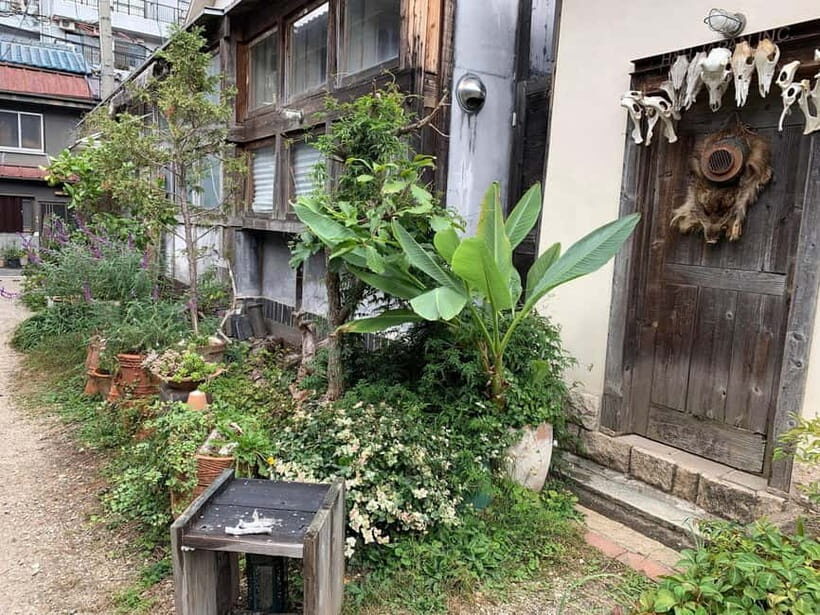
If you’ve only seen Osaka from the big sights, this tour is a different angle—street-level, neighbor-to-neighbor. You’ll pedal through areas tied to wall art, small shops, galleries, and the everyday rhythm that makes Osaka feel like Osaka.
At $89.17 per person for about 3 to 4 hours, the value is mostly in the structure. You get transportation (the bike), planned stops, and food/coffee built into the route. It’s not just a ride. It’s a guided way to reach the parts of Tenma, Juso, and Nakazaki-cho where you’d likely wander right past without local help.
One more quiet plus: the group size caps at 8 travelers. That matters in a city like Osaka, where turning corners, reading signage, and keeping an eye out for bikes can get chaotic fast. A small group helps you stay together and keep the tour feeling friendly, not rushed.
You can also read our reviews of more cycling tours in Osaka
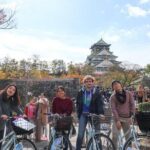
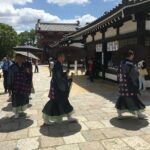
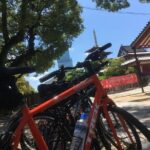
Price and logistics: bikes, mobile tickets, and the ride pace
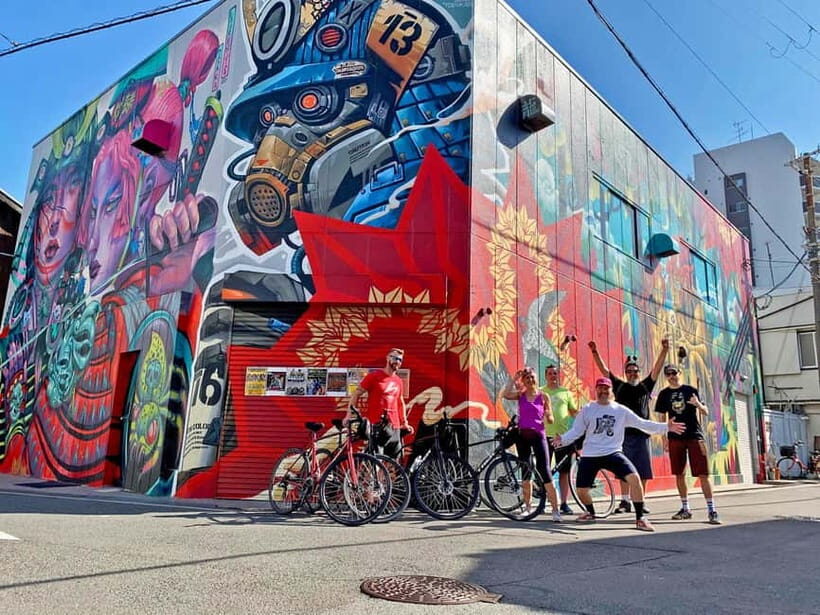
The logistics are refreshingly simple. You start at Cycle Osaka (1-chōme-10-7 Tenma, Kita Ward, Osaka, 530-0043, Japan) at 11:00 am and the tour ends back at the same place.
You’ll use a mobile ticket. That’s one less paper thing to manage while you’re figuring out train lines. Also, the meeting point is near public transportation, which is handy if you’re mixing this with other Osaka days.
On the physical side, the tour asks for a moderate fitness level. The ride time is split into sections, and you get rest stops. Still, expect real time in the saddle. One past rider even noted around 23 km—so you’re not doing a slow “park loop.” Bring water, wear comfortable shoes, and treat it like a proper neighborhood cycling day.
Finally, there’s a weather reality check. This experience requires good weather, and if conditions are poor, you’ll be offered another date or a full refund. In Osaka, that means you should watch the forecast closely the day before you go.
Getting rolling in Osaka: train lines, rivers, and the underground vibe
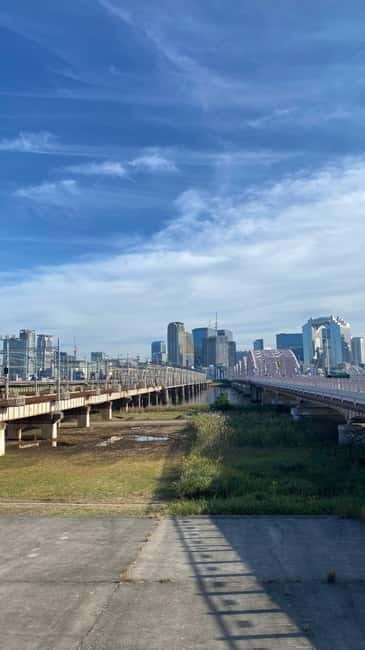
Your ride starts by threading an urban maze of train lines, rivers, bridges, graffiti, and modern skylines. That first hour is a “get your bearings fast” type of segment—you see how the city moves, where the edges are, and how quickly the look of a neighborhood can change from street-level life to bold building shapes overhead.
The most useful part here is the guide’s local commentary. You’re not just looking at walls. You’re learning how Osaka works under the surface—how daily life, nightlife, and the city’s backspaces connect. This is the kind of context that makes the street art feel more like communication than decoration.
If you’re the type who loves noticing details—alley textures, bridge shadows, the way streets funnel toward rivers—you’ll get a lot out of this opening stretch.
Tenma backstreets: hip local stands, quick food intel, and craft coffee
After the first sweep, the tour shifts into Tenma for a shorter stop. This is where the vibe changes into something more lived-in and low-key. You’ll ride through Tenma backstreets, and you’ll get practical recommendations for food and drinks.
Then comes the craft coffee moment. You stop at a hip local stand for craft coffee—and this isn’t just a caffeine break. It’s a reset for your legs and a chance to ask questions while the group stays together.
Tenma is a great neighborhood to learn from because it’s the kind of place where your eyes start to connect dots: small signs, everyday storefronts, and street-level creativity. If you like wandering but want a plan, this stop does both.
Possible drawback: because the coffee and recommendations are part of a short window, you’ll want to be ready with a few questions. If you go silent, you’ll still enjoy the coffee, but you’ll leave some value on the table.
Nakazaki-cho: boutiques, galleries, and a 100-year-old pizza slice
From the “gritty vibes” feeling of Juso and Tenma, the tour heads into Nakazaki-cho, described as an hipster enclave. This part leans more into boutique shops and galleries—less about big street theatrics and more about finding art in places that feel like they’ve always been there.
The food highlight here is a locally made pizza slice served in a 100-year-old building. It’s a simple stop, but it hits the sweet spot: you get something tasty and you get a sense of time and texture. Old buildings change how you experience streets. A modern slice of pizza is fun, but the setting makes it memorable.
Time-wise, this section is brief (about 20 minutes), so don’t treat it like a full meal plan. It works as a snack-lunch blend inside a broader ride.
A few more Osaka tours and experiences worth a look
Juso and Street Art Central: why the tour’s route feels different
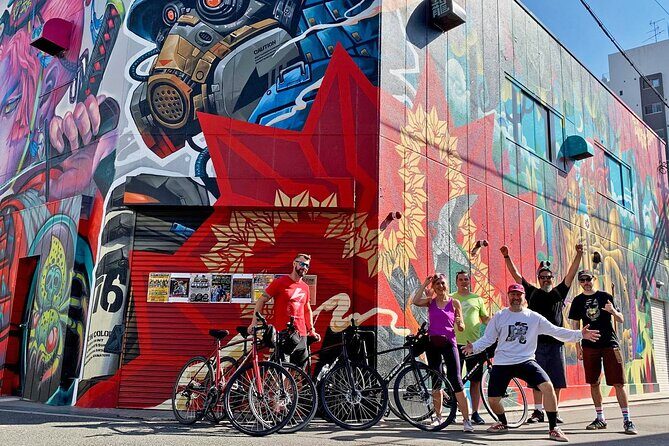
The tour’s center of gravity lands in the Juso area. You cross into an urban street art hub that’s called out as a place almost never visited by tourists. That wording matters, because Juso gives you the feeling of being let into an Osaka that’s still for locals first.
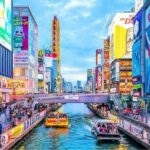
You’ll also ride over to Juso from the Yodo river side—so you get a sense of geography, not just street blocks. The city looks and feels different near water: you’ll often notice pacing changes, bridge views, and the way neighborhoods stretch.
This is also where you’ll likely see more serious street art concentration. The tour is built around Osaka’s art scene, so Juso isn’t a random “we’ll stop here because it’s close” moment. It’s the part that ties the theme together.
If you’re hoping for only famous mural stops, you might find the route feels more like “street art as everyday environment.” That’s a feature, not a bug. It’s also why the tour feels more authentic.
Old-school bars and the architecture you’ll start noticing
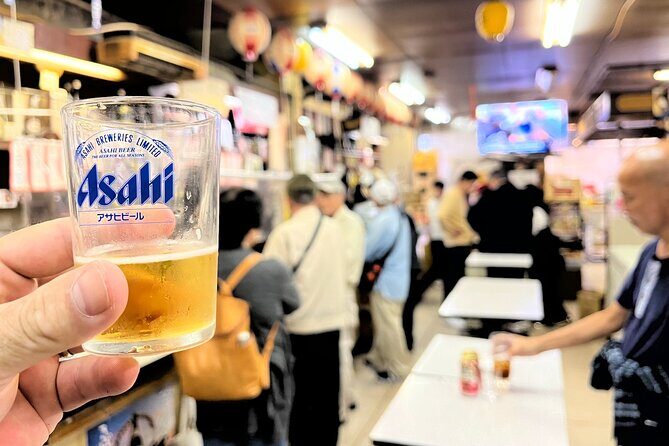
A street art tour that ignores the rest of the neighborhood culture would feel incomplete. Here, the tour brings in the broader social fabric—things like old school Japanese bars and local architecture you wouldn’t necessarily register as you’re rushing between trains.
You’ll see examples of Osaka’s urban architecture, and because you’re cycling at neighborhood speed, you’re better positioned to take in details: building lines, stairwell entrances, how graffiti sits beside small retail fronts, and how bridges shape movement.
One rider highlight that rings true for this kind of tour: it’s not just sightseeing. The guide makes you read the city. And if the guide is also an artist—which is true for Eric from past experiences—that personal connection to making things often sharpens what you notice on the walls.
The route also includes multiple stops so you’re not constantly pedaling. You get time to look, talk, and reset.
About your guide (and why it affects what you see)
Guides are the difference between taking photos and actually understanding a place. This tour leans hard into that with local commentary throughout.
In the experiences shared by guests, the guide Eric stands out for being informative and for communication that feels clear and organized. He’s also described as an artist who has created street art himself, which helps the tour feel more like a conversation than a lecture.
When you’re in a place where art is attached to real neighborhoods (not museum walls), that matters. You’ll come away with better context for what you saw—why certain styles appear where they do, and how street art fits into Osaka’s everyday life.
What to bring (so the ride feels easy, not annoying)
You don’t need much, but a few basics make a big difference:
- Comfortable clothes and shoes for cycling and walking during stops
- Sunglasses or light protection if the sky is clear
- Water, since you’ll likely be moving for hours
- A small bag you can keep simple (you’ll be using it during snack/coffee stops)
Also, since the tour includes coffee and snacks, it helps to avoid heavy meals right before you start. The pizza stop is part of the same flow, not a standalone full lunch.
If you’re sensitive to weather, plan your layers. Osaka can go from warm to cool depending on cloud cover and river breezes.
Alcohol and other inclusions: what’s covered, what isn’t
What you get included is straightforward:
- Use of bicycle
- Coffee and/or tea
- Snacks
Alcoholic drinks are not included. If you’re 20 and up, alcohol may be available for purchase, but it’s not part of the included set.
This matters because it keeps the tour focused and keeps the ride safer and more comfortable. You’ll enjoy the street art and the food stops without needing a drink to get through the day.
Who should book this Osaka Street Art Bike Tour?
This is a strong match if you want:
- A street-level Osaka experience beyond the big, well-trodden sights
- A guided route into Tenma, Juso, and Nakazaki-cho
- A mix of cycling plus coffee, snacks, and pizza
- Street art context from a guide who actually understands the scene
It’s also a good fit if you’re traveling on your own and want a small-group day. With a max group size of 8, it’s easier to feel included and to ask questions.
You might skip this (or choose a different style tour) if:
- You’re not comfortable biking for several hours, even with rest stops
- You want only fully structured indoor stops or museum-style art
- Weather and cycling stress you out—since this one depends on good conditions
Should you book it?
If your ideal Osaka day includes street art, neighborhood food, and a human guide who helps you see more than you’d notice on your own, this is an easy yes. The bike being included, the small group size, and the built-in coffee/snack moments turn what could be a basic ride into a real plan.
Book this when you want to feel Osaka at street pace—especially in the Juso area. If you’re flexible on timing and you check the weather, it’s a smart use of a half-day.
FAQ
FAQ
How long is the Osaka Street Art Bike Tour?
The tour runs about 3 to 4 hours.
Is the bicycle included?
Yes. Use of the bicycle is included, so you don’t need to rent one separately.
What food and drinks are included?
You’ll get coffee and/or tea plus snacks during the tour. The route also includes a pizza slice stop.
Where does the tour start and what time does it begin?
The meeting point is Cycle Osaka (1-chōme-10-7 Tenma, Kita Ward, Osaka, 530-0043, Japan) and the start time is 11:00 am. The tour ends back at the meeting point.
What’s the group size?
This experience has a maximum of 8 travelers.
What fitness level do I need?
You should have a moderate physical fitness level for cycling and the time spent between stops.
Is alcohol included in the tour?
Alcoholic beverages are not included. They are only mentioned as being available for ages 20 and up.
What happens if the weather is poor?
This experience requires good weather. If it’s canceled due to poor weather, you’ll be offered a different date or a full refund.