REVIEW · TOKYO
Urban Geometry with Laurence Bouchard
Book on Viator →Operated by Laurence Bouchard · Bookable on Viator
Tokyo can look random at first.
Then you learn to see the structure. This 4-hour photography workshop with Laurence Bouchard turns Tokyo’s corners into graphic compositions, using high-contrast and black-and-white shooting to emphasize lines, shadows, and reflective surfaces.
I especially like the small group size (up to 6) and the hands-on feel of Laurence’s feedback, which is tailored to your camera and skill level. You also get a practical plan for timing and framing, not just a list of photo spots.
The only real drawback is that you’ll need to be ready to walk and shoot with intention. If you want a relaxed, sit-and-look tour, the pace and focus on making images might feel a bit demanding.
In This Review
- Quick Hits: What Makes This Workshop Worth Your Time
- A Tokyo Photo Walk Built on Lines, Shadows, and Black-and-White
- Why Black-and-White in Tokyo Makes You a Better Photographer
- Ebisu Garden Place: Trellis Shadows and Graphic Patterns
- Roppongi: Short Hops to Hidden Angles and Photo-Friendly Timing
- The National Art Center Tokyo: Learning Light from a Glass Facade
- Tokyo International Forum and Yurakucho: Structure in the “In-Between” Spaces
- What Laurence’s Feedback Style Really Changes
- Gear and Readiness: The Stuff That Stops Bad Photos Before They Happen
- Price and Value: $130.31 for 4 Hours of Real Coaching
- Who Should Book This Workshop in Tokyo
- Should You Book Urban Geometry with Laurence Bouchard?
- FAQ
- What is the duration of the Urban Geometry with Laurence Bouchard workshop?
- Where is the workshop meeting point, and where does it end?
- How many people are in the group?
- What photography style does the workshop focus on?
- What should I bring or prepare before the tour?
- Is there a mobile ticket?
- Is the workshop refundable if my plans change?
Quick Hits: What Makes This Workshop Worth Your Time
- Small-group coaching (max 6 people) so you actually get feedback, not generic tips
- Black-and-white, high-contrast focus that helps you simplify what you see in busy scenes
- Specific location route built around shadows, glass, and reflective surfaces across Tokyo
- Hands-on guidance for timing, light, and framing so your photos improve fast
- Real support when you need a subject or reference, including Laurence stepping in to model when it helps
A Tokyo Photo Walk Built on Lines, Shadows, and Black-and-White
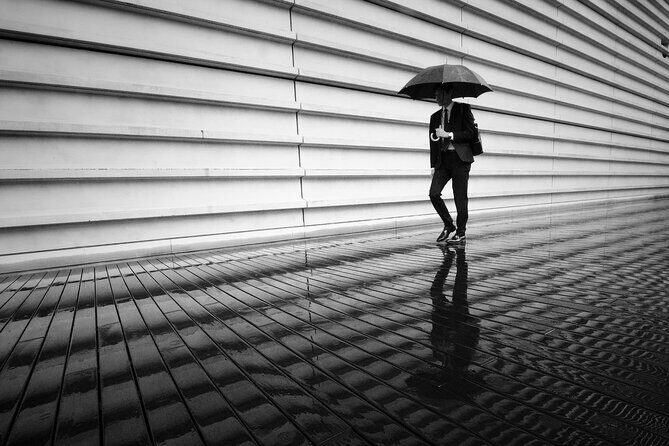
Tokyo is full of surfaces that beg to be photographed: glass that mirrors light, metal that slices reflections, and buildings that cast strict shadows. This workshop helps you stop hunting for a single postcard view and start noticing the geometry already in front of you.
What I like about the concept is that it’s not locked to Tokyo. The skills are meant to transfer to any city you photograph after you get home. You’re learning a way of looking, not just where to point your lens.
You’ll work through a route that deliberately shifts your eye: from shaded trellises in Ebisu to large glass planes in central Tokyo, then toward architectural pockets around Yurakucho. Along the way, Laurence guides you on what to frame and when to shoot so the final image feels ordered, not accidental.
You can also read our reviews of more tours and experiences in Tokyo.



Why Black-and-White in Tokyo Makes You a Better Photographer
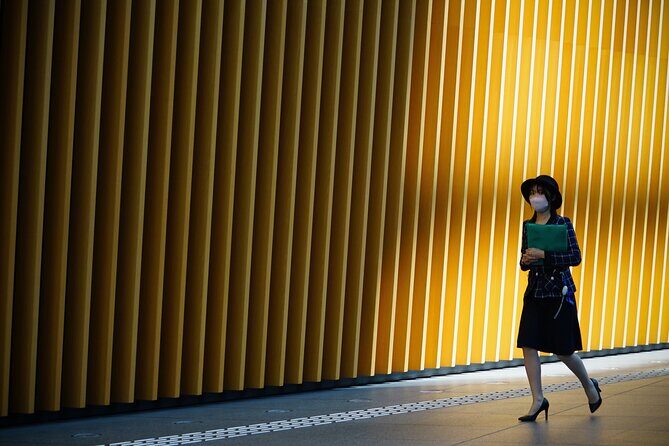
Switching to black-and-white does something useful right away: it forces you to rely on light, shape, contrast, and texture. In a city where color can distract, that’s a big advantage. You’ll learn to see how shadows behave and how reflective surfaces can act like a second subject.
Laurence’s approach leans into high-contrast composition. That means you’re not waiting for perfect clouds or a golden-hour miracle. Instead, you learn to use what Tokyo offers constantly—hard light, deep shade, glass reflections, and strong edges.
Even if you end up shooting color later, the habit you’re building stays. When you understand how black-and-white “finds” structure, you start composing better in any lighting situation.
Ebisu Garden Place: Trellis Shadows and Graphic Patterns
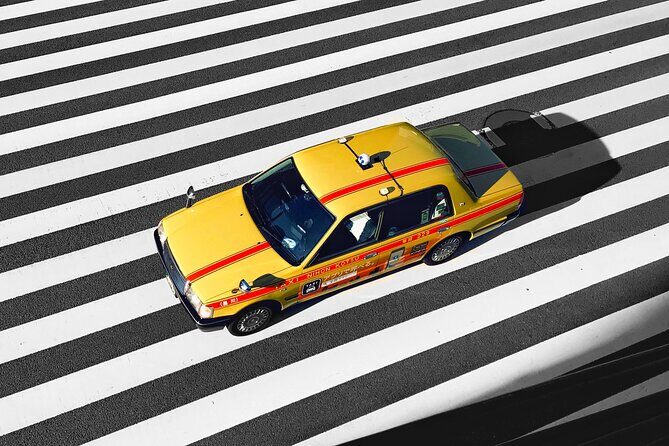
The workshop starts in Ebisu, at Ebisu Garden Place, where trellised canopy shadows create bold shapes on the ground and building surfaces. It’s a smart first stop because it teaches you the core idea quickly: don’t just photograph the scene, photograph the pattern the light creates.
In practical terms, this is where you can practice:
- Finding strong lines that lead through your frame
- Waiting for shadow edges to land crisply
- Choosing angles that turn a normal walkway into a graphic layout
If you’re newer to photography, this stop can feel refreshingly clear. You’re given a simple visual rule: look for how light gets turned into shape.
One small consideration: you’ll likely be shooting while other people move through the area. The trick is to use timing and positioning to keep your final frames clean. The coaching here matters because you’re not just guessing.
Roppongi: Short Hops to Hidden Angles and Photo-Friendly Timing
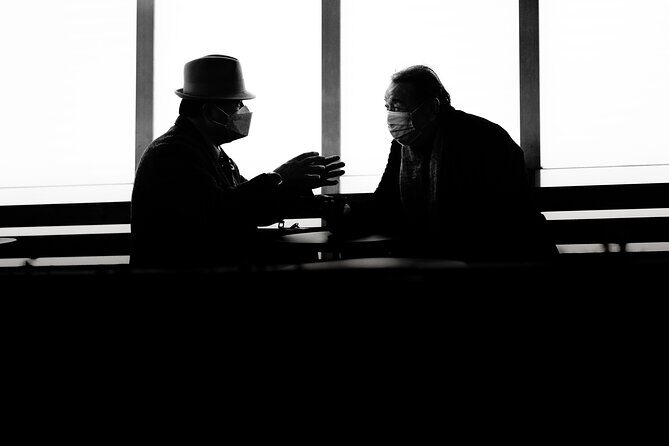
Next comes Roppongi, with a few spots that lean into “look closer” photography rather than tourist landmarks. The value of this section is that it gives you variety without throwing you across the city for long stretches.
Roppongi can be visually loud—signage, movement, and bright surfaces. So the coaching focus becomes important. You’ll be thinking about:
- How to isolate structure amid busy backgrounds
- How to frame reflective surfaces so they support the composition
- When to shoot so reflections and shadows line up
A detail that stood out from feedback: Laurence can help you create images even when a scene lacks a clear subject. That support can make your learning curve smoother, especially if you’re trying portrait-like framing or looking for a human element to scale the architecture.
The National Art Center Tokyo: Learning Light from a Glass Facade
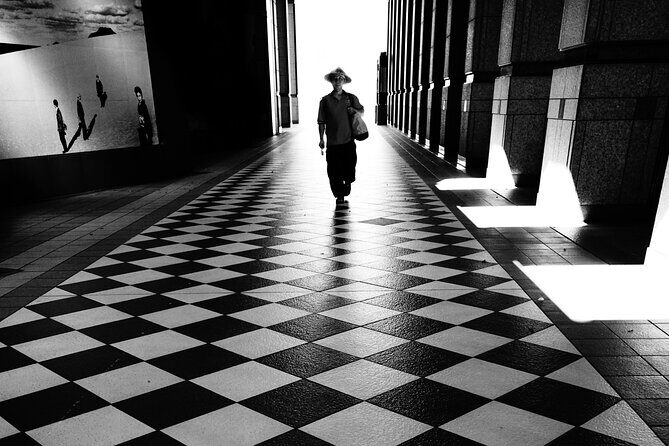
Then you move to the National Art Center, Tokyo, where the star of the show is the massive glass facade and the shadows it throws. Glass in a city like Tokyo is never simple. It can reflect, distort, block, and create layered depth all at once.
This stop is where the workshop’s “see differently” promise becomes real. You’re not only photographing the building. You’re photographing:
- Reflections that turn glass into a mirror
- Shadow bands that cut across planes
- Contrast transitions, like bright edges against darker interior spaces
If you’re shooting black-and-white, glass is especially useful. It can give you clean tonal steps and crisp edges, which is exactly what strong monochrome images need.
The potential drawback here is expectation. Glass facades can look amazing in person, but your first few frames might feel flat if you’re not actively composing. That’s why you want Laurence’s feedback. You’ll get help adjusting angles, cropping, and framing choices so the scene reads as geometry instead of just a wall of light.





Tokyo International Forum and Yurakucho: Structure in the “In-Between” Spaces
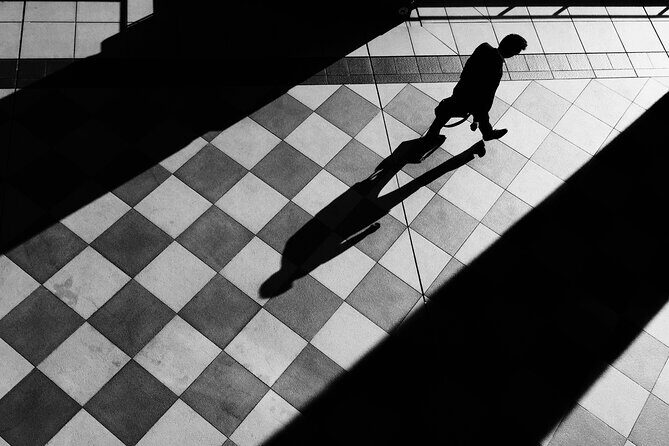
The route then heads toward Yurakucho, where the workshop focuses on the Tokyo International Forum area and its hidden pockets. This segment is valuable because it shifts from big iconic surfaces to spaces where structure shows up in smaller ways.
Here, the goal is to find order in what feels like the in-between zones of the city—areas where people often pass quickly. You’ll practice composing with:
- Edges and repeated architectural elements
- Shadow shapes that create depth
- Reflections that add layers rather than clutter
This is also a good area to refine your pacing. Once you’ve learned what to look for, you start arriving at locations with more confidence. Instead of shooting everything, you shoot fewer images with clearer intent.
If you’re the kind of photographer who likes narrative, this stop helps too. You can create a story through recurring shapes: repeating line angles, consistent tonal contrast, and reflections that show the city’s rhythm.
What Laurence’s Feedback Style Really Changes
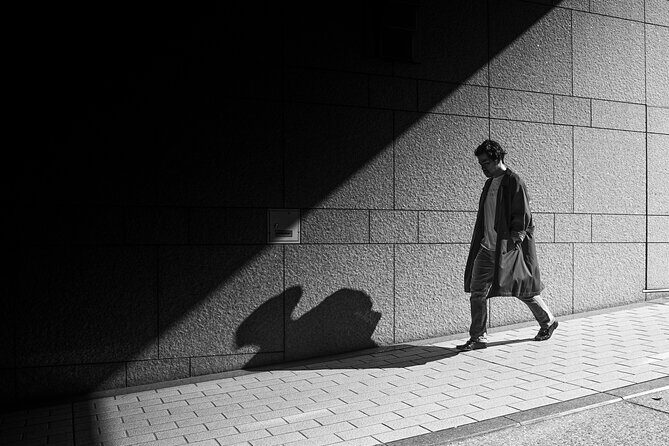
A great photo workshop is one thing. A great coaching style is another. The strongest praise for Laurence’s workshop centers on how he explains the thinking behind the images and then gives targeted feedback on what you’re doing.
That matters because most beginner-to-intermediate photography problems aren’t about camera gear. They’re about decision-making:
- What to include
- What to leave out
- Where to stand
- When the light is right
During the walk, you’ll get guidance tied to your camera and skill level. That tailored approach saves you time because you don’t have to translate generic advice into your own setup.
Another detail I appreciate: Laurence is willing to step into the role of a passerby or subject when it helps your framing. That removes one of the most annoying workshop issues. Sometimes a photo idea works only if someone is there for scale or interaction. If you’re waiting for the right person to wander by, you lose momentum. Having help keeps the lesson moving.
Gear and Readiness: The Stuff That Stops Bad Photos Before They Happen

This workshop is very shoot-focused, so preparation matters more than usual.
You’ll want:
- A 100% charge on your phone and camera
- Comfortable shoes (the route is built for walking and repositioning)
- A Suica or Pasmo card for the metro if possible
Even if you think you have enough battery, charge anyway. A workshop like this trains your eye in real time. If your device dies mid-session, you lose the chance to practice while the light and shadows are doing their best work.
The shoes point sounds boring, but it’s practical. Strong compositions often require awkward angles, quick steps, and frequent changes in viewpoint. If your feet hurt, your attention goes first.
Price and Value: $130.31 for 4 Hours of Real Coaching
At $130.31 per person for about 4 hours, this workshop sits in the mid-range for Tokyo photography experiences. The reason it can feel like good value is the coaching model: a small group and practical feedback aimed at what you’re actively shooting.
Here’s how to think about it:
- If you simply wander Tokyo with your camera, you’ll get inspiration, but your progress depends on what you notice.
- If you get structured locations plus feedback on framing and timing, your learning loop shortens fast.
The up to 6-person limit is key. Smaller groups tend to make it easier for Laurence to look at your shots and tell you what to change. For photography, that’s where the money tends to convert into results.
The other value piece: the techniques are designed to travel with you. If you leave with a repeatable method for lines, shadows, and contrast, the cost is easier to justify.
Who Should Book This Workshop in Tokyo
This is a great fit if you:
- Like city photography that feels graphic and structured
- Want to practice black-and-white thinking even if you usually shoot color
- Appreciate coaching that adjusts to your gear and skill level
- Prefer walking routes that still teach you how to see
It’s also a good option for people who already own a camera (or have a solid phone) but want more confidence in framing and timing. You don’t need to be an expert to benefit, since the guidance is meant to match your level.
If you’re chasing only famous monuments and wide skyline views, this might feel too focused. But if you enjoy turning corners into compositions, you’ll probably enjoy the way Tokyo reveals itself.
Should You Book Urban Geometry with Laurence Bouchard?
If you want a Tokyo experience that improves your photography habits, not just your photo count, I’d book it. The workshop’s whole premise is practical: teach you a way to read light and structure so your images get stronger city after city.
I’d hesitate only if you want a low-effort sightseeing day. This is hands-on, and it rewards attention. You’ll do better when you show up ready to walk, shoot, and adjust.
Best bet: plan to bring charged devices, comfortable shoes, and a willingness to focus on shadow edges and reflections. Do that, and you’ll leave with photos that look intentional, not random.
FAQ
What is the duration of the Urban Geometry with Laurence Bouchard workshop?
It runs for about 4 hours.
Where is the workshop meeting point, and where does it end?
It starts at 4-chōme-2-6 Ebisu, Shibuya, Tokyo 150-0013, Japan and ends back at the same meeting point.
How many people are in the group?
The workshop has a maximum of 6 people.
What photography style does the workshop focus on?
You’ll focus on high-contrast and black-and-white shooting, with attention to lines, shadows, and reflective surfaces.
What should I bring or prepare before the tour?
Bring comfortable shoes and make sure your phone/camera is fully charged. If possible, also bring a Suica or Pasmo card for using the metro.
Is there a mobile ticket?
Yes, it includes a mobile ticket.
Is the workshop refundable if my plans change?
You can cancel for a full refund up to 24 hours before the experience starts.