REVIEW · OSAKA
Osaka: Dark Side of Osaka Night Walking Tour
Book on GetYourGuide →Operated by Localized Walking & Food Tours · Bookable on GetYourGuide
Osaka’s nighttime has an edge. On this Osaka night walking tour, I like how the guide connects neon streets in Shinsekai and the red-light lanes of Tobita Shinchi to the real social rules that shaped them. You’re not just passing sights—you’re getting context for why these neighborhoods look and behave the way they do at night.
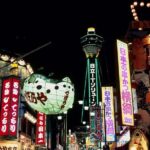
I also like the story inside the streets. Shinsekai was laid out in 1912 with Western-style entertainment influences—southern areas modeled after Paris and northern areas inspired by New York’s Coney Island—and you’ll see how that design idea still shows up in the mood. And near Tsūtenkaku, the Jyanjyan Yokocho alley delivers that old-Osaka feel with tight lanes, old-school shops, and late-night snacks.
One thing to consider: the topic can feel uncomfortable if you’re sensitive. Tobita Shinchi is Osaka’s best-known, largest red-light district, and the tour isn’t suitable for children under 18. If you don’t handle adult themes calmly, skip it.
In This Review
- Key things I’d circle on your map
- Why an Osaka night walk like this is worth your two hours
- Meeting point at MEGA Don Quijote Shinsekai (and how not to waste time)
- Shinsekai’s New World: Paris vs. Coney Island in 1912
- Nishinari at night: the working-class past behind today’s streets
- Jyanjyan Yokocho near Tsūtenkaku: old-school alley energy
- Tobita Shinchi: Osaka’s largest red-light district explained with care
- Price and logistics: what $25 buys (and what it doesn’t)
- Who this tour suits best (and who should think twice)
- Should you book the Osaka Dark Side night walking tour?
- FAQ
- How long is the Osaka night walking tour?
- Where do I meet the guide?
- What neighborhoods and places does the tour cover?
- Is the tour offered in English?
- Are food and drinks included?
- Is this tour suitable for children or wheelchair users?
- Are there rules about smoking or alcohol?
Key things I’d circle on your map
- MEGA Don Quijote Shinsekai start at the Under the Giant Penguin spot, with your guide holding a GetYourGuide sign
- Shinsekai’s 1912 Western design: Paris on one side, New York’s Coney Island on the other
- Nishinari’s change over time: from working-class day labor to a more visitor-friendly, gritty present
- Jyanjyan Yokocho by Tsūtenkaku: narrow nostalgic lanes for old-school bites and drinks
- Tobita Shinchi’s red-light district: a long, tightly regulated history explained in a careful way
- You can ask questions and get thoughtful, diplomatic answers on sensitive topics
Why an Osaka night walk like this is worth your two hours
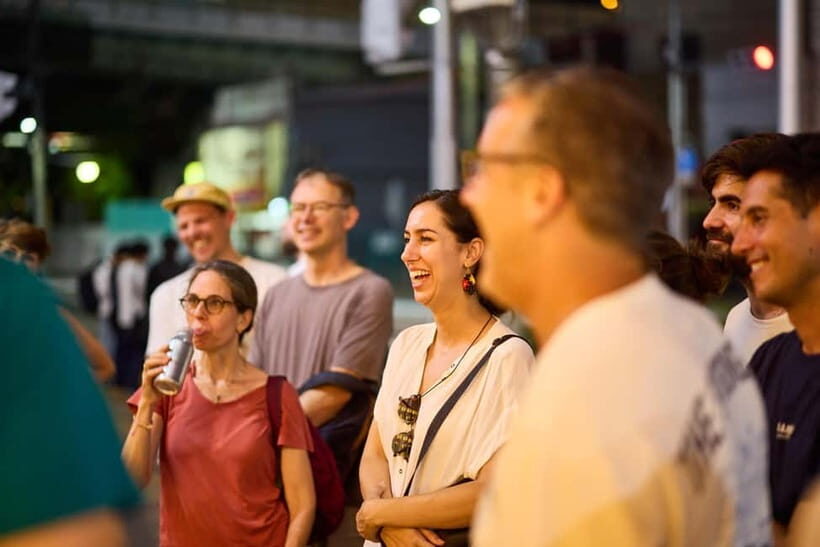
Osaka after dark doesn’t try to be polite. It shows you the parts of the city that usually stay off the postcard route—street life, social class edges, and the traditions that continue even as the city changes.
This tour is built around a simple promise: you’ll walk through Shinsekai, Nishinari, and Tobita Shinchi with a live guide who explains what you’re seeing and why it exists. That matters because many neighborhoods feel confusing at night unless someone gives you the background. When a guide uses clear explanations and real examples from the area (I’ve seen guides like Rico, Jay, and Matt highlighted for making the talk practical and respectful), you end up with something you can carry into the rest of Osaka—not just pictures.
You’re also walking a route that ends at a recognizable landmark: Tsūtenkaku. That’s not just a nice finish. It helps you make sense of the whole evening as one connected story, from “new world” nostalgia to the adult undercurrents.
You can also read our reviews of more walking tours in Osaka


Meeting point at MEGA Don Quijote Shinsekai (and how not to waste time)
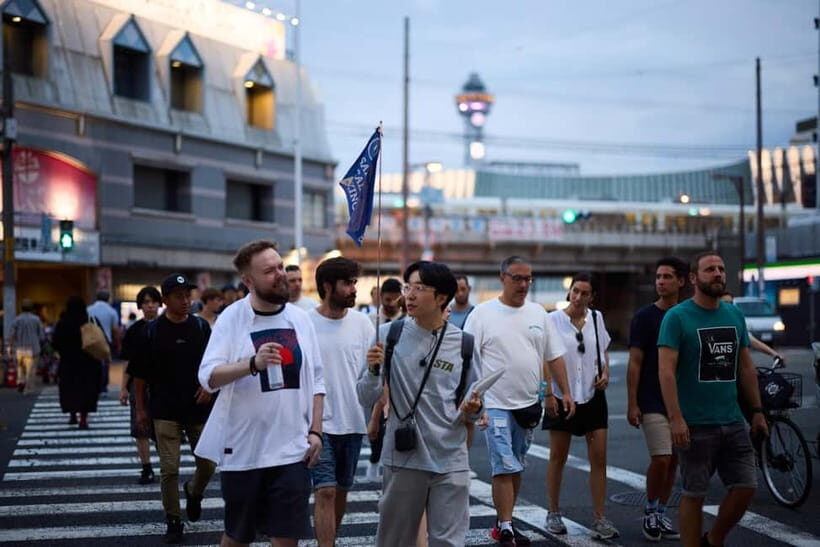
You start at MEGA Don Quijote Shinsekai, specifically by the Under the Giant Penguin. Your guide will be waiting there holding a sign that says GetYourGuide.
This is the kind of meeting point that can go wrong if you’re rushed. Don Quijote is busy, and the “right” entrance can be confusing. So I’d arrive early, stand near the penguin marker, and scan for the guide with the sign. If you’re even slightly late, you’ll spend your first minutes stuck figuring out where everyone went instead of starting your walk.
Also, plan to move. This is a 2-hour walking tour, so comfortable shoes aren’t optional—your feet will lead you, not your itinerary. And because weather can shift quickly in Osaka, bring a light layer that you can handle on the go.
Shinsekai’s New World: Paris vs. Coney Island in 1912
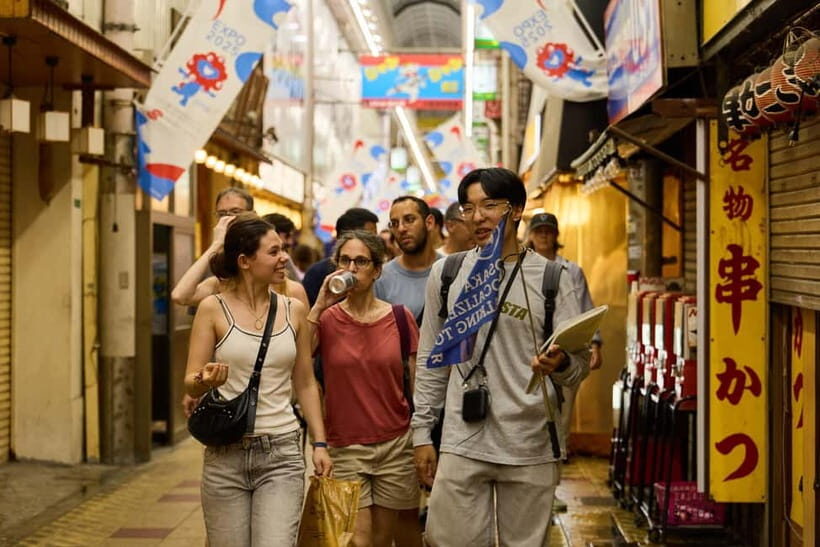
Shinsekai means “New World,” and that name wasn’t just marketing. The district was established in 1912 as an entertainment area with a Western-fantasy blueprint. The southern half was modeled after Paris, while the northern part took cues from New York’s Coney Island.
What I like about this stop is how it turns architecture and street layout into a story you can feel. Even if the original shine has faded, you’ll still notice the way the area was built to create a specific kind of nighttime experience—one where people come for food, amusement, and the glow of public life.
Your guide will point out what you’re likely to miss on your own:
- how the district’s “new world” concept shows up in its vibe
- how Shinsekai’s role as an entertainment zone shaped the neighborhood’s rhythm
- what people would have been doing here historically—and how that compares with what you see now
This is also a good place to start your evening because it gives you orientation. By the time you move toward Nishinari and the red-light district, you’ll be better at reading the city’s “why.”
Nishinari at night: the working-class past behind today’s streets
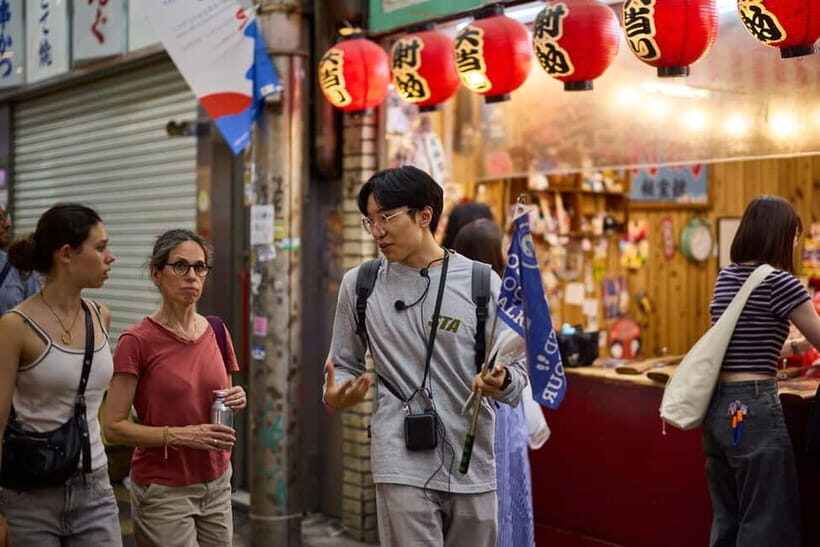
Next comes Nishinari, in southern Osaka. This area has a reputation that’s less shiny and more honest. It used to function as a hub for day laborers and the working-class community. In recent years, the neighborhood has shifted again—drawing budget travelers and urban explorers who are attracted by its gritty, lived-in character.
The tour treats Nishinari with a careful tone. The goal isn’t shock value. It’s a look at how economic reality, community life, and city change leave marks on streets over decades. If you pay attention, you’ll start noticing how “normal” night activity can look different depending on the neighborhood’s history.
One practical reason this stop is valuable: you learn how Osaka can hold two truths at once. A place can be evolving and still carry weight from earlier decades. When you understand that, Tobita Shinchi makes more sense later in the walk.
You’ll likely hear explanations that connect daily life, social boundaries, and the idea of “discretion” that comes up around adult entertainment districts. And the guide’s job here is to keep it respectful—facts first, judgments last.
Jyanjyan Yokocho near Tsūtenkaku: old-school alley energy
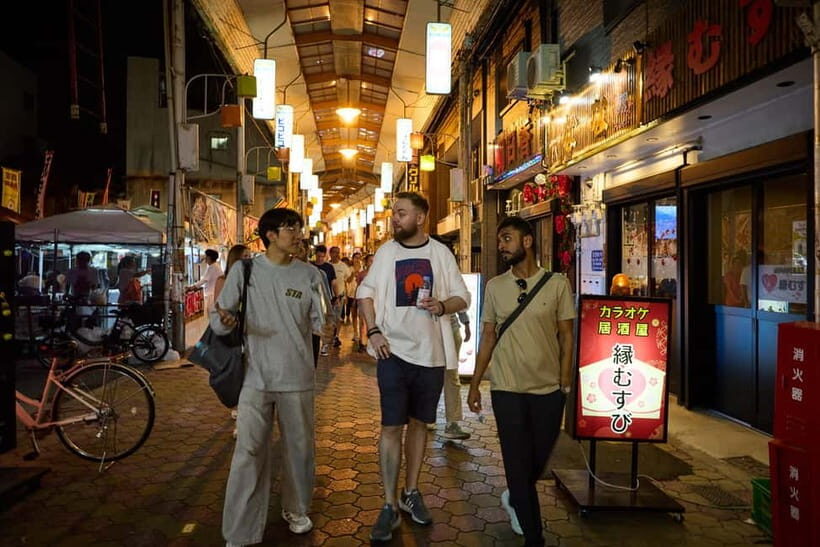
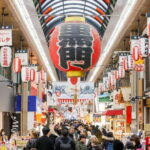
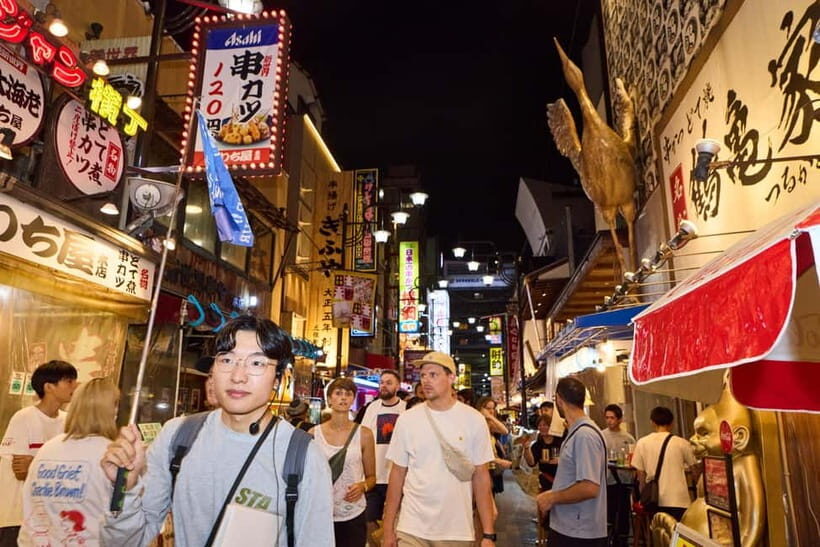
After Shinsekai and Nishinari, you’ll head toward Jyanjyan Yokocho, a nostalgic shopping and dining alley in the Shinsekai area near Tsūtenkaku.
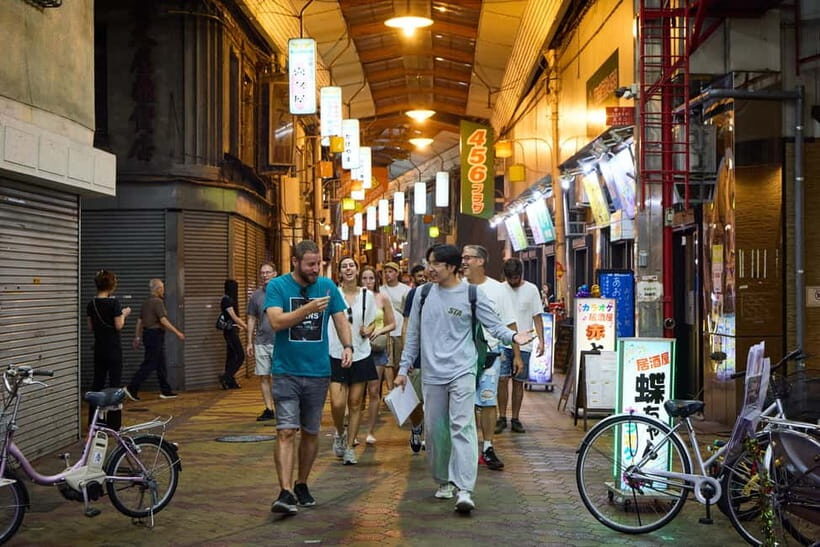
This is one of my favorite parts of the tour because it shifts from big-picture context to street-level atmosphere. The alley is narrow and lined with old-style eateries, bars, and shops. That mid-20th-century feel isn’t just aesthetic. It’s the kind of place where food, conversations, and late-night routines have their own momentum.
Also, pay attention to how people behave in small public spaces. Narrow lanes teach you a lot about etiquette faster than museums do. You may even spot “sign language” that foreigners often miss—one example I’ve seen shared by guides is a painted tori symbol used to communicate please do not pee here. It’s the kind of tiny detail that makes a walk feel real instead of tour-bus generic.
Even if you don’t stop for a full meal (food and drinks aren’t included), Jyanjyan Yokocho gives you something important: a taste of what locals mean by everyday nightlife—casual, close, and built for repeat visits.
You can also read our reviews of more evening experiences in Osaka




Tobita Shinchi: Osaka’s largest red-light district explained with care
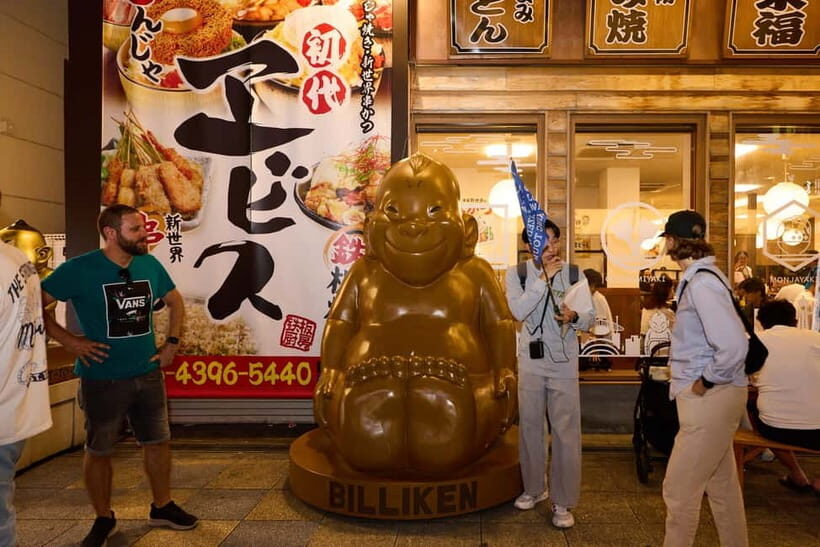
The last major segment is Tobita Shinchi, Osaka’s most famous and largest red-light district. This area has a history spanning over a century, and it’s known for its distinct architectural feel and a tightly regulated environment.
Here’s the key: this tour doesn’t treat the district like a sideshow. The value is in understanding how a city organizes adult entertainment under rules, tradition, and local social expectations. That context is what turns an uncomfortable topic into something you can process intelligently.
In fact, many guides are praised for being diplomatic about sensitive details—so you’re less likely to get crude chatter and more likely to get structured explanations. Guides like Jay and Matt have been singled out for handling tough subjects respectfully, while still answering questions.
A word on mindset. If you’re expecting a party atmosphere, you might not get that. If you’re expecting a history lecture, you might not get that either. You get a walking narrative: the district’s setting, its past, and how it functions as part of Osaka’s urban system.
And once you reach Tsūtenkaku at the end, the evening clicks into place. You’ve gone from New World nostalgia to the adult side of city life, and now you can see the whole area as one connected story rather than a cluster of stops.
Price and logistics: what $25 buys (and what it doesn’t)
At $25 per person for a 2-hour live-guided walk, this is strong value if you want meaning, not just movement. The biggest cost you’re paying isn’t distance—it’s interpretation. A good guide helps you understand what you’re seeing in places that are hard to read without local context, especially at night.
What you should know about expectations:
- Food and drinks aren’t included, so bring an open budget if you want snacks or a drink during the walk.
- There’s no hotel pickup/drop-off, so you need to reach the meeting point yourself.
- It’s English, which is great for most visitors, but if you’re not comfortable with fast conversational speech, plan to slow down and focus on questions.
Logistics are simple, but don’t underestimate the walking. The tour is designed for people who can comfortably move for about two hours with breaks handled by the guide’s pacing.
Who this tour suits best (and who should think twice)
This works best if you like Japan the way it actually is: layered, sometimes awkward, and often more interesting than what guidebooks highlight.
You’ll enjoy it if:
- you want a night experience tied to neighborhoods like Shinsekai, Nishinari, and Tobita Shinchi
- you appreciate social history explained plainly
- you’re okay with sensitive topics and want respectful context
You should think twice if:
- you don’t handle adult themes well
- you’re traveling with children (it’s not suitable for kids under 18)
- you rely on a wheelchair (it’s not suitable for wheelchair users)
Also, consider comfort with walking in different weather. The tour expects you to be out there, shoes on, eyes open.
Should you book the Osaka Dark Side night walking tour?
If you want the “real Osaka” that sits outside the usual neon highlights, I’d say yes—book it. The best reason is the format: a live guide plus a route through neighborhoods that are hard to understand without background. Ending at Tsūtenkaku gives you a clean finish line, and the stops (Shinsekai, Nishinari, Jyanjyan Yokocho, Tobita Shinchi) cover both the nostalgic and the complicated sides of the city.
If you’re easily uncomfortable with adult districts, skip it and choose a different night walk focused on food markets or nightlife streets. This one is for adults who want context, not for people who only want pretty photos.
FAQ
How long is the Osaka night walking tour?
The tour lasts 2 hours.
Where do I meet the guide?
Meet at Under the Giant Penguin of MEGA Don Quijote Shinsekai. The guide will be holding a sign that says GetYourGuide.
What neighborhoods and places does the tour cover?
You’ll explore Shinsekai, Nishinari, Jyanjyan Yokocho, and Tobita Shinchi, and it finishes at Tsūtenkaku.
Is the tour offered in English?
Yes, the tour guide speaks English.
Are food and drinks included?
No, food and drinks are not included.
Is this tour suitable for children or wheelchair users?
No. The tour is not suitable for children under 18, and it’s not suitable for wheelchair users.
Are there rules about smoking or alcohol?
Smoking is not allowed, and alcoholic drinks in the vehicle are not allowed.