REVIEW · FUJIKAWAGUCHIKO MACHI
A class on Making Hoto, Yamanashi’s Traditional Dish
Book on Viator →Operated by Japanese Cooking Class FUJIYA · Bookable on Viator
Mt. Fuji area cooking classes are rare—and tasty. This one teaches hoto, Yamanashi’s noodle dish, with a hands-on flow that feels simple once you see the steps. I like that it starts with basic dough technique (wheat flour and water) instead of fancy skills, and I also love how the soup thickens naturally with potato starch and miso, so it’s not just eating a dish—it’s understanding how it works.
One watch-out: it’s a 2-hour class, so it will take priority over lingering time somewhere else nearby.
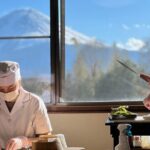
You’ll cut thick, rustic noodles and cook them right in a miso vegetable broth, which makes the meal feel home-style instead of like a restaurant demo. The class is guided in an indoor tatami room, and it’s designed for beginners and all ages, so you’re not forced to be a “kitchen person” to have fun.
My only caution is practical: if you’re hoping for a deep sightseeing day around Lake Kawaguchi, this time slot will narrow your choices.
In This Review
- Key Hoto Class Highlights (What You’ll Really Notice)
- What Makes Hoto Different (And Worth the Time)
- The 2-Hour Flow: From Kneading to Your Bowl of Hoto
- 1) Mix and knead the dough
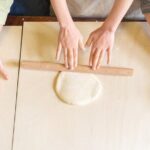
- 2) Roll and slice the thick noodles
- 3) Cook the noodles in a miso vegetable broth
- 4) Eat your handmade hoto in a tatami room
- Miso, Vegetables, and the “Why” Behind Potato Starch
- Indoor Tatami Room Comfort Near Lake Kawaguchi
- English support and group setup
- Dietary needs and vegetarian adjustments
- Price and Value: Is $26.01 a Good Deal?
- Optional Add-Ons for a Full Food and Craft Day
- Who This Cooking Class Fits Best
- Quick Practical Tips Before You Go
- Should You Book This Hoto Class Near Mt. Fuji?
- FAQ
- How long is the hoto cooking class?
- Where does the class start?
- How much does it cost?
- Is there an English-speaking staff member?
- What do I make during the class?
- Is the class suitable for beginners and kids?
- Can the class accommodate vegetarian diets or allergies?
- Is this activity indoors?
- Are there optional add-ons besides hoto?
Key Hoto Class Highlights (What You’ll Really Notice)
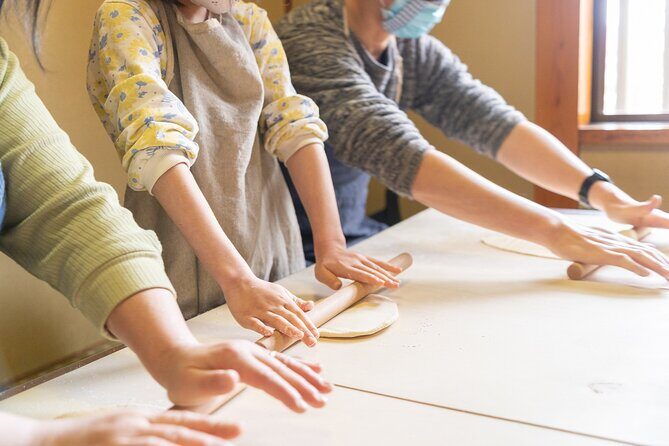
- Hoto dough is taught from scratch using wheat flour and water, with attention to even moisture.
- Potato starch thickens the soup so you get body and warmth without complicated steps.
- Thick, hand-cut noodles go into the broth, which changes the texture in a way udon lovers will spot.
- Miso vegetable broth style leans primarily on miso (often Koshu miso), plus seasonal veggies like pumpkin and mushrooms.
- Tatami-room meal makes the “class” feel like a real shared meal, not a performance.
- Optional add-ons let you turn the day into more than just noodles (indigo dye, shichimi, suridane, kinako mochi dessert).
What Makes Hoto Different (And Worth the Time)
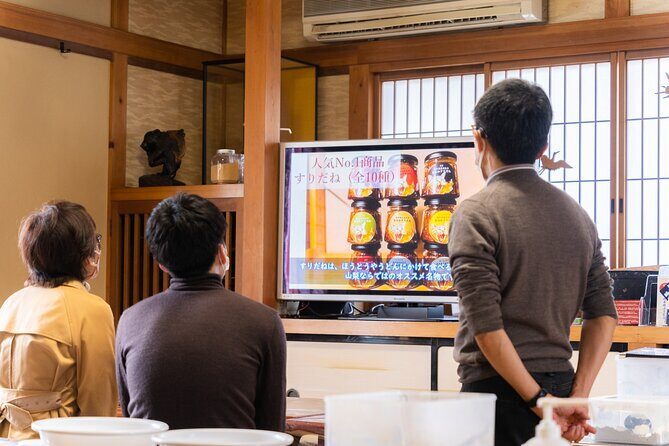
Hoto is a Yamanashi specialty, and it has a clear identity: thick wheat noodles cooked together with ingredients in a warm miso-based soup. If you know udon, hoto will still feel familiar in the broad sense (noodles + broth), but the cooking method changes the outcome. The noodles aren’t just an item floating in soup. They cook in the broth, and that’s where the texture and heartiness come from.
I like that the class explains the logic behind the dish. You’re not just told what to do. You learn why the dough is mixed and kneaded the way it is, why moisture distribution matters, and why potato starch is the trick that thickens the soup. That kind of “how it behaves” knowledge sticks, and it makes you feel confident even after the class ends.
Also, the soup is primarily miso-based, and it’s paired with vegetables like pumpkin and mushrooms. That matters because hoto isn’t one-note salty broth. The vegetables bring sweetness and depth, and the final bowl feels like a meal you could actually eat on a cold day, not just a novelty.
A few more Fujikawaguchiko machi tours and experiences worth a look



The 2-Hour Flow: From Kneading to Your Bowl of Hoto
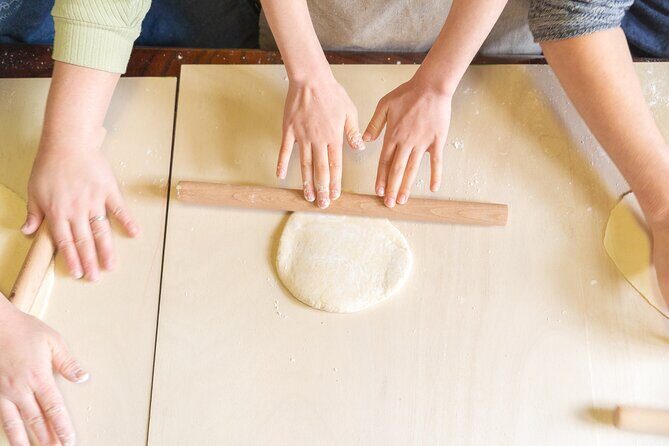
The experience is about two hours, and you’ll move through the process in a guided sequence. Since it’s taught step-by-step, the class works well even if you’ve never cooked noodles before.
1) Mix and knead the dough
You start with the basics: wheat flour and water. The key teaching point is even moisture distribution. That sounds minor, but it’s the difference between dough that’s easy to work with and dough that turns fussy when you roll it out.
If you’ve ever had homemade dough turn sticky or tough, this is where hoto sets you up for success: you’ll focus on getting the feel right, not on perfection. Once the dough behaves, rolling and cutting becomes far easier.
2) Roll and slice the thick noodles
Next comes the noodle part: flatten the dough and slice it into thick, rustic pieces. Hoto noodles are not trying to look like store-bought precision noodles. They look handmade, and that’s part of the charm.
You’ll also notice something practical here. The thickness helps the noodles stay satisfying in the broth. Thin noodles can get too soft or vanish into soup. Thick noodles keep a pleasant chew and hold up to the cooking style.
3) Cook the noodles in a miso vegetable broth
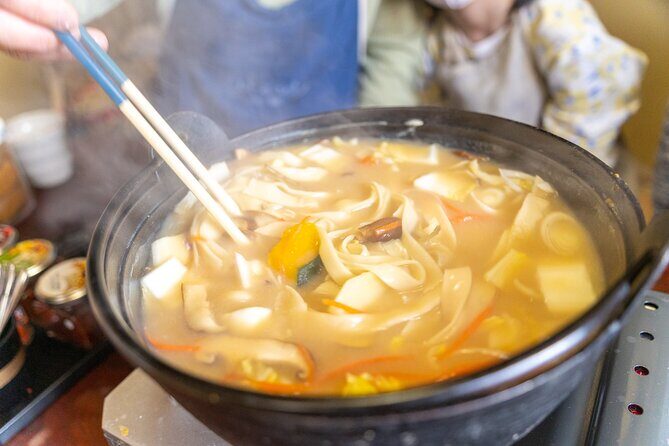
Then you get to the fun payoff: the noodles go into the cooking stage. The broth is miso-based and loaded with vegetables, and the class structure is designed so the cooking happens in a way that leads to a hearty finish.
A standout teaching detail is how thickening works. Adding potato starch helps the soup thicken as it cooks, creating warmth and body. It’s also described as a key step that enhances the soup without relying on extra salt, which makes the dish feel approachable.




4) Eat your handmade hoto in a tatami room
Finally, you sit down and eat what you made in a cozy tatami room. This is where the whole class clicks. The noodles you cut show up as something more than a craft activity—they become dinner.
The meal is designed to be beginner-friendly and rewarding. Even if your noodle slices weren’t identical to anyone else’s, the soup and cooking process bring everything together.
Miso, Vegetables, and the “Why” Behind Potato Starch
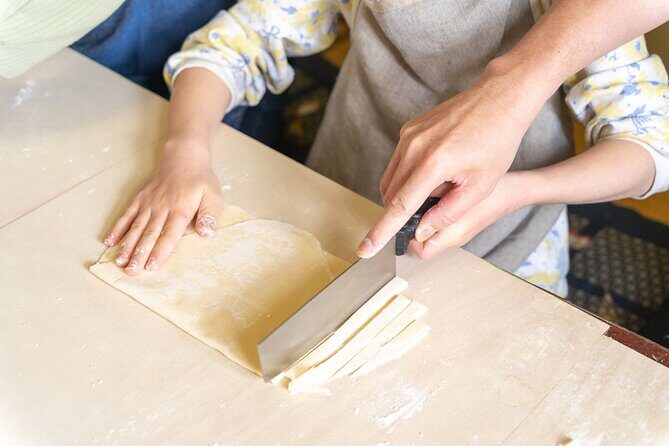
Hoto’s flavor center is miso. In a typical explanation during the class, you’ll hear about a miso foundation similar to Koshu miso, a style associated with Yamanashi. Whether you’re familiar with Koshu miso or not, you’ll taste the effect: a deeply savory base that feels hearty and comforting.
Vegetables drive the balance. Seasonal options are part of the experience, with examples like pumpkin and mushrooms. Those ingredients make the soup taste like it belongs to the season, not just to a cookbook.
Now for the practical highlight: potato starch thickening. This is one of those culinary tricks that makes a class worth your time. You learn a real technique you can use later. Potato starch thickens the soup so it has body and warmth. The class also frames it as a step that contributes without needing extra salt, which keeps the flavor focused and less fussy.
If you’re the kind of person who likes to understand why a dish turns out right, this is where hoto becomes more than food. It becomes a small cooking lesson you can repeat.
Indoor Tatami Room Comfort Near Lake Kawaguchi
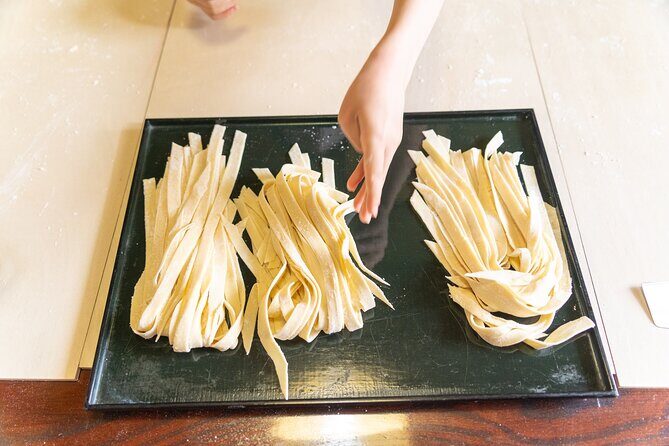
This class happens indoors in a tatami-style setting. That’s a big plus near Mt. Fuji, because weather can swing fast around Lake Kawaguchi. If it’s raining or chilly, an indoor activity like this is often the easiest way to keep the day enjoyable.
I also like the room vibe for the type of activity it is. Tatami rooms encourage a slower rhythm—knead, roll, cut, cook, then eat. It doesn’t feel rushed, even though the total time is about two hours.
English support and group setup
English-speaking staff are available, and the class is beginner-friendly and suitable for all ages. There’s also a maximum of 100 travelers. That number matters for expectations: you’re not guaranteed a tiny private lesson, but you’re also not likely to feel lost in an enormous crowd.
Dietary needs and vegetarian adjustments
The experience notes that vegetarian or allergy-conscious options can be arranged with advance notice. That’s the kind of detail that saves you stress. If you have allergies or strict dietary needs, message ahead so the kitchen can plan.
Price and Value: Is $26.01 a Good Deal?
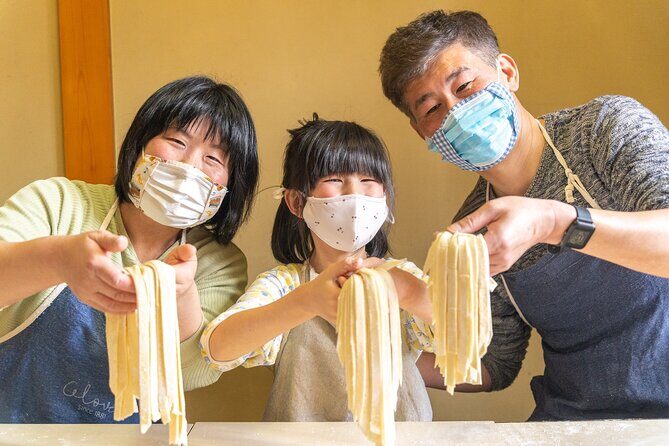
At about $26.01 per person, this is a straightforward value proposition for what you get: a guided cooking lesson plus a meal. You’re not just tasting something. You’re making the dough, cutting thick noodles, and cooking them in a miso vegetable broth.
Here’s how I think about the value:
- You’re paying for instruction, not just ingredients. The whole point is learning the method.
- You get the full experience arc in around two hours, which is efficient if your Mt. Fuji schedule is tight.
- You’re eating what you made, so your time becomes both a hands-on activity and a real meal.
In other words, it’s not competing with cheap street food. It’s more like buying a skill-based food experience that also feeds you. For many visitors around Fujikawaguchiko, that’s a good trade.
Optional Add-Ons for a Full Food and Craft Day
If you want to turn the day into more than one skill, there are optional extras. These can pair nicely if you’re already planning to spend time in the Mt. Fuji area and you want variety in what you take home.
Possible add-ons include:
- Indigo T-shirt dyeing
- Spice blend (Shichimi) making
- Chili paste (Suridane) workshop
- Kinako mochi dessert class
I like options like these because they let you customize based on your mood. If you love noodles, you can keep it simple. If you want souvenirs that aren’t just packaged snacks, a small craft or condiment workshop adds a lot.
Who This Cooking Class Fits Best
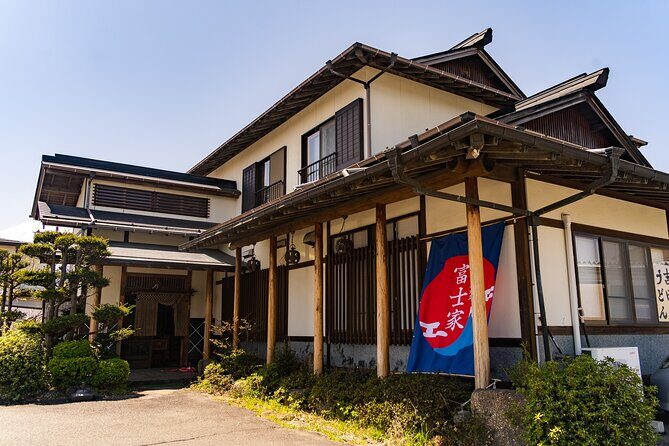
This class is a strong fit if you want a practical, guided activity that still feels local and a little rustic. It’s also a great choice when you’d rather not fight crowds or hunt for a timed reservation.
It tends to work especially well for:
- Couples who want one shared experience that turns into dinner
- Families looking for an indoor, hands-on option
- Solo travelers who want staff guidance and a cozy setting
- Anyone near Mt. Fuji who wants a weather-safe plan
If you’re a true foodie who loves learning techniques, hoto is a smart pick because it teaches a method (dough, thick noodles, broth thickening) rather than just the final dish.
Quick Practical Tips Before You Go
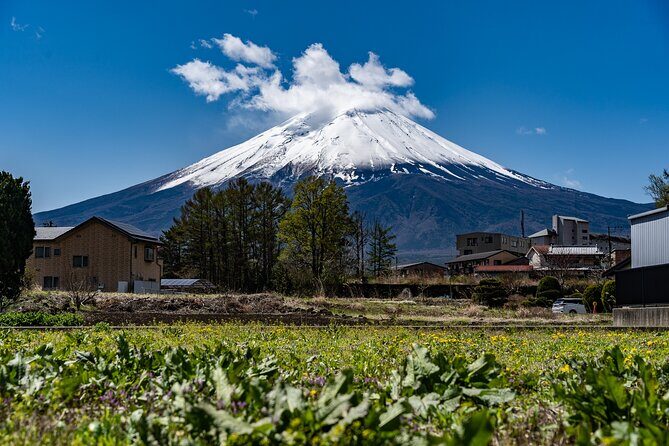
A few details can make your experience smoother:
- Bring your appetite. You’ll be working with dough and then eating the results.
- If you have allergies or need a vegetarian-friendly setup, arrange it with notice so the kitchen can plan.
- Use the mobile ticket. The experience supports mobile entry, which cuts down on paper fuss.
- Plan around the timing. With about two hours, it’s best as a scheduled block in your day.
- Head to 3376-3 Funatsu, Fujikawaguchiko, Minamitsuru District, Yamanashi 401-0301. The activity ends back at the meeting point.
If you’re making this part of a larger Mt. Fuji itinerary, I’d treat it like your anchor activity. It’s easier to build the rest of your day around it than to squeeze it into an already packed schedule.
Should You Book This Hoto Class Near Mt. Fuji?
I’d book it if you want a guided food experience that teaches real cooking technique and gives you a warm, satisfying meal. The big wins are the hands-on steps (dough, thick noodles, broth thickening) and the miso-vegetable character that feels specifically Yamanashi.
Skip it only if you’re looking for a long sightseeing outing or a fully private, ultra-small class. Also, if you’re the type who hates any hands-on work, you might find noodle cutting a little more effort than you want.
For most visitors in the Fujikawaguchiko area, this is a smart use of a few hours: practical, local, and tasty enough that you’ll remember the bowl long after you leave the tatami room.
FAQ
How long is the hoto cooking class?
The class runs for about 2 hours (approx.).
Where does the class start?
It starts at 3376-3 Funatsu, Fujikawaguchiko, Minamitsuru District, Yamanashi 401-0301, Japan.
How much does it cost?
The price is $26.01 per person.
Is there an English-speaking staff member?
Yes, English-speaking staff are available.
What do I make during the class?
You make hoto noodles from dough you mix and knead by hand, roll and cut thick noodles, and cook them in a miso vegetable broth. You then eat your handmade meal.
Is the class suitable for beginners and kids?
Yes, the class is beginner-friendly and suitable for all ages.
Can the class accommodate vegetarian diets or allergies?
Vegetarian or allergy-conscious options can be arranged with notice.
Is this activity indoors?
Yes, it takes place in a cozy tatami room, so it’s indoors.
Are there optional add-ons besides hoto?
Yes. Optional extras can include indigo T-shirt dyeing, shichimi spice blend making, suridane chili paste workshop, and kinako mochi dessert class.