REVIEW · OSAKA
Calligraphy Workshop in Namba, Dotonbori
Book on Viator →Operated by Calligraphy Workshop · Bookable on Viator
A brush, a pot of ink, and your name. In a 2-hour calligraphy workshop in Namba, Osaka, you learn Japanese brushwork the classic way and leave with a personal souvenir you made yourself.
You’ll love how beginner-friendly the instruction feels, with step-by-step guidance even if kanji looks intimidating. You’ll also love that the focus is practical: you write your own name in kanji or katakana and create a one-of-a-kind keepsake.
The main tradeoff is time. In just about 2 hours, you’ll make one finished piece (your name), not a long, multi-page calligraphy practice session.
In This Review
- Key Highlights You’ll Feel in the Room
- Where Namba Meets Traditional Shodō
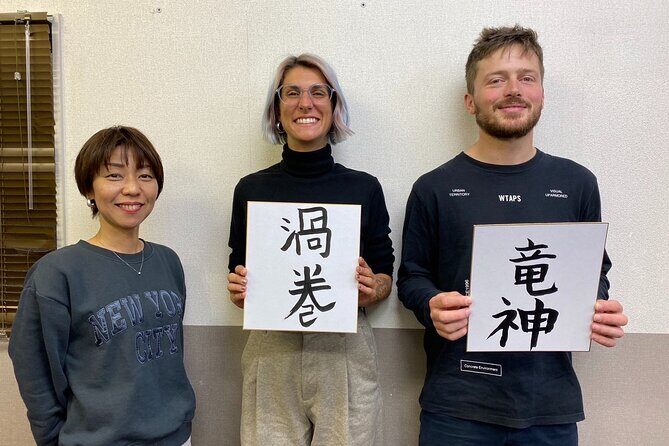
- The Main Event: Writing Your Name in Kanji or Katakana
- Inside the Classroom: Two Hours of Technique and Calm
- What You Learn Beyond the Strokes (Shodō’s Meaning)
- Your Keepsake: Colored Paper or a Name Tag You’ll Actually Use
- How to Pair It With Dotonbori and Kuromon Market
- Price and Value: What $49.54 Really Buys You
- Who This Workshop Fits Best (And Who Might Want More)
- Quick Tips to Get the Best Result
- Should You Book This Namba Calligraphy Workshop?
Key Highlights You’ll Feel in the Room
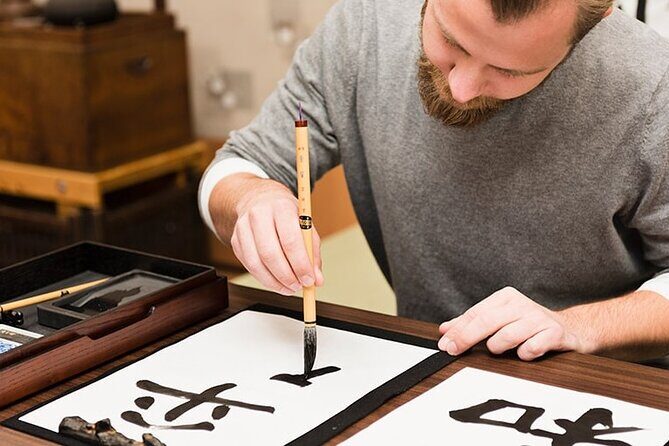
- Small group size (up to 6) keeps the attention on you, not the crowd.
- Your name in Japanese (kanji or katakana) is the centerpiece of the session.
- Brush and ink time is real, not a demo you watch from the back.
- Culture + technique: you learn what Japanese calligraphy is about, then put it into action.
- A take-home handwritten souvenir on colored paper or as a name tag/luggage tag.
- Near major sights like Dotonbori, Nihonbashi, and Kuromon Market for easy pairing with sightseeing.
Where Namba Meets Traditional Shodō
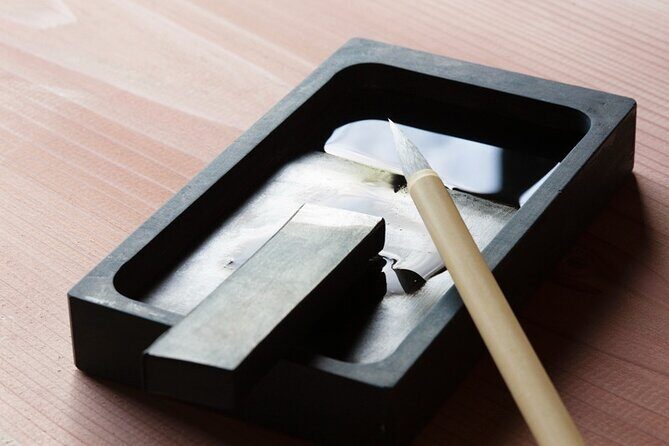
This workshop is in downtown Osaka, in the Namba area, where neon and local life are all around. The meeting point is at イスク英語学院 Japan, Nanbanaka 1-chōme 61, Takeda Building 3F (Osaka 556-0011). It’s close to public transportation, which matters because you’re likely to combine this with sightseeing in the same day.
One practical thing: arrive with a little extra buffer. The address is clear, but you’ll be entering a building at a specific floor. A prior suggestion from a participant was that signage could be more obvious in the hallway, so treat this as a spot where patience pays off. Once you’re inside, the workshop itself runs smoothly.
The biggest “feel” of the location is contrast. Reviews describe it as peaceful even though you’re surrounded by a busy city. That contrast is exactly why this is such a good Osaka activity: you get the calm focus of calligraphy without needing to leave the downtown scene behind.
A few more Osaka tours and experiences worth a look

The Main Event: Writing Your Name in Kanji or Katakana
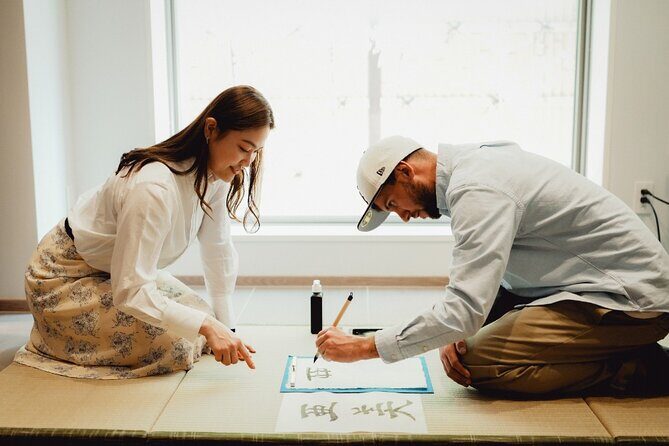
At the center of the experience is simple and personal: you write your own name in Japanese, using a brush and ink. The workshop teaches you Japanese calligraphy basics in a way that works for first-timers. You don’t need to already know the characters you’ll write.
Here’s what you can expect to produce by the end:
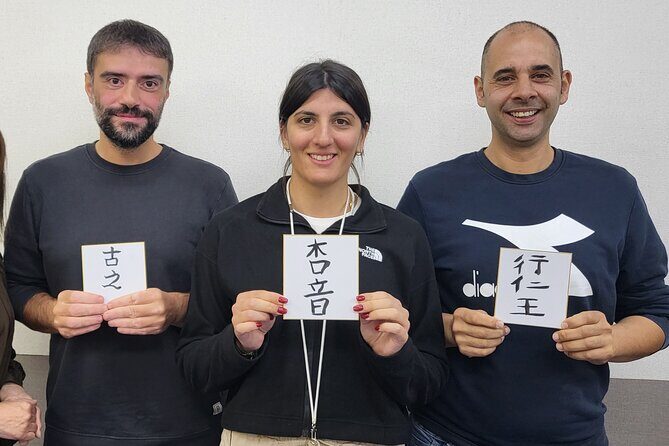
- A handwritten name in Japanese, in kanji or katakana
- A completed souvenir made on colored paper or as a name tag / luggage tag type keepsake
This is one of those activities where the “I did this” feeling hits fast. You watch the strokes, then you try them. With brushwork, the difference between looking and doing is huge. Expect your first attempts to feel awkward, then improve as the instructor guides you through the order of strokes and the feel of ink on paper.
Also, this isn’t just copying symbols. The class aims to help you understand what Japanese calligraphy (shodō) is and how it connects to Japanese culture. That makes the final piece more meaningful, even if your lettering is far from perfect.
Inside the Classroom: Two Hours of Technique and Calm
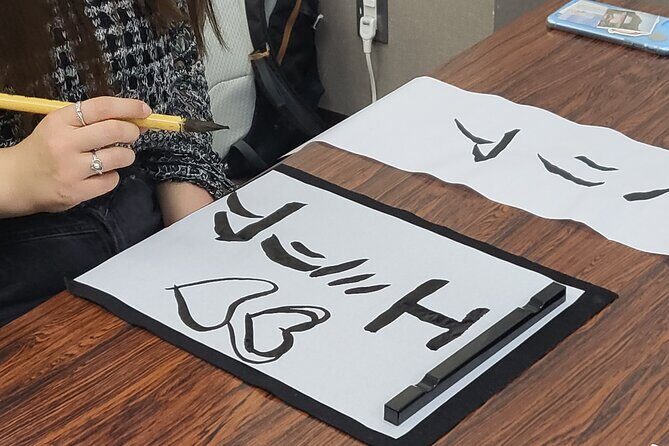
The workshop is about 2 hours (approx.) and it runs with a small group of up to 6 travelers. That small size changes the whole experience. You’re not stuck competing for attention. You can ask questions. You can adjust your grip, your stroke pressure, and your pace without feeling rushed.
The teaching approach is very hands-on. Reviews highlight that instruction is delivered step by step, which is exactly what you want for something as physically specific as brush calligraphy. Brushwork has muscle memory, and muscle memory doesn’t happen in a lecture.
English support is part of the setup. In multiple sessions, instruction is paired with translation support (you may hear names like Nao as the calligraphy teacher and Stephan / Stephen as the translator in the feedback). That matters because you’ll understand not just what to do, but why the stroke order and form are important.
You should also expect the lesson to be more than mechanics. Several participants describe learning about the meaning and concepts behind calligraphy—not just motion. When you understand the idea of what you’re making, your concentration improves, and your final piece looks better.
What You Learn Beyond the Strokes (Shodō’s Meaning)
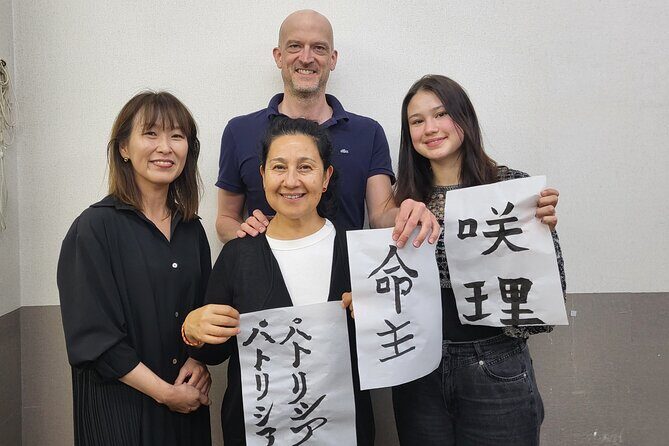
Calligraphy can easily become “pretty pictures.” This workshop tries to keep it grounded in Japanese culture.
You’ll learn what shodō is, how it connects to Japanese writing traditions, and how the characters you’re making fit into that bigger picture. Participants describe that the explanation helped them see calligraphy as a process, not a trick.
That process focus is a big deal. Brush calligraphy isn’t only about how it ends. It’s also about how you get there:
- the careful start of a stroke
- the controlled flow of ink
- the timing and rhythm
- the discipline of repeating until it looks right
When an instructor talks through the meaning and intention, it also reduces anxiety. A few reviews explicitly say the class made calligraphy feel less intimidating. That’s a real benefit. If you’re worried you’ll do it wrong, you waste energy. Better understanding means better hands.
Your Keepsake: Colored Paper or a Name Tag You’ll Actually Use
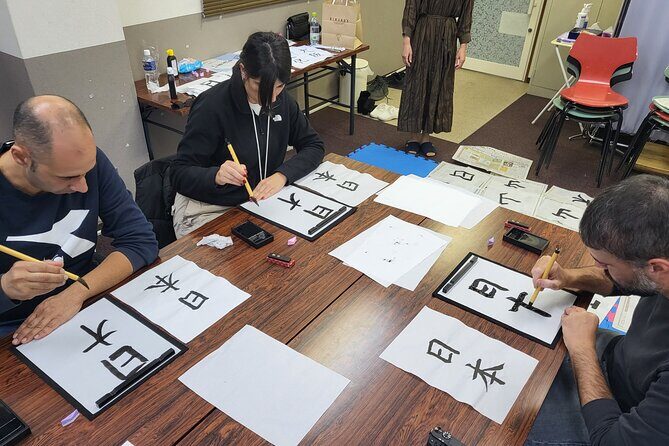
The souvenir is part of what makes this workshop worth doing. Many cultural classes give you a product, but you don’t always get something you’ll display or keep for years.
Here, you’ll write your name in Japanese and take it home on:
- colored paper, or
- a name tag / luggage tag style keepsake
That means your output isn’t trapped in a drawer. It becomes a reminder that you stood at a table, held a brush, and created something that matches your own identity—spelled the Japanese way.
And because you’re writing a name, the result is instantly personal. Even if your stroke style differs from the model, you’ll still feel proud because it’s yours.
If you’re traveling with kids, this is also a great choice. One family described the workshop as a peaceful, special activity where their children left with keepsakes they genuinely cared about. For ages around 9 to 11 (and up), this kind of guided making tends to land well because it’s interactive but not overwhelming.



How to Pair It With Dotonbori and Kuromon Market
One of the best planning advantages is location. The workshop is in Namba, and the route from here to major Osaka sights is short.
The class area is near:
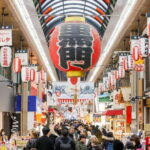
- Dotonbori
- Nihonbashi
- Kuromon Market
That’s perfect for building a day that feels balanced. You can do the workshop first and then let your eyes feast on the food streets. Or you can wander Dotonbori after, and the calligraphy keepsake becomes a nice “anchor” to the trip—something calmer you did before the sensory overload.
A practical rhythm that often works:
- Go early enough to reduce stress finding the meeting point.
- Treat the workshop like your scheduled quiet activity.
- Afterward, head to Kuromon Market when you want a sensory reward.
Since the workshop ends back at the meeting point, you won’t need to solve a complicated transit problem. Just step back into the neighborhood and keep moving.
Price and Value: What $49.54 Really Buys You
The price is $49.54 per person for the 2-hour workshop. On paper, that could sound like “just one activity.” But when you break down what you get, it’s more like a small cultural workshop + a take-home craft, with real coaching.
Here’s why the value holds up:
- You get hands-on instruction (not just watching).
- The group stays small (max 6), which typically means better feedback.
- You make an actual finished keepsake: your name in Japanese on paper or a tag.
- You learn the context of shodō, so the souvenir has meaning, not just decoration.
- It’s designed for beginners, so you’re not paying for a course that assumes prior skill.
Also, you’re paying for time. Two hours passes fast, and you’ll be surprised how quickly you go from staring at blank paper to having something you want to take home. That matters in Japan, where many cultural activities either cost more or take longer to feel satisfying.
One more clue that the value is real: this kind of workshop is often booked about 38 days in advance on average. If you’re going during a busy travel window, I’d plan ahead rather than hope you can walk in.
Who This Workshop Fits Best (And Who Might Want More)
This activity is described as suitable for most travelers, and the teaching style supports beginners. That’s a strong match for:
- first-time Osaka visitors who want one authentic craft experience
- families who want something meaningful but not too intense
- solo travelers who enjoy slower, focused activities
- couples or small groups who want a shared souvenir
It also works well for teenagers. Several groups in the feedback described going as a family unit with a mix of ages, and the shared challenge of making Japanese strokes seemed to bring everyone together.
The main mismatch is if you’re hunting for an all-day calligraphy immersion. This workshop is intentionally short. You’ll focus on writing your own name and creating one keepsake. If your goal is to become fluent in brush techniques, you’ll likely want to build on it afterward.
Quick Tips to Get the Best Result
You don’t need previous skill. What you do need is the right mindset.
- Go in expecting the strokes to feel harder than they look. Brush calligraphy is physical, and it takes a few tries to find the right flow.
- Pay attention to the step-by-step guidance rather than trying to freestyle immediately.
- Slow down for quality. Calligraphy rewards control more than speed.
- Ask questions if something feels unclear. With a small group, you can get quick corrections.
If you end up with a piece you’re not totally satisfied with, don’t panic. That’s normal for a first brushwork session. The real win is that you leave understanding shodō’s logic and how to shape your name in Japanese.
Should You Book This Namba Calligraphy Workshop?
If you want one Osaka activity that feels authentically Japanese but still welcoming for beginners, this workshop is an easy yes.
Book it if:
- you want to write your name in kanji or katakana
- you like small-group, hands-on classes
- you want a take-home souvenir that’s personal, not generic
- you’re pairing it with a downtown day around Dotonbori / Nihonbashi / Kuromon Market
Skip it if:
- you’re looking for hours of practice beyond one finished keepsake
- you prefer self-guided activities only (this is very guided and structured)
My practical advice: schedule it when you have some energy left for after. Two hours of concentration can make you feel pleasantly calm, but you’ll still want time to enjoy the rest of Namba once you’re done.