REVIEW · OSAKA
Eat Like a Japanese with a Local Guide
Book on Viator →Operated by Foodprint Tours · Bookable on Viator
Osaka’s food scene hits you fast and hard. This 2.5-hour stroll through Dotonbori turns famous neon streets into a guided lineup of street bites, from takoyaki to karaage and desserts. You’ll also get a real sense of how Osaka snacks fit together as a meal-plan, not just a grab-bag of food stops.
I like that the route is built around variety: you’ll hit savory classics and then cool things down with sweets like purin and matcha tart. I also like the pacing of multiple short tastings, which keeps you from getting stuck at a single place too long. One drawback to keep in mind: Dotonbori is busy, so if you’re unlucky with lines, the schedule can feel stretched.
In This Review
- Quick hits before you go
- Why Dotonbori is the right place for a food-focused walk
- Price and value for $89.47 per person
- How the 2.5-hour walk actually works (and why timing matters)
- Bite by bite: your Dotonbori food stops in order
- Stop 1: Takohachi Dotonbori Main Store for crispy gooey takoyaki
- Stop 2: Mattari-Purin Dotombori for caramel custard purin
- Stop 3: 551 Horai Ebisubashi honten for warm nikuman
- Stop 4: Honke Ootako Dotonbori Honten for okonomiyaki on the griddle
- Stop 5: DEARBROS for karaage with lemony contrast
- Stop 6: Lord Stow’s Bakery for matcha tart with creamy balance
- Stop 7: Takoyaki Dotonbori Kukuru Dotonbori Minami for yakisoba comfort
- Stop 8: Rikuro’s Namba Main Branch for airy Japanese cheesecake
- Stop 9: Dotonbori Glico Sign photo stop for Osaka atmosphere
- What I’d watch for: lines, guide style, and no-veg limits
- Who should book this Osaka food adventure
- Should you book Eat Like a Japanese with a Local Guide in Osaka?
- FAQ
- FAQ
- What food and drinks are included?
- How long is the experience?
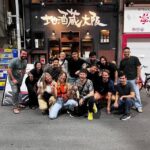
- Where do I meet, and where does it end?
- How many stops are there?
- Does the tour have vegetarian or vegan options?
- What’s the group size limit?
- Do I need to download a ticket?
Quick hits before you go
- 2.5 hours, up to 10 people: Small group size helps your guide keep attention on the food.
- A full snack-meal arc: Savory first, then custard and tarts—so you don’t end the tour tasting only one thing.
- Nine stops plus the Glico Running Man: You’ll eat at well-known spots and still get iconic photo time.
- English/Spanish guides with gratuities included: You’re paying for the guide experience, not just the food.
- No vegetarian/vegan options: Plan around that if you have dietary restrictions.
- Expect some waiting: Popular spots can mean longer waits than you’d like.
Why Dotonbori is the right place for a food-focused walk

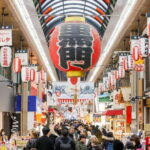
Dotonbori is one of those Osaka districts where the street itself feels like part of the meal. You’ll walk past the big, loud symbols (especially near Ebisubashi Bridge) while your guide strings together dishes you can actually eat on the go. That matters, because a food tour works best when it’s not just about eating—it’s about moving through the neighborhood at the right speed.
Also, this is a place where food is normal life, not museum stuff. You’ll see the rhythm: order, wait, watch the cook, then take your bite while the street energy keeps going. A good guide turns that chaos into something understandable—what you’re eating, why it tastes the way it does, and what to look for on the plate.
One more practical point: this tour is timed for the evening food mood, when Osaka street food feels most alive. If you’re a planner, you’ll like the structure. If you’re more spontaneous, you’ll still appreciate having a plan so you don’t waste time deciding.
A few more Osaka tours and experiences worth a look

Price and value for $89.47 per person
$89.47 may sound like a “tour price,” but what you’re really buying is convenience and guidance. This is not a single restaurant meal. It’s multiple food stops, plus the guide, plus lunch and snacks included, with gratuities covered.
Here’s the value math I see:
- You get a guide in English/Spanish, which is huge in Dotonbori where menu choices and ordering can be confusing.
- You get a set route that includes both savory and dessert, so you’re not stuck guessing what to try.
- You’re capped at 10 travelers, which usually helps the experience stay coordinated.
What’s not included is also worth knowing: extra orders. That’s your cue that you might want drinks or more food if something hits perfectly. For value-focused planning, I’d assume you’ll want a little budget buffer for that extra craving.
How the 2.5-hour walk actually works (and why timing matters)
This experience runs about 2 hours 30 minutes and ends back at the same starting point. You’ll meet at Kani Doraku Dotonbori Main Branch (1-chōme-6-18 Dōtonbori, Chuo Ward, Osaka 542-0071). From there, the tour cycles through short tasting periods—mostly around 15 to 20 minutes per stop.
Why that timing is smart: it keeps you moving through Dotonbori without turning it into a sit-and-wait marathon. You’re meant to eat enough to feel satisfied, then walk to the next place while your appetite resets.
The one watch-out is real-world crowd behavior. In past feedback, the biggest disappointment was long waits due to lines and slower-than-expected service. Even with a guide, busy shops can’t instantly speed up. If you’re the type who gets cranky when you’re hungry and waiting, build in patience—or keep your expectations flexible during peak hours.
Bite by bite: your Dotonbori food stops in order

Below is what the tour is aiming for: a progression that starts savory, builds with classic Osaka comfort foods, then lands on custards and cakes. Each stop is short, but the flavors are meant to feel complete as a night out.
Stop 1: Takohachi Dotonbori Main Store for crispy gooey takoyaki
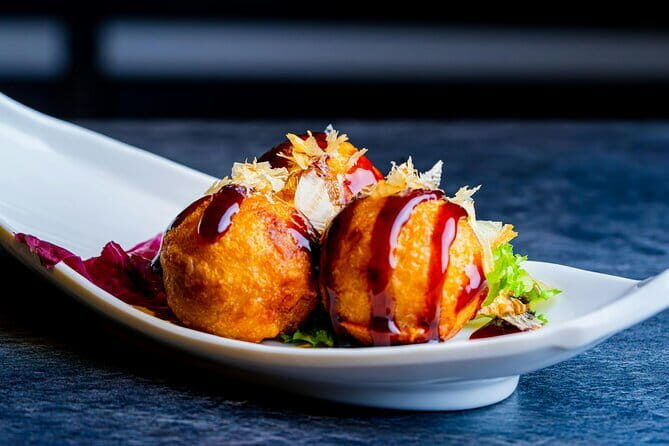
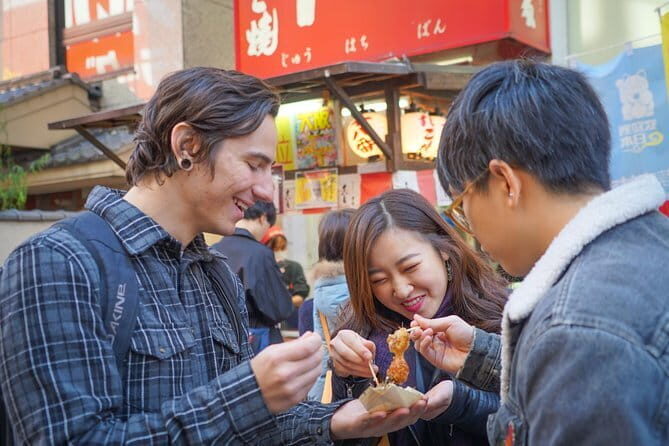
Takoyaki is the Osaka signature snack for a reason: crisp outside, soft inside, and packed with savory octopus flavor. At Takohachi, you’ll get the classic structure—batter with diced octopus, tempura scraps, pickled ginger, and green onions, cooked in that special takoyaki pan for the round shape.
Expect the standard topping combo: takoyaki sauce, Japanese mayonnaise, bonito flakes, and dried seaweed. You’ll taste that contrast—sweet-tangy sauce, creamy mayo, and the gentle ocean umami from the toppings plus the octopus.
Practical note: these are usually served hot. Don’t grab a bite instantly if you’re sensitive to heat—let it cool a second so the center stays gooey instead of just burning your tongue.
You can also read our reviews of more guided tours in Osaka




Stop 2: Mattari-Purin Dotombori for caramel custard purin
After octopus balls, purin feels like a reset button. Purin is a silky custard—eggs, milk, sugar, and vanilla—usually cooked gently in a water bath to keep it smooth. The top gets a layer of amber caramel syrup that balances sweetness with a slight bitterness.
This is one of those desserts that tastes nostalgic and not overly heavy. If you want something lighter than cake, purin fits perfectly right after savory snacks.
If you’re deciding between sweets: go for purin if you want creamy, not crusty. It’s a different texture than the tart and cheesecake you’ll have later.
Stop 3: 551 Horai Ebisubashi honten for warm nikuman
Nikuman (steamed bun) is the comfort-food cousin of fast street snacks. The filling is typically ground pork with onion and seasonings, then tucked into soft, slightly sweet dough. The result is fluffy on the outside and juicy inside, and it’s designed for bite-sized satisfaction.
This stop is useful because it adds a different kind of heat and texture compared to fried items later. Steamed buns don’t come with crispy crunch; instead, they give you a slow, savory bite.
If you’re planning your pace, this is where you can slow down and actually taste the seasoning—ginger, garlic, soy—rather than treating the food as a quick gulp.
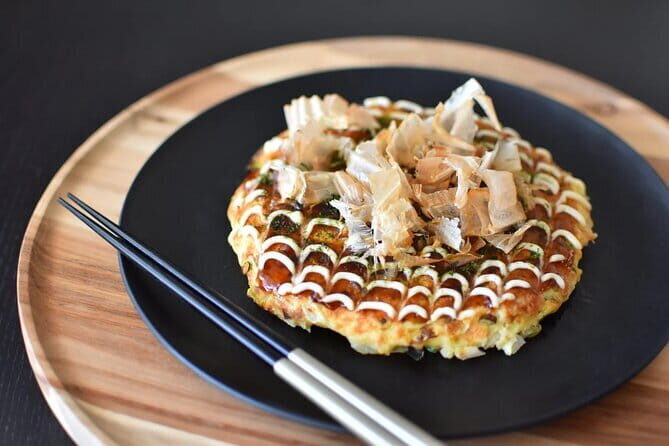
Stop 4: Honke Ootako Dotonbori Honten for okonomiyaki on the griddle
Okonomiyaki is often described like a pancake, but it’s really its own category of Osaka eating. It’s made from batter (flour, eggs, shredded cabbage), then grilled until the outside turns golden and crisp while the inside stays tender. You can find it with toppings like pork, shrimp, or squid, depending on the version.
On top, you usually get okonomiyaki sauce, mayonnaise, bonito flakes that flutter with the heat, and sometimes seaweed flakes. That sauce-meets-smoky-fish combo is a big reason okonomiyaki feels like a full meal instead of a snack.
Potential drawback: depending on the crowd, griddle cooking can move slower. If you hit peak time, you might end up waiting longer here than the tour pace suggests. Still, the payoff is worth it if your main goal is classic Osaka flavor.
Stop 5: DEARBROS for karaage with lemony contrast
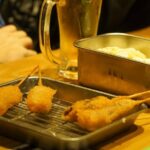
Karaage is one of Japan’s best “crunch plus juicy” foods: bite-sized meat—often chicken—marinated in soy, garlic, ginger (sometimes sake), then coated and deep-fried until golden. You get a crispy exterior and tender interior, plus a simple lemon wedge to cut through the richness.
This stop matters because it adds the most obvious contrast in the tour: fried crunch. It also helps you reset taste buds before the next set of noodles and desserts.
If you want to eat like a local, treat karaage as part of the main snack rhythm: don’t overthink it, just enjoy the contrast between salty marinade and the bright lemon.
Stop 6: Lord Stow’s Bakery for matcha tart with creamy balance
Now you shift gears into dessert mode. The matcha tart here is built around that classic matcha dilemma: matcha can be bitter, but dessert should feel smooth. This one uses earthy matcha with a creamy filling—often blending matcha with white chocolate or cream cheese—and sits inside a buttery, crisp tart shell.
The point is balance. The crust gives crunch, and the filling softens the bite of green tea. If you’re the type who finds straight matcha too intense, this is a good bridge.
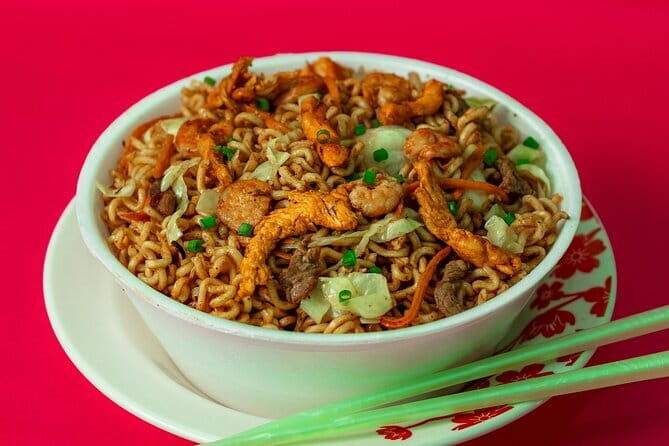
Stop 7: Takoyaki Dotonbori Kukuru Dotonbori Minami for yakisoba comfort
Yakisoba is stir-fried noodles with vegetables like cabbage, carrots, and onions, plus meat such as pork, beef, or chicken. The noodles get tossed in a savory-slightly sweet sauce made from ingredients like Worcestershire, soy sauce, and ketchup. You’ll often see toppings like pickled ginger, sesame seeds, and sometimes bonito flakes.
This stop works because it’s savory again, but in a different form than okonomiyaki. Noodles help you fill up without feeling like you’re stuck in a single texture (like all fried food or all custard).
If you’re worried about eating too much: yakisoba is a solid “meal finish” savory item before the last dessert section.
Stop 8: Rikuro’s Namba Main Branch for airy Japanese cheesecake
Japanese cheesecake is famous for its light, airy texture—often called cotton cheesecake. It’s made with cream cheese, eggs, sugar, and a bit of flour, resulting in a spongy cake with a golden top.
This is a smarter dessert choice late in the tour because it’s not as heavy as traditional dense cheesecake. You get a subtle sweetness and a gentle tang from the cream cheese, and the texture makes it easy to keep tasting without feeling stuffed.
Stop 9: Dotonbori Glico Sign photo stop for Osaka atmosphere
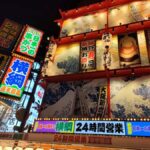
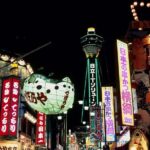
You finish with the iconic Running Man sign near Ebisubashi Bridge. It’s a recognizable Osaka advertising landmark installed in 1935, and it’s especially striking at night when the neon lights hit full brightness.
This isn’t just a photo stop. It helps land the whole experience in context: you started in the food flow of Dotonbori, and you end with the district’s most famous visual cue of Osaka night life.
What I’d watch for: lines, guide style, and no-veg limits
Here’s the honest part. If you’re sensitive to waiting, Dotonbori’s popularity can affect the vibe. Even with a planned route, you may run into crowds and longer-than-ideal gaps between when you arrive and when food shows up.
There’s also the guide-factor. In one piece of feedback, the main problem was feeling the guide wasn’t local. That’s a reminder to expect differences in guiding styles. You’ll get the same itinerary structure, but the storytelling and pacing can vary depending on the guide.
And there’s one firm rule: no vegetarian/vegan options. If you need plant-based meals, you’ll have a hard time with this specific tour as written.
Who should book this Osaka food adventure

This tour is best for:
- Food-first travelers who want multiple iconic Osaka bites without the planning headache.
- People who like short walking chunks between tastings (instead of one long sit-down meal).
- Visitors comfortable eating meat and dairy, since the menu includes items like nikuman, karaage, and cheesecake.
It may not be ideal for:
- Anyone who gets stressed by lines and delays.
- Travelers needing vegetarian/vegan options.
Should you book Eat Like a Japanese with a Local Guide in Osaka?
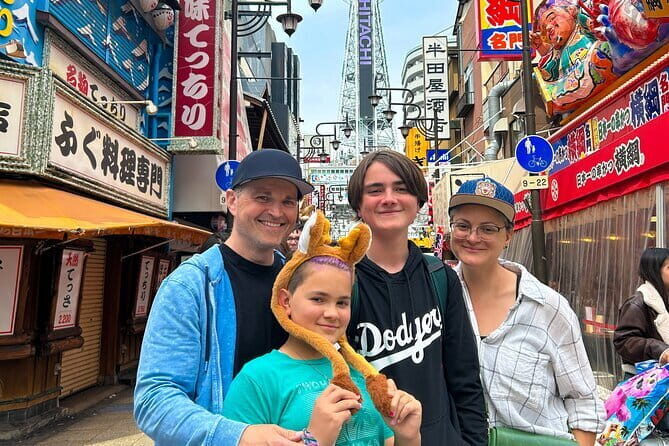
If your goal is an efficient, high-flavor night in Dotonbori, I’d say yes—especially if you want both street food classics and dessert stops in one tidy plan. The biggest strengths are the variety of dishes across different textures (takoyaki, okonomiyaki, karaage, noodles) and the dessert finish (purin, matcha tart, Japanese cheesecake). Add in a small group cap and a guide in English/Spanish, and you get a lot of food value for your time.
But book with eyes open. Dotonbori can be packed, and that can create waiting. If that would ruin your night, you might be happier with a more flexible plan where you can skip a line or two.
If you want to lock it in, consider reserving sooner. It’s typically booked about 21 days in advance, and that usually means popular slots go fast.
FAQ
FAQ
What food and drinks are included?
The tour includes lunch and snacks, plus a guide (English/Spanish) and gratuities. Extra orders are not included.
How long is the experience?
It runs for about 2 hours 30 minutes.
Where do I meet, and where does it end?
You meet at Kani Doraku Dotonbori Main Branch in Dotonbori, Osaka, and the activity ends back at the same meeting point.
How many stops are there?
The itinerary includes Takohachi, Mattari-Purin, 551 Horai, Honke Ootako, DEARBROS, Lord Stow’s Bakery, Kukuru, Rikuro’s, and a Glico Running Man photo stop.
Does the tour have vegetarian or vegan options?
No. The tour notes no vegetarian/vegan options.
What’s the group size limit?
This experience has a maximum of 10 travelers.
Do I need to download a ticket?
You’ll receive a mobile ticket.