REVIEW · TOKYO
Asakusa Night Evening Walking Tour with English-Speaking Guide
Book on Viator →Operated by GuideMe Japan · Bookable on Viator
Asakusa looks different after sunset. This night walking tour threads you through the famous sights when the day crowds thin out, then guides you into the side streets where locals grab a drink before dinner. I like how it keeps things short and efficient while still giving you context so the lanterns and gates mean something.
Two standouts for me: the English-speaking guide who explains what you’re looking at (not just where to stand for photos), and the walk’s focus on Asakusa after dark—Kaminarimon, Senso-ji, and the alleys that feel more local than tour-bus. You also get a small group (max 8), which makes it easier to ask questions and keep your pace comfortable.
One thing to consider: the Senso-ji main hall closes at 6 PM, so depending on when your tour runs, you might only be able to view the grounds from outside.
In This Review
- Key points before you go
- Asakusa After Dark: Why a Guided Walk Beats Going Alone
- Price and Timing: A One-Hour Plan to Start Your Evening
- Meeting at Burger King, Ending at Hoppy Street
- Kaminarimon Gate and the Fujin–Raijin Myth You Can See
- Nakamise Shopping Street: Snacks and Souvenirs Without the Rush
- Senso-ji Temple at Night: Kannon, Lantern Light, and 6 PM Reality
- Asakusa Shrine: Founders, 17th-Century Roots, and a WWII Survival Story
- Hanayashikidori and the Streets Near the Old Amusement Park
- Hoppy Street: Finish at Dinner Mode
- What You’re Really Buying: Guide Stories That Change the Way You See Asakusa
- Who This Tour Fits Best
- Practical Tips So You Get the Most From the Walk
- Should You Book This Asakusa Night Walk?
- FAQ
- How long is the Asakusa Night Evening Walking Tour?
- What is included in the tour price?
- Do I need to buy admission tickets for the stops?
- Is the tour guide English-speaking?
- Where do I meet the guide and where does the tour end?
- What is the maximum group size?
- Can I enter the Senso-ji main hall?
- How does cancellation work?
Key points before you go
- Small group (up to 8) means a more personal pace.
- English-speaking guide helps you connect stories to what you’re seeing.
- 6 PM closure at Senso-ji main hall can affect interior access.
- Ends at Hoppy Street, a smart setup for dinner and casual izakaya hopping.
- Free access at each listed stop keeps costs simple.
- Mobile ticket makes check-in straightforward on your phone.
Asakusa After Dark: Why a Guided Walk Beats Going Alone
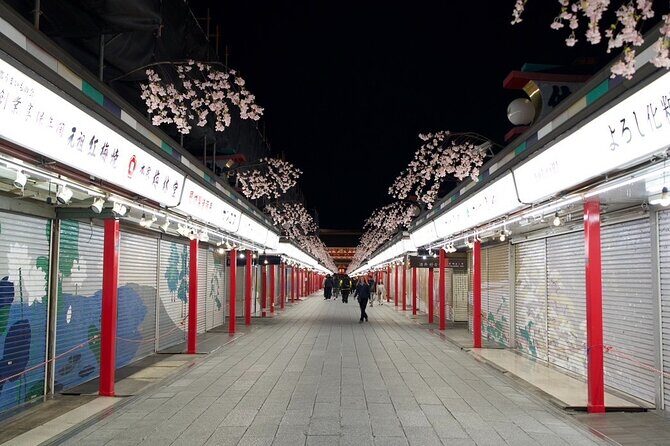
Daytime Asakusa is famous for a reason, but night has its own mood. The big lantern light on Kaminarimon looks sharper, and the area feels calmer without disappearing. That’s exactly where this tour shines: it’s built for people who want the atmosphere right away, then want to head to dinner while the night is still young.
What makes it work well is the way the guide connects details to the street scenes. You’re not just walking past landmarks; you’re learning what to notice. That turns a quick stroll into a more satisfying experience, especially if this is your first time in Tokyo or your first time in Asakusa.
And the timing matters. Because the tour is about an hour, it’s a practical option on a packed schedule. You get the key sights and the local flavor without committing your whole evening.
You can also read our reviews of more walking tours in Tokyo
Price and Timing: A One-Hour Plan to Start Your Evening
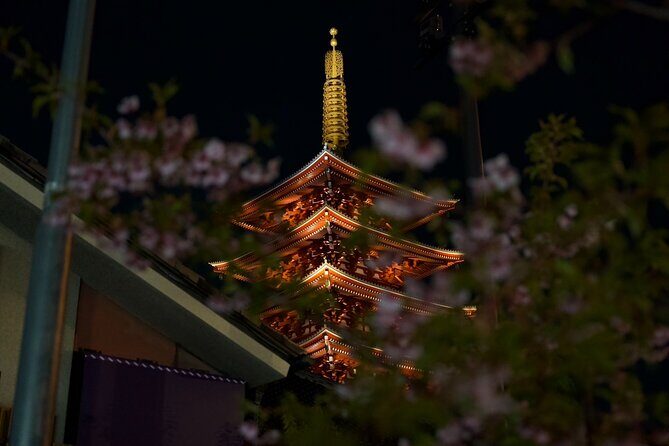
The price is $34.29 per person for about 1 hour. On paper, that’s not a “budget” deal, but it’s also not overpriced when you compare what you’re getting: multiple major sights, an English guide for the full time, and free access to the listed places.
This is especially good value if you’re the type who wants to understand what you’re seeing instead of just taking photos and moving on. For me, a guide is worth it when it changes how I notice things—like the symbolism at gates and shrines, or why certain streets feel the way they do.
Also, the tour tends to sell fairly early, with an average booking window of about 50 days in advance. If you know your Tokyo dates, booking ahead is a smart move so you’re not hunting for availability at the last minute.
Meeting at Burger King, Ending at Hoppy Street
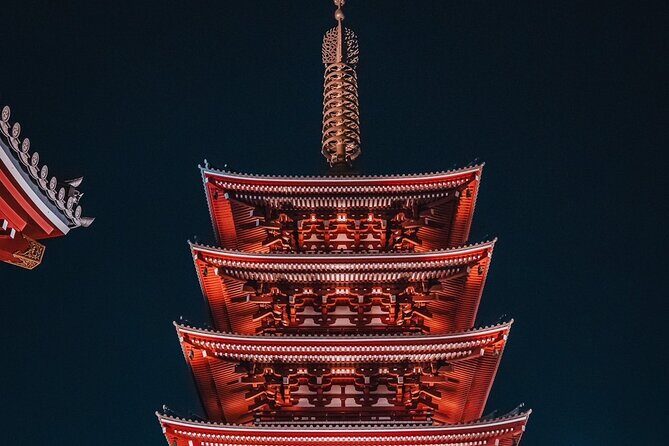
Your start point is very specific: Burger King Asakusa Azumabashi, in the Kaminarimon area (Taito City), listed at 2-chōme 206 Cross Building Royal Palace. You’ll end near Hoppy Street (Hoppy St, 2-chōme-8, Asakusa).
I like this setup because it means your evening is naturally “structured” without feeling rigid. You meet at a recognizable landmark, then the walk gradually leads you into the areas where you’ll actually want to eat and drink afterward. When the tour ends at Hoppy Street, you’re already in the right neighborhood to keep exploring.
The tour notes it’s near public transportation, which helps if you’re coming in from another part of Tokyo. You won’t feel totally dependent on a long trek just to start.
And you’ll use a mobile ticket, which is convenient. No paper scramble, no waiting for someone to send you a printout.
Kaminarimon Gate and the Fujin–Raijin Myth You Can See
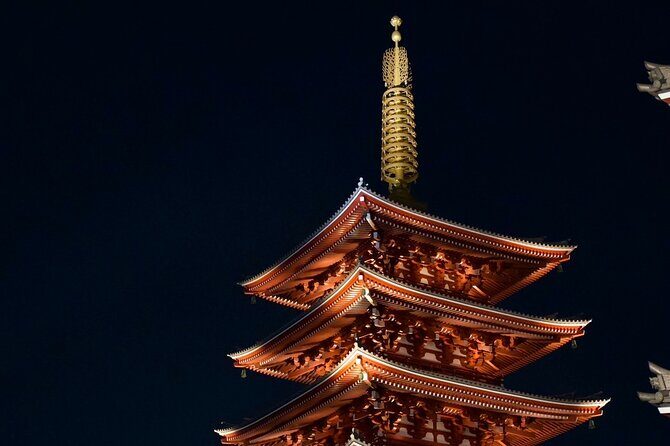
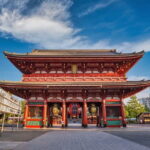
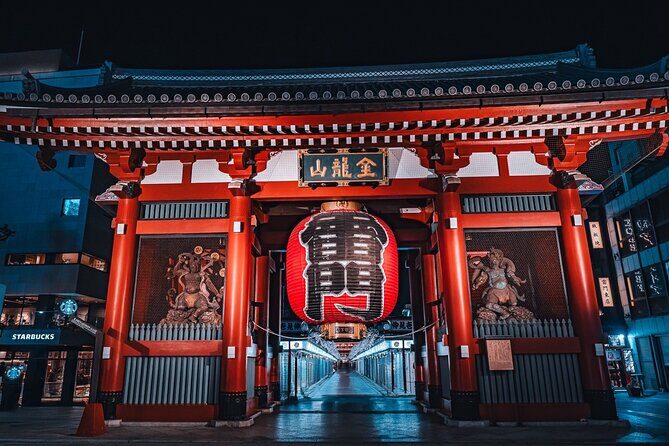
You start at Kaminarimon Gate, also called the Thunder Gate—an iconic entrance to Senso-ji. Flanking the gate are statues tied to Japanese wind and thunder: Fujin (wind) and Raijin (thunder). This is one of those spots where the symbolism actually helps your photos. When you know what the figures represent, the gate stops being just “a big red thing” and becomes a story.
Kaminarimon is also where you’ll notice how Asakusa lights up at night. The lantern and the red gate dominate the scene, and the surrounding area feels more photogenic when the background isn’t as crowded.
One practical note: even if you don’t go inside the temple complex during your visit, the gate itself and its framing are worth seeing properly. This stop is short, but it’s a strong anchor for the whole walk.
Nakamise Shopping Street: Snacks and Souvenirs Without the Rush
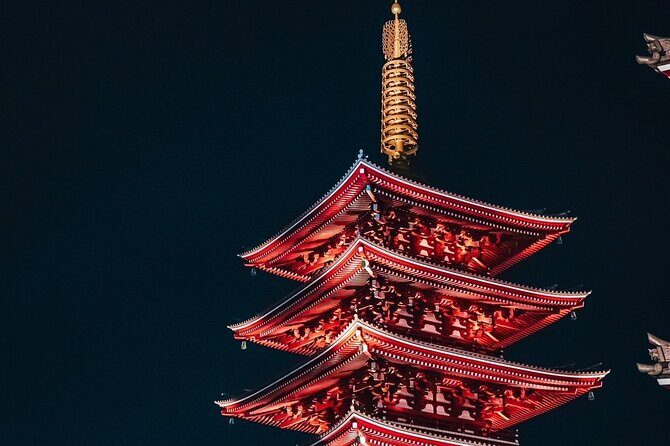
Next comes Nakamise Shopping Street, the path leading toward Senso-ji. By day it’s busy; at night, it has a different rhythm. Even when many shops are quieter, you still get the sense of where people come to taste and buy classic Asakusa items.
This is a good segment if you like browsing. You’ll see traditional snacks, souvenir options, and handcrafted goods. Since the tour doesn’t include food, this stop works best as a look-around and plan-a-purchase moment. If you want to snack during the walk, you’ll need to do it on your own.
The benefit here is that the guide helps you orient fast. You learn how Nakamise relates to the temple approach, which makes the next stops feel less like separate attractions and more like one connected area.
You can also read our reviews of more guided tours in Tokyo


Senso-ji Temple at Night: Kannon, Lantern Light, and 6 PM Reality
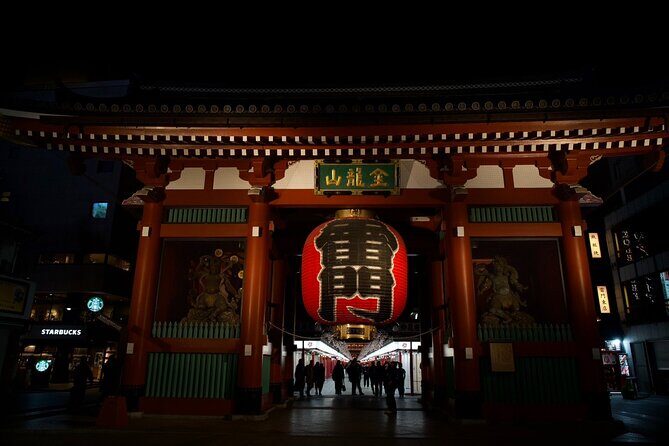
Then you reach Senso-ji Temple, dedicated to Kannon, the goddess of mercy. Senso-ji is one of Tokyo’s oldest and most well-known temples, and at night it feels less like a daytime tourist crush and more like a solemn place you can actually see.
This is where the tour’s storytelling pays off. You’re standing in front of an important religious site, and the guide’s explanations help you understand why specific details matter.
Here’s the main consideration you should plan around: the main hall closes at 6 PM. The tour notes that entry may not be possible depending on timing. So if your schedule lands after that cutoff, treat this stop as a viewing experience—still powerful, but not the same as going inside the main hall.
Even without interior access, you’ll still get that classic Senso-ji look: the temple grounds, the lantern glow, and the sense that this place anchors Asakusa in a way that’s more than just scenery.
Asakusa Shrine: Founders, 17th-Century Roots, and a WWII Survival Story
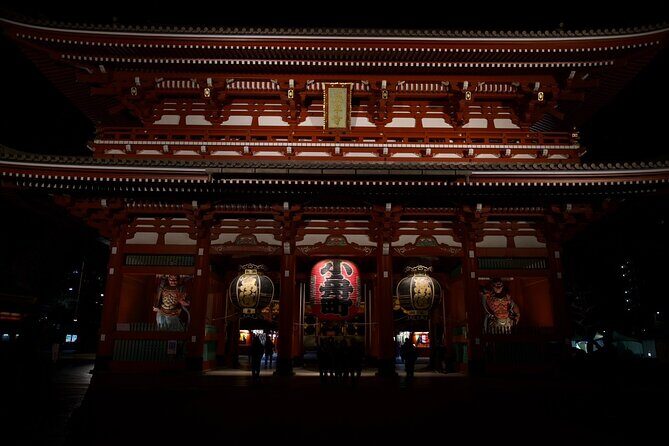
Right beside Senso-ji is Asakusa Shrine, a Shinto shrine connected with the three men who founded Senso-ji. It’s described as built in the 17th century, and it survived World War II—an important detail that gives the area weight beyond sightseeing.
The tour’s approach here is smart: you go from a large temple gate and grounds into a shrine setting that has its own identity. It’s close, but it feels different. Shrine spaces often have a calmer visual tone, and the guide’s stories help you notice things you might otherwise skip.
Also, this stop adds variety. After walking through the temple atmosphere and the shopping street textures, the shrine grounds give your brain a chance to settle. It’s a nice rhythm shift inside a short hour.
Hanayashikidori and the Streets Near the Old Amusement Park
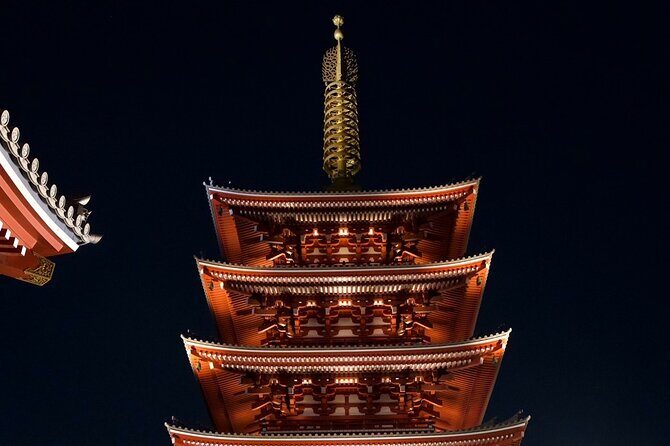
As you move along, you reach Hanayashikidori, a street area named after Hanayashiki, Japan’s oldest amusement park. Even if you don’t go into the amusement area itself, the name tells you what kind of neighborhood this is: playful, casual, and built around everyday street life.
You’ll find shops, restaurants, and cafés here, and it’s a useful stop because it shows Asakusa as more than temples. Yes, the gates are the headline, but the area lives through the businesses on the street.
This segment is short, so the best way to use it is to notice the vibe and keep your options open for after the tour. If you’re deciding where to eat, it helps to get a feel for the nearby streets while you still have energy to explore.
Hoppy Street: Finish at Dinner Mode
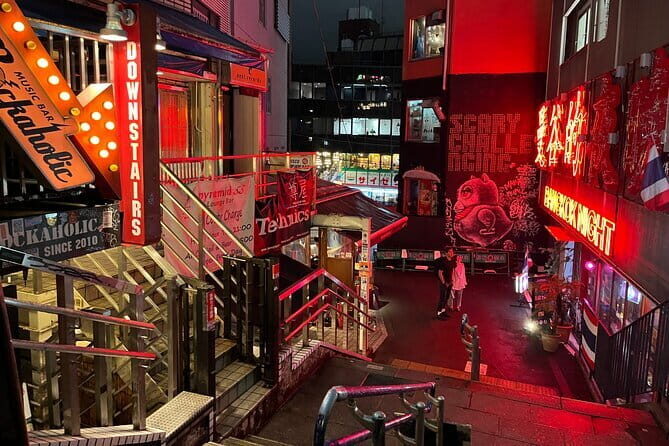
The tour ends at Hoppy Street, a lively alley lined with izakayas. It’s especially known for serving Hoppy, a popular local drink. This is exactly why the tour’s finish point makes sense. You finish your walk and you’re dropped right where you can transition into dinner without a stressful transfer.
Even if you don’t plan to drink, the street atmosphere is the point. Izakaya alleys are a big part of what makes Tokyo evenings fun: small places, lots of character, and a feeling that people are letting the day go.
Since food and drinks are not included, you’ll make your own choices here. I like that freedom. You can decide based on your appetite, budget, and how adventurous you feel.
What You’re Really Buying: Guide Stories That Change the Way You See Asakusa
If you’re the type who reads signs and still feels like something is missing, an English guide is the difference-maker. This tour is run by GuideMe Japan, and the guides have been praised for explaining the background in a way that makes quick stops feel meaningful.
In particular, the names Takumi and Mio show up in the guide feedback. The common thread is simple: they make the walking experience informative and enjoyable, so you’re not just following instructions—you’re understanding what you’re looking at.
That matters most at places like Kaminarimon, Fujin and Raijin, and the shrine connection story. These details aren’t hard to see, but they’re hard to interpret without context. With the guide’s explanation, you start noticing patterns: the way symbols sit at entrances, the way a shrine relates to the main temple complex, and the way streets lead you toward the main sites.
Who This Tour Fits Best
I’d point this tour toward you if:
- You want a first taste of Asakusa at night without committing to a long evening.
- You prefer a small-group experience where you can ask questions.
- You like your Tokyo stops with stories that connect to the sights.
- You’re planning dinner nearby and want the tour to naturally lead you there.
It also fits well if you’re traveling solo or as a pair. Small groups can feel friendly fast, and a guided pace reduces decision fatigue.
The one “not ideal” scenario is timing. If your schedule puts you past the Senso-ji main hall closing time, you should still go for the atmosphere and exterior viewing, but set expectations accordingly.
Practical Tips So You Get the Most From the Walk
A short tour can still feel like a lot when you’re moving between spots. To make it easy on yourself:
- Wear comfortable walking shoes. You’re on your feet through multiple areas.
- Bring a light layer if you’re sensitive to evening temperatures in Tokyo.
- Use the first gate stop to set your camera settings early; the lantern light can be strong.
- Since food and drinks aren’t included, decide whether you want to snack on Nakamise or save it for Hoppy Street.
Also, because the tour ends at Hoppy Street, think about what kind of dinner you want before you start. Casual izakaya energy is the default here, so you’ll have a smoother time if that’s your style.
Should You Book This Asakusa Night Walk?
I think you should book if your goal is an efficient, guided Asakusa evening that leads naturally into dinner. The combination of English guide storytelling, free access to the stops, and the practical finish at Hoppy Street is a strong value play for a one-hour time slot.
Skip it only if you’re specifically hoping to spend extra time inside Senso-ji’s main hall after 6 PM. If that’s your plan, you may want a different time window or a longer temple-focused visit.
Otherwise, this is the kind of tour that makes a famous neighborhood feel personal—because you’re not just looking at lights and gates. You’re learning what they represent, right when the street mood is at its best.
FAQ
How long is the Asakusa Night Evening Walking Tour?
It lasts about 1 hour.
What is included in the tour price?
The tour includes an English-speaking guide. Food and drinks are not included.
Do I need to buy admission tickets for the stops?
The listed stops are free of admission, and the tour includes free access to the areas mentioned.
Is the tour guide English-speaking?
Yes. The tour includes an English-speaking guide.
Where do I meet the guide and where does the tour end?
You start at Burger King Asakusa Azumabashi (Kaminarimon area). The tour ends at Hoppy Street (Hoppy St, 2-chōme-8 Asakusa).
What is the maximum group size?
The tour has a maximum of 8 travelers.
Can I enter the Senso-ji main hall?
The tour notes that the main hall closes at 6 PM, so entry may not be possible depending on your timing.
How does cancellation work?
You can cancel for a full refund up to 24 hours before the experience start time. If you cancel less than 24 hours before, the amount paid is not refunded.