REVIEW · TOKYO
Exciting Hakone – One Day Tour from Tokyo
Book on Viator →Operated by Fulfilling Inc. · Bookable on Viator
Hakone feels worlds away in one day. I love the hotel pickup/drop-off and the chance to see Owakudani’s black eggs in real volcanic steam. One heads-up: Mt. Fuji visibility changes a lot by season, and the ropeway/boat can pause if strong winds or snow are forecast.
This is a “hands-free” way to reach Hakone. A professional guide handles the flow across multiple transport types, so you’re spending energy on views, not ticket math.
The biggest thing to plan around is your pace. There’s a moderate amount of walking, and you’ll move through several stops at a day-trip rhythm—fun, but not a sit-and-smile schedule.
In This Review
- Key things I’d circle before you go
- Getting Out of Tokyo Without Wrestling Maps
- The Shinkansen Ride: Fast Enough, Without the Headache
- Hakone Yumoto to Gora: Mountain Train Views and Hydrangea Timing
- Cable Car/Ropeway to Owakudani: Volcanic Steam and the Egg Moment
- From Owakudani to Lake Ashi: The Ropeway Shift and Fuji Chances
- If Cable Car or Boat Can’t Run: How to Think About Weather
- Walking, Timing, and the 10-Hour Pace
- Price and Logistics: What You’re Really Paying For
- Choosing the Right Guide Style for Your Day
- Who This Tour Fits Best (and Who Should Skip It)
- Should You Book This Hakone One-Day Tour?
- FAQ
- What time does the tour start?
- How long is the Hakone day trip?
- Is hotel pickup and drop-off included?
- Is this a private tour?
- What costs are not included in the tour price?
- How likely is it to see Mt. Fuji?
- What happens if the ropeway or Lake Ashi cruise can’t operate?
- Is there free cancellation?
Key things I’d circle before you go
- Hotel lobby pickup and drop-off in Tokyo’s 23 wards means you skip the transit puzzle
- Volcanic Owakudani: see bubbling activity and the famous black hot-spring egg
- Multiple transport thrills: mountain train, cable car/ropeway, and a Lake Ashi cruise
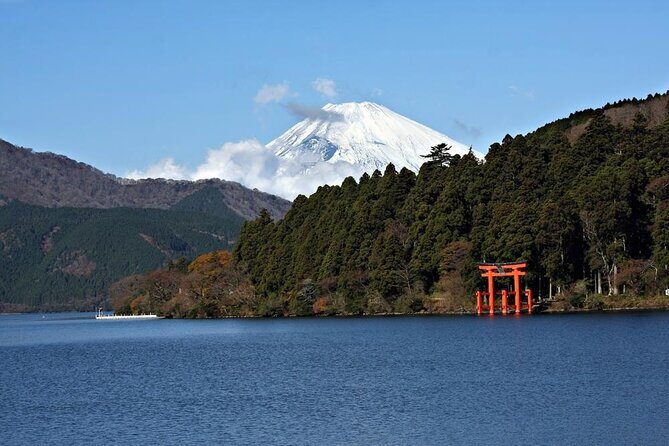
- Mt. Fuji is seasonal: about 80% chance in winter, less than 30% in summer
- Small private group with a maximum size of 5 keeps the day more personal
- Weather can change the plan if ropeway or boat operations are affected
Getting Out of Tokyo Without Wrestling Maps
The best part of this tour is the low-stress start. You meet at your hotel lobby at 8:30am and the plan includes pickup and drop-off, so you don’t need to line up trains on your own first thing in the morning. For Hakone, that matters: the route is very doable, but doing it smoothly takes planning.
Once you’re gathered, the day gets busy in a good way. You shift from Tokyo’s city energy into countryside rhythm as the transport changes repeatedly. That variety is also the point of going this way—Hakone is much more fun when you’re not trapped in one long ride.
The tour runs about 10 hours total, so you’ll feel like you left Tokyo and came back, not like you moved cities. It’s a full day, but it’s built to maximize “Hakone moments” rather than dragging time.
A few more Tokyo tours and experiences worth a look



The Shinkansen Ride: Fast Enough, Without the Headache
After meeting your guide, you head toward Tokyo/Shinagawa for the Shinkansen to Odawara. It’s not the absolute fastest Shinkansen, but it cruises around 260 km/hr, which still means you’re moving quickly and comfortably.
Here’s why this part is worth having handled for you: Shinkansen logistics in Japan are easy once you know the flow, but they’re intimidating if you’re arriving without a plan. This tour also factors in that you may need to buy transport components separately. The tour cost itself doesn’t include the Shinkansen travel ticket component described below, but the guide’s role helps you manage the day so you can stay focused on the trip.
Also, depending on the weather and season, your early arrival into Hakone’s region can make a difference for viewpoints. You’re not just rushing; you’re positioning yourself for the sights that follow.
Hakone Yumoto to Gora: Mountain Train Views and Hydrangea Timing
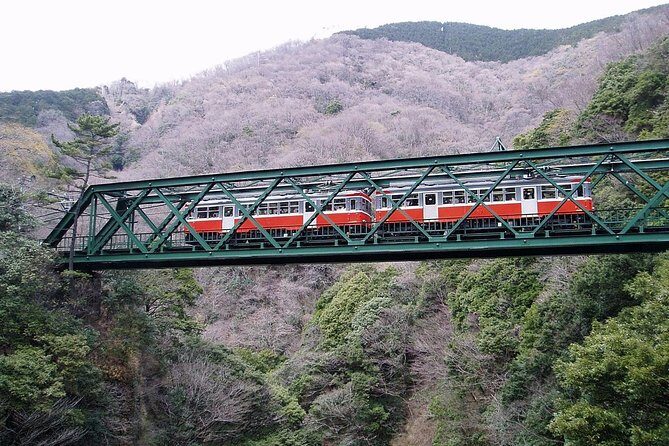
From Odawara, the route carries you to Hakone Yumoto, then onto a mountain train to Gora (about 40 minutes). This segment matters because it’s where the terrain changes. Instead of thinking you’re “just taking a train,” you get valley views as you climb.
There’s also a seasonal detail that’s easy to miss if you’re planning alone: from mid-June to mid-July, the line can be lined with hydrangeas. If you’re traveling during that window, this is one of the most atmospheric parts of the day because flowers appear right along the route, not only at a single photo stop.
Is it a must-see year-round? Not in the same way as Owakudani. But it’s a nice reminder that Hakone is about the route and the scenery, not only the destination.
Cable Car/Ropeway to Owakudani: Volcanic Steam and the Egg Moment
From Gora, you take a cable car/ropeway to Owakudani (about 20 minutes). On a sunny day, you may catch Mt. Fuji from higher vantage points—so this is one of the segments where the weather can pay you back.
Then you spend about an hour strolling Owakudani, and this is the stop that turns a “day trip” into a Hakone memory. Owakudani is known for real volcanic activity, and the famous visual is the hot-spring black egg—eggs boiled in the bubbling pools you can see up close.
A practical note: this is an area where steam smell and heat can feel intense. If you’re sensitive to strong odors, plan to move steadily and keep water handy. If you love unusual natural sights, this is the whole reason to come.
From Owakudani to Lake Ashi: The Ropeway Shift and Fuji Chances
After the volcanic walk, you move by ropeway from Owakudani to Lake Ashi (about 20 minutes). This ride changes the mood quickly. You go from steaming volcanic energy to open-air views over the Hakone region.
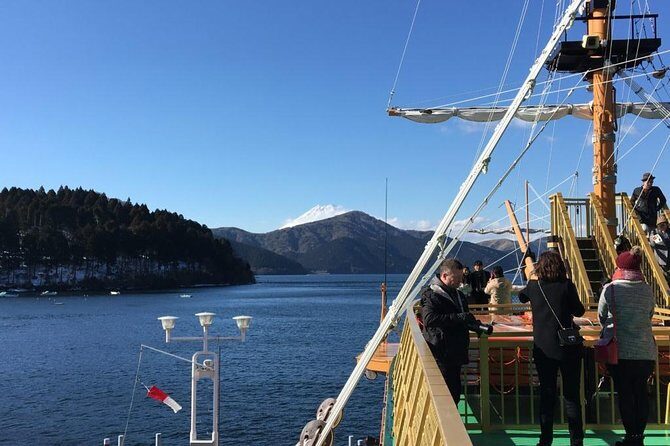
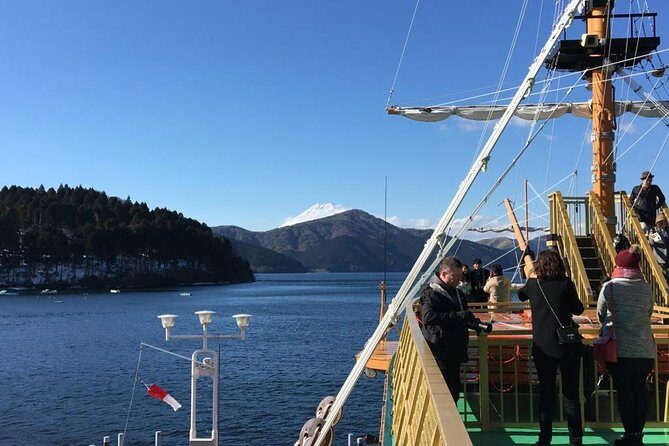
From there, you cruise Lake Ashi for about 30 minutes. This is the “slower” block of the day, and it’s one of the easiest ways to appreciate Hakone scenery because you’re not constantly stepping in and out. Stare long enough and you’ll notice why Mt. Fuji often becomes the star of this region when conditions cooperate.
You’ll also visit Hakone shrine afterward. This isn’t about checking boxes; it’s a chance to add a calm, cultural pause after the heat and drama of Owakudani.





If Cable Car or Boat Can’t Run: How to Think About Weather
Hakone weather isn’t just a suggestion. The tour notes that the ropeway and Lake Ashi cruising may be suspended or unable to operate as scheduled due to natural hazards like snow or strong winds.
Here’s how I’d plan for it: treat the Fuji view and the cruise as big bonuses, not guarantees. You can still enjoy the day even if one segment pauses, but your best mindset is flexible. The day is structured around several modes of transport, so losing a single segment can change pacing and viewpoints.
Season matters for Mt. Fuji odds, too. Based on Fuji city weather records, viewing Mt. Fuji is about 80% in winter and less than 30% in summer. If Fuji is your top priority, winter gives you better odds. If summer is your only window, go anyway—just don’t build the whole trip around one visible cone.
Walking, Timing, and the 10-Hour Pace
This is not a lazy half-day. The tour includes a moderate amount of walking, plus time shifting between transport lines. Most people can participate, but you’ll feel it if you’re used to a very low-step day.
Timing is also tight enough that you won’t want to start the morning with a long breakfast that runs late. You’ll want comfortable shoes, and you’ll likely benefit from light layers you can adjust as you move between steam areas and open-air sections.
The payoff is that you see multiple “Hakone faces” in one go: volcanic Owakudani, scenery from high ridges, lake atmosphere, and shrine calm.
Price and Logistics: What You’re Really Paying For
The tour price is listed at $208.49 per person, and it’s commonly booked about 28 days in advance. For that money, you’re getting several things that reduce friction: a professional guide, a private tour for your group, and meeting at your hotel lobby in Tokyo’s 23 wards.
But it’s important to budget for the transport add-ons noted for customers:
- Shinkansen discount ticket (2-way): 6,560 JPY per person
- Hakone Free Pass: 6,000 JPY per person
- Admission fees and lunch are not included
So is it good value? I’d say yes if you value time and ease. You’re paying for the guide’s ability to coordinate a day full of changing transport types, plus pickup/drop-off convenience. If you enjoy researching and building routes yourself, you could DIY parts of this. If you’d rather show up and just enjoy the sights, the setup is more cost-effective than it first looks.
Also, the group size is capped at 5 people. That’s small enough to feel like a private experience without being so tiny that you feel alone or rushed.
Choosing the Right Guide Style for Your Day
This is one of the areas where quality shows. The reviews highlight specific guides such as Akira, Hideiki/Hideaki, and Yumiko (including Yumiko Sano), and their common thread is straightforward: they’re attentive, respectful, and help the day run smoothly across transport modes.
One review example also points out that when weather blocked cable car and boat options, the guide rearranged the tour so you could still do other activities. That’s exactly what you want to hear for a region where wind and snow can affect operations.
If you want the day to feel calm and guided—especially for first-timers—this kind of guide support is a major part of why the tour feels worth it.
Who This Tour Fits Best (and Who Should Skip It)
This one-day Hakone plan is ideal if you:
- want Mount Fuji-area scenery plus volcanic sightseeing without heavy planning
- like multi-mode transport days (train, cable car/ropeway, boat)
- prefer small private groups with guided commentary
- are traveling with someone who’d appreciate fewer logistics decisions
It may be less ideal if you:
- hate walking and prefer a strictly seated day
- need a guaranteed Fuji view (it’s seasonal and weather-dependent)
- have very tight timing constraints and can’t handle schedule changes if ropeway/boat pause
If you’re in Tokyo for a short stay, this is a smart way to get a real Hakone sampler without eating an entire day planning transit.
Should You Book This Hakone One-Day Tour?
Book it if you want the classic Hakone highlights—Owakudani volcanic steam, Lake Ashi cruising, and that chance at Mt. Fuji—with pickup, a guide, and a coordinated transport chain. The small group size and the guide’s ability to handle changes make this feel safer than DIY when weather shifts.
Consider skipping or rethinking if Fuji visibility is the only thing you care about and your travel window is summer. In that case, plan for a flexible outcome and treat the scenery as the main reward.
If you’re excited by the idea of multiple transport styles in one day and you’d rather spend your time looking at Japan than sorting out tickets, this is a strong choice.
FAQ
What time does the tour start?
It starts at 8:30am with a hotel lobby meeting (Tokyo 23 wards).
How long is the Hakone day trip?
It runs for about 10 hours (approx.).
Is hotel pickup and drop-off included?
Yes. The tour includes hotel pickup and drop-off, and the meeting point is the hotel lobby in Tokyo’s 23 wards.
Is this a private tour?
Yes. It’s described as a private tour/activity with your group only, and the maximum group size is 5 people.
What costs are not included in the tour price?
The tour price does not include admission fees, lunch, or specific transport costs you pay as a customer: a 2-way Shinkansen discount ticket (6,560 JPY per person) and a Hakone Free Pass (6,000 JPY per person).
How likely is it to see Mt. Fuji?
It depends on the season and weather. The chance is about 80% in winter, while it can be less than 30% in summer.
What happens if the ropeway or Lake Ashi cruise can’t operate?
The tour notes that ropeway and cruising may be suspended or unable to operate as scheduled because of natural hazards such as snow or strong winds.
Is there free cancellation?
Yes. You can cancel for a full refund up to 24 hours before the experience’s start time, and cancellations within 24 hours are not refunded.