REVIEW · TOKYO
Samurai Ninja Museum Asakusa: Kid-Friendly Ninja Training
Book on GetYourGuide →Operated by GLOBA Inc. · Bookable on GetYourGuide
Ninja training in Asakusa is pure hands-on fun. You start in a full ninja outfit, then jump straight into a shuriken throw competition that’s equal parts skill practice and game time. It is the kind of Tokyo activity that gets kids moving while still giving adults something real to watch and learn.
I also like the tight, 75-minute structure: costume-up, a ninja treasure hunt, blowgun practice, and a photo session before you roll into the museum part. One consideration: at $56 per person for a short session, it’s best if your child is ready to participate rather than just observe.
In This Review
- Key things to know before you go
- Samurai Ninja Museum Asakusa: a costume start that actually works
- Inside the 75 minutes: what happens in order
- 1) Suit up as a ninja
- 2) Ninja secrets and technique coaching
- 3) Ninja treasure hunt (the kid-magnet moment)
- 4) Photo session while you’re still in costume
- 5) Ninja star throw competition (shuriken)
- 6) Ninja blowgun practice
- 7) Complimentary museum tour and interactive exhibits
- Cost, value, and what $56 buys in Tokyo
- Shuriken and blowgun: fun with a built-in skill lesson
- Who this ninja session fits best (and who might struggle)
- Asakusa logistics: keep it smooth, not rushed
- What the strong ratings usually signal
- Should you book Samurai Ninja Museum Asakusa Kid-Friendly Ninja Training?
- FAQ
- How long is the ninja training experience?
- Where is this experience located?
- What is the price per person?
- What’s included in the ticket?
- Is there a live guide?
- What activities do you do during the session?
- Can children under 3 join the ninja experience?
- Is the group small?
- Is the tour wheelchair accessible?
- Is free cancellation available?
Key things to know before you go
- Costume time first: You dress as a ninja right away, so the fun starts before the training begins.
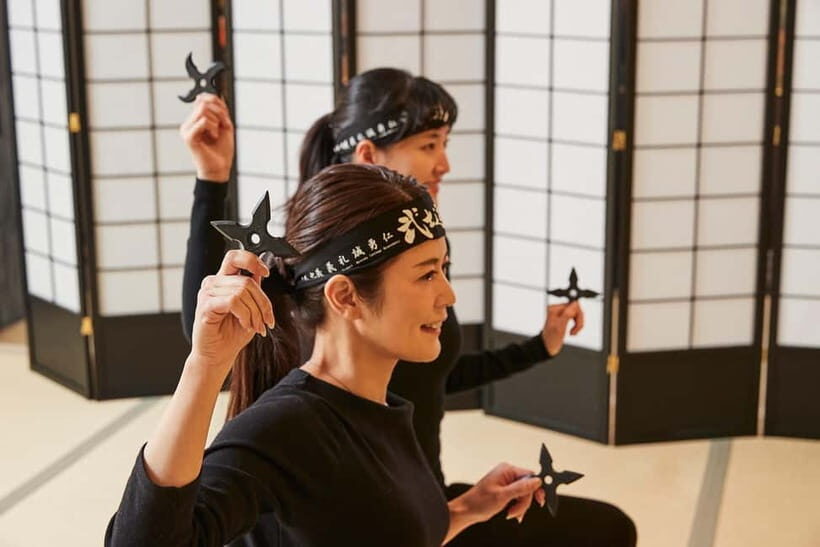
- Two hands-on skill stations: You practice with a ninja blowgun and join a shuriken throw competition.
- Kid-friendly hunt: The ninja treasure hunt is built for children and works well for family energy levels.
- English live guide: Your instruction is in English with a live tour guide.
- Small group setup: It’s described as small group with limited participants, so the guide can keep things moving.
- Museum add-on: You also get a complimentary tour of the Samurai and Ninja Museum with interactive exhibits.
Samurai Ninja Museum Asakusa: a costume start that actually works
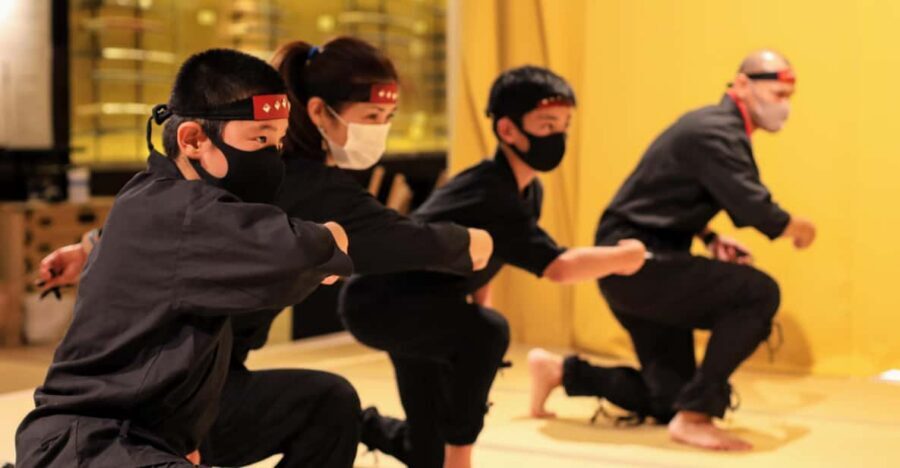
The Samurai Ninja Museum Asakusa format is smart. Most “themed” attractions in Tokyo either feel like a photo booth, or like a lecture you can’t escape. This one flips the script by getting you into role-play first. When you put on the ninja outfit, the rest of the session makes more sense. Kids stop asking when it ends. Parents stop wondering if there’s anything substantial here.
The setting is in Honshu, Japan, and the experience is built around a simple promise: you leave with ninja memories and a few concrete things you learned, not just a bunch of standing around.
And the instruction style helps. In feedback from past sessions, the guide experience comes through as a key part of the fun. One set of notes highlighted an instructor named Koki as especially good at explaining and making the shuriken moment enjoyable. Even if your guide is someone else, the session is clearly designed to keep explanations clear while the kids rotate through activities.
You can also read our reviews of more museum experiences in Tokyo

Inside the 75 minutes: what happens in order
This is a fast, family-paced session. Plan on about 75 minutes from start to finish, with timing depending on availability. Here’s the flow you can expect, and why it matters:
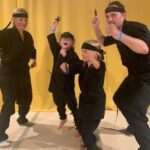
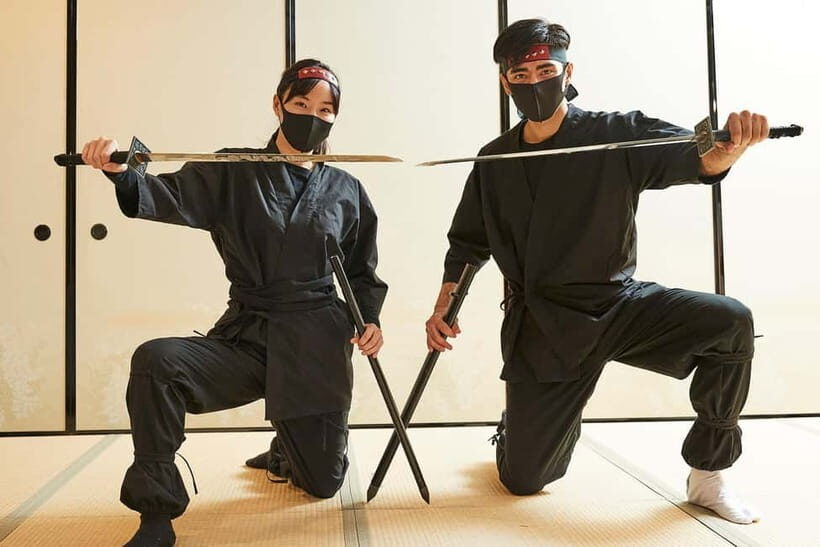
1) Suit up as a ninja
The session begins with you wearing a full ninja outfit. That’s not just for photos. It sets expectations instantly. Kids know they’re doing something active, and adults get why this experience is different from a museum walk.
Practical tip: If your child is sensitive about clothing, arrive a little calm and give them time to settle into the outfit. It’s usually quick, but costume time is the foundation.
2) Ninja secrets and technique coaching
You’ll learn the secrets of ninja as part of the training. The key is that it’s instruction tied to actions you’ll do next. So it doesn’t feel like you’re being handed a history quiz. It’s more like: here’s how you hold your gear, here’s the basic idea, then you try it.
3) Ninja treasure hunt (the kid-magnet moment)
Then comes the ninja treasure hunt, which is a favorite for children. This is the part that turns “training” into a game. It also gives kids variety. They aren’t just throwing and shooting. They’re moving attention, solving simple challenges, and staying engaged.
If you’re traveling with younger kids, this hunt is often the make-or-break segment. When it clicks, the entire 75 minutes feels like one continuous win.





4) Photo session while you’re still in costume
You get a photo shoot as part of the experience. This matters more than it sounds. You’re already dressed, and the energy is already high, so photos come out better than if you have to wait until you’re tired and sweaty.
5) Ninja star throw competition (shuriken)
One highlight is the ninja star throw competition. This is the shuriken moment people talk about most because it is a real skill challenge. The competition element turns it into a game, not a demo.
In the feedback, the shuriken throw gets specific praise, including excitement around getting to do it. That’s your clue: if your child likes aiming games or sports, this segment is going to land.
6) Ninja blowgun practice
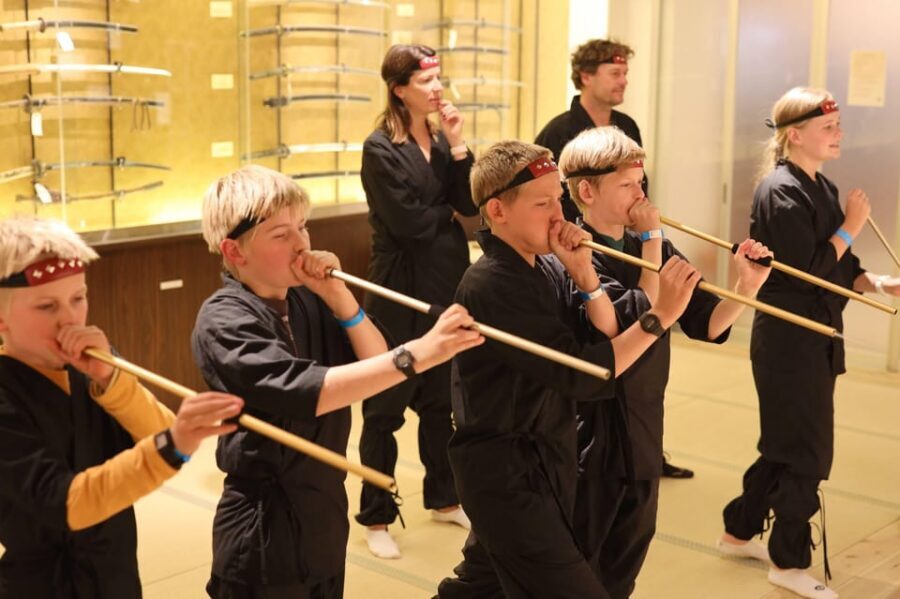
Next, you use a ninja blowgun. Again, this isn’t just a prop. It is a hands-on practice step, guided by the tour team. It gives a different kind of challenge from throwing: more focus, more careful technique, and usually a calmer rhythm than the shuriken competition.
7) Complimentary museum tour and interactive exhibits
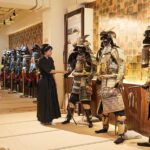
After the training activities, you also get a complimentary tour of the Samurai and Ninja Museum. The focus includes history with interactive exhibits. This is the part that makes the experience feel like more than a theme park exercise.
For parents, this museum time is your chance to slow down just a bit. You’ll still be in “activity mode,” but it gives context for what you just tried.
Cost, value, and what $56 buys in Tokyo
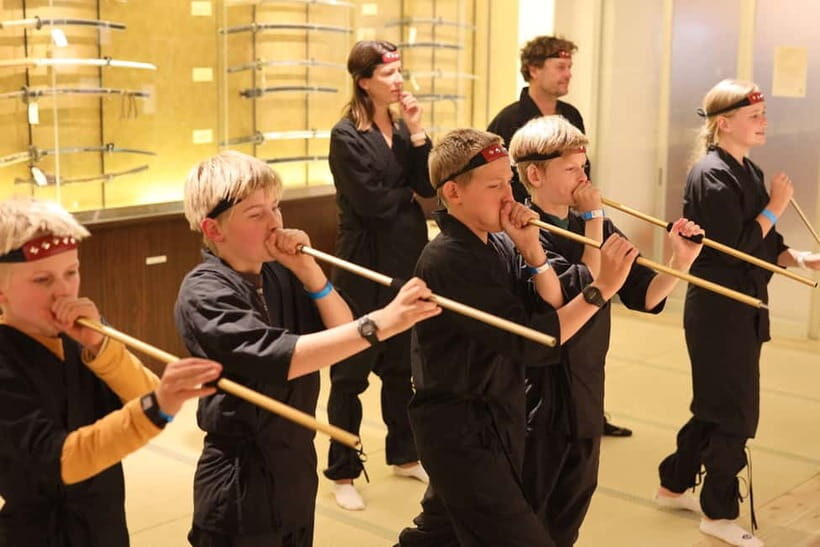
At $56 per person, you’re paying for a package: entrance, a guided training session, the ninja treasure hunt, and the photo shoot, plus guided activities like shuriken throwing and blowgun practice.
Is it expensive? It can feel that way if your child is not fully on board. But if they are, it becomes good value because you’re getting multiple distinct experiences inside one ticket. Many Tokyo activities charge separately for costuming, photos, and an attraction add-on. Here, they’re bundled.
Also, the duration is 75 minutes. That’s short enough for kids who burn out quickly, and long enough to feel like you actually did something. For families, this matters. One long session can turn into a negotiation. This one is intentionally paced.
My practical way to judge value: ask yourself whether your child wants to try multiple activities in a single go. If the answer is yes, $56 is much easier to justify.
Shuriken and blowgun: fun with a built-in skill lesson
This experience’s biggest advantage is that it doesn’t treat weapons-style props like pure theater. You get structured practice: throw technique for shuriken, and precision practice for the blowgun.
For kids, that translates into tangible feedback. They try. They adjust. They improve. Parents can watch skill build in real time. It’s not just role-play.
And for adults, it’s satisfying for a different reason. You see how the instruction is organized around basic mechanics: stance, aim, and controlled movement. Even if you don’t care about ninjas as a fandom, the skill component adds credibility to the experience.
A quick caution: If your child is extremely timid about aiming or competition, the shuriken throw competition may feel intense. In that case, remind them it’s practice and games, not a real-life contest. The way the guide runs it is part of the success here, and the English instruction helps keep expectations clear.
Who this ninja session fits best (and who might struggle)
This is explicitly designed for families and children. There’s also an important age rule: children under 3 can enter the venue, but they cannot join the ninja experience.
So who should book?
- Kids who love costumes, games, and “try it” activities.
- Families who want a Tokyo experience that feels interactive rather than passive.
- Adults traveling with kids who want a guided activity in English.
Who might find it less satisfying?
- Very young children who aren’t able to participate in the full experience.
- Kids who get overwhelmed by structured competitions or multiple stations in one session.
- Adults looking for a long museum-focused day. This isn’t that. It’s a training-and-game format with a museum add-on.
Also, the group size matters. It’s described as small group, and limited participants are mentioned. That usually means less waiting around and more personal attention when questions pop up.
Asakusa logistics: keep it smooth, not rushed
The experience includes a live tour guide in English, and it’s set for a scheduled slot depending on availability. In practice, that means you should build your day so you can arrive ready for costume time, not sprinting between stops.
Asakusa is often busiest in the daytime, so treat this like an “anchor activity.” Do it when your group is fresh. If your day is already packed with walking, give yourself buffer time so parents aren’t juggling tired kids at the start.
One small strategy: bring a simple plan for the photo moment. If your child gets cranky in the last 10 minutes of activities, you’re better off knowing the photo session is part of the plan, so you can encourage it earlier rather than scrambling at the end.
What the strong ratings usually signal
This activity has an average rating of 4.7 out of 5 from 67 bookings. That kind of score usually points to two things: the guide performance and the hands-on activities landing with kids.
One note specifically praised the instructor and the fun of doing the ninja experience. Another highlighted that the instructor named Koki explained well, with a direct mention of enjoying the shuriken throw. That combination matters. If the guide keeps the pace right and the activities feel doable, families walk away happy.
Should you book Samurai Ninja Museum Asakusa Kid-Friendly Ninja Training?
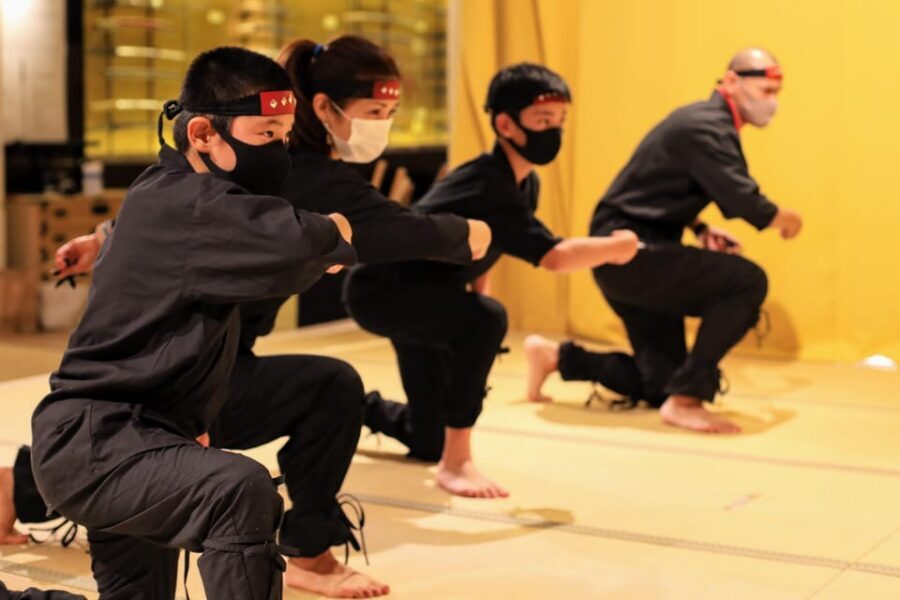
If you’re traveling with kids who want to do things, not just watch, I’d book it. The best part is the mix: costume up, treasure hunt, then skill stations (shuriken throw and blowgun), plus a photo session and a museum tour.
Skip it only if your child is not likely to participate, or if you’re mainly looking for a quiet museum day. Because it’s built for action, the value is highest when everyone’s ready to try.
FAQ
How long is the ninja training experience?
The duration is 75 minutes.
Where is this experience located?
It is in Honshu, Japan, as part of the Samurai Ninja Museum Asakusa experience.
What is the price per person?
The price is $56 per person.
What’s included in the ticket?
Included items are an entrance ticket, a ninja treasure hunt, and a photo shoot.
Is there a live guide?
Yes, there is a live tour guide, and the language is English.
What activities do you do during the session?
You wear a full ninja outfit, learn ninja techniques, take part in a ninja star throw competition, use a ninja blowgun, and do a ninja treasure hunt. There is also a complimentary museum tour with interactive exhibits.
Can children under 3 join the ninja experience?
No. Children under 3 cannot join the ninja experience, though they can enter the venue.
Is the group small?
Yes. The experience is described as small group, with limited participants (and a maximum of 20 travelers mentioned overall).
Is the tour wheelchair accessible?
Yes, it is wheelchair accessible.
Is free cancellation available?
Yes. You can cancel up to 24 hours in advance for a full refund.