REVIEW · TOKYO
Exciting Nikko – One Day Tour from Tokyo
Book on Viator →Operated by Fulfilling Inc. · Bookable on Viator
Nikko temples pack a lot into ten hours. You’ll line up the famous Shinkyo Bridge photo first, then spend the day in UNESCO-site splendor with Toshogu’s carved color and Rinno-ji’s golden Buddhas, all guided by a real pro. The only real catch: there are steps, and this is a decent walking-with-a-stair-smile day.
I love how this tour is set up for people who want the key sights without building a whole plan from scratch. It’s also a private tour, so you’re not stuck listening to someone else’s group math all day.
One note before you go: lunch isn’t included, and while the tour claims transport and admission are covered, a past customer reported unexpected extras. I’d treat that as a prompt to confirm what’s included for your date, especially around any train tickets and meals.
In This Review
- Key Things I’d Focus On
- Is a One-Day Nikko Trip a Smart Move from Tokyo?
- Price and What You’re Really Getting for $267.13
- Meeting at Tobu Asakusa and the Flow of the Day
- The Train Ride to Nikko: Not Just Transit
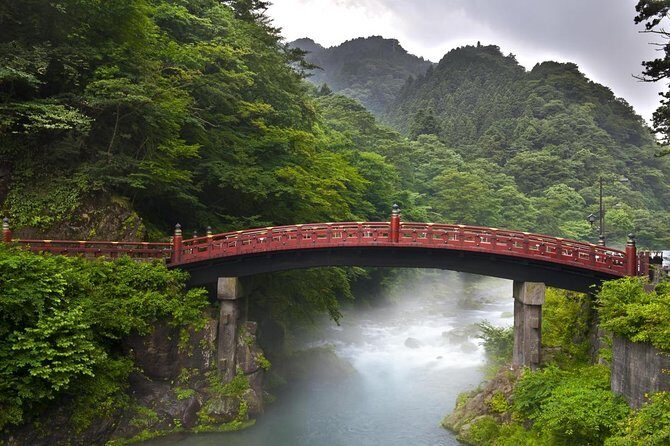
- Stop 1: Shinkyo Bridge and Getting the Photo Right
- Stop 2: Rinno-ji Temple and the Three Golden Buddhas
- Stop 3: Nikko Tosho-gu and the Colorful Carvings You’ll Remember
- Stop 4: Futarasan Shrine and the Love + Mountains Theme
- Stop 5: Taiyu-in Temple Niomon and the Tokugawa Connection
- How to Prepare: Steps, Shoes, and a Realistic Day Pace
- Who This Tour Fits Best (and Who Might Skip It)
- Should You Book This Nikko One-Day Tour?
- FAQ
- What time does the tour start and how long is it?
- Where do we meet for the Nikko day tour?
- Where does the tour end?
- Is lunch included?
- Are admission tickets included?
- Is this tour private?
- Do I need a certain fitness level?
- Is this tour suitable for children?
Key Things I’d Focus On
- Toshogu Shrine carvings: plants, animals, and creature-like details that reward slow looking
- Rinno-ji’s three golden Buddhist deities: a standout visual payoff early in the day
- Shinkyo Bridge at the right time: a set photo stop with time to actually take pictures
- Futarasan Shrine’s two themes: love-focused vibes plus respect for Nikko’s sacred mountains
- Taiyu-in Temple Niomon: a Tokugawa connection that adds meaning beyond sightseeing
Is a One-Day Nikko Trip a Smart Move from Tokyo?
If you’re short on time, this is the kind of day trip that makes Nikko feel doable. You’re not just rushing from one postcard to the next—you hit the major shrine-temple cluster that earned UNESCO status in 1999. In practice, that means your day has a clear theme: sacred space, art details, and history tied together.
The biggest strength is pacing. Each stop is timed tightly (mostly around 30 minutes, with Toshogu getting a full hour), so you see a lot without turning the day into a blur. It also helps that the tour is private, so you can move at a human pace and ask questions without feeling like you’re competing for attention.
That said, it’s still one day. If you’re hoping for a laid-back stroll with zero stairs, you might find the temple routes more demanding than you expected—one person specifically warned that steps can be challenging.
A few more Tokyo tours and experiences worth a look



Price and What You’re Really Getting for $267.13
At $267.13 per person, you’re paying for structure: a professional guide, private tour, and (as listed) transportation cost and admission fee. For many people, that’s what turns “Nikko is far” into “Nikko is simple.”
Here’s how I’d think about value:
- If you were to DIY Nikko, you’d spend real time figuring out trains, tickets, and which entrances to use.
- You’d also be doing all the art-and-symbol reading yourself. A good guide can translate what you’re seeing fast, so the carvings don’t just look pretty—they make sense.
- You’re getting a full day, about 10 hours, so the cost is spread across a lot of sightseeing.
The one part you should double-check is whether everything is covered end-to-end. The tour information says admissions and transport are included, but at least one previous buyer complained about extra costs like train tickets and entrances. Even if that was unusual, it’s still worth confirming directly before you go—especially if you’re comparing budgets for multiple people.
Also, remember: lunch isn’t included. Build in a place to eat on your own. And your transport to Asakusa (the meeting area) is also not included—so factor that into your overall Tokyo logistics.
Meeting at Tobu Asakusa and the Flow of the Day
The day starts at 9:00 am at the Tobu Tourist Information Center in Asakusa (1-chōme-4-1 Hanakawado, Taito City). The tour ends back at the same meeting point, which is a real stress-saver on a busy Tokyo day.
You’ll also likely travel with a mobile ticket, and confirmation is handled around your booking timing. The tour is set up as near public transportation, so you’re not hunting for some remote bus stop.
In real terms, this kind of meeting system works well because you don’t spend your morning making connections. You get on the train and let the day unfold. One reason people seem to enjoy this trip is that the train ride itself adds something—less “commute” and more “transition into the countryside.”
The Train Ride to Nikko: Not Just Transit
The train portion matters more than you might think. One of the positive notes was that the journey gave a scenic countryside feel, not just a boring in-between gap.
That’s where a guide helps, too. Even in short stretches, a good guide can point out what you’re approaching and why this area matters. You arrive already primed to notice details instead of just hunting for the next big photo.
Bring a little patience for the day rhythm. You’re doing multiple sacred sites, and the day is only so long. But once you accept that this is an active day trip—not a slow retreat—everything clicks.
Stop 1: Shinkyo Bridge and Getting the Photo Right
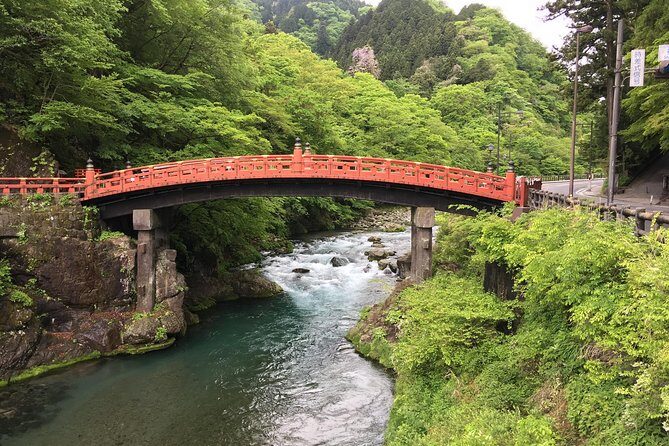
You start with Shinkyo Bridge, one of Nikko’s most popular photo stops. It’s a quick hit—about 30 minutes—with admission noted as free.
The key here is to use the short time well:
- Take your wide shot first (bridge context matters).
- Then do the details (ripples, rail lines, the color tones).
- If you care about photos, wear footwear you can move in quickly. You don’t want to waste your entire half-hour repositioning.
The bridge is described as vermilion-lacquered, and that color is part of why it’s so photogenic. The tour gives you time to actually get that moment instead of treating the bridge as a photo-from-the-bus-stop.





Stop 2: Rinno-ji Temple and the Three Golden Buddhas
Next up: Rinno-ji Temple, with a history of more than 1,200 years. Again, admission is listed as free, and your visit is about 30 minutes.
This is one of the stops where the “art meets meaning” idea becomes real. The highlight is the three golden Buddhist deities. Because you’ve only got a limited time window, a guide’s explanations can be a big deal—without that, you might see gold statues but miss the relationships and symbolism that make the place feel intentional.
Rinno-ji also works as a tonal shift. After the outdoor bridge and the first sacred setting, you move into a temple environment where details and ritual space feel closer and more immersive—just in a practical, tour-friendly way rather than a long drawn-out visit.
Stop 3: Nikko Tosho-gu and the Colorful Carvings You’ll Remember
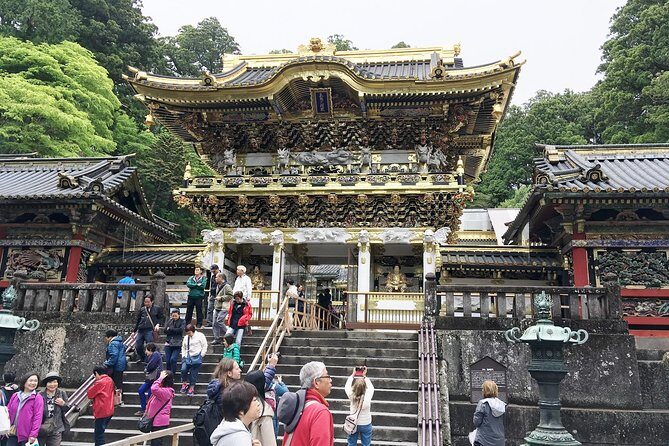
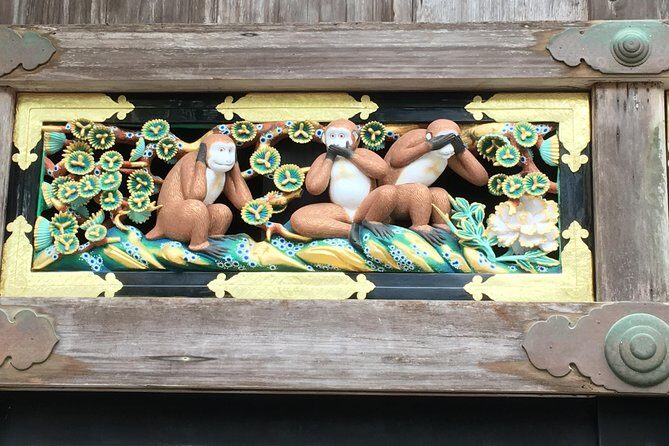
This is the main event: Nikko Tosho-gu, visited for about 1 hour. Admission is listed as free, and this is described as Japan’s most gorgeous shrine, famous for colorful and elaborate sculptures of plants, animals, and imaginary creatures.
I like giving this stop extra attention because Toshogu rewards it. Even when you only have an hour, you can still slow down and notice:
- natural forms turned into ornament
- animals carved into decorative systems
- creature-like figures that feel part myth, part art workshop
A guide can also help you connect what you see to the broader sacred setting. And according to one guide-specific positive note, guides like Yumiko Sano were described as professional and very patient—exactly the kind of attitude that matters when you’re trying to take in a site this detailed without feeling rushed.
If you’re worried about stamina, this is where your body should be ready. One of the most direct warnings from a past customer was that there’s enough climbing and steps to make you rethink your footwear.
Stop 4: Futarasan Shrine and the Love + Mountains Theme
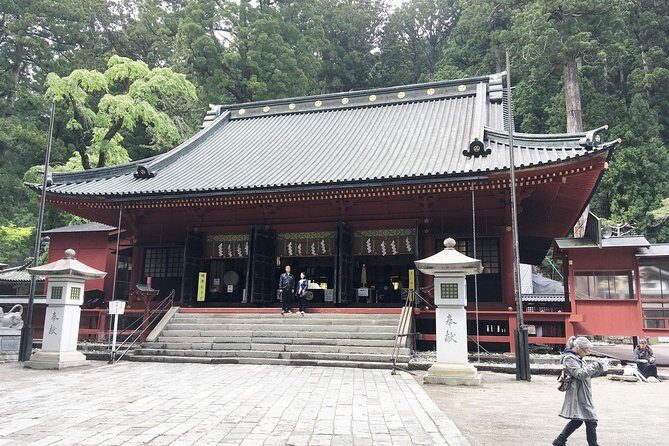
After Toshogu, you head to Nikko Futarasan Shrine for about 30 minutes. This shrine is described in two ways in the tour details: it’s a shrine of love, and you’ll also pay homage to Nikko’s three sacred mountains.
That combination is interesting because it turns the visit into something more than “more temples.” You get a sense that Nikko has multiple layers of meaning: devotion, geography, and also a human-facing theme people can relate to.
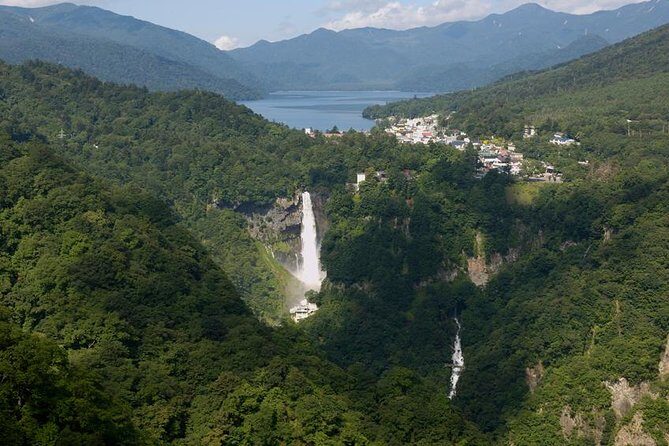
In a one-day format, this is a smart stop because it breaks the rhythm. You’re less “wow, carving again” and more “reflect, notice the atmosphere, and move with intention for a bit.” Even if you’re not religious, you’ll likely appreciate the way the site frames devotion through place.
Stop 5: Taiyu-in Temple Niomon and the Tokugawa Connection
The final scheduled stop is Taiyu-in Temple Niomon, about 30 minutes. The big point here is the grave of the third Shogun of the Tokugawa dynasty.
This is the history anchor of the day. Earlier stops focus on visual spectacle and sacred space; Taiyu-in adds the political and dynastic thread that shaped Japan’s power structures. You don’t need a textbook to understand what you’re seeing—you just need the guide to point out why it matters.
Also, Niomon suggests an entrance element (and these sites often feel more ceremonial at entry points). The timed visit keeps it from dragging, so you finish with meaning instead of leaving feeling like you only rushed photo spots.
How to Prepare: Steps, Shoes, and a Realistic Day Pace
This trip assumes moderate physical fitness. That doesn’t mean “athlete only,” but it does mean you should treat temple steps seriously. One review called out that it’s a workout and that steps to the shrine can be a challenge.
So here’s what I’d do:
- Wear shoes with grip and support. If your shoes slip on stone, your day gets harder fast.
- Bring water. You’ll be out for about 10 hours, and lunch is on you.
- Plan for standing time. Even a 30-minute stop can feel longer when you’re pausing for photos and looking at details.
- Keep your camera ready at Shinkyo Bridge. That’s a first-stop moment and time is limited.
If you’re traveling with kids, note that children must be accompanied by an adult, and the day will involve walking and steps.
Who This Tour Fits Best (and Who Might Skip It)
This tour is a strong fit if you:
- want the major Nikko shrines without planning trains and timing yourself
- love temple art and want help understanding what you’re seeing
- like the idea of a guided, private day from Tokyo that still feels efficient
It may be less ideal if you:
- need a very low-step itinerary (the day includes stair climbs)
- hate the idea of being out for a full day with limited free time at each stop
- are extremely budget-sensitive if any transport/admission details aren’t fully covered for your exact ticket setup (again, confirm inclusions)
Should You Book This Nikko One-Day Tour?
If you want a high-impact Nikko day with a guide, this is a good option. The mix of Shinkyo Bridge, Rinno-ji’s three golden deities, Toshogu’s famous carvings, and the concluding Futarasan and Taiyu-in stops makes the day feel complete. The highlights aren’t random—they connect into a UNESCO-worthy route.
Book it if you’re comfortable with steps and you value interpretation as much as photos. Skip or reconsider if you’re looking for a flat, slow walk day—or if you can’t risk surprises about what’s covered. Either way, do one smart thing: confirm what “admission and transportation included” means for your date, then go enjoy Nikko’s art where it actually matters—on the ground, in front of the carvings, with time to look.
FAQ
What time does the tour start and how long is it?
The tour starts at 9:00 am and runs for about 10 hours.
Where do we meet for the Nikko day tour?
You meet at the Tobu Tourist Information Center, Asakusa 1-chōme-4-1 Hanakawado, Taito City, Tokyo 111-0033, Japan.
Where does the tour end?
The tour ends back at the same meeting point.
Is lunch included?
No. Lunch is not included.
Are admission tickets included?
Admission tickets are listed as free for the stops, and the tour includes admission fee as part of the overall package. Still, it’s wise to confirm what is covered for your specific date.
Is this tour private?
Yes. It’s described as a private tour/activity, meaning only your group participates.
Do I need a certain fitness level?
You should have a moderate physical fitness level. There are steps, and the shrine visit can involve climbing.
Is this tour suitable for children?
Children must be accompanied by an adult.