REVIEW · TOKYO
From the Imperial Palace to Odaiba : Time travel to Tokyo
Book on Viator →Operated by Matteo Leone · Bookable on Viator
Tokyo moves in chapters. This private route turns the city into a time machine, from Edo Castle ruins in the Imperial East Gardens to the glass-and-steel calm of Tokyo International Forum and out to futuristic Odaiba.
I especially liked Matteo Leone as a guide—quick, prepared, and ready with answers that connect architecture to everyday Japanese life. I also liked that all four main stops are listed as free entry, so your money goes into the guide and the flow of the day, not into ticket piles.
One catch: this is a walk. The tour asks for moderate physical fitness, and it’s not recommended for people who need extra help with reduced mobility or for prams/strollers.
In This Review
- Key highlights you’ll actually care about
- Time travel in Tokyo: why this route feels different
- Your day’s rhythm: meeting near Kokyo Gaien, ending in Odaiba
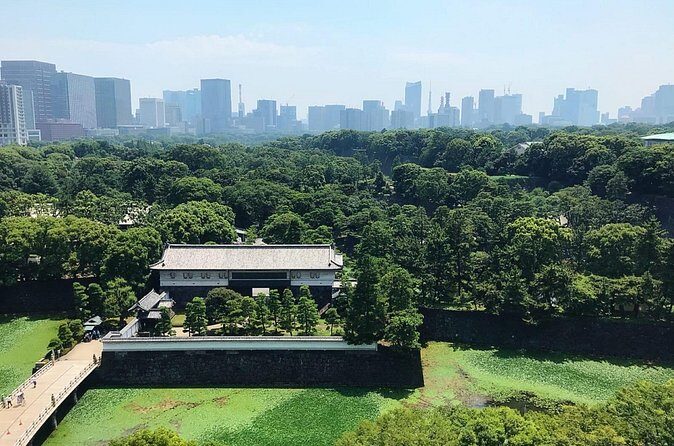
- Stop 1: Imperial Palace East Gardens and the Edo Castle ruin story
- What to expect
- A practical consideration
- Stop 2: Tokyo Central Railway Station, where styles mix
- Why this stop matters
- What to do with your time
- Value note
- Stop 3: Tokyo International Forum for the feel of modern Tokyo
- What makes it a good “middle chapter”
- Practical tip
- Stop 4: Odaiba—an artificial island with room to reset
- What to expect
- A consideration before you go
- How much it costs: $91.21 and where the value really is
- The main extra cost you should plan for
- Who this tour is best for—and who should skip it
- You’ll likely enjoy it if you:
- Consider skipping if:
- Tips to get the most from each stop
- Keep an eye on contrasts
- Bring questions
- Should you book this time-travel Tokyo tour?
- FAQ
- What is the duration of the tour?
- How much does the experience cost?
- Where does the tour start and end?
- Is hotel pick-up included?
- Are tickets or entry fees included for the stops?
- Do I need to pay for public transportation?
- What’s included besides the guide?
- Is this a private tour?
- What fitness level is required?
- Is free cancellation available?
Key highlights you’ll actually care about
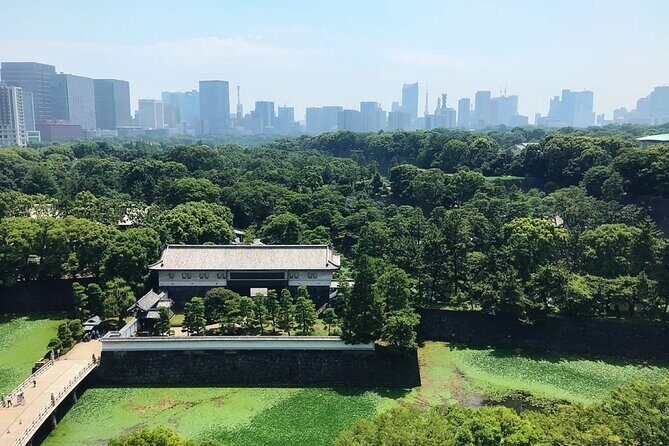
- A true time-travel route: Edo Castle ruin → European-style Tokyo Station → modern Tokyo at the International Forum → waterfront Odaiba
- Matteo Leone’s Q&A style: he answers history and culture questions as you go, so it doesn’t feel like a lecture
- No entry fees at the main stops: Imperial East Gardens, Tokyo Station, International Forum, and Odaiba are listed as free
- Private group pacing: only your group participates, so you’re not rushed by a crowd
- Pickup can reduce stress: hotel pick-up is offered if you’re centrally located
Time travel in Tokyo: why this route feels different
Tokyo can feel like a list of landmarks. This tour flips that. You walk from older layers of the city to newer ones, and you start noticing patterns—how design choices, public space, and even station buildings reflect the era that created them.
What makes this experience work is the “story” built into the geography. You start near the Imperial East Gardens, then move to Tokyo Central Railway Station, then shift to the contemporary-minded Tokyo International Forum, and finish in Odaiba, a man-made island in Tokyo Bay. It’s not just sightseeing. It’s a guided comparison of Tokyo across time.
If you’re a first-timer, this is a strong way to get oriented fast. If you’ve been to Shibuya, Shinjuku, and Harajuku already, this is a nice change of pace. It pulls you toward the parts of Tokyo that help you understand how the city ticks, not just how it looks in photos.
You can also read our reviews of more tours and experiences in Tokyo.



Your day’s rhythm: meeting near Kokyo Gaien, ending in Odaiba
You meet at Starbucks Coffee – Kokyo Gaien Wadakura Fountain Park (3-1 Kōkyogaien, Chiyoda City). From there, the day runs like a sequence of short chapters: each stop has its own time window, and you’re not expected to manage everything solo.
The tour ends in Odaiba. The arrival and meetup point can be adjusted with you depending on your hotel and what’s convenient for your return. That flexibility is especially helpful because ending in a different district can be a headache if you’re trying to get back on your own.
Expect about 6 to 8 hours total (approx.). The four featured stops have scheduled time blocks: 1 hour 30 minutes, then 1 hour, then 1 hour, then 2 hours. The extra time in between is where a guide earns their keep—walking time, transit help, and the slow-down moments when questions actually matter.
Stop 1: Imperial Palace East Gardens and the Edo Castle ruin story
Your first real “chapter” is the East Gardens of the Imperial Palace, tied to the Edo Castle ruin area—specifically, the place where the shōgun castle once stood. Even without turning this into a history lesson, you’ll feel the purpose of the setting: this is Tokyo using calm space to show how powerful older political centers were.
What I like about starting here is the reset. You begin with a slower pace in a garden setting, and it makes the rest of the day’s contrasts land better. When you later see red brick and glass, it won’t feel random. You’ll be thinking in layers.
What to expect
- A 1 hour 30 minutes walk in the East Gardens
- Free admission for this stop, which is great for value
- Plenty of room for your guide to explain how Tokyo’s identity grew from older structures into the city you experience today
A practical consideration
Because this is the start, it’s smart to arrive on time (or a bit early) and keep your energy. Once you’re warmed up, the rest of the route feels easier.





Stop 2: Tokyo Central Railway Station, where styles mix
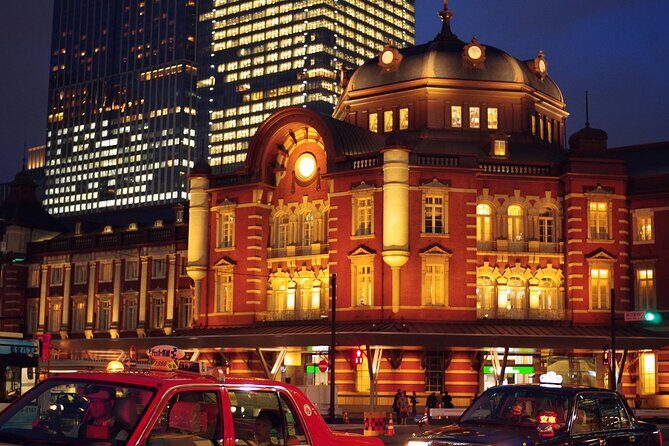
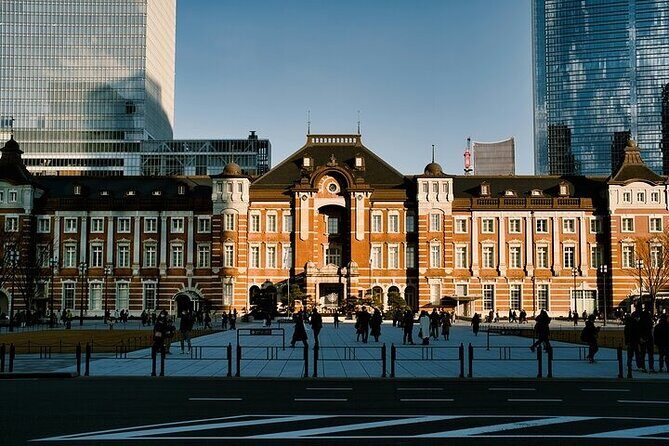
Next up is Tokyo Central Railway Station, known here for its red brick facade in a European style. That’s the key word for this stop: mix.
Tokyo is good at blending old and new. This station gives you a very visible example. It helps you understand that Tokyo’s modernization didn’t always mean “copy nothing from elsewhere.” Sometimes it meant borrowing style language, then building a system that works for modern life.
Why this stop matters
A big station isn’t only a place to transfer. It’s also a public statement about how a city wants to move. Even if you don’t go inside every corridor, you’ll still see how architecture can signal order, confidence, and connection.
What to do with your time
You’ve got about 1 hour at this stop. I’d use it for simple things:
- Look at the exterior and notice how the red brick reads next to surrounding urban density
- Take a moment to think about how many people pass through places like this every day
Value note
This stop is listed as free for admission. So you’re paying for guidance and context, not an entrance fee.
Stop 3: Tokyo International Forum for the feel of modern Tokyo
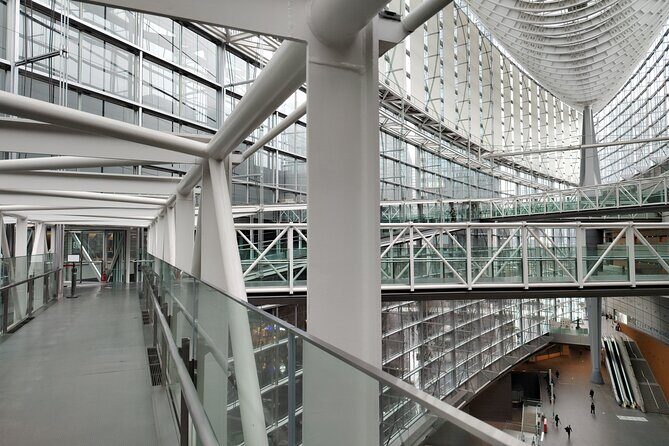
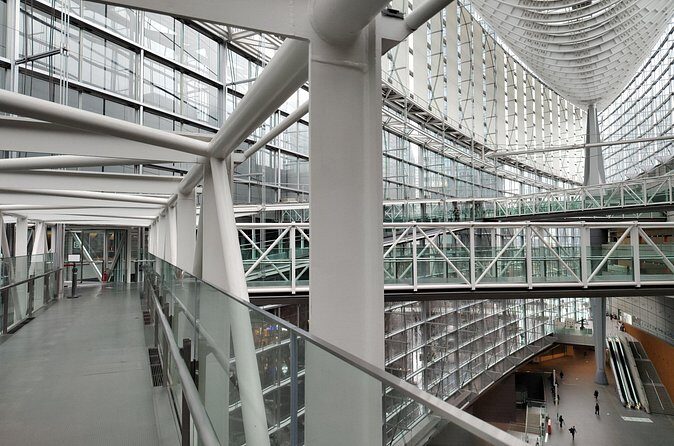
After the station, you shift to something quieter: Tokyo International Forum. It’s described here as a modern glass and steel building with a particular shape, and the best thing about it in this itinerary is how it gives you a breath of calm.
You’ll have 1 hour here, and the tone is different from the earlier stops. Instead of digging into past layers, you’re watching how contemporary Tokyo organizes space and movement.
What makes it a good “middle chapter”
This is a smart break point. By the time you reach the Forum, you’ve already walked through one major symbol of history (Imperial East Gardens/Edo Castle ruin) and one of modernization (Tokyo Station). Now you get a third viewpoint: a modern civic/working space that’s still open to observation.
It’s also a good place to pause because the description emphasizes it as quiet and spacious. If you tend to get mentally tired on big cities, that matters.
Practical tip
Don’t rush this hour. Use it to notice:
- How glass and steel change the light
- How the building’s shape affects your sense of direction and openness
Stop 4: Odaiba—an artificial island with room to reset
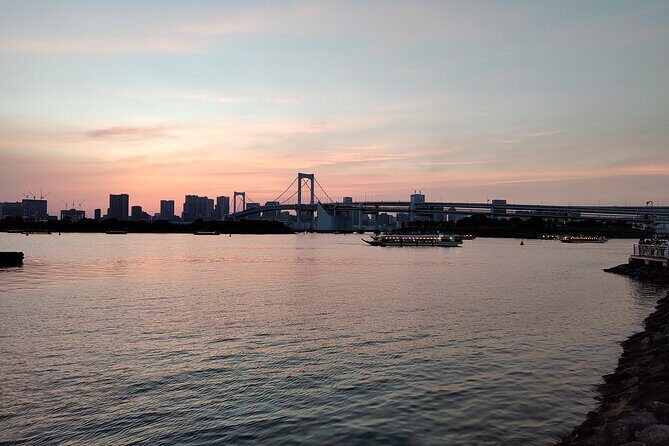
Then comes the finish: Odaiba District, an artificial island on Tokyo Bay. This stop is where Tokyo’s future-energy shows up in everyday form—open spaces, modern architecture, and panoramic views.
You’ve got about 2 hours here, which is a good amount of time because Odaiba works best when you’re not sprinting. It’s the kind of place where you can walk, pause, and just watch the bay and the skyline.
What to expect
- A different Tokyo feel compared to the earlier stops
- Time for relaxation and taking in views and open spaces
- A final contrast to the Imperial-era starting point
A consideration before you go
Since this is an island district and the tour ends there, plan your return accordingly. The tour does mention that the arrival point can be agreed depending on hotel location and convenience, but the end point itself is Odaiba. If you don’t already know how you’ll get back, this is worth thinking about early.
How much it costs: $91.21 and where the value really is
The listed price is $91.21 per person for a private 6 to 8 hour experience. Here’s where the value story gets interesting.
You’re getting:
- Guide service for the duration of the tour
- Hotel pick-up if your hotel is centrally located
- Assistance with purchasing tickets for transport and attractions if required
- A route that includes stops with free admission (as listed for each major stop)
On top of that, this is a private experience. That matters because it changes the math. You’re not just buying access to places—you’re buying interpretation, timing, and the ability to ask questions in real time. The reviews you’ll see elsewhere tend to focus on the guide’s role in making the day feel connected. That’s not fluff. In a city as layered as Tokyo, a good guide can save you from sightseeing-by-checklist.
The main extra cost you should plan for
Public transportation is not included and is listed at ¥1,500.00 per person. Meals and personal expenses aren’t included, and there are no restaurant reservations included.
So what you’re really budgeting is:
- The tour price (guide + route)
- Transit (likely needed between the districts)
- Your own food
If you like having a coherent path (instead of hopping around on your own), this format often feels cheaper than it looks.
Who this tour is best for—and who should skip it
This works best for people who want Tokyo explained as a place that changes over time, not just as photo stops.
You’ll likely enjoy it if you:
- Are in Tokyo for a short time and want a fast orientation
- Have already seen the usual nightlife and shopping areas and want something “deeper”
- Like architecture and city planning as a way to understand culture
- Want a guide who answers questions as you walk
Consider skipping if:
- You need accommodations for reduced mobility, mobility difficulties, or if you’re traveling with a pram/stroller. The tour notes it is not recommended for these situations.
- You dislike walking. This is built around multiple districts on foot.
Tips to get the most from each stop
A guide helps, but you still control how much you absorb. A few simple choices can make the day feel sharper.
Keep an eye on contrasts
Every stop is there to show a different Tokyo mood:
- Imperial East Gardens: calm and older power
- Tokyo Station: modernization with European-style styling cues
- Tokyo International Forum: contemporary design and open space
- Odaiba: engineered waterfront and future-leaning atmosphere
If you notice those contrasts, the tour’s “time travel” idea stops being abstract.
Bring questions
Matteo Leone is the kind of guide who’s ready to answer history and culture questions. Come with curiosity. Even small questions (like how a building type changes how people use the city) can steer your day into something personal.
Should you book this time-travel Tokyo tour?
I’d book it if you want Tokyo to make sense fast. The route links Edo-era space to modern districts in a way that encourages you to think, not just look. The biggest selling points are the guide-led explanations and the fact that the main stops are listed as free admission, so you’re not constantly paying to enter buildings.
I’d hesitate if you’re limited in mobility or traveling with a pram/stroller, since the tour is not recommended for those needs. I’d also plan for public transport costs since they’re not included.
If you’re trying to experience more than the usual highlights, this itinerary is a practical way to do it—one guided chapter at a time, from the Imperial gardens to Odaiba’s bay views.
FAQ
What is the duration of the tour?
The tour runs approximately 6 to 8 hours.
How much does the experience cost?
It costs $91.21 per person.
Where does the tour start and end?
It starts at Starbucks Coffee – Kokyo Gaien Wadakura Fountain Park and ends in Odaiba, Tokyo. The arrival point can be agreed depending on where you’re staying and what’s convenient.
Is hotel pick-up included?
Hotel pick-up is included if your hotel is centrally located.
Are tickets or entry fees included for the stops?
The main stops listed in the itinerary are marked as free admission. The tour also says it provides assistance in purchasing tickets for transport and attractions if needed, but entrance fees to attractions are listed as not included.
Do I need to pay for public transportation?
Yes. Public transportation is not included and is listed at ¥1,500.00 per person.
What’s included besides the guide?
Included items are guide service, hotel pick-up (if centrally located), and assistance in purchasing tickets for transport and attractions if required.
Is this a private tour?
Yes. It’s described as private, meaning only your group participates.
What fitness level is required?
Travelers should have a moderate physical fitness level. It is not recommended for people with reduced mobility, mobility difficulties, or special needs related to prams, walkers, or strollers.
Is free cancellation available?
Yes. You can cancel for a full refund up to 24 hours before the experience’s start time.