REVIEW · SAPPORO
Furano Biei Tour Sapporo DEP: English Speaking Driver, No Guide
Book on Viator →Operated by Japan Guide Agency · Bookable on Viator
One day in Hokkaido, zero guesswork. This private Furano Biei tour from Sapporo puts an English-speaking driver in the driver’s seat, so you can tailor the day to flowers, food, and photo stops without waiting on a group schedule. I especially like that you choose 3–4 sites from a set menu, which keeps the day from turning into a rushed blur of checkmarks.
My other big plus: the route can flex with what the season is actually doing. In prior runs, drivers including Igoshi Hayate and Takeshi have adjusted plans based on timing and conditions. One drawback: there’s no licensed local guide, so you’ll get explanations from the driver, but you should come ready with a few questions and interests.
In This Review
- Key takeaways before you book
- A private day trip from Sapporo, without a licensed guide
- Choosing 3–4 stops: the day fits your priorities
- Stop-by-stop: what each place offers, and what you should expect
- Farm Tomita: the lavender name most people recognize
- Ningle Terrace: forest shopping with log-house charm
- Furano Cheese Factory: watch the production side of the dairy story
- Flower Land Kamifurano: multiple blooms in one garden complex
- Furano Wine Factory: grapes, research, and a different side of the region
- Shirogane Blue Pond (Aoiike): the famous blue water and the science behind it
- Zerubunoka Atomunooka: themed hills and flower areas
- Shirahige Falls: quick, photogenic, and close to onsen-town vibes
- Shikisai no Oka: the big panoramic garden spread
- Timing in Hokkaido: when the flowers hit their best look
- How to get solid answers with an English-speaking driver only
- Price and value: $910.18 per group, up to four people
- Comfort and logistics that matter on a long day
- Car seats: limited supply, so plan early
- Season, crowds, and the upside of not hitting peak
- When plans go sideways: reliability you’ll want to feel
- Should you book this Furano Biei private driver tour?
- FAQ
- What’s included in the Furano Biei Tour from Sapporo?
- Is there a licensed local English-speaking guide on this tour?
- How many stops can we customize for the day?
- Are entrance fees included for the stops?
- When is the tour available, and when are lavender fields in bloom?
- How long is the tour?
- Is pickup included?
- Are car seats available for infants or children?
- Is the tour private?
- How does cancellation work?
Key takeaways before you book
- No guide, just a driver: you control the pace, but you’ll do more of the learning by asking questions
- Pick 3–4 stops from a proven Furano/Biei lineup, so the day fits your style (flowers, treats, views)
- Season window matters: the tour runs June to the first week of September, with peak lavender mid/late July–August
- Blue Pond is real and specific: Shirogane Blue Pond’s color comes from aluminum effects tied to upstream hot springs
- Entrance fees aren’t included: plan for paid sights and budget lunch separately
- Private vehicle for your group: you won’t share the ride with other tour groups
A private day trip from Sapporo, without a licensed guide
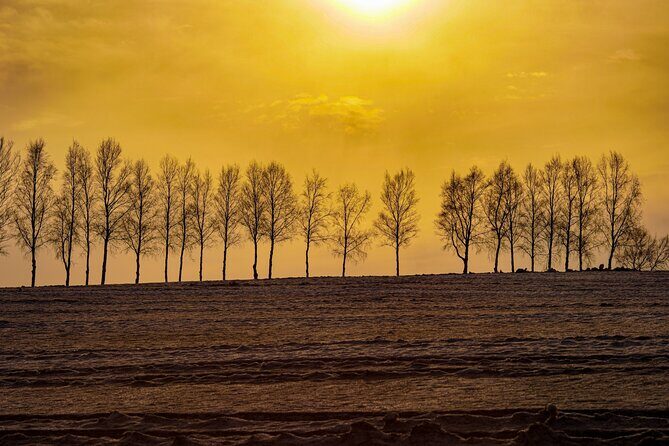
This is a private chauffeur tour, not a guided lecture tour. You get an English-speaking driver and a private vehicle, and then you pick your 3–4 stops from the Furano/Biei short list. That setup is ideal if you want freedom: you can linger when something grabs you, or skip anything that looks less appealing once you’re on-site.
Still, the no-guide format is something to consider. If you love deep historical context or want expert-level commentary on every stop, you’ll be relying on the driver’s answers (which can be great, but it’s not the same as a licensed local guide). My advice: come with 3–5 “must-know” questions, like best photo angles, what’s likely blooming right then, and how long to spend at each place.
You can also read our reviews of more guided tours in Sapporo
Choosing 3–4 stops: the day fits your priorities
The tour is built around customization. Your driver works with a menu of top places and turns it into a smooth plan for your group. The total day runs about 10 hours, which includes travel time plus your selected stops.
Here’s the mental trick that makes this tour work well: don’t try to do everything. Furano and Biei can feel endless once you’re out in the countryside. Instead, choose a mix like:
- One major flower garden (or lavender)
- One “unique local product” stop (cheese or wine)
- One signature nature photo spot (Blue Pond or falls)
- One panoramic garden for wide views
That kind of mix helps you end the day feeling like you saw the region, not just parked in front of a list.
Stop-by-stop: what each place offers, and what you should expect
Your driver selects from these highlights. Below is what each stop is best for, plus a quick reality check.
Farm Tomita: the lavender name most people recognize
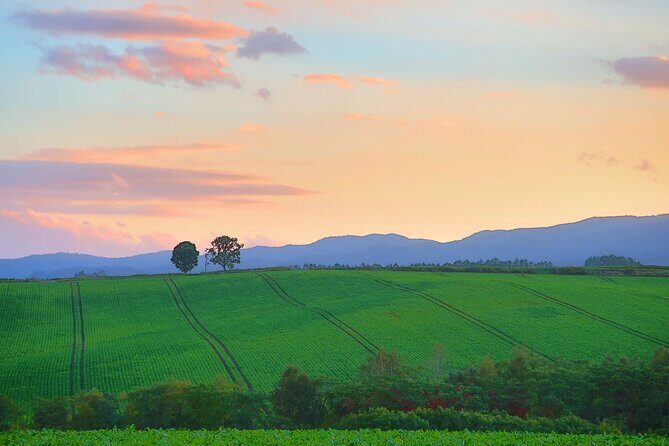
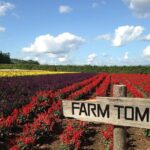
Farm Tomita is the lavender stop for a reason. It’s been producing lavender since 1958, and it’s a classic traditional lavender field. This is the kind of place where you’ll see the countryside “branding” that Hokkaido is famous for: long flower rows, open fields, and clear, sunny photo conditions when the weather cooperates.
Timing note: lavender is described as blooming from mid/late July to August. If you come earlier, the gardens can still be pretty, but you’re less likely to hit full peak. In earlier-season visits, the experience can be more about the setting than the maximum flower density.
Ningle Terrace: forest shopping with log-house charm
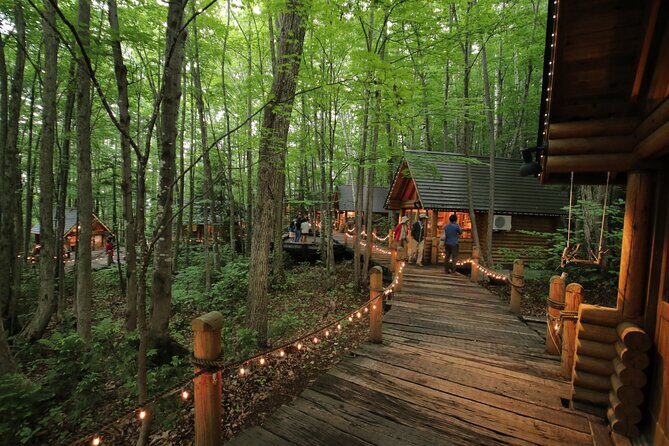
Ningle Terrace is a small shopping area made up of 15 log houses near the Shinfurano Prince Hotel. It’s called after a dwarf in a story book, and it has that cozy, woodland vibe.
This stop works well if you want a break from pure nature sightseeing. You can browse local goods and slow down for about an hour. If you’re not shopping-minded, treat it as a short reset so you can enjoy the drive and the next outdoor stop more.
A few more Sapporo tours and experiences worth a look


Furano Cheese Factory: watch the production side of the dairy story
If you’re a cheese person, this is one of the most satisfying stops on the list. You can see cheese being produced through a glass setup, and the tour notes that the milk comes from cows living outdoors in Furano.
Plan to use this stop for sampling energy—grab something, take a breath, then move on while the rest of the day is still fresh. It’s not the kind of place where you’ll burn hours, but it does add variety beyond flowers.
Flower Land Kamifurano: multiple blooms in one garden complex
Flower Land Kamifurano is called out as a top-class flower gardens area. It’s recommended from June to September, and that’s where you’ll get variety: the garden season can include lupines, lavender, poppies, lilies, cosmos, marigolds, and sunflowers.
This is a strong choice when you want maximum “garden energy” in a single stop. If your goal is wide color and lots of different flower types, this tends to fit the bill better than focusing only on one crop.
Furano Wine Factory: grapes, research, and a different side of the region
Furano isn’t only lavender. The wine side matters too. The tour description points to the Furano City Grape Research Institute established in 1972, focused on grape variety and wine production.
If you like food stops that teach you something practical—like where a regional product comes from—this gives you that angle. Even if you don’t plan to drink wine, it’s a good change of pace from flower fields.
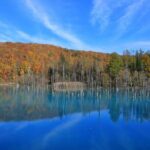
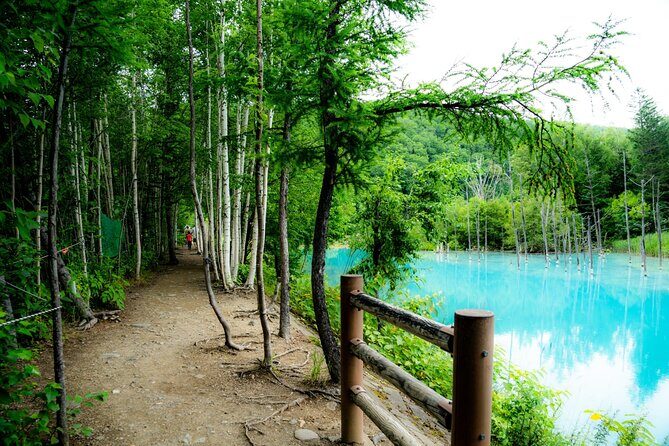
Shirogane Blue Pond (Aoiike): the famous blue water and the science behind it
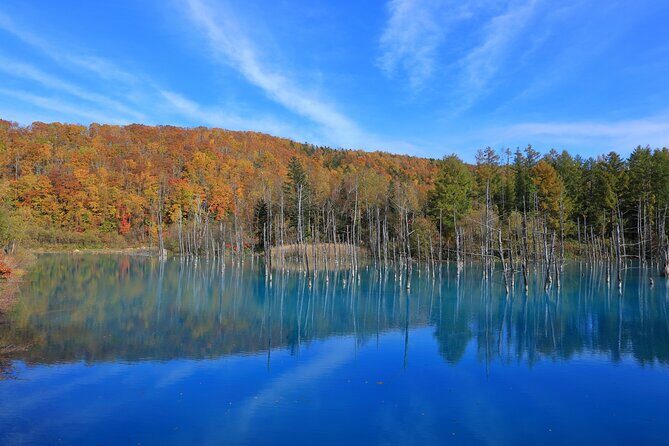
Shirogane Blue Pond is short in time but big on impact. The “mysterious blue world” is explained as a natural phenomenon tied to aluminum produced by Shirakane hot springs upstream. That’s why the pond can look that striking blue.
This is a great stop for travelers who like one iconic photo moment. You’ll want your camera ready, but also give yourself enough time to walk around and find your angle. The tour lists this as about an hour, which usually feels about right for viewing calmly rather than rushing.
Zerubunoka Atomunooka: themed hills and flower areas
Zerubunoka Atomunooka is described as a hill named from the last letters of the words wind, scent, and play. It’s positioned as a place where you can enjoy flower gardens across different Biei areas, with a lighthearted theme.
This stop can be a good “in-between” moment: you get outdoors time, views, and a sense of theme, without it feeling like a single-crop field. If you’re building a day around garden wandering, it earns its place.
Shirahige Falls: quick, photogenic, and close to onsen-town vibes
Shirahige Falls is named because it looks like a white beard. The tour notes a drop of about 30 meters, and it’s listed as one of the attractions in Biei’s Shirogane Onsen Town, where you can get close to the falls.
This is a short stop on the schedule (about 5 minutes listed for the viewing time). That doesn’t mean it’s worthless—short can be perfect if you’re balancing multiple flower spots. It’s best used as a punchy nature break before your next garden panorama.
Shikisai no Oka: the big panoramic garden spread
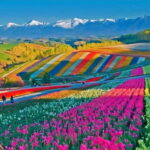
Shikisai no Oka is all about views. The flower gardens stretch across 15 hectares, and it’s described as a seasonal blossoms paradise from spring through fall. The emphasis here is the wide panorama—good for photos that show depth, not just single blooms.
Because it’s listed as about 30 minutes, I’d treat it as your “see the whole picture” stop. If you’re the type who likes to walk slowly for photos, you’ll want to arrive with a plan for where to aim your shots first.
Timing in Hokkaido: when the flowers hit their best look
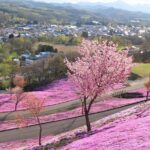
This tour runs June through the first week of September, and the tour highlights lavender bloom from mid/late July to August. That window matters more than people expect. Outside peak season, the gardens can still be beautiful, but you’re less likely to hit the full-on flower density that makes the photos look like a postcard.
Here’s the practical way I’d think about it:
- If you’re chasing lavender in top form, target mid/late July or August.
- If you’re traveling earlier in the summer, plan to enjoy the gardens for their atmosphere and variety, not just maximum bloom.
- If you visit when it’s not in full bloom, you may get fewer crowds and more personal space, which can make wide gardens feel more relaxing.
Weather can also swing the mood of a day like this. You’ll be outdoors for multiple stops, so treat sunny days as prime photo time and use your indoor/food stops (like cheese or wine) as anchors when the light is less ideal.
How to get solid answers with an English-speaking driver only
Since there’s no licensed guide, your best move is to drive the conversation. The driver can still be your best source of real-time advice: what’s worth more time today, which roads or viewpoints feel easiest, and how the bloom timing is trending.
To get better value from the day, I suggest you show up with:
- The 3–4 stops you want most (and one backup)
- One or two interests per stop (flowers, food production, nature photography)
- A question about timing, like when to visit each stop for best light and easiest flow
It helps that this is a private day, so you won’t be rushed by a larger group. That flexibility is the real advantage of skipping a guide and using a customized driver route.
Price and value: $910.18 per group, up to four people
The total price is $910.18 per group for up to 4 people. The value depends on how many seats you fill:
- If you fill all 4 spots, it comes out to roughly $228 per person.
- If you’re only 2 people, it’s more like $455 per person.
That’s why this tour is most cost-effective for couples, small families, or friends traveling together. Where the money tends to make sense is when you compare the hassle of doing Furano/Biei by yourself—arranging transport, timing, and figuring out how to stitch together far-flung stops in one day.
One more cost reality: entrance fees aren’t included, and lunch isn’t included either. So your final spend will be more than the base price. The upside is that you can choose what to pay for at the stops you care about most.
Comfort and logistics that matter on a long day
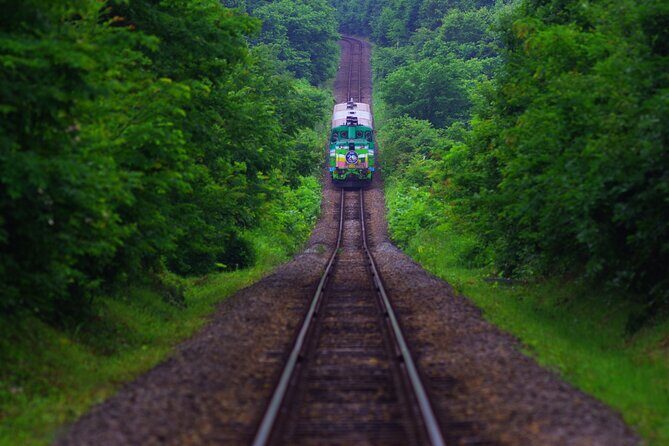
This is a private vehicle tour, and it includes pickup offered plus a mobile ticket. That combo is practical for a long day: you’re not negotiating meeting points in rural areas, and you’re not trying to juggle paper tickets.
A few other practical points that are worth knowing:
- It’s only your group in the vehicle (private activity).
- You can’t combine multiple tour groups, so you won’t share pickups with strangers.
- Service animals are allowed.
- The tour notes that it’s near public transportation, though your day will still run based on the chauffeur schedule.
Car seats: limited supply, so plan early
If you’re traveling with kids, read the fine print carefully. There are only limited car seats and booster seats, and rear-facing car seats are not available. The tour asks you to contact the provider directly if you need a car seat.
This is one of those issues that can quietly ruin a day if you wait too long—so handle it at booking or soon after.
Season, crowds, and the upside of not hitting peak
One of the nice surprises with this style of private day is that it doesn’t punish you for traveling outside the absolute peak bloom window. If flowers are not fully in season, you might get fewer crowds and more space to wander. That can turn the same places into a calmer experience, even if the flower show is less intense.
That doesn’t change the basic sightseeing goals, though. You’ll still be seeing the signature features: lavender fields (when in bloom), Blue Pond’s famous color effect, panoramic garden views, and the food stops tied to the region.
When plans go sideways: reliability you’ll want to feel
Road-trip days can have weird luck. One example from past operations: if something unexpected happens (like window damage to the vehicle), the provider has handled the situation by scrambling another driver to take over for the rest of the trip. That kind of backup matters because Furano/Biei timing can be tight, and you don’t want your day to collapse over one snag.
Should you book this Furano Biei private driver tour?
Book it if you want a customizable, efficient Furano and Biei day without the stress of coordinating transport and stop timing. It’s a great fit for small groups who care about flowers, panoramic views, and a couple of regional food/product stops, and who are happy to use the driver as your main source of info rather than expecting a full licensed guide.
Skip it—or consider a more guided alternative—if you need detailed expert storytelling at every stop or you don’t want to think about which 3–4 sites you’ll pick. Also, if your travel dates fall outside the best bloom window and lavender is your single obsession, adjust your expectations and pick stops that still look good even when flowers are lighter.
FAQ
What’s included in the Furano Biei Tour from Sapporo?
The tour includes an English-speaking driver, a private vehicle, pickup offered, and a mobile ticket. You also choose a customizable set of 3–4 sites from the provided list.
Is there a licensed local English-speaking guide on this tour?
No. This experience lists an English-speaking driver only, and it does not include a licensed local guide.
How many stops can we customize for the day?
You can customize your itinerary to 3–4 sites selected from the list of places included in the tour information.
Are entrance fees included for the stops?
No. Entrance fees, lunch, and other personal expenses are not included.
When is the tour available, and when are lavender fields in bloom?
The tour is available from June to the first week of September. Lavender is in bloom from mid/late July to August.
How long is the tour?
The duration is listed as 10 hours (approx.).
Is pickup included?
Yes, pickup is offered.
Are car seats available for infants or children?
Car seats and booster seats are limited. Rear-facing car seats are not available, and you must contact the provider directly if you need one.
Is the tour private?
Yes. It’s a private tour/activity, and only your group participates. The tour also notes that you cannot combine multiple tour groups.
How does cancellation work?
Free cancellation is available up to 24 hours in advance for a full refund.