REVIEW · TOKYO
Tokyo: Make Your Own Hanko Stamp — Unique Cultural Souvenir
Book on GetYourGuide →Operated by YURAGI - Japan Guide Tours - · Bookable on GetYourGuide
A real Hanko workshop beats another photo stop. This one happens inside a long-running seal shop in central Tokyo, where you learn the meaning of hanko and carve your own name in a style you choose. It is hands-on Japanese culture, not a performance.
I love how the guide helps you map your name to kanji or katakana, so you understand what you are making, not just copying a shape. I also love the small feel: the session is limited to four people, so the craftsmen and multilingual guide can keep an eye on your design as you carve. The main thing to consider is cost and time: at $154 per person for 90 minutes, you are paying for a custom, guided craft, not a quick demo.
In This Review
- Key things to know before you carve your own Hanko
- Getting to Otemachi and meeting your seal-shop team
- Why a Hanko matters in Japan (and how you learn it fast)
- Choosing your characters: kanji or katakana for your name
- Picking a calligraphy style (so the carving looks right)
- The carving process: stone, tools, and expert hands on yours
- Photos, the red-ink impression, and the thrill of taking it home
- Small-group format: why max four participants changes everything
- How much is $154, and is it good value?
- Who this Tokyo hanko workshop suits best
- Practical details you should plan around
- Should you book this Tokyo make-your-own Hanko experience?
- FAQ
- How long is the Hanko workshop?
- Where do I meet for the workshop?
- How much does it cost?
- Is prior experience required to carve a Hanko?
- What languages are available for the guide?
- How many people are in a session?
- What will I take home at the end?
- Is the workshop indoors?
- Can young children participate?
- Are pets allowed?
Key things to know before you carve your own Hanko
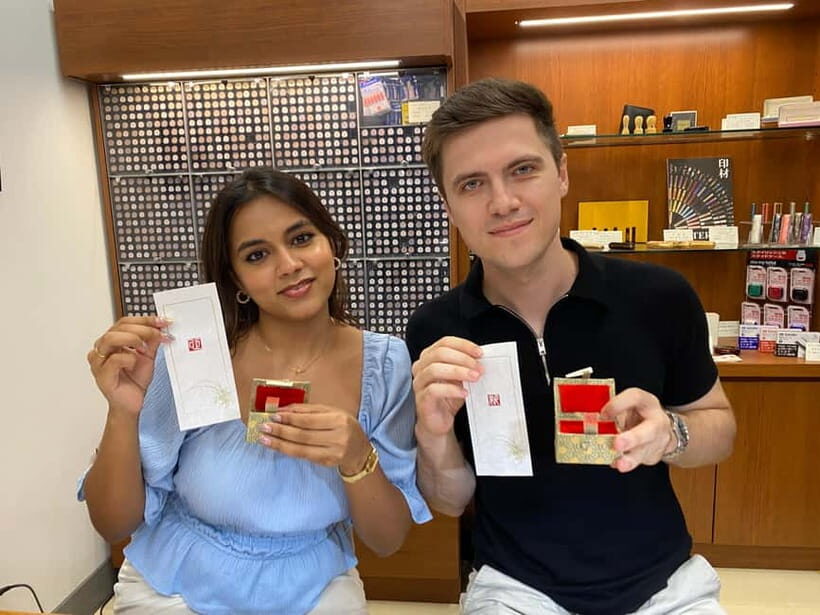
- You build a real custom seal: you end up with an original hanko you can actually use.
- Design help is part of the experience: choose kanji or katakana with guidance for your characters.
- You carve with support from experienced local staff, even if you have never used carving tools.
- Red ink stamping and photos are built in, so you can see your first impression right away.
- Small group (max four) makes it easier to ask questions and get corrections.
- Indoors and all-weather friendly: it runs in any weather since the workshop is indoors.
Getting to Otemachi and meeting your seal-shop team
Your workshop starts in Otemachi with a meet-up at a Lawson in front of Taihodo, at the Shin-Otemachi Building (2-2-1 Otemachi, Chiyoda-ku). It is a practical location if you are staying anywhere in central Tokyo, and it helps keep the activity smooth. Expect a calm arrival with other participants, then a quick handoff to the guide and the shop staff.
The provider is YURAGI – Japan Guide Tours, and you will be welcomed by a fluent guide who can support you in English, Spanish, French, Italian, or Chinese. That matters more than you might think. Making a hanko correctly involves characters, layout, and carving technique, so being able to communicate clearly keeps you from losing time to misunderstandings.
If you are the type of traveler who likes learning while doing, this format clicks. You are not just watching someone else work. You are there to make decisions, ask questions, and get feedback.
You can also read our reviews of more tours and experiences in Tokyo.



Why a Hanko matters in Japan (and how you learn it fast)
This workshop is built around the cultural role of hanko. You will learn the history and meaning of Japanese name seals and why they have been used for centuries as a symbol of identity and authenticity. Even if you do not plan to use a hanko for paperwork back home, the context is the point.
You will also learn how the name seal functions as a personal mark. That is the real shift from souvenir shopping: you are not collecting a random object. You are creating something tied to identity—your identity, expressed through Japanese characters and calligraphy-style carving.
This is also where the guide’s job becomes more than translating. The workshop includes thoughtful explanations of how your name can be represented in kanji or katakana, and why each character choice matters. You will be nudged toward a design that looks intentional in seal style, not just readable.
Choosing your characters: kanji or katakana for your name
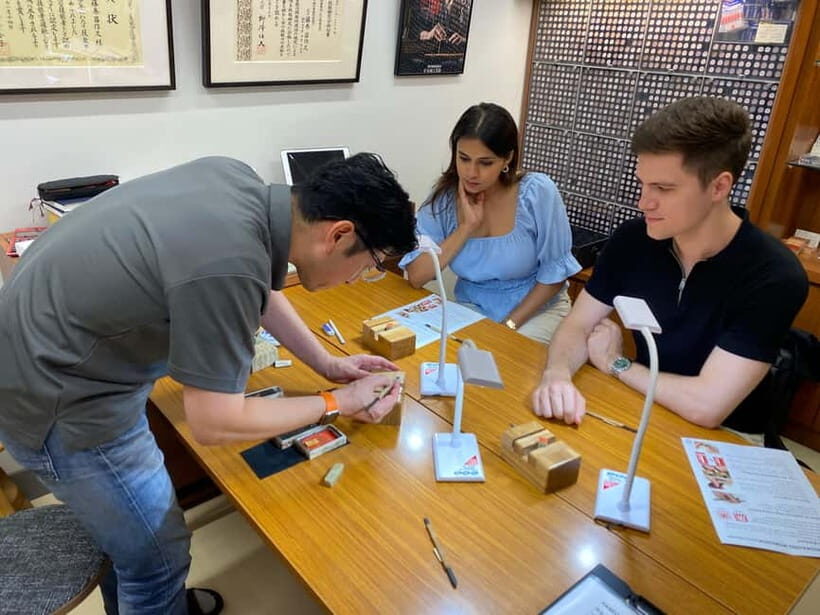
The design phase is where you stop thinking of this as a craft project and start thinking of it as a personal translation.
You will choose how to represent your name in either kanji or katakana, with help from your multilingual guide. You do not need to be able to read Japanese to participate. The guide’s role is to help you settle on character options and understand the meaning of each character, where possible, before carving begins.
One practical tip: be ready to bring your name exactly as you want it on the seal. If you have multiple spellings you use online or on travel documents, pick the one you want represented in Japan-style form. If you have a name with letters that can be ambiguous in Japanese, rely on the guide’s help and do not rush. The best designs usually happen when you take a moment and confirm what you are making.
This choice step is also why the workshop feels meaningful. A hanko is not just decorative typography. It is the visual core of your seal identity.
Picking a calligraphy style (so the carving looks right)
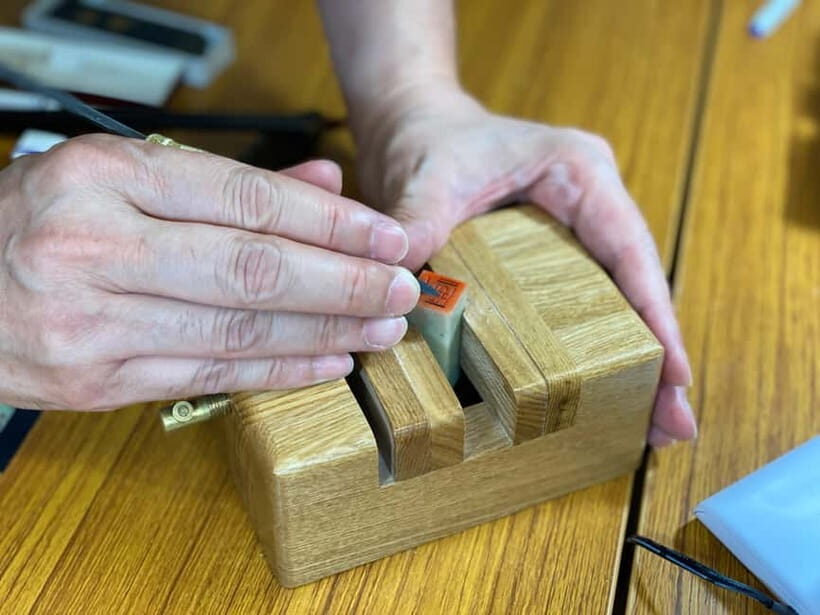
After you select your character set, you choose a calligraphy style. That part is not just aesthetic. Style affects how the lines will be carved and how the final stamp impression will read.
You start carving only after your design and style are decided. That gives you a clear target instead of experimenting blindly. If you worry about doing it wrong, this is comforting. The shop staff support you during carving, so the tools are only half the challenge. The other half is getting the design into the right seal format.
It also explains why this workshop works even for first-timers. Prior experience is not required. You are guided through the process, from selecting the characters to shaping the carving plan.
The carving process: stone, tools, and expert hands on yours
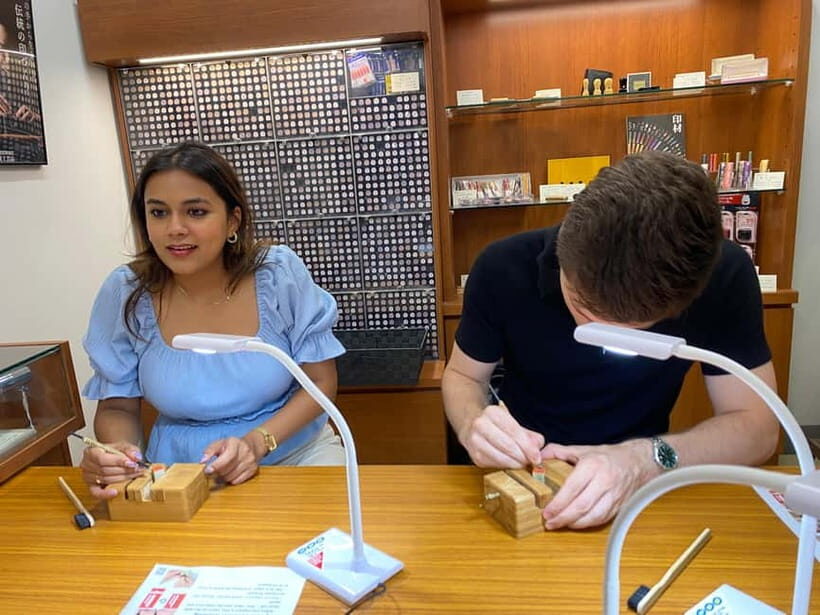
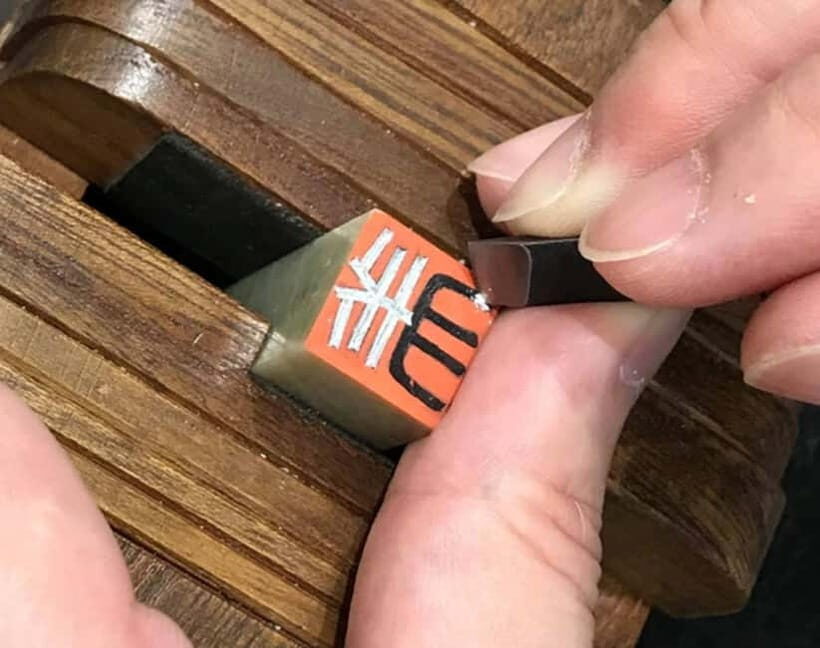
Now for the satisfying part: hand-carving your personal seal. The workshop provides carving support from experienced local staff, with help to keep things safe and precise. That is important, because carving is detail work. Small errors can change the stamp impression.
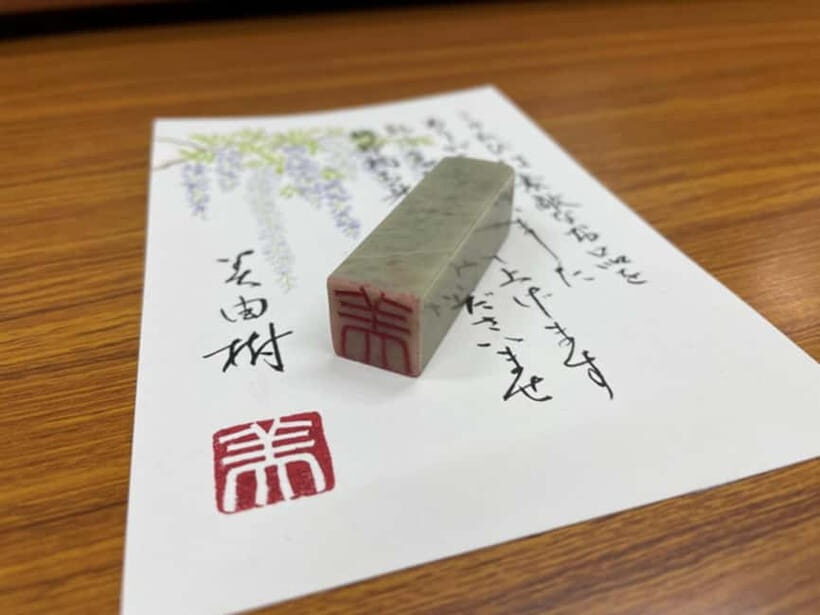
You will carve your name in the seal style you chose. Then you do the signature moment: you stamp the finished seal with traditional red ink. Seeing your own carving turn into a clean red impression is usually the moment people realize they actually made something real.
The staff also help you get the carving to a finish you can take home. The process is hands-on, but you are not left to figure it out alone. This is one of the most praised parts of the experience because it turns a potentially intimidating craft into something doable and rewarding.






Photos, the red-ink impression, and the thrill of taking it home
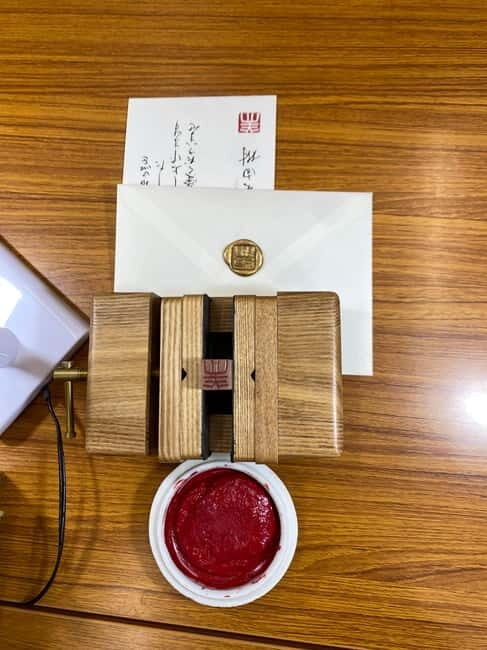
Once your stamp is done, you get a chance to stamp again and admire the result. The workshop includes commemorative photos, which is useful because you will want to remember the hands-on steps, not just the final object.
Then you take home your finished hanko presented in a protective case. That case is more than packaging. It signals that this is meant to be used and preserved, not just displayed. In practical terms, it also keeps your seal from getting damaged in transit.
If you are thinking like a traveler-shopping smart, this is a great category of souvenir: it is lightweight, personal, and functional. And it has a story you can actually tell—how you chose characters, why the seal style mattered, and what the red ink impression looked like when you stamped it.
Small-group format: why max four participants changes everything
One of the quiet wins here is the group size. Sessions are private with a maximum of four participants, which keeps the shop from feeling hectic. More space means more attention for your design questions, and it makes corrections easier during carving.
In a bigger group, carving workshops can turn into a race: you fall behind, then you lose confidence. Here, you can slow down. The guide and staff can spend time with you, especially during the character and style choices when clarity matters most.
This format also helps if you are traveling with a partner or family. The workshop is designed for all ages and is fully wheelchair accessible, with staff assistance available if needed. If you are bringing kids, know that children under 5 may join as observers but cannot carve.
How much is $154, and is it good value?
At $154 per person for a 90-minute workshop, this is not a budget activity. You are paying for several things at once: instruction in the cultural meaning of hanko, character and style guidance, hands-on carving support, and the materials you leave with—your own original hanko plus the seal case.
In other words, the price is tied to the fact that you leave with a real custom object, made with direct help from local staff in an actual shop setting. That is different from taking a quick class where you go home with a craft that looks similar to everyone else.
If you value cultural accuracy and want a souvenir with meaning, the cost can feel fair. If you are mainly looking for a cheap activity to fill time, you might feel it is steep. I think the workshop is a strong fit if you enjoy making things and learning why they matter.
Who this Tokyo hanko workshop suits best
I would recommend this workshop if you:
- want a meaningful Tokyo activity beyond temple photos
- enjoy crafts where you make real choices and get feedback
- like cultural learning that is practical, not just lecture-based
- want a souvenir that feels personal and usable
It is also a good option if you are short on time. Ninety minutes can fit into a day without swallowing your schedule.
Who might not love it: if you strongly dislike tools or hands-on crafts, or if you get anxious about detail work even with support, you may find it more stressful than fun. Still, the staff guidance is there to reduce that risk.
Practical details you should plan around
The workshop is indoors, so weather is not a problem. It runs in all conditions, which is helpful in Tokyo when rain or humidity can mess with outdoor plans.
No pets are allowed, so if you are traveling with an animal, you will need separate arrangements.
Transportation costs are not included. Plan how you will get to Otemachi, since you will likely want to arrive a bit early to settle in.
And if you are the kind of person who likes to spend time browsing, keep in mind that personal shopping fees are not included. The focus here is the workshop, and your main spend is already baked into the price.
Should you book this Tokyo make-your-own Hanko experience?
If you want one souvenir that feels like a story, not a receipt, I think you should book it. The best parts are the combination of cultural context and real hands-on carving, with multilingual support and a small group size that keeps things comfortable. You will leave with a genuine custom hanko in a protective case, plus an understanding of why hanko matter in Japan.
Book it especially if you enjoy the process: character selection, calligraphy style choice, and the moment your carving becomes a red stamp. If your goal is only to check a cultural activity off a list, you might find it too personal and too hands-on.
FAQ
How long is the Hanko workshop?
It lasts about 90 minutes.
Where do I meet for the workshop?
Meet at Lawson in front of Taihodo, Shin-Otemachi Building, 2-2-1 Otemachi, Chiyoda-ku, Tokyo.
How much does it cost?
The price is $154 per person.
Is prior experience required to carve a Hanko?
No. You do not need prior experience, and staff support you throughout the carving process.
What languages are available for the guide?
English, French, Spanish, Italian, and Chinese.
How many people are in a session?
It is a private group with a maximum of four participants.
What will I take home at the end?
You take home your finished original Hanko in a protective case.
Is the workshop indoors?
Yes. The workshop takes place indoors, so it runs in all weather conditions.
Can young children participate?
Children under 5 may join as observers, but they cannot carve.
Are pets allowed?
No, pets are not allowed.