REVIEW · TOKYO
Tokyo Asakusa Temple & Shrine Walking Tour with Local Guide
Book on Viator →Operated by Sunrise Adventure · Bookable on Viator
Asakusa is loud, and this tour helps. I really like two things right away: the group stays small (up to eight), and the guide explains the rituals you’d otherwise miss or do the wrong way. The only real drawback is the pace: you’re walking for about two hours, so if you want long solo stops in every shop, this format may feel a bit scheduled.
For around $19.82, you’re not just paying to see famous gates and streets. You’re paying for navigation through the busy temple area and context that makes the sights click—especially around Kaminarimon and the big temple entrances. Bring comfy shoes and arrive on time at the meeting point, since the tour depends on everyone starting together.
In This Review
- Key highlights at a glance
- Why Asakusa clicks fast when you have a local guide
- Group size, timing, and the walking reality (2 hours)
- Where you start: Burger King Asakusa Azumabashi
- Stop one: Azumabashi Bridge and the Sumida River view
- From modern edges to the temple core
- The Thunder Gate: Kaminarimon and the 700kg lantern
- Nakamise Shopping Street: where browsing turns into context
- Passing Hozomon Gate: symbolism you can actually notice
- Inside Senso-ji: what a guide changes about the visit
- Asakusa Shrine rituals: temizu cleansing, prayer, and omikuji
- Shinto and Buddhism in one walking day
- Price and value: what $19.82 buys in Tokyo
- Who this tour suits best (and who should rethink it)
- Should you book this Asakusa Temple & Shrine walking tour?
- FAQ
- FAQ
- How long is the Tokyo Asakusa Temple & Shrine walking tour?
- What is the group size limit?
- What rituals are included during the tour?
- Do you need to pay admission to enter Senso-ji?
- Where do we meet for the tour?
- What kind of ticket do I get?
- What is the cancellation policy?
Key highlights at a glance
- Small-group cap of eight means you can actually ask questions and keep up.
- Ritual walkthroughs help you try temizu cleansing, prayer, and omikuji without guessing.
- Built-in navigation so you don’t waste time stuck with maps in crowds.
- Big-name Asakusa landmarks from Azumabashi Bridge to Senso-ji’s key gates.
- Nakamise Shopping Street context, so browsing feels purposeful instead of random.
- Mobile ticket keeps things simple on a phone.
Why Asakusa clicks fast when you have a local guide
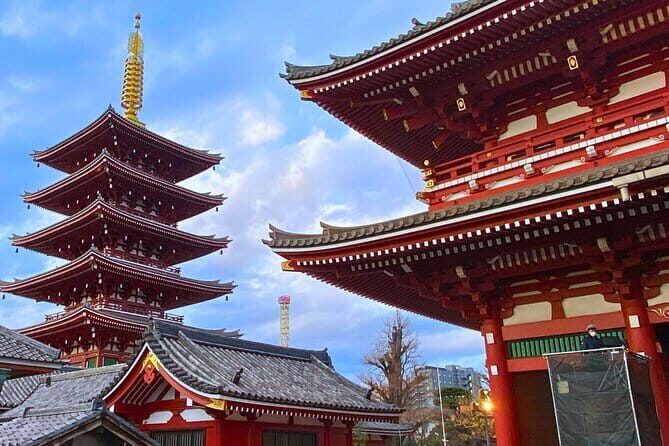
Asakusa can feel like sensory overload—lanterns, incense smoke, camera phones, and lines moving at different speeds. What makes this kind of walking tour work is that the guide gives you a mental route: where you’re going, what you’re looking at, and what the tradition is behind it.
I also like that this is built around both Buddhism and Shinto. You’re not just taking photos of big buildings; you’re watching how people perform rituals in real time, and learning what those actions mean so you can take part respectfully.
Finally, the guide’s job is to keep you from getting lost. That matters more than it sounds, because temple areas are full of narrow lanes, side entrances, and crowds that can pull you off course.
You can also read our reviews of more walking tours in Tokyo
Group size, timing, and the walking reality (2 hours)
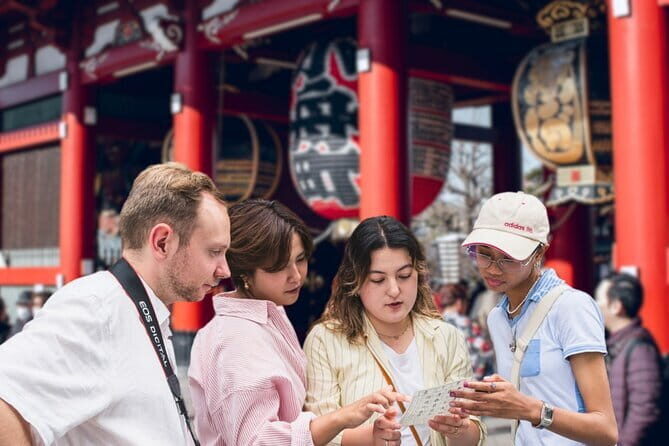
This is a 2-hour guided walk, and it’s designed as a small-group experience with a maximum of eight travelers. That cap makes a difference around Senso-ji and the gates, where space is tight and people naturally slow down for pictures.
You’ll want to plan for a comfortable walking pace and occasional stops to watch what’s happening. If you’re the type who likes to linger for 30 minutes at a time at one stall, you may need to choose where you spend your extra energy during the Nakamise stretch.
Shoes are your main “gear” here. Asakusa is flat overall, but you’ll still rack up steps on cobblestone and busy sidewalks while people are funneling toward the temple approach.
Where you start: Burger King Asakusa Azumabashi
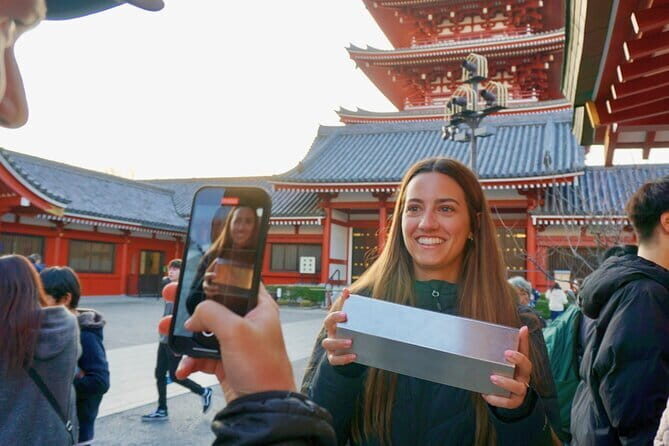
The meeting point is Burger King Asakusa Azumabashi, in Taito City near Kaminarimon. It’s a very specific landmark, and that’s good news: it makes it easier to gather your group and start promptly instead of wandering around an entire neighborhood.
The good part of starting right by the old-town area is that you don’t burn your first minutes getting oriented. You also end back at the meeting point, so you’re not stuck trying to figure out how to get home after the tour.
If you’re using public transit, you should be fine because the tour is described as near public transportation. Just give yourself extra time to find the exact Burger King address and to spot your group before the walking begins.
Stop one: Azumabashi Bridge and the Sumida River view
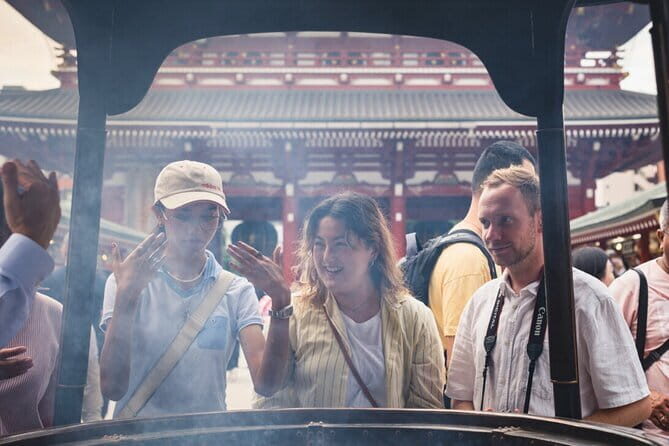
Before you hit the thick of temple crowds, you pause at Azumabashi Bridge. Expect views over the Sumida River and out toward the Tokyo skyline, with the guide explaining how this area fits into the story of old Asakusa.
This stop is smart because it gives you scale. You can see how the city grew around the river, and you get a sense of why Asakusa became a gateway to older Tokyo life. Even if you’re not a “photo at every bridge” person, this moment helps you understand the geography you’re about to walk through.
A small tip: if you’re sensitive to wind or sun, this is the kind of spot where conditions can change quickly. Layering and a hat can make the bridge part more comfortable.
From modern edges to the temple core
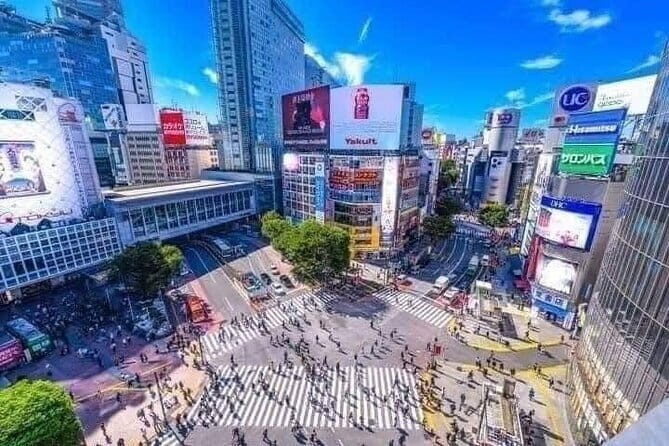
After the bridge, the tour shifts toward the temple zone with a stop to notice a nearby modern landmark. The point isn’t to pretend old Tokyo is frozen in time—it’s to show how Asakusa sits right next to contemporary architecture.
That contrast is actually helpful. When you later see the gates and lanterns at Senso-ji, you’ll understand you’re stepping into a living place of worship, not a theme park set.
As you walk, the guide also sets expectations for the cultural etiquette. That’s the difference between watching a ceremony from far away and being able to participate in a way that feels natural.
You can also read our reviews of more guided tours in Tokyo



The Thunder Gate: Kaminarimon and the 700kg lantern
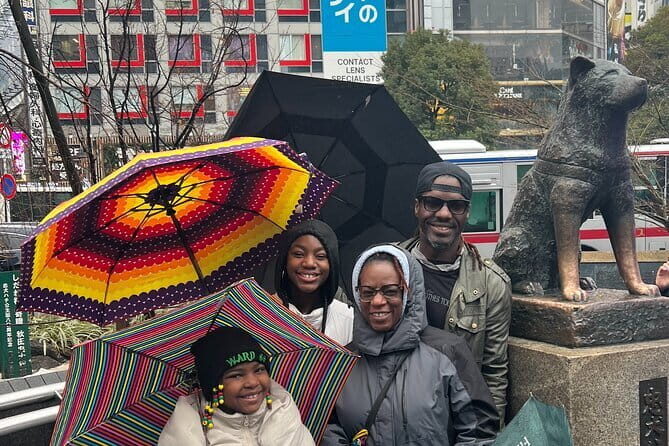
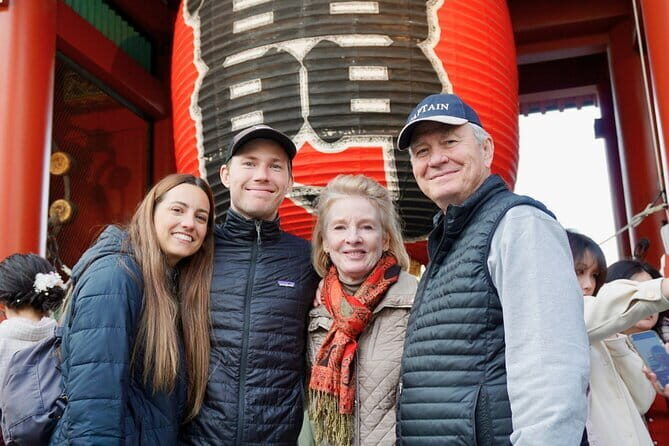
One of the big takeaways you’ll get here is what makes Kaminarimon such a recognizable symbol. You’ll learn the stories behind the Thunder Gate, including the famous 700kg red lantern and the repeated reconstruction due to fires.
The name Kaminarimon matters too. The guide explains why it’s called the Thunder Gate and what that implies in Japanese culture, so the gate stops being just a dramatic photo backdrop and becomes a piece of meaning.
This stop is also a practical lesson in timing. People gather here for photos, and you’ll want to follow the guide’s lead on where to stand and when to move forward—otherwise the crowd movement can slow you down.
Nakamise Shopping Street: where browsing turns into context
Next comes Nakamise Shopping Street, the traditional approach lined with shops selling local snacks, souvenirs, and crafts. You’ll get the street’s origin stories and how it fits into temple visits, which changes the experience from shopping mode to “I understand why these stores are here” mode.
This is also where you can pick up small food items, but remember personal spending isn’t included. The tour gives you the chance; you still decide what to buy.
My advice: don’t try to sample everything. Pick one snack you genuinely want, then continue walking. That keeps your energy up for Senso-ji’s main area and the rituals that follow.
Passing Hozomon Gate: symbolism you can actually notice
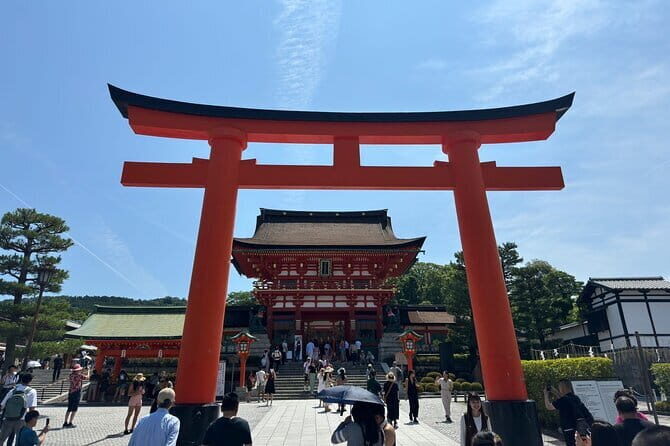
You’ll also pass the Hozomon Gate, an important cultural property that protects the temple grounds. What makes this stop valuable is that your guide points out architectural features and symbolism, so you’re not just walking through another ornate entrance.
Gates in Japan often act like visual “buffers”—you feel the shift from the street outside into the sacred space inside. Learning the meaning behind that transition helps you notice small details you might otherwise skip, like how the structure frames what’s ahead.
This portion also helps you pace yourself. You’re building up to the main temple experience, and the route keeps you moving so you’re not stuck in one spot while the group tries to catch up.
Inside Senso-ji: what a guide changes about the visit
At Senso-ji Temple, you’ll go through Tokyo’s oldest and most famous Buddhist temple with the guide explaining its significance. Even if you’ve seen images online, a live guide helps you understand what you’re looking at and why people behave the way they do.
This is the heart of the tour. The guide’s explanations give you a map for your eyes: where to focus, which features have cultural meaning, and what the overall flow of worship tends to look like.
A realistic note: temple areas can get crowded, especially around the main approach routes and entrances. Your guide’s navigation is what keeps the experience smooth instead of frustrating, because they help you keep moving with the group and avoid getting separated.
Asakusa Shrine rituals: temizu cleansing, prayer, and omikuji
One of the most useful parts of the tour is the hands-on ritual section. You’ll participate in authentic Japanese religious customs including temizu cleansing, prayer, and omikuji fortune-telling.
Here’s why this matters for you as a visitor: without guidance, it’s easy to skip rituals or do them incorrectly. With a local guide explaining what’s going on, you can focus on being respectful and simply taking part.
- Temizu cleansing is typically about purification, and the guide shows you how people rinse their hands and mouth steps in a way that feels clear rather than awkward.
- Prayer is explained in context so you understand what people are doing and why the process looks the way it does.
- Omikuji gives you that fun, tangible souvenir that isn’t a product tag. You draw a fortune slip, and you’re left with something personal—though the exact wording depends on the slip you receive.
If you’re someone who worries about etiquette, this section is the reason to book. It turns a sightseeing visit into something you can genuinely take part in.
Shinto and Buddhism in one walking day
Asakusa is where many visitors feel the blending of traditions. This tour specifically explains the cultural blending of Shinto and Buddhism, which helps you understand why worship styles can look different but still coexist in the same neighborhood.
That context also changes how you interpret what you see near gates, statues, incense, and shrine spaces. Instead of thinking of everything as one “temple zone,” you start noticing how different places guide different forms of devotion.
For readers who like cultural nuance, this is the kind of explanation that makes photos more meaningful. For readers who just want good sightseeing, it still pays off by helping you navigate with confidence.
Price and value: what $19.82 buys in Tokyo
At $19.82 per person for about two hours, this tour is priced as an accessible guided experience rather than a premium private tour. The value comes from the things that are hard to DIY: translating the ritual steps, understanding the symbolism at gates like Kaminarimon and Hozomon, and staying on the right route through a crowded district.
Also, the tour includes admission tickets that are listed as free for the main temple stop. That means you’re not stacking extra costs on top of the guide fee, which is a big deal in Tokyo where some activities add up quickly.
Think of it this way: you’re paying mostly for “what to look for” and “where to go,” not for a series of paid museum rooms. If you’re arriving with limited time and want your day to feel purposeful, this is the kind of spend that makes sense.
Who this tour suits best (and who should rethink it)
I think this tour is a great fit if you:
- Want a small-group experience with room to ask questions
- Like cultural context, not just big monuments
- Prefer to handle temples and shrine etiquette with guidance
- Are short on time and want an efficient walk through core Asakusa sights
You might reconsider if you:
- Want a very slow pace with long shopping breaks
- Plan to spend most of your time wandering off-street into side areas
- Dislike walking through crowded areas, even with a guide keeping you moving
Should you book this Asakusa Temple & Shrine walking tour?
If your goal is to see Senso-ji, understand why Kaminarimon matters, browse Nakamise without feeling clueless, and then actually try temple and shrine rituals, this tour makes a lot of sense. For roughly $20, the guide’s navigation plus ritual explanations are exactly the kind of value you can’t easily replicate on your own in a busy neighborhood.
If you’re mainly coming for photos and don’t care about ritual etiquette, you could technically go alone. But in practice, this is the type of walk where the guide turns famous landmarks into a story you can follow while you’re standing there.
FAQ
FAQ
How long is the Tokyo Asakusa Temple & Shrine walking tour?
The tour lasts about 2 hours.
What is the group size limit?
This activity is capped at a maximum of 8 travelers.
What rituals are included during the tour?
The tour includes authentic Japanese rituals such as temizu cleansing, prayer, and omikuji fortune-telling.
Do you need to pay admission to enter Senso-ji?
The tour includes an admission ticket that is listed as free.
Where do we meet for the tour?
You start at Burger King Asakusa Azumabashi, Japan, 111-0034 Tokyo, Taito City, Kaminarimon, 2-chōme 206 クロスビルロイヤルパレス.
What kind of ticket do I get?
You receive a mobile ticket.
What is the cancellation policy?
You can cancel up to 24 hours in advance for a full refund.