REVIEW · TOKYO
Go Karting Tokyo Old Town Experience | 8 Destinations in 100 Mins
Book on Viator →Operated by Kartzilla Go Kart Tours | Top Cultural & Historic Destinations in Tokyo · Bookable on Viator
Tokyo has a way of pulling you forward fast. This go-kart route adds speed to the sightseeing and gives you a seat on the right side of the street for once. You get an intimate small group capped at 10, plus stop-and-explain guidance at big-name landmarks like Tokyo Skytree and the Imperial Palace.
I also like that this isn’t only about cruising main roads. You’ll hit distinct Tokyo districts in a tight loop, and you can grab photos and video during the ride with included gear support. The one real consideration: you must bring a physical International Driving Permit (IDP) plus your original local driver’s license, because digital copies aren’t accepted for driving on public roads.
In This Review
- Key things that make this go-kart tour work
- Why Old Town Tokyo Feels Different from a Go-Kart Seat
- Price and Value: What $91.45 Covers (and Why It Might Be Worth It)
- Before You Drive: IDP Paperwork Is Not Optional
- Meeting Point in Higashiyotsugi: Arrive Ready to Start
- The First Stretch: Costume, Instructions, and How the Ride Gets Moving
- Skytree (Sumida City): A Landmark That Instantly Changes Your Perspective
- Ryogoku and the Sumo Stadium Area: Tradition Meets Motion
- Tokyo Sword Museum Stop: Samurai Symbolism You Can Actually See
- Tokyo Station and Marunouchi: Architecture in the Slow-Ball Speed Zone
- Akihabara and Ueno: Anime-Energy and Art-Culture in One Loop
- Asakusa and the Imperial Palace: Old Tokyo Charm and the Center of Power
- Costumes and Included Photo/Video: How You’ll Remember This Day
- Weather and Timing: When This Plan Works Best
- Who Should Book This Go-Kart Old Town Tokyo Experience
- Should You Book This One
- FAQ
- FAQ
- How long is the go-kart tour?
- What is the price per person?
- What’s included in the tour price?
- What is not included?
- Where is the meeting point?
- Do I need an IDP to drive?
- Can I use a digital copy of my IDP instead of the paper document?
- How big is the group?
- Is the tour wheelchair accessible?
- What is the cancellation policy?
Key things that make this go-kart tour work
- Small group (10 max) keeps the route feeling personal instead of chaotic
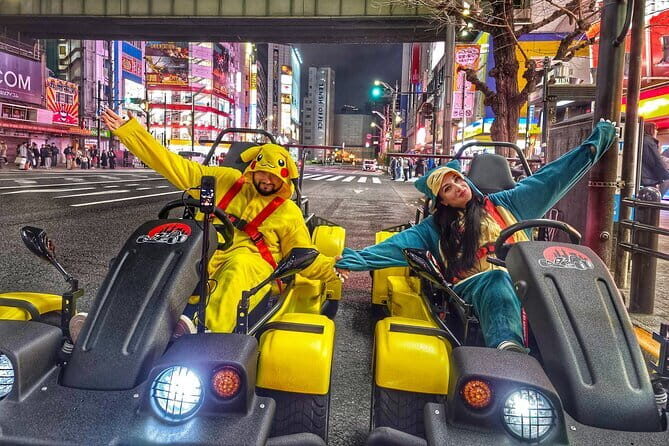
- Quirky costumes mean you’ll look the part in your photos, not just pose with landmarks
- Photo and video included so you’re not scrambling for the right angle on the fly
- Big-hit itinerary connecting Skytree, Ryogoku, Tokyo Station, Akihabara, Ueno, Asakusa, and the Imperial Palace
- Wheelchair accessible lets more people enjoy the experience
Why Old Town Tokyo Feels Different from a Go-Kart Seat
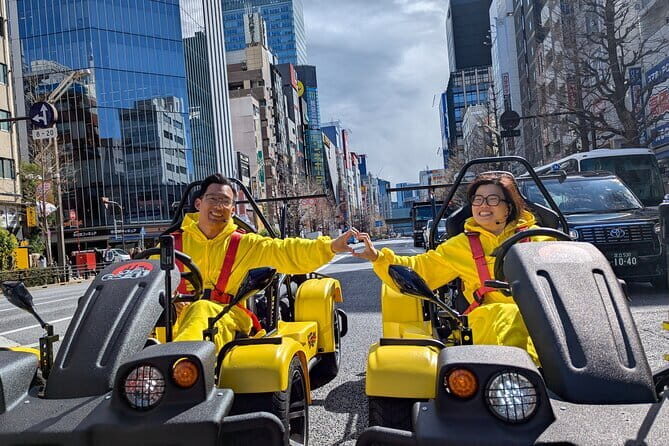
There’s sightseeing, and then there’s seeing Tokyo from behind the wheel. This tour is built for the traveler who wants more than photos from sidewalks. When you’re steering through Tokyo streets (with a guide directing the flow), the city starts to feel like one continuous route instead of a list of stops.
What I like most is that the experience is designed around momentum. The itinerary strings together places that usually demand separate train hops: Skytree/Sumida, the Ryogoku area tied to sumo culture, Tokyo Station in Marunouchi, and the electronics and anime energy of Akihabara. You get a sense of how these districts connect, which is hard to replicate if you only arrive, snap, and leave.
One more practical win: the tour is capped at 10. That matters because go-kart group rides can get slow or messy when numbers swell. A smaller cap makes it easier to follow instructions, get photo moments, and keep the ride fun instead of stressful.
You can also read our reviews of more tours and experiences in Tokyo.



Price and Value: What $91.45 Covers (and Why It Might Be Worth It)
At $91.45 per person, this isn’t the cheapest thing on a Tokyo day. But it is priced like an activity that includes the stuff that usually costs extra once you’re on the ground.
Here’s what you’re getting as part of the price:
- Go-kart rental
- Tour guide
- Costume for the drive
- Fuel
- Insurance
- Photo & video
- Drinking water
Even if you’d normally spend time and money on transport, this tour reduces decision fatigue: you’re not figuring out schedules, transfers, or which neighborhood to hit first. The included insurance also changes the math. For a driving activity, that peace of mind is part of the value.
Also, it runs about 1 hour 40 minutes. That’s long enough to feel like a full outing, not a quick gimmick. For many first-time visitors, that length hits the sweet spot between too short to matter and too long to feel tiring.
Before You Drive: IDP Paperwork Is Not Optional
This is the part that can make or break your day, and it’s worth reading twice.
To drive on public roads in Japan, you need:
- Your original local driving license, and
- An International Driving Permit (IDP) issued under the 1949 Geneva Convention
The important detail is about format. Digital copies or email proof are not legally accepted for driving. If you don’t show the required paper documents on the day, your tour can be canceled with no refund.
Practical tip: pack your driving documents in a spot you can reach fast. Don’t leave them buried in a bag you have to repack. I’d rather you spend 30 seconds checking than risk losing the whole experience.
If you’re a Swiss, German, French, Belgian, Monaco, or Taiwanese national, you can drive if you have a Japanese translation of your license. If you’re a member of US Forces in Japan, a SOFA driving license is required.
Meeting Point in Higashiyotsugi: Arrive Ready to Start
The tour meets at:
124-0014 Tokyo, Katsushika City, Higashiyotsugi, 1-chōme202 小島貸事務所
It ends back at the same meeting point, so you don’t need a separate plan for getting home at the end of your ride. The listing also notes that the start location is near public transportation, which helps if you’re not staying in the area.
You’ll receive a mobile ticket, so keep it accessible on your phone. Still, I recommend having your basic trip information saved offline too, just in case the Wi-Fi gods take the day off.
The First Stretch: Costume, Instructions, and How the Ride Gets Moving
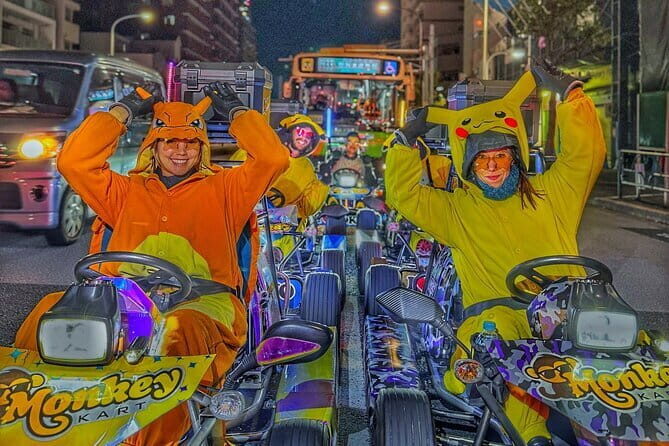
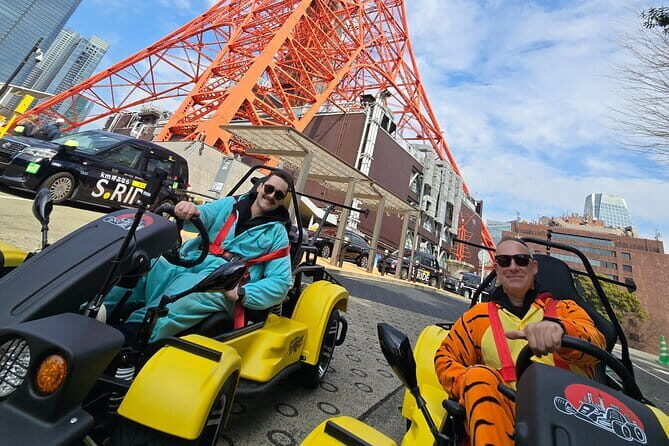
The experience begins with you getting geared up. You’ll pick up a costume for the drive, which sounds like pure fun because it is, but it also helps set expectations: this is meant to be playful. It’s not a silent museum-style tour.
Then comes the driving briefing. Since you’re on a go-kart route through Tokyo, you’ll want to listen carefully about handoffs, turn rules, and how the group stays together. With a maximum of 10 people, it’s easier to follow than many larger group activities.
A simple approach helps here:
- Wear comfortable shoes
- Bring layers if the weather shifts
- Keep your hands steady and your focus up, especially near intersections and slower-moving moments
And yes, there are photo and video moments. That changes how you experience the ride: you’re not only watching the road, you’re also looking for the guide’s cues about when to pose or when to focus on driving.





Skytree (Sumida City): A Landmark That Instantly Changes Your Perspective
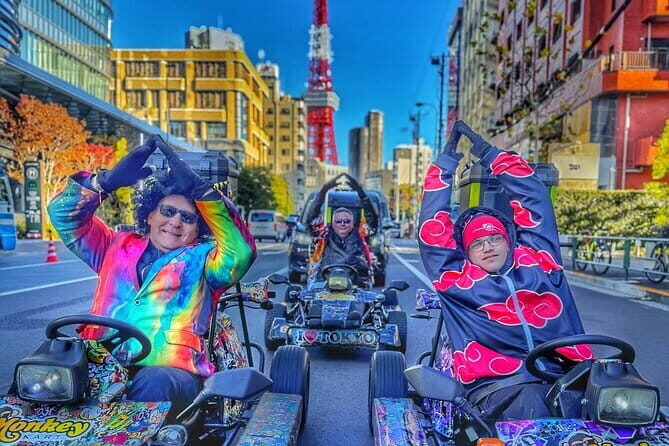
One stop is Tokyo Skytree. It’s the world’s tallest broadcasting and communication tower, located in Sumida City Ward. Even if you’ve seen it in pictures, seeing it as part of your route gives you a stronger sense of scale.
What’s smart here is timing and pacing. Skytree is a visual anchor for the Sumida side of the city. When you move past it rather than just visiting it as a standalone attraction, you understand where you are in Tokyo’s layout.
Potential drawback: with a go-kart experience, you won’t treat Skytree like a full long-form stop where you wander inside or linger. This is about passing through with guided context and grabbing the main photo moments while you still have speed in your day.
Ryogoku and the Sumo Stadium Area: Tradition Meets Motion
Next you head through Ryogoku, with the Sumo Stadium as a focal point. Ryogoku is one of those districts where sumo isn’t just a sports topic, it’s part of local identity. Having it on a go-kart route adds a surprising energy: you’re surrounded by the everyday city feel, yet the cultural reference point is close.
What you’ll likely enjoy here is the way the guide ties place to meaning. You’re moving fast, but the explanation slows things down just enough to make the area click.
Consideration: if you’re expecting a deep dive into sumo culture through museums or long explanations, this won’t replace that kind of experience. It’s more like a high-speed orientation that still respects the landmark.
Tokyo Sword Museum Stop: Samurai Symbolism You Can Actually See
Another stop is the Tokyo Sword Museum. The tour frames Japanese swords as more than tools. They’re described as symbols of authority, works of art, and objects of worship. That kind of context helps you read what you’re seeing instead of just treating it as a random add-on.
For me, this is one of the most interesting stops in the route because it connects history to craftsmanship. You can appreciate the idea of swords as cultural objects, not just weapons, especially with a guide giving you the framing while you’re there.
Practical note: museum time in a go-kart itinerary is usually limited. So think of this as a guided cultural stop designed to give you direction and key takeaways, not an all-day deep museum session.
Tokyo Station and Marunouchi: Architecture in the Slow-Ball Speed Zone
The tour includes Tokyo Station as it takes you through the Marunouchi district. Tokyo Station is a symbol of architectural brilliance, dating to the early 20th century. Even if you’ve seen it from a distance, passing through the area as part of a guided ride helps you get oriented fast.
Marunouchi also works well as a mid-tour reset. You’ve had high excitement up to this point (and you’re still in the go-kart mode), but this stop tends to feel more grounded and urban. The contrast makes the ride feel like a real Tokyo day rather than one-theme entertainment.
Possible drawback: because this is a major transport hub area, it can feel like a busy urban environment. The guide’s job is to keep the group flowing safely, so just follow directions and don’t try to freestyle your timing for photos.
Akihabara and Ueno: Anime-Energy and Art-Culture in One Loop
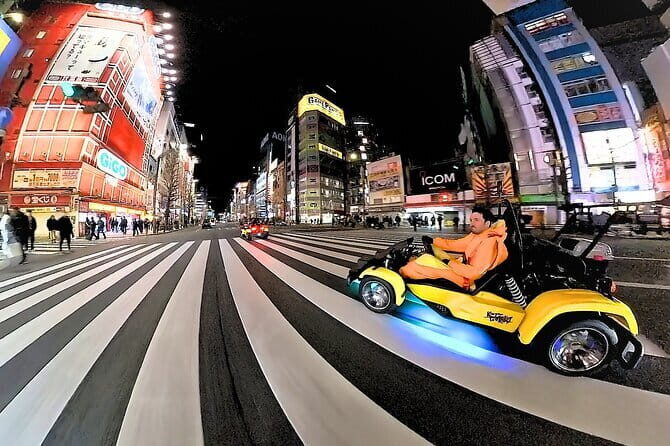
Akihabara is next, described as the epicenter of anime and known as the Otaku Capital of the world, with roots dating back to the Meiji period. This is where the tour shifts tone from classic sightseeing to pop-culture Tokyo.
Akihabara works especially well as a go-kart stop because it’s known for dense storefront energy. You don’t have to plan your own route through multiple streets to feel the vibe. You get the area on your radar during the ride, then you’re left with ideas for what you might want to explore later on foot.
Then you move to Ueno. The tour notes Ueno rose in prominence after the Tokugawa Shogunate period began in 1603, starting with Buddhist temples and townsfolk, then evolving into a hub for modern Japanese art and culture during the Meiji period.
Here’s why this stop matters for first-timers: it shows Tokyo isn’t one identity. Between Akihabara’s modern pop-culture pull and Ueno’s art-and-history role, you see Tokyo’s layers.
If you’re short on time, this tour is helpful because it compresses those contrasts into one outing. If you’re hoping for long museum hours, you’ll still need a separate plan after the ride.
Asakusa and the Imperial Palace: Old Tokyo Charm and the Center of Power
Asakusa is described as having origins dating back about 1400 years to the Asuka period. It’s tied to the idea of shitamachi, or the low city. That’s a key word if you want to understand Tokyo beyond skyscrapers.
In an activity like this, Asakusa can be more than a photo stop. The guide framing helps you connect the neighborhood’s identity to what you see around you. It’s also a nice emotional shift: after tech and art culture stops, you move into a softer, older-feeling Tokyo atmosphere.
Finally, the tour includes the Tokyo Imperial Palace. The description focuses on its role as the residence of the Emperor and Empress and notes construction in 1457 by Ota Dokan within the expansive grounds of Edo Castle.
This ending section tends to feel like a big close. You’ve been moving through multiple districts, and then you arrive at a place that functions as the political and historical heart of modern Japan. Even without extended interior access, you get the right mental map for how Tokyo is organized around major centers.
Costumes and Included Photo/Video: How You’ll Remember This Day
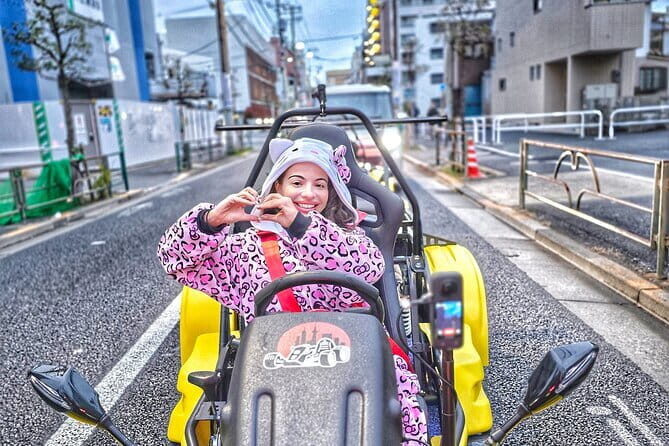
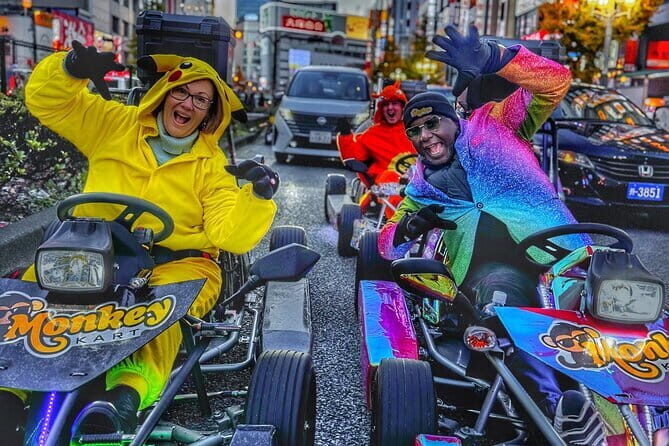
This tour includes photo and video, plus a costume for the drive. That combo is more than a gimmick. It changes how you experience the day: you’re not only trying to capture landmarks; you’re getting documentation of your ride and your route.
Costumes can also make the group feel less stiff. When you’re strapped into the go-kart experience, everyone has the same goal: drive safely, follow directions, and have fun. A costume lowers the self-conscious factor and helps you get pictures without turning it into a whole production.
One extra detail: a data card for Insta360 cameras isn’t included and is available for purchase. If you’re planning to rely on your own action-camera setup, plan for that ahead of time.
Weather and Timing: When This Plan Works Best
The experience requires good weather. If conditions aren’t right, you’ll be offered a different date or a full refund. That’s not unusual for driving activities, but it’s a key factor in Tokyo planning because weather can change quickly.
Timing-wise, you’re looking at about 1 hour 40 minutes from start to finish. That makes it a good option for:
- Your first or second day in Tokyo when you want orientation
- A day you want to mix sightseeing with something active
- Travelers who prefer guided structure over building their own route
Who Should Book This Go-Kart Old Town Tokyo Experience
I think it suits you if you:
- Want an active, guided way to see major districts in one outing
- Like playful touches, like quirky costumes, without sacrificing structure
- Prefer small group energy over big-bus crowds
- Are okay with a route that focuses on highlights rather than hours of museum-style time
It might not be ideal if you:
- Want a slow, wandering tour with lots of time to enter buildings
- Don’t have the required driving documents in paper form
- Are traveling at a time when weather is very unpredictable and you can’t adjust your schedule
Also, the tour has a wheelchair accessible component and a maximum of 10 travelers, which helps keep logistics manageable for many visitors.
Should You Book This One
If you’re the type of traveler who likes Tokyo’s major sights but gets bored with only standing still, this is a strong pick. The route connects Tokyo Skytree, Ryogoku, Tokyo Station, Akihabara, Ueno, Asakusa, and the Imperial Palace into one coherent day, and the included photo/video support helps you capture it without extra planning.
Book it if you can meet the driving requirements cleanly. The driving-license rule is the only big potential downside. If you show up with the original local license and the physical IDP, you’re set up for a fun, guided sprint through Old Town Tokyo.
FAQ
FAQ
How long is the go-kart tour?
It runs about 1 hour 40 minutes.
What is the price per person?
The price is listed as $91.45 per person.
What’s included in the tour price?
Included items are go-kart rental, tour guide, costume, fuel, insurance, photo & video, and drinking water.
What is not included?
Pickup and dropoff, data card for Insta360 camera (available for purchase), and food are not included.
Where is the meeting point?
The meeting point is in Katsushika City at 124-0014 Tokyo, Higashiyotsugi, 1-chōme202 小島貸事務所.
Do I need an IDP to drive?
Yes. You need an International Driving Permit (IDP) issued under the 1949 Geneva Convention, plus your original local driving license.
Can I use a digital copy of my IDP instead of the paper document?
No. The tour requires the original physical documents, and digital copies are not accepted for driving.
How big is the group?
The tour has a maximum of 10 travelers.
Is the tour wheelchair accessible?
Yes, the experience is wheelchair accessible.
What is the cancellation policy?
Free cancellation is available up to 24 hours before the experience start time for a full refund. If you cancel less than 24 hours before, there is no refund.