REVIEW · OSAKA
Osaka Okonomiyaki Cooking Class “Learn here and make it at home”
Book on Viator →Operated by WashokuYanen · Bookable on Viator
Cooking in Osaka sounds fun. Cooking and tasting what you make hits different. This class turns two of the city’s most-loved foods—okonomiyaki and takoyaki—into a doable skill you can repeat at home, with instructors guiding you step by step and helping you understand key ingredients.
I especially liked the small group feel (max 8) plus the chance to talk ingredients, not just follow a script. The kitchen is also in a calm spot even though it’s very central—about a 5-minute walk from Shinsaibashi and Honmachi.
One consideration: you’re not booking a private, one-on-one cooking session. With a small shared class, you’ll get plenty of help, but it’s still a group experience with a set pace.
In This Review
- Key highlights you’ll care about
- Why learning okonomiyaki and takoyaki together makes sense
- Location check: central Osaka with an easy walk to get your bearings
- The 30 minutes that set you up for success
- Cooking okonomiyaki: build the pancake, then learn the toppings
- Cooking takoyaki: form, fill, fry, and get that signature bite
- The 1-hour tasting: eat your results with drinks
- What you’ll take home: recipes plus the ingredient hunt
- Instructors and languages: help that actually reaches you
- Group size and pacing: fun, interactive, not chaotic
- Price and value: $70 for skills, tools, and a full meal moment
- Who this Osaka okonomiyaki class suits best
- Quick practical tips before you go
- Should you book this Osaka okonomiyaki and takoyaki class?
- FAQ
- How long is the Osaka okonomiyaki cooking class?
- What dishes will I learn to make?
- Is food and cooking equipment provided?
- What languages are available during the class?
- Are vegetarian options or allergy adjustments available?
- Is sake or beer included?
- What happens if the weather is bad or I need to cancel?
Key highlights you’ll care about
- Step-by-step training for both okonomiyaki and takoyaki, not just one dish
- A central, quiet kitchen near Shinsaibashi and Honmachi stations
- Tasting with drinks including sake, beer, and soft drinks (alcohol only for age 20+)
- Written recipes and ingredient guidance that make supermarket shopping easier afterward
- Multilingual support: English included, Japanese/Spanish available on request
Why learning okonomiyaki and takoyaki together makes sense
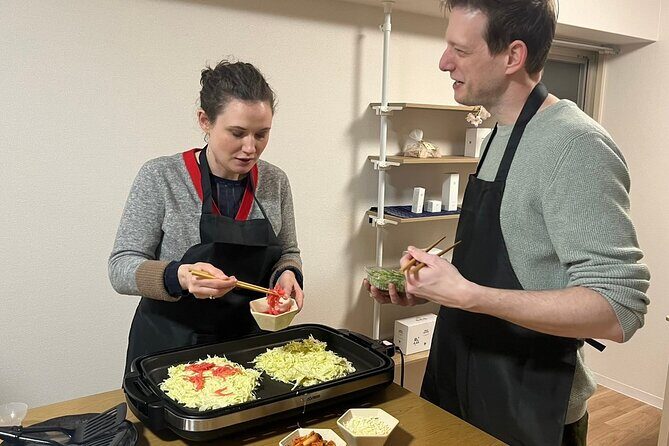
Okonomiyaki and takoyaki can feel like separate food worlds. One is a cabbage-forward savory pancake you cook on a hot surface. The other is a ball-shaped snack where the filling matters. Doing them in the same session is smart because you get two useful techniques, in one evening plan.
Okonomiyaki starts with batter plus lots of cabbage, then you build in fillings such as pork or seafood. You finish with sauce and bonito flakes. Learning it this way helps you understand the balance: how much batter to use, how to spread and cook evenly, and how the toppings come together. If you’ve ever tried making it at home and wondered why it turned out flat or uneven, this kind of direct instruction is exactly what you need.
Takoyaki is different. You’re working with a hot pan made for forming balls, then you fill each one with octopus. After frying, you top with sauce, bonito flakes, and seaweed powder. The big value here is practicing the “small-batch” mindset: you’re not cooking one giant pancake—you’re shaping and cooking multiple bites until they come out right.
You also get a “repeat at home” framework. Not just a meal, but skills you can rebuild later.
You can also read our reviews of more cooking classes in Osaka
Location check: central Osaka with an easy walk to get your bearings
The meeting point is in Minami-Semba area, at 南船場コレット, in Chuo Ward (Bakurōmachi area). The practical win is the 5-minute walk from both Shinsaibashi and Honmachi stations on the Osaka Metro.
Even better, the kitchen sits in a quiet neighborhood. Osaka can be loud and crowded, so it’s nice to arrive somewhere that feels calm enough to focus on cooking. You also don’t have to wrestle with complex directions. If you’re using the metro, you can get there without stress, then spend your energy on making takoyaki correctly instead of finding the place.
The activity also ends back at the meeting point, which keeps your night tidy.
The 30 minutes that set you up for success
Before any serious frying happens, you get a 30-minute orientation and preparation. This is where the class saves you later. They walk you through what you’ll be making, how the stations work, and how to handle the tools safely.
You’re also set up with the basic gear: aprons and disposable plastic gloves. Having gloves matters for takoyaki and mixing tasks, and you’ll appreciate it the moment you start working. Since the class provides all ingredients and tools, you don’t need to hunt down specialty items before you arrive.
This short prep period also helps if you’re visiting Japan for the first time. You’re not just blindly cooking. You’re learning what each ingredient does, which makes it easier to recreate later.
And for me, the best part of this stage is the conversation. In small classes, Q&A actually happens. You can ask why something gets added at one step and not another, or what the texture should be. That’s how “I made food” turns into “I learned food.”
Cooking okonomiyaki: build the pancake, then learn the toppings
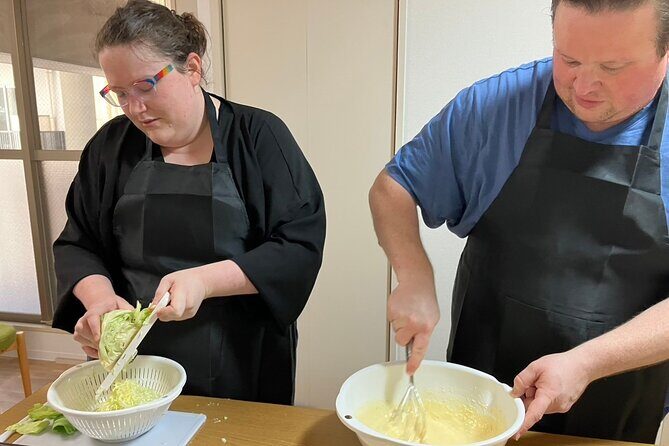
Okonomiyaki is the dish that looks simple—until you try it. In the class, you make it from scratch using batter, cabbage, and fillings like pork or seafood. Then you top it with sauce and bonito flakes.
What makes this valuable is that you learn the structure. Cabbage isn’t decorative here. It affects moisture, texture, and how the pancake cooks through. If you go too heavy on toppings or don’t manage the spread, you can end up with undercooked centers or a pancake that won’t set properly. Here, you’re guided through the practical choices so the pancake behaves.
You also learn why the toppings are part of the cooking experience, not just a finish. Sauce timing and bonito flakes are all about how the dish looks and tastes when served hot. The class keeps you moving so you’re not waiting around while the pan cools.
If you want a home result that looks and eats like the real thing, pay attention to the “moment” the pancake finishes cooking. That’s when it sets and the flavors come together.
Cooking takoyaki: form, fill, fry, and get that signature bite
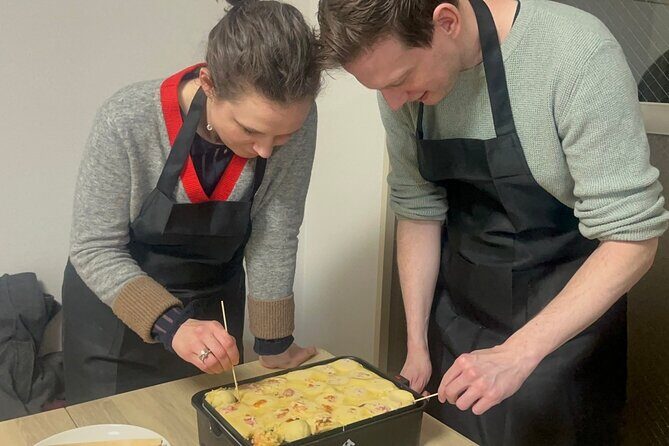
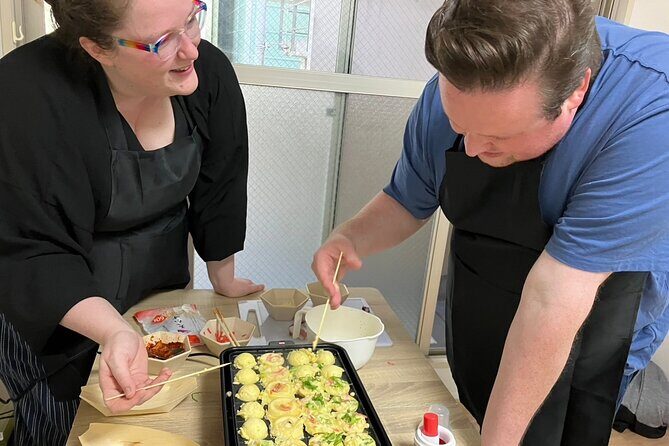
Takoyaki is pure Osaka snack logic. Small ball shapes. Hot pan. Filling inside. Sauce and bonito on top. The class has you making it with octopus and then finishing with sauce, bonito flakes, and seaweed powder.
The real skill isn’t only adding ingredients. It’s managing the pan and shaping the balls. You’re learning how to cook these so they develop that classic texture on the outside while keeping the interior satisfying.
This dish also teaches patience in tiny doses. You can’t rush the frying. You need to watch how they brown and adjust as you go. With instructor support, you learn how to correct course quickly, rather than starting over at home later.
And yes, it’s fun. The work is hands-on and active. You’re not just observing. You’re making dozens of choices with your hands. When it clicks, you’ll understand why takoyaki is such a street-snack standard in Osaka.
A few more Osaka tours and experiences worth a look

The 1-hour tasting: eat your results with drinks
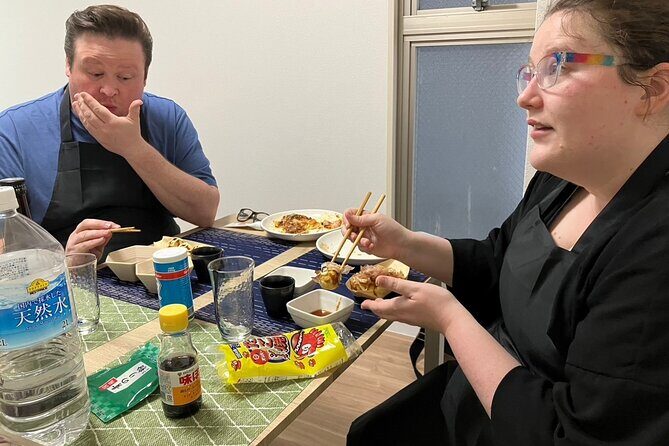
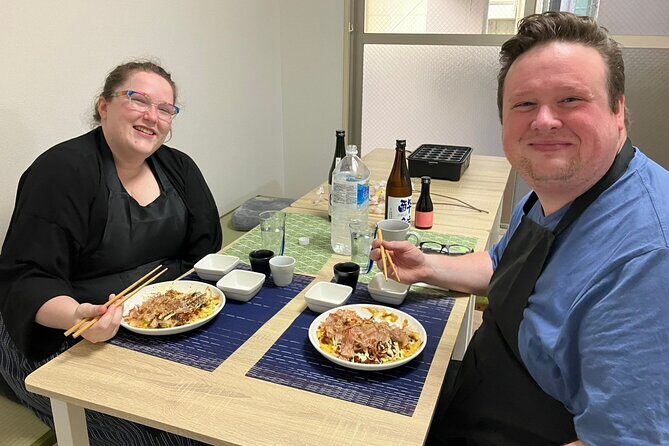
After cooking, you get a 1-hour tasting session. This is where the class stops being purely instructional and becomes a real meal moment. You relax, enjoy the okonomiyaki and takoyaki you made, and pair them with sake, beer, and soft drinks.
A quick practical note: alcoholic drinks are only served for people 20 years old and above. If you’re under that age, you’ll still get non-alcoholic options.
This tasting hour matters because it closes the learning loop. You can taste what “good” feels like. Then you can connect it back to what you did during cooking—cabbage balance, sauce finish, bonito topping timing, and the exterior texture of takoyaki.
If you like food memories with context, this is where you build them.
What you’ll take home: recipes plus the ingredient hunt
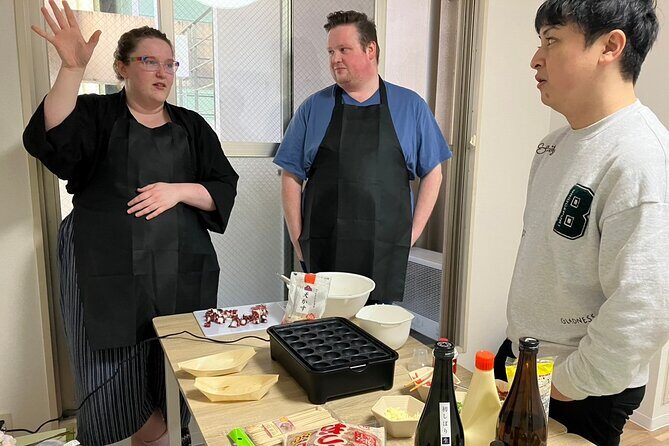
The best souvenir from this class isn’t a photo. It’s the ability to shop and cook again.
One strong point from the experience is the written recipes and the chance to see ingredient packaging. That makes a big difference when you go back to the supermarket. Japanese sauces and powders can look similar on a shelf, and translations don’t always help. If you’ve ever tried to recreate Japanese food and ended up with the wrong sauce, you’ll understand the value immediately.
You’ll also get a better grasp of what ingredients matter most. For example, okonomiyaki depends on the right balance between batter and cabbage, plus toppings like sauce and bonito flakes. Takoyaki depends on the ball-form frying process and the right finishing mix, including seaweed powder.
If you cook at home even occasionally, you’ll find the class gives you a repeatable plan instead of a one-time meal.
Instructors and languages: help that actually reaches you
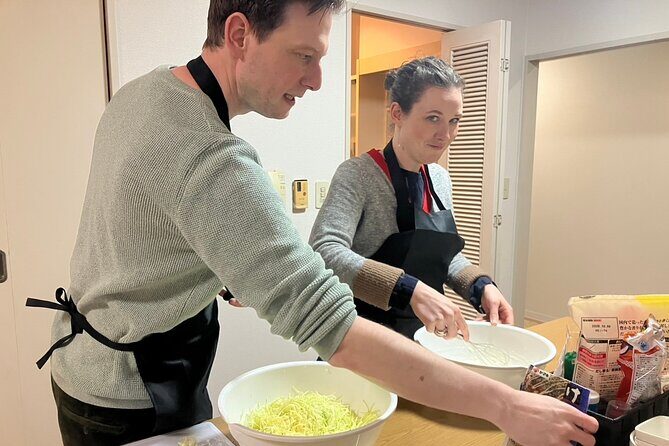
The class is taught by WashokuYanen with friendly instruction support. English is part of the package, and Japanese and Spanish instructors are available upon request.
That matters more than it sounds. Cooking classes can get frustrating when you don’t understand the “why” behind a step. Here, the language support helps you catch technique cues in real time—how hot the surface is, what texture to aim for, and how to adjust your cooking.
In small groups, this becomes personal. You can ask questions without feeling like you’re interrupting. You’re also more likely to get feedback on your technique, not just a quick pass-by.
Group size and pacing: fun, interactive, not chaotic
With a maximum of 8 travelers, the pace stays manageable. It’s not a mass-market cooking show. You’ll likely have time for conversation and small-course correction during cooking.
The review-style takeaway is simple: you get an intimate, hands-on vibe. If you enjoy learning by doing—mixing, shaping, flipping—this format fits well.
The tradeoff is schedule rigidity. Cooking classes work by timing the stations and keeping the hot surfaces working at their best. So if you hate following a set flow, you might feel slightly rushed. Still, the structure is what makes it possible to cook both dishes in one session.
Price and value: $70 for skills, tools, and a full meal moment
At $70 per person for about 3 hours, you’re paying for more than ingredients. You’re paying for:
- guided instruction in two dishes
- all ingredients and cooking tools
- gear like aprons and gloves
- a built-in tasting with sake/beer/soft drinks (with age rules for alcohol)
- a small group setting with active help
- written recipes for repeat cooking at home
If you’ve ever tried to replicate Japanese street snacks at home, the cost adds up fast: specialty sauce bottles, bonito flakes, seaweed powders, and the right batter basics. This class removes that guesswork and gives you a tested workflow.
You also don’t need to arrange your own cooking setup. No pan hunting, no ingredient trial-and-error. You show up ready, and you leave with both food and a method.
Who this Osaka okonomiyaki class suits best
This class fits best if you want a practical Osaka food experience, not just a meal.
You’ll likely enjoy it if:
- you want to learn both okonomiyaki and takoyaki
- you like interactive cooking, not passive watching
- you want recipes you can follow later
- you like eating what you make right away
It can also work well for families, since the experience has supported younger participants in past sessions. Still, it’s always smart to consider how your group handles active cooking stations and hot surfaces.
If you want an ultra-custom menu or a fully private format, this may feel too structured. But for learning two signature dishes with real support, it’s a strong deal.
Quick practical tips before you go
A few things to do that will make the class feel smooth:
- Wear comfortable clothes you don’t mind getting a little cooking smell on them.
- Plan to arrive a bit early so you can settle in before the hands-on part begins.
- If you have vegetarian needs or food allergies, message after booking so arrangements can be considered.
- If alcohol is part of your plan, keep the age 20+ rule in mind.
Also note: the ticket is mobile, so have it ready on your phone at arrival.
Should you book this Osaka okonomiyaki and takoyaki class?
Yes—if your goal is to leave Osaka with a skill you can use again, this is a smart booking. The class hits the sweet spot: hands-on cooking, small-group attention, and an end-of-session tasting where you eat what you made. The written recipes and ingredient packaging help you shop smarter back home, which is where a lot of cooking classes fall short.
Skip it only if you want a private, custom experience or you dislike following a set cooking flow. Otherwise, this is one of the more practical ways to understand Osaka food beyond the tourist version of it.
FAQ
How long is the Osaka okonomiyaki cooking class?
The class runs for about 3 hours total.
What dishes will I learn to make?
You’ll learn to cook okonomiyaki (Japanese savory pancake) and takoyaki (Japanese savory dough balls).
Is food and cooking equipment provided?
Yes. The class includes all ingredients and kitchen tools you need, plus aprons and disposable plastic gloves.
What languages are available during the class?
An English-speaking instructor is included. Japanese and Spanish speaking instructors are available upon request.
Are vegetarian options or allergy adjustments available?
Vegetarian or food allergy options are available, but you need to contact the organizer after booking.
Is sake or beer included?
Alcoholic drinks (sake and beer) are included for participants age 20 and above. Under 20 will be served non-alcoholic drinks, and soda/soft drinks are also included.
What happens if the weather is bad or I need to cancel?
You can cancel for a full refund up to 24 hours in advance. The experience requires good weather, and if it’s canceled due to poor weather, you’ll be offered a different date or a full refund.