REVIEW · HIROSHIMA
Hiroshima Highlights Guided Tour in 5.5 hours
Book on Viator →Operated by DeepExperience · Bookable on Viator
Hiroshima hits you fast, then teaches gently. This guided loop covers the Atomic Bomb Dome, Peace Memorial Park, and the Peace Memorial Museum before sending you across to Miyajima for Itsukushima Shrine. I like that the transport and key admissions are handled for you, which cuts down on ticket-hunting stress in a day that already moves quickly. One thing to consider: this route is emotionally heavy and pretty time-compressed, so if you want to linger for hours at the museum or shrine, you may feel rushed.
My other big win here is the human factor. The tour runs with an English-speaking guide (often mentioned: Gordon), and the way he explains what you’re seeing makes the stops click instead of just passing by. The tour ends at Miyajimaguchi Ferry Terminal, so you’ll want a plan for your next move right after the shrine and shopping street.
In This Review
- Key highlights worth planning for
- A tight 5.5-hour plan that actually makes sense
- Meeting up at the 7-Eleven, then finishing at Miyajimaguchi
- Atomic Bomb Dome: the first stop sets the emotional tone
- Peace Memorial Park: the cenotaph moment you shouldn’t skip
- The Hiroshima Peace Memorial Museum: where the story gets real
- JR West ferry to Miyajima: a break that still feels connected
- Itsukushima Shrine: timing your walk and your photos
- Miyajima Omotesando shopping street: food and souvenirs without added transit
- Price and value: what $179.17 buys you in real terms
- What the guide experience feels like in practice
- Who this tour suits best, and who might feel cramped
- Should you book this Hiroshima and Miyajima highlights tour?
- FAQ
- How long is the Hiroshima Highlights guided tour?
- How much does the tour cost?
- Where do we meet, and where does the tour end?
- What’s included in the tour?
- What is not included?
- Is the guide English-speaking?
- Is the Atomic Bomb Dome admission included?
- Can I cancel for a full refund?
Key highlights worth planning for
- Atomic Bomb Dome + Peace Memorial Park in the same morning block so context lands right away
- Hiroshima Peace Memorial Museum with 2 full hours for reading, photos, and careful pacing
- JR West ferry included to Miyajima, saving you from figuring out schedules mid-trip
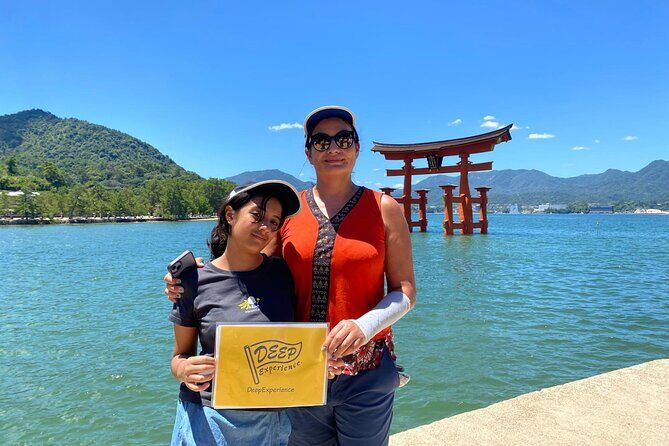
- Itsukushima Shrine visit included with time for that famous sea-side look
- Omotesando shopping street on Miyajima for food and souvenirs without adding extra transit
- Private tour format so your group sets the tone more than a crowded bus
A tight 5.5-hour plan that actually makes sense
This is the kind of tour you choose when you want the essentials of Hiroshima and Miyajima without building a complicated day yourself. You’re looking at about 5 hours of guided time, plus travel between sites, and it adds up to a full half-day experience.
I like that it follows a clean storyline. You start with the memorial sites tied directly to 1945, then move toward the calm of Miyajima and its shrine setting. That contrast can be powerful, as long as you’re ready for it.
This also fits well if your schedule is limited. If you have only a day in the region, the mix of Peace Memorial Museum + Miyajima is hard to replicate with the right timing on your own.
You can also read our reviews of more guided tours in Hiroshima

Meeting up at the 7-Eleven, then finishing at Miyajimaguchi
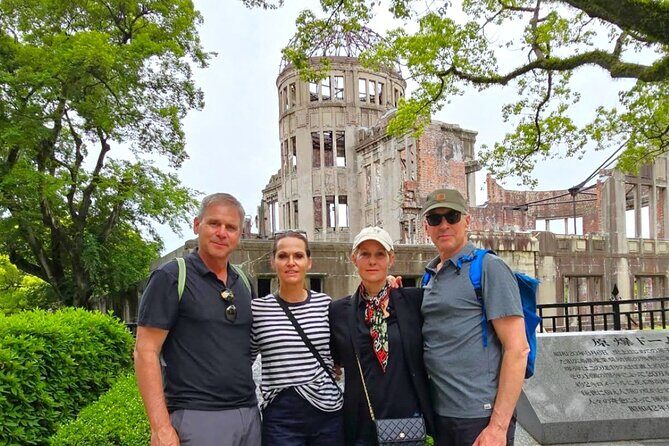
The start is at a very specific meeting point: 7-Eleven, 1-chōme-1-21 Ōtemachi, Naka Ward, Hiroshima. The tour ends at Miyajimaguchi Ferry Terminal, 1-chōme-11-1 Miyajimaguchi, Hatsukaichi.
That finish matters. You’re not dropped back into central Hiroshima, so you’ll want to plan your next step with the ferry terminal as your endpoint. If you’re connecting to another train route, having a rough plan beats trying to wing it right after the tour.
One practical note: for this kind of timed, guided format, showing up late can cause problems. The tour guidance emphasizes being on time so you don’t miss the start or have to handle access on your own.
Atomic Bomb Dome: the first stop sets the emotional tone
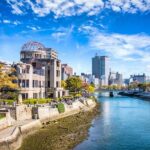
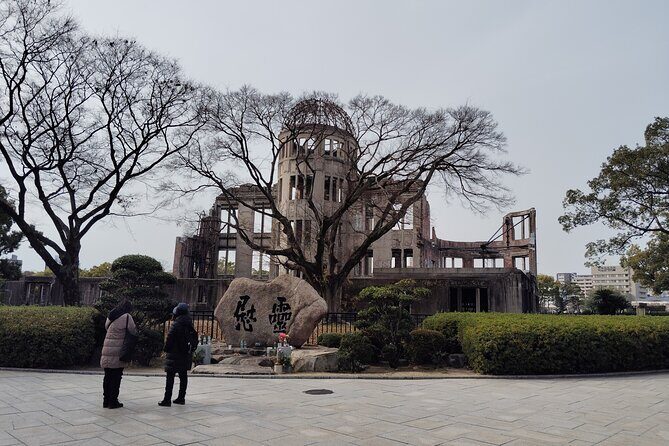
You begin at the Atomic Bomb Dome. Admission is listed as free here, and the stop is about 30 minutes. You’ll be seeing the dome as a ruin left after the heat rays and shock wave of the atomic bomb in 1945, and that meaning shapes how you look at every detail.
A helpful way to make this stop land is to treat the dome like a “before-and-after” object. The guide’s job in a short slot is to connect the building you see now with what was there before and what survived. With a good guide, the dome stops being only a photo spot and becomes a point for understanding.
Time is tight, so keep your expectations realistic. If you want to take long pauses, plan to do that in the Peace Memorial Park or museum, where you have more time.
Peace Memorial Park: the cenotaph moment you shouldn’t skip
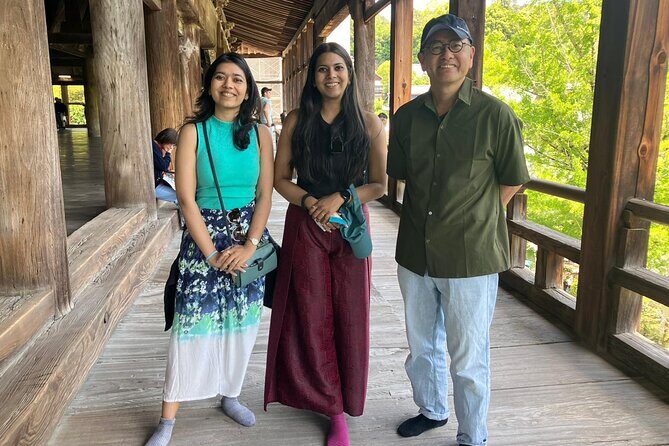
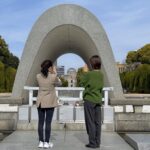
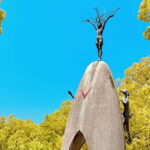
Next you head to Hiroshima Peace Memorial Park, also about 30 minutes. There’s a cenotaph there meant to comfort the spirits of atomic bomb survivors, and the setting looks out toward the A-bomb Dome.
This is the stop where you slow down a bit without needing to fully switch gears. You’re still in the same emotional chapter, but the park layout gives you a moment to absorb the broader meaning of remembrance.
If you’re the type who likes to take notes or read signs carefully, this park is a good place to do it. You won’t get that kind of freedom at every stop.
The Hiroshima Peace Memorial Museum: where the story gets real
The museum is the big one, with about 2 hours and admission included. This is where the tour earns its place in a short itinerary, because the museum is built for self-paced reading and reflection, not quick scrolling.
Expect exhibits that explain Hiroshima and its people before the bombing, then show the impact after. The archives and displays focus on what happened on that day, with a tone that’s meant to be quiet and respectful rather than dramatic.
Two practical tips make your time here better. First, don’t try to read everything. Pick areas that match what your guide highlights, and let the rest be background. Second, if you start feeling overloaded, step out briefly for a breath, then return with a calmer brain. Two hours is enough if you move with intention.
This is also where the English-speaking guidance can really help. A good guide helps you understand what you’re looking at fast, so you can spend your attention on the parts that matter to you.

JR West ferry to Miyajima: a break that still feels connected
After the museum, the tour includes JR West ferry transport to Miyajima. The ferry ride is about 40 minutes, and admissions are included for this leg.
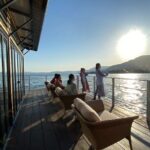
This is more than a transit link. The water time gives you a mental reset from museum intensity, and it also changes your point of view. In a single day, it’s a shift from memory and explanation to scenery and place.
If you’re prone to getting seasick, this is the moment to be mindful, though the route is relatively short. Otherwise, it’s a good time to look out and enjoy the transition rather than staring at a phone the whole ride.
Itsukushima Shrine: timing your walk and your photos
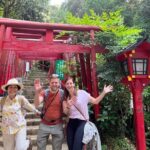
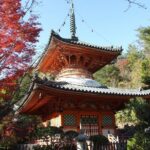
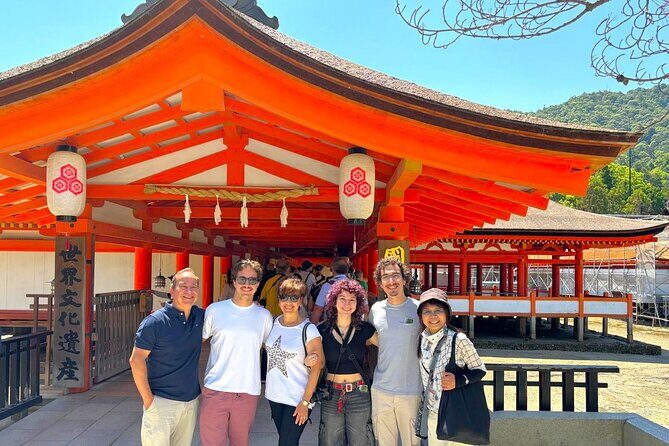
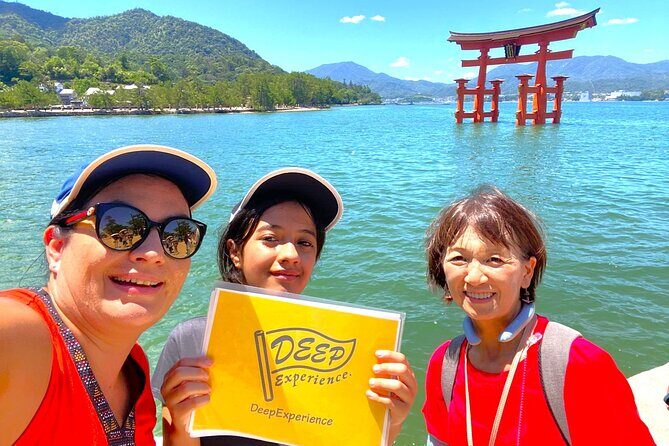
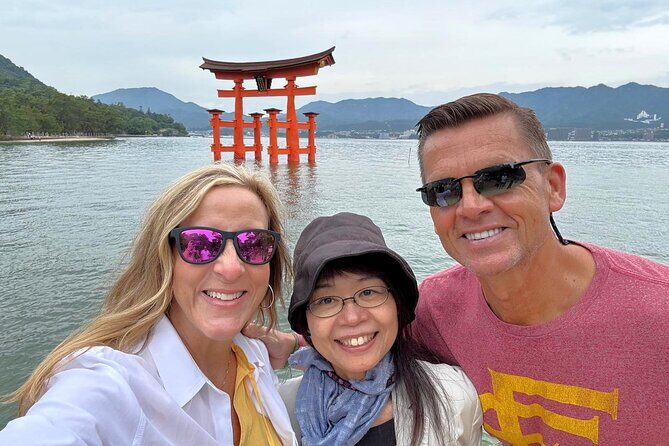
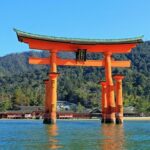
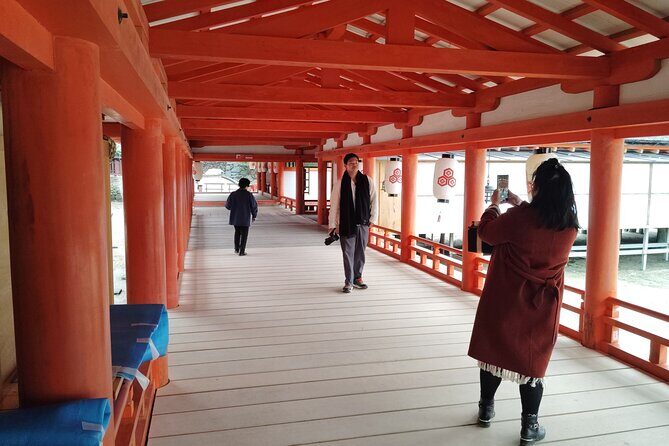
On Miyajima, you visit Itsukushima Shrine with about 40 minutes and admission included. It’s known for the shrine structure that looks like it’s partway floating on the sea, with a vermilion color that pops against the water and sky.
For photos, plan to do two passes. First pass is for your wide views and “I’m here” shots. Second pass is for smaller details and angles once you see where the light falls and where the crowd thins.
This stop is also a lesson in how places work. You’re not just seeing a building; you’re seeing a shrine embedded in its setting, where the sea is part of the visual story. A guide can help you notice things you might otherwise overlook in a brief visit.
If you feel like 40 minutes isn’t long enough, it’s because it isn’t long enough for a leisurely wander. But it’s long enough to understand the site and get your bearings for further exploring later.
Miyajima Omotesando shopping street: food and souvenirs without added transit
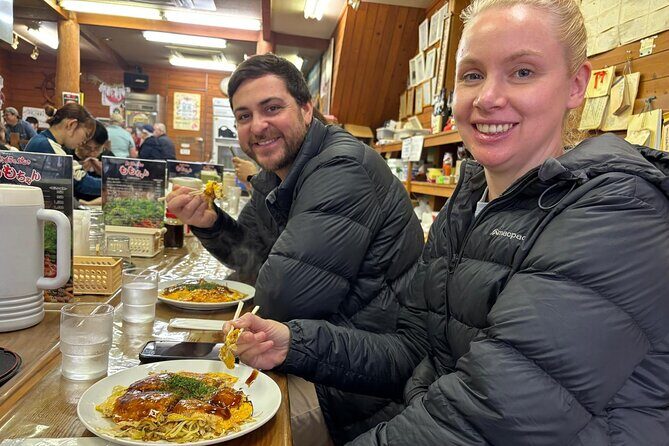
After the shrine, you have about 40 minutes at Miyajima Omotesando shopping street, and this part is free to explore. This approach to the shrine is lined with shops, and it’s where you can pick up snacks and small gifts tied to the island.
I like this ending because it gives you a chance to turn the day into something you can keep. If you’ve been thinking about Hiroshima’s meaning all morning, buying a small edible or souvenir at the end can be a gentle way to close the loop.
You also avoid the common problem of “we get to the cool area and then everyone’s hungry and we don’t have time.” Here, you do have a dedicated block for shopping street time.
Price and value: what $179.17 buys you in real terms
The price is $179.17 per person for roughly 5.5 hours of guided time. That number looks steep until you count what’s actually included.
You get an English-speaking guide, the Peace Memorial Museum admission, the Atomic Bomb Dome visit, plus transport (train/boat) for the Miyajima portion. Those pieces are the expensive and time-consuming parts when you plan on your own, especially if you’re trying to match schedules in a tight window.
There’s also a practical scheduling value. On your own, you’d spend time buying tickets, figuring out ferry timing, and rechecking connections. Here, the day is designed to run in a way that keeps you moving between the right sites.
One more detail that affects value: this is described as a private tour/activity, meaning your group participates rather than being absorbed into a bigger crowd. That tends to make the experience feel more flexible, and the guide’s style matters more.
Finally, the tour is usually booked well ahead; the average booking window is about 53 days. If your dates are fixed, grabbing it early can save headaches.
What the guide experience feels like in practice
From the way this tour is described, the guide matters a lot. The name Gordon comes up repeatedly, and the notes focus on him being friendly and good at explaining Hiroshima and Miyajima clearly within a short schedule.
One standout theme is that the guide listens to timing needs. In one example, the guide adjusted planning to help a group return to a cruise ship on time. Even if you’re not on a cruise, that kind of flexibility is useful if your day has hard deadlines.
That said, don’t treat it like a slow, open-ended stroll. The tour is structured. Your job as the visitor is to show up ready to move between stops, then get the best from each time block.
Who this tour suits best, and who might feel cramped
I’d call this tour a great fit if you want:
- A one-day Hiroshima essentials package
- An easy plan that includes the tough logistics for Peace Museum + Miyajima
- A guide to translate context fast so you get more meaning from less time
- A private-group feel with English guidance
It may feel less ideal if you:
- Need lots of quiet time in the museum without pressure
- Prefer to linger for 90+ minutes at religious sites and shopping streets
- Want a loose end at the end of the day back in central Hiroshima
If you land in that second group, consider pairing the tour with extra self-guided time either before or after, rather than expecting this half-day to be your only stop.
Should you book this Hiroshima and Miyajima highlights tour?
If you’re deciding between DIY and a guided day, I’d book it if your priority is getting the right sequence with less hassle. The strongest reasons are the included museum admission, the ferry/train transport, and the fact that the route is built around the most meaningful places rather than just the most photographed ones.
This is also a good choice if you want Miyajima’s famous shrine without losing half your day to planning transit. You can finish the tour, then keep exploring on your own if you want more time.
My one caution: go in mentally prepared for emotion. Hiroshima is not a quick attraction, and the pace here is designed to cover key stops, not to drag out the day. If you can handle that, you’ll get a day that’s both informative and moving, with a real transition to the sea-side calm of Miyajima.
FAQ
How long is the Hiroshima Highlights guided tour?
The tour runs for about 5 hours, often described as a 5.5-hour experience, including travel between stops.
How much does the tour cost?
The price is $179.17 per person.
Where do we meet, and where does the tour end?
You meet at 7-Eleven, 1-chōme-1-21 Ōtemachi, Naka Ward, Hiroshima. The tour ends at Miyajimaguchi Ferry Terminal, 1-chōme-11-1 Miyajimaguchi, Hatsukaichi, Hiroshima.
What’s included in the tour?
Included items are train and boat tickets to Itsukushima Shrine, admission to the Hiroshima Peace Memorial Museum, the Atomic Bomb Dome visit, and an English speaking guide.
What is not included?
Meals and drinks, hotel pickup and drop-off, and personal expenses are not included.
Is the guide English-speaking?
Yes. The tour includes an English speaking guide.
Is the Atomic Bomb Dome admission included?
Yes. The Atomic Bomb Dome stop lists admission as free.
Can I cancel for a full refund?
Yes. You can cancel up to 24 hours in advance for a full refund.