REVIEW · HIROSHIMA
Hiroshima: Hiroshima Highlights Guided Tour
Book on GetYourGuide →Operated by DeepExperience, Inc. · Bookable on GetYourGuide
Hiroshima hits hard, then guides you to beauty. This guided day strings together the Atomic Bomb Dome and Hiroshima Peace Memorial Museum with Itsukushima Shrine on Miyajima, so you see history and healing in one flow. I especially like the calm, explanatory way the guide handles serious material, and I like that you get ticketed train and boat transfers without having to figure them out on the fly.
One possible drawback: the schedule can feel tight, and the 4-hour option may not fit both the Hiroshima city area and the Miyajima area. If you want the full combo without shortcuts, plan for the longer time slot.
In This Review
- Key things that make this tour worth your time
- A day that connects 1945 and Miyajima’s sacred calm
- Meeting point near Hiroshima’s Otemachi Seven-Eleven
- Atomic Bomb Dome: the fastest way to get the right context
- Hiroshima Peace Memorial Museum: use the two hours wisely
- The jump to Miyajima: bus, train, and ferry without headaches
- Itsukushima Shrine: about 50 minutes to appreciate the sea-and-mountain setting
- The day’s second ferry ride and finishing at Miyajima-guchi
- Price and value: what you’re paying for at $128
- Who this tour suits best
- A note on guides: English commentary with proven service
- Weather and walking tips that keep the day pleasant
- Should you book this Hiroshima Highlights Guided Tour?
- FAQ
- How long is the Hiroshima highlights tour?
- What’s included in the price?
- Do I need to buy tickets for the ferry and train to Miyajima?
- Where do I meet the guide?
- Is the tour in English?
- How much walking is involved?
- Is food included?
- Can I take photos?
- Is hotel pickup provided?
Key things that make this tour worth your time
- A-Bomb Dome first: start at the UNESCO Atomic Bomb Dome near Peace Memorial Park for real context.
- Two hours in the museum: enough time to actually read and choose what to focus on.
- Guided meaning, not just photos: the guide’s commentary helps you understand what you’re looking at.
- Ticketed transfer to Miyajima: train plus ferry takes care of the biggest logistics.
- Itsukushima Shrine timing for views: you’ll spend around 50 minutes on site to see the shrine and the sea setting.
- Short-tours have limits: the quickest option can’t cover both city stops and Miyajima.
A day that connects 1945 and Miyajima’s sacred calm
This tour is built around a simple idea: don’t treat Hiroshima like a checklist. You start at the place that marks August 6, 1945, then you move into the museum where the story gets specific. After that emotional weight, you shift to Miyajima Island, where the spiritual atmosphere at Itsukushima Shrine has a different kind of power.
That contrast is exactly why this works. You’re not just looking at landmarks. You’re learning how Hiroshima holds memory, survival, and peace side by side—then stepping into one of Japan’s most recognizable shrine landscapes.
You can also read our reviews of more guided tours in Hiroshima


Meeting point near Hiroshima’s Otemachi Seven-Eleven
You’ll meet in front of the Seven-Eleven Hiroshima Otemachi 1-chome. The guide holds a yellow sign with the DeepExperience logo, so it’s easy to spot the right group.
If you choose the pickup option, the guide will come near the designated meeting spot. Either way, plan to arrive a few minutes early. This part matters because the rest of the day runs on a set rhythm: guided stops, then timed connections for public transport.
Atomic Bomb Dome: the fastest way to get the right context
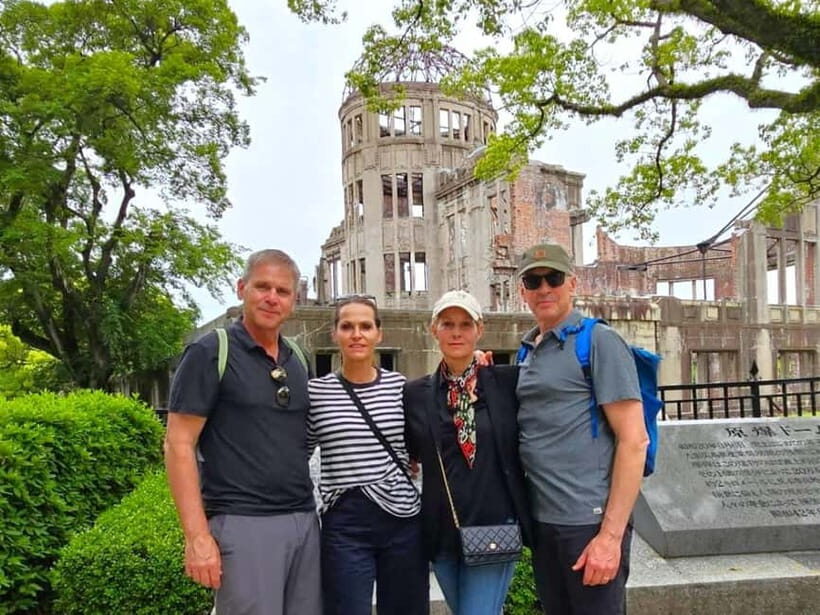
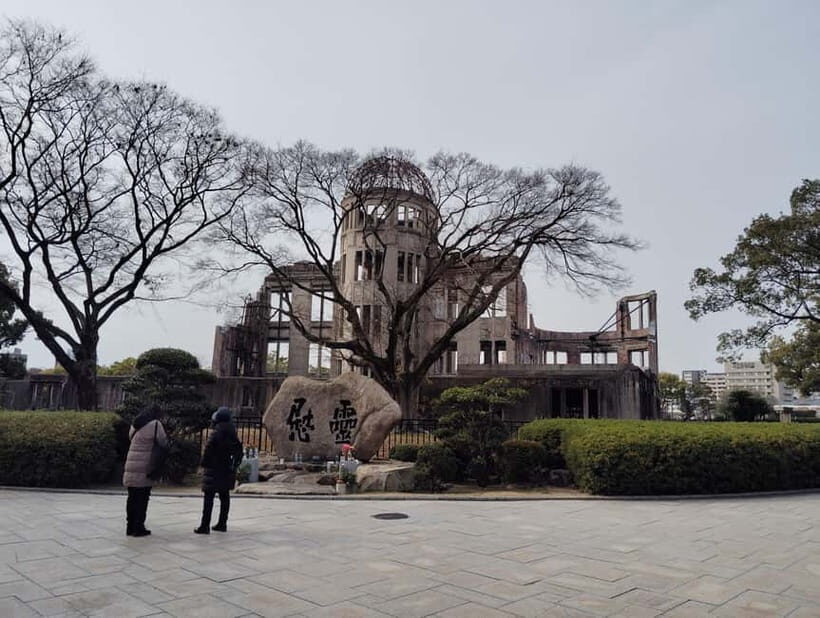
The day begins at the Atomic Bomb Dome, with a guided visit that lasts about 20 minutes. This isn’t one of those quick photo stops where you barely get your bearings. Because it’s guided, you know what to notice and why the building still matters.
A practical tip: wear comfortable shoes. The area is flat enough for many people, but you’ll still be moving around as you look at the structure from different angles and listen to the context. And yes—this is a memorial zone. You can photograph, but keep it respectful.
What I like most here is the way the guide helps you connect the physical site to the human impact. Even if you already know the basics, seeing the place in person makes the history feel real in a different way.
Hiroshima Peace Memorial Museum: use the two hours wisely
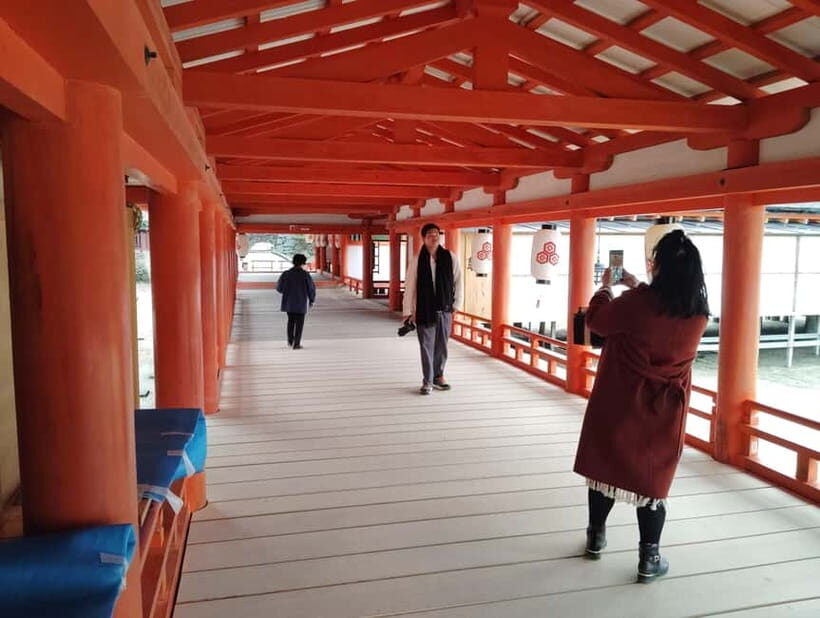
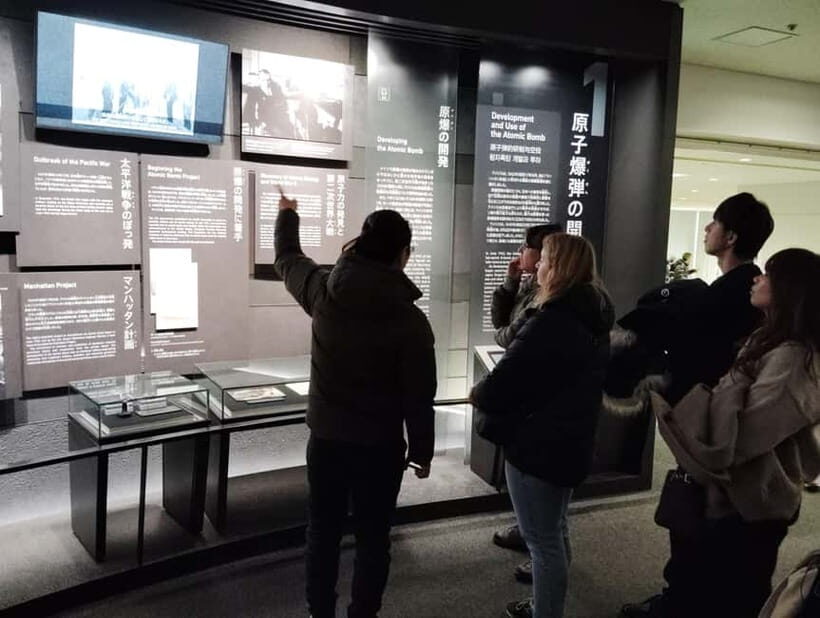
Next comes the Hiroshima Peace Memorial Museum for about 2 hours. This is where the story becomes detailed: artifacts, photographs, and documents that help you understand the scale of the tragedy and what people did to survive afterward.
Two hours sounds long until you’re standing in front of exhibits that pull you in. Here, timing is your friend. The guide’s commentary helps you choose what to focus on, so you don’t end up stuck only in one section while the best parts pass by.
If you’re the kind of visitor who likes to read slowly, this still gives you room to do it. If you’re more time-pressed, the guidance helps you get the big picture without feeling lost.
Also, the emotional tone is real. Plan for that. You don’t need to rush to the next stop just to shake off the heaviness. If you need a breather, use it—then come back when you’re ready.
The jump to Miyajima: bus, train, and ferry without headaches
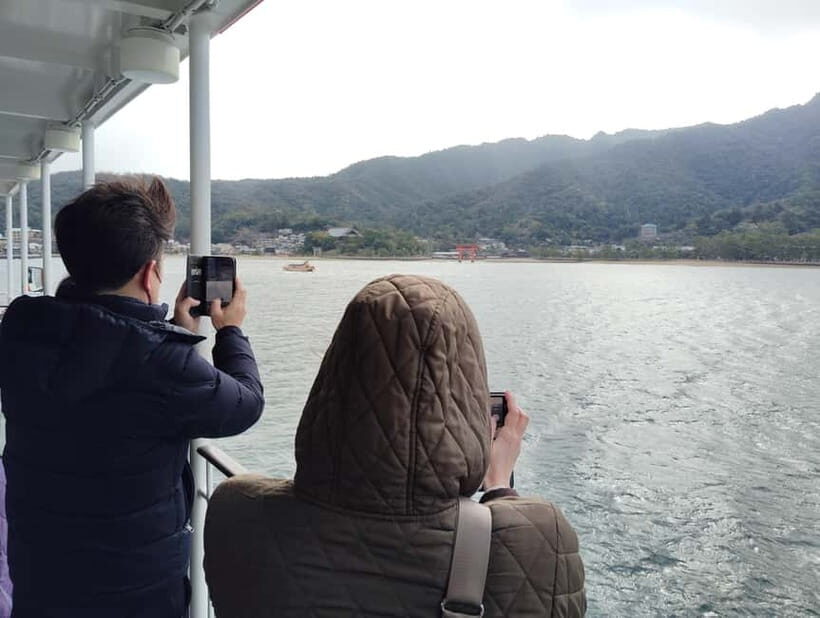
After the museum, you shift into transport mode: a short bus/coach ride (about 15 minutes), then a train segment (about 20 minutes), and then a ferry (about 20 minutes). The good news is that your guide provides the ticketing for the route to Miyajima.
This matters because transfers on your own can eat time. Here, you’re not just moving between points—you’re using a built-in plan designed to get you to the island without turning the trip into a navigation project.
And on top of that, you’re traveling in a way that feels different from standard city sightseeing. The ferry ride gives you that “okay, we’re really going somewhere” moment—especially helpful after Hiroshima’s memorial spaces.

Itsukushima Shrine: about 50 minutes to appreciate the sea-and-mountain setting
Once you arrive on Miyajima, you’ll visit Itsukushima Shrine for around 50 minutes, guided. This is one of Japan’s most sacred places, strongly tied to Shinto beliefs and the natural world.
Your guide will help you with what to look for. You’ll see the shrine’s intricate architecture and get the feel of the island’s quiet rhythm. And since the shrine sits by the Seto Inland Sea, the water setting is part of the experience. The iconic torii gate is known for appearing to float at high tide, and even if conditions vary, you still get that strong visual sense of the shrine living at the shoreline.
Photography is allowed, but keep memorial respect in mind where applicable. This is a sacred site, so think more “observe with care” than “speed-shoot everything.”
The day’s second ferry ride and finishing at Miyajima-guchi
After the shrine visit, you’ll take a ferry back (about 30 minutes) and finish at 宮島口旅客ターミナル (Miyajima-guchi Passenger Terminal).
This is a useful detail for your planning: you’re not ending back at the Hiroshima city center. Your next stop should be arranged accordingly—so check what you want to do after the tour. If you’re staying in Hiroshima city, you’ll likely need to connect from Miyajima-guchi onward.
Price and value: what you’re paying for at $128
At $128 per person, the value here comes from three things you would otherwise have to piece together yourself:
First, you’re paying for a professional English-speaking guide who sets context at the Atomic Bomb Dome and brings clarity at the Peace Memorial Museum. That kind of guided interpretation is hard to replicate with a phone audio guide if you’re not already fluent in the subject.
Second, admission to the Peace Memorial Museum is included. That saves you time and keeps your planning simpler.
Third, the guide provides train and boat tickets to Miyajima. Transport on islands can feel fiddly, and ticket coverage reduces stress at the exact moments you don’t want to be figuring things out.
Could you do parts on your own? Sure. But if you want a smooth, guided flow that keeps you moving at the right pace—especially after a heavy morning—this format often feels worth it.
Who this tour suits best
This is a strong fit if:
- You want Hiroshima’s key sites plus Miyajima in one structured day.
- You appreciate a guide that explains what you’re seeing, not just where to stand.
- You prefer fewer logistics headaches, especially with timed ferry travel.
It may be less ideal if:
- You want lots of free time to wander without a schedule.
- You’re highly sensitive to emotionally heavy content. (You can still go, but plan for slower moments and choose the longer time slot if it helps you absorb the experience.)
Also, the tour runs in private or small groups depending on your option. That can make the commentary feel more like a conversation than a loud bus lecture.
A note on guides: English commentary with proven service
The guides leading this kind of tour are English live guides, and the names mentioned for past departures include Amy, Gordon, and Miyu. What stands out from that pattern is consistent service: guides who organize the route well, keep the pace fair, and answer questions as they come up.
Even with a set itinerary, flexibility helps. On this route, small timing adjustments can make a big difference between feeling rushed and feeling present.
Weather and walking tips that keep the day pleasant
You’ll do a moderate amount of walking and you’ll be outside at key points. Bring comfortable shoes. Bring an umbrella or raincoat, since weather changes can happen quickly.
Also, think about pacing through the museum. The exhibits are not “quick browse” material for most people. You’ll be glad you gave yourself enough time.
Should you book this Hiroshima Highlights Guided Tour?
Book it if you want the clearest, most balanced route through Hiroshima’s defining memorial sites—then a well-organized transition to Miyajima’s sacred atmosphere. The mix of guided explanation, museum time, and ticketed ferry/train transport is a practical win.
Skip or consider a different format if you’re only available for the shortest 4-hour slot and you strongly want both Hiroshima city area and Miyajima. That shorter option can’t cover both.
If you’re trying to decide between “most important places with guidance” and “maximum independent wandering,” this tour leans toward the first choice—and it does that well.
FAQ
How long is the Hiroshima highlights tour?
It runs for about 4 to 8 hours depending on the option you pick. The experience description also references a 5.5-hour guided flow.
What’s included in the price?
The tour includes a professional guide, admission to the Hiroshima Peace Memorial Museum, and a visit at the Atomic Bomb Dome. It also includes train and boat tickets to Itsukushima Shrine.
Do I need to buy tickets for the ferry and train to Miyajima?
No. The guide provides the train and boat tickets for your transfer to Itsukushima Shrine.
Where do I meet the guide?
Meet in front of Seven-Eleven Hiroshima Otemachi 1-chome. The guide will be holding a yellow sign with the DeepExperience logo.
Is the tour in English?
Yes. The live tour guide offers English commentary.
How much walking is involved?
Expect a moderate amount of walking. Comfortable shoes are recommended.
Is food included?
No. Meals and drinks are not included.
Can I take photos?
Yes, photography is allowed. Just be respectful in memorial areas and sacred sites.
Is hotel pickup provided?
Hotel pickup and drop-off are not included, but pickup is optional near the meeting point. The guide will be holding the yellow sign near the designated location.