Kyoto’s Arashiyama hits differently when you go sideways. This 4-hour walk links the famous sights—Togetsu Bridge and the bamboo grove—with less-packed temples like Otagi and Adashino, plus a preserved street in Saga.
Two things I really like: you get clear, human context from your guide as you move (not just stop-and-stare), and the photos still come fast—especially the bamboo moment. One thing to consider: you’ll walk a moderate amount, and it isn’t set up for wheelchair users or people with mobility limits.
In This Review
- Key highlights you’ll care about
- Why Arashiyama feels calmer when you start at Saga Arashiyama Station
- Togetsu Bridge and the Arashiyama Park observatory stop
- Bamboo forest photo stop: quick, classic, and not a full-day ordeal
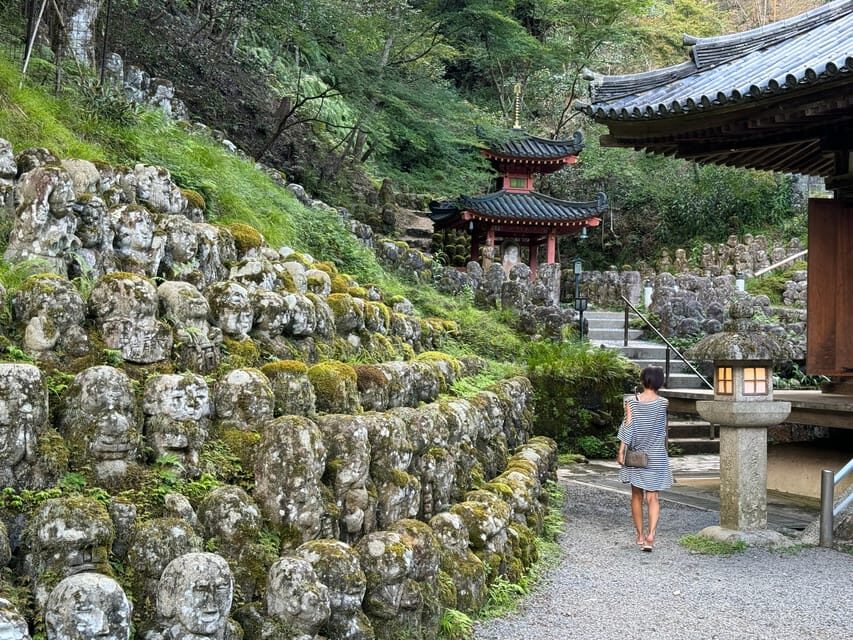
- Otagi Nenbutsu-ji: the 1,200+ stone statues that make you smile
- Adashino Nenbutsu-ji: 8,000 stone images and the quiet that follows
- Saga Toriimoto preserved street: traditional homes and small shops
- Seiryoji Temple and how your guide ties it back to Okusaga
- Price and logistics: what $83 buys you (and what it doesn’t)
- Timing, walking pace, and what to bring
- Which guide style matches you best?
- Who this Arashiyama crowd-avoidance tour is best for
- Should you book this Arashiyama tour?
- FAQ
- What is the duration of the Kyoto Arashiyama tour?
- Where do I meet the guide?
- What does the ticket price include?
- Which stops are included during the 4 hours?
- Is food and drinks included?
- Is this tour suitable for wheelchair users or limited mobility?
Key highlights you’ll care about
- Togetsu Bridge + Arashiyama Park observatory views for the classic “yes, this is it” first impression
- Bamboo forest photo stop timed for a quick, clean shot without losing half your afternoon
- Otagi Nenbutsu-ji’s 1,200+ whimsical stone statues that feel playful, not gloomy
- Adashino Nenbutsu-ji’s 8,000 stone images and pagodas for a quieter, haunting kind of beauty
- Saga Toriimoto preserved street with traditional homes and small shops (cocoon dolls and washi paper)
- Your guide connects Okusaga and Arashiyama history so the stops add up, not repeat
Why Arashiyama feels calmer when you start at Saga Arashiyama Station
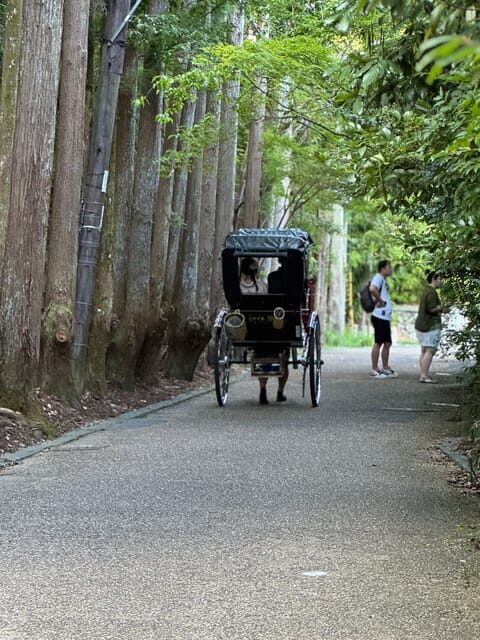
Meeting at the Saga Arashiyama Station ticket gate keeps things grounded. You’re not scrambling to find a bus drop-off in the middle of the loudest foot traffic. Your guide holds a yellow DeepExperience sign, which is exactly the kind of detail that saves time when Kyoto’s streets are busy and signage blends together.
From there, the day’s logic is simple: hit the famous postcard items early, then peel off toward the side streets and temple grounds that people miss when they only chase the main bamboo lanes. That route shift is the whole point of this tour.
You can also read our reviews of more tours and experiences in Kyoto.



Togetsu Bridge and the Arashiyama Park observatory stop
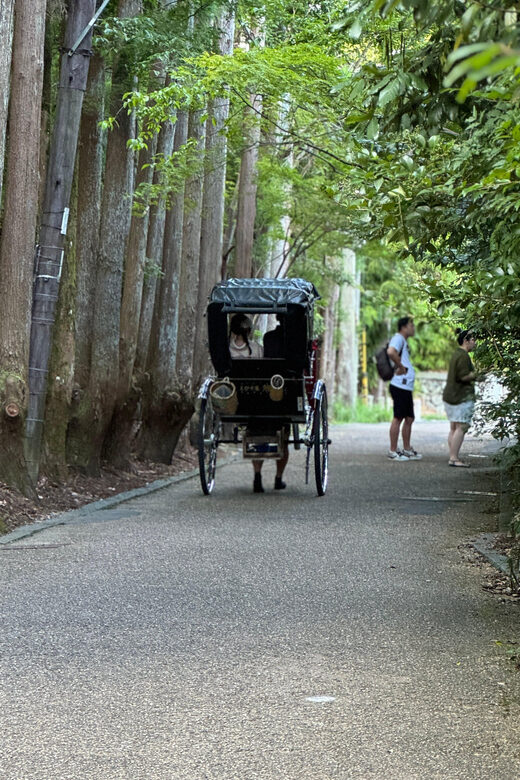
You get a short visit at Togetsukyo Bridge, which is the Kyoto-style “stretch your legs, grab your bearings, and get your photo” moment. Even with crowds nearby, being there with a group and a plan helps. You won’t waste time circling to find the best angle.
Then you head to the observatory at Arashiyama Park. This isn’t just a random viewpoint. It’s a useful pause that lets you understand how the river, paths, and temple areas connect. If you’re the type who likes to see a place make sense, this stop helps you do that before you enter the temple-heavy stretch later.
Bamboo forest photo stop: quick, classic, and not a full-day ordeal
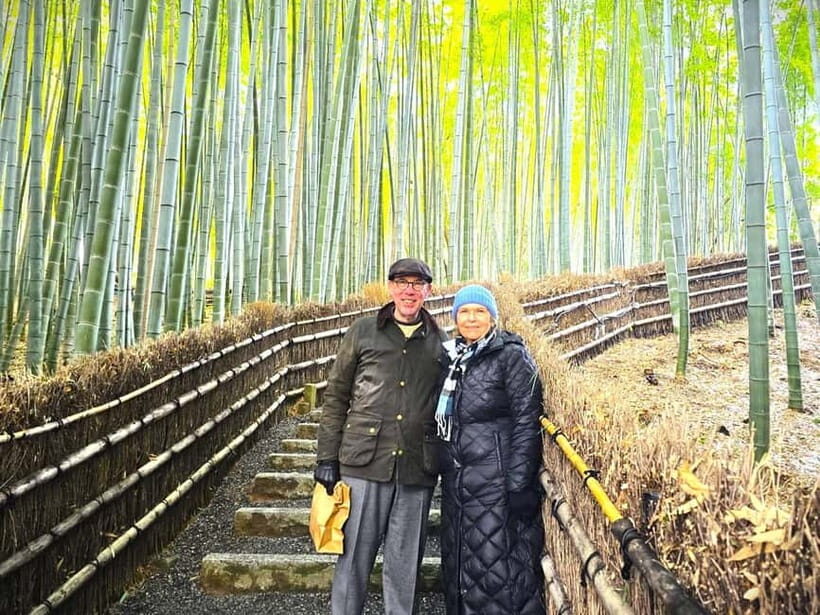
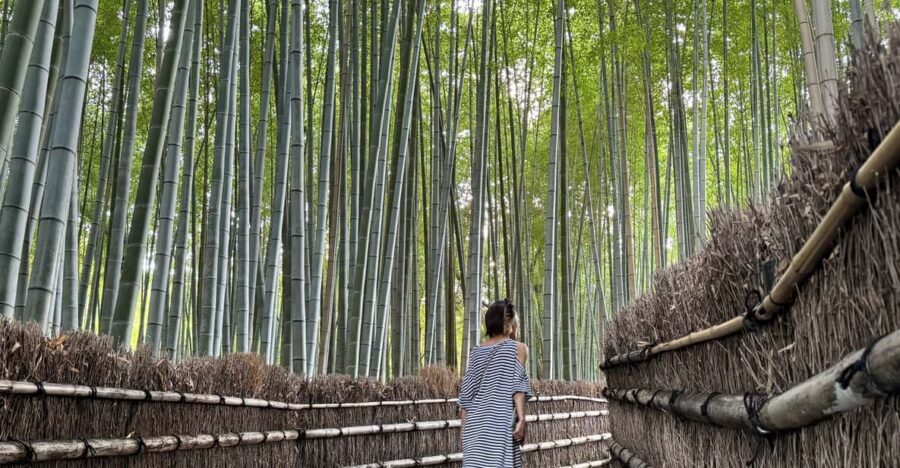
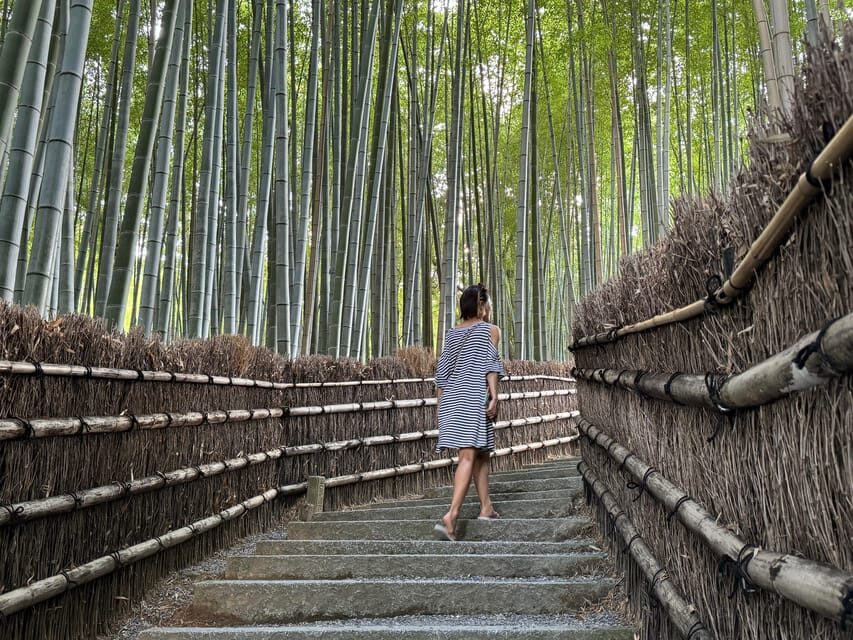
Yes, the bamboo grove is iconic. You’ll spend about five minutes on the bamboo forest photo stop, which is just enough time to frame the classic shot without turning it into a half-hour bottleneck.
A tip for getting a better photo in less time: treat it like a two-step task. First, check your background (people, railings, signs). Second, shoot a couple of different angles quickly—then move on. The tour structure means you don’t have to “wait for the perfect moment,” because you won’t be trapped there.
And if you’re hoping to do more wandering on your own, you’ll be better positioned afterward. You’ll know where you are and what’s nearby.
Otagi Nenbutsu-ji: the 1,200+ stone statues that make you smile
Otagi Nenbutsu-ji Temple is the stop that changes the mood. Instead of the standard solemn temple vibe, you’re greeted by whimsical stone figures—so many of them that you’ll start to notice patterns and themes as you walk.
The tour time is around 30 minutes, which feels right here. It gives you enough time to slow down, look closely, and take photos without feeling rushed through a “photo-production line.” If you love quirky side attractions, this is often the part people remember most.
Also, this is a great place to ask questions. Your guide’s job isn’t just to point. They can explain how this kind of memorial art fits into Japanese Buddhist practice and why the expressions feel both strange and oddly human.
Adashino Nenbutsu-ji: 8,000 stone images and the quiet that follows
If Otagi is playful, Adashino Nenbutsu-ji Temple is the counterweight. This site features 8,000 stone images and pagodas, and the scale is the point. After you’ve looked at the statues at Otagi, Adashino makes you feel the difference between “a collection” and “a system.”
The visit is also about 30 minutes, which helps. This isn’t a place you want to skim. You’ll want a minute to let your eyes adjust, then you can walk the paths and see the repetition—thousands of stones arranged in a way that tells a bigger story than any single statue.
This is one of the stops where a good guide matters. In past Arashiyama tours, guides like Yoshi have been the type to connect temple art to everyday culture, and others (for example, Juraj) have shared Buddhist-philosophy context that turns stone carvings into something more than scenery. You’re not required to study anything. You just get the meanings that make the place stick.



Saga Toriimoto preserved street: traditional homes and small shops
The tour includes time walking through Saga Toriimoto Preserved Street, with a guided stroll of about 30 minutes. This part is valuable because it shows you the “in-between Kyoto” that doesn’t always show up on your itinerary selfies—traditional houses and street character that feel lived in.
It’s also where the tour becomes practical. You’ll pass small shops, including a cocoon dolls shop and a washi paper shop. Even if you don’t plan to buy anything, watching how these items are made and sold gives you a sharper understanding of local crafts.
One note: food and drinks are not included. So if you’re the kind of person who gets hungry while walking (most of us do), plan for a snack or decide where you’ll eat afterward near the station.
Seiryoji Temple and how your guide ties it back to Okusaga
You also visit Seiryoji Temple for about 15 minutes. That shorter time works well because it keeps the afternoon moving while still giving you a final temple stop that doesn’t feel like filler.
What makes this section click is the way your guide connects the broader picture—specifically the history of Okusaga and Arashiyama. If you’ve ever visited temples one after another and thought, I get it, but does it connect?—this tour aims to prevent that.
And you can feel the difference in guide style. In some small-group outings with this operator, I’ve seen guide names like Shino, Akino, Megumi, Kana, and Juliette credited for being friendly and chatty, with enough space for questions. The best guides don’t drown you in facts. They make the place make sense.
Price and logistics: what $83 buys you (and what it doesn’t)
At $83 per person for 4 hours, the value is strongest when you look at what’s included: a local guide, plus admission to Otagi Nenbutsu-ji and Adashino Nenbutsu-ji.
That matters because these entrances aren’t always free in Kyoto, and paying for them on your own during a tight schedule can turn into a time sink. Here, you roll from stop to stop with the entrances already handled.
What’s not included is also clear: food and drinks and souvenirs. So think of this as a “guided sights and temples” block. You’ll likely want to eat before or after, not during.
Group size is another quiet value factor. The tour offers private or small groups, which usually means less waiting, more conversation, and a gentler pace than large crowd tours.
Timing, walking pace, and what to bring
This is a walking-focused afternoon. The overall time adds up to a series of short visits: a bridge stop, a bamboo photo moment, two longer temple visits, a preserved street stroll, and a final temple check-in. Expect the day to feel active even though each stop isn’t “all day” on its own.
What to bring:
- Comfortable shoes (moderate walking)
- Camera (you’ll use it)
- Water (Kyoto can be warm, and you’ll be moving)
Not allowed: smoking. Also, it’s not suitable for people with mobility impairments or wheelchair users, based on the tour’s walking format.
A small practical idea: wear layers. Arashiyama can shift from sunny to shaded temple paths fast, and you don’t want your outfit to become the problem halfway through.
Which guide style matches you best?
You won’t pick your guide here, but the names that show up in English/Japanese tours give you a clue about the vibe you might get. Guides such as Megumi have been described as warm and fun to talk with. Yoshi has been credited for detailed Japanese culture and history, and even helping arrange a taxi to a curry restaurant recommendation (Cocoichi). Kana has been praised for making time for questions for families with teenagers and adults.
If you like more conversation, you’ll probably enjoy the small-group feel. If you want a calm guide who keeps the day organized and smooth, you should still be in good shape—this tour’s structure is designed for that.
Who this Arashiyama crowd-avoidance tour is best for
This tour fits best if you want:
- the big Arashiyama icons (Togetsu Bridge and bamboo) without spending all day in the busiest lanes
- two memorable temples that feel different from each other (Otagi’s quirky statues; Adashino’s 8,000 stones)
- a short walk that still teaches you something meaningful about Okusaga and Arashiyama
It’s less ideal if you:
- can’t manage moderate walking
- want a long free-roam shopping or café crawl (food is not included, and the tour time is packed with sights)
If you’re a first-time Kyoto visitor with limited time, this is a strong use of a half day. If you’ve been to Kyoto before and think you already “know” Arashiyama, the side temples and preserved street can surprise you—in a good way.
Should you book this Arashiyama tour?
I’d book it if you want a smarter Arashiyama plan: the famous views, plus the quieter temple art that explains why Arashiyama feels deeper than bamboo postcards. The included temple admissions and the focused 4-hour format make it easy to justify the price, especially when you’d otherwise pay entry fees and waste time navigating alone.
I wouldn’t book it if walking is a challenge for you, or if you’re hoping for a long, relaxed day with lots of food stops and no schedule. This is a “see and learn” route, not a drifting stroll.
If your schedule allows, this is one of the better ways to enjoy Arashiyama without turning your afternoon into a crowd-watching exercise.
FAQ
What is the duration of the Kyoto Arashiyama tour?
The tour lasts 4 hours.
Where do I meet the guide?
Meet your guide in front of the ticket gate at Saga Arashiyama Station. The guide holds a yellow sign with the DeepExperience logo.
What does the ticket price include?
The tour price includes a local guide and admission to Otagi Nenbutsuji and Adashino Nenbutsuji.
Which stops are included during the 4 hours?
You’ll visit Togetsukyo Bridge and Arashiyama Park, the bamboo forest photo stop, Otagi Nenbutsu-ji Temple, Adashino Nenbutsuji Temple, Saga Toriimoto Preserved Street, and Seiryoji Temple.
Is food and drinks included?
No. Food and drinks are not included, and souvenirs are also not included.
Is this tour suitable for wheelchair users or limited mobility?
No. The tour is not suitable for people with mobility impairments or wheelchair users due to the walking involved.