REVIEW · KYOTO
KYOTO: Golden Pagoda, Bamboo Forest, Arashiyama (Italian)
Book on GetYourGuide →Operated by Agenzia Turisti Italiani in Giappone · Bookable on GetYourGuide
Two Kyoto icons in one tight route. This Italian-led half day links Sagano Bamboo Forest and Kinkaku-ji with clear explanations of daily life, not just postcard facts.
I also like that the tour is handled by a Kyoto guide who can answer your questions as you go. In my experience of guides like this, that Q&A is where the trip turns from sightseeing into real understanding.
One possible drawback: the day is short, so the pace includes multiple transfers (train, bus, subway) and the time at each big stop is limited to about an hour.
In This Review
- Key Takeaways Before You Go
- Meeting Kyoto Station Like a Pro
- The Half-Day Route: Fast Transport, Smart Timing
- Sagano Bamboo Forest: Walk It, Don’t Just Photo It
- A small caution
- Kinkaku-ji (Golden Pagoda): Why the Guidance Changes Everything
- Timing note
- Why the Tour Feels More Like Understanding Kyoto
- Value Check: Is $117 Worth It?
- Where You End (and How to Use That Freedom)
- Who This Tour Suits Best
- Should You Book It?
- FAQ
- Where do I meet the tour in Kyoto Station?
- How long is the tour?
- What does the tour include?
- Is the tour only in Italian?
- Does the tour start and end at Kyoto Station?
- Can I get a refund if plans change?
Key Takeaways Before You Go
- Kyoto-native explanations in Italian: history plus everyday life, not just dates and photos.
- Sagano Bamboo Forest time to actually walk: about an hour, with time for sightseeing and shopping nearby.
- Kinkaku-ji guided visit: roughly one hour at the Golden Pagoda area.
- Easy start point at Kyoto Station: the meeting spot is very specific and close to clear landmarks.
- Return to Kyoto Station at the end: you can plan your next activity—or leave earlier if you want.
Meeting Kyoto Station Like a Pro
This tour starts at Kyoto Station, North entrance (Karasuma-guchi). The meeting point is on the space between the four escalators in front of the cab (not bus) terminal, toward the east just outside the central north entrance.
Here’s the handy way to confirm you’re in the right place: from that spot, you should see the Kyoto Tower in front of the station, up at the top left. If you don’t see it, don’t guess—double-check where you are first.
You’ll also get an email the day before with confirmation details. That helps because Kyoto Station is huge, and “near the station” is how people lose 20 minutes.
You can also read our reviews of more tours and experiences in Kyoto.



The Half-Day Route: Fast Transport, Smart Timing
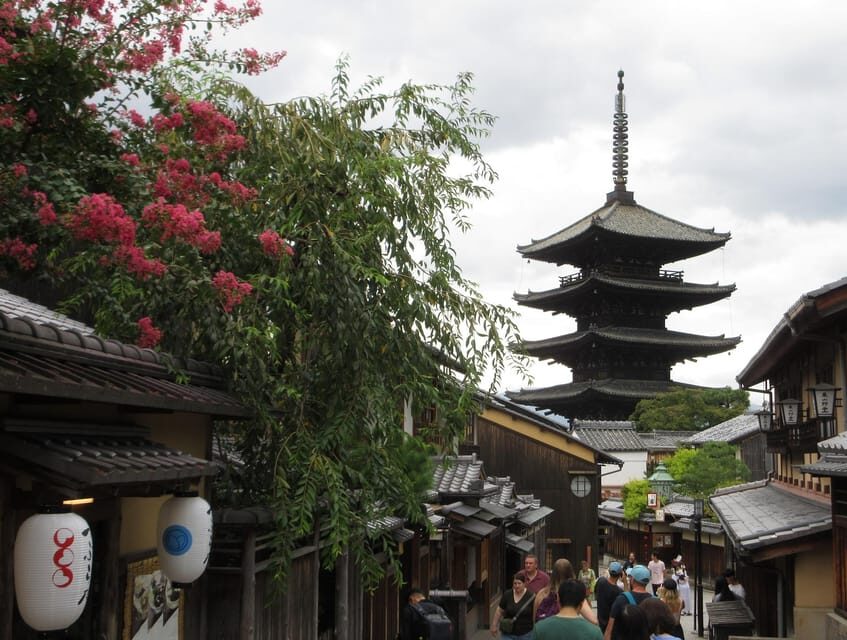
The whole experience is about 5 hours. It’s built for people who want two major Kyoto hits without spending the day zig-zagging across town.
Your route includes:
- a 20-minute train to the Sagano area
- an additional 20-minute train after the bamboo stop
- 15 minutes by bus/coach to reach Kinkaku-ji
- another 15 minutes by bus/coach plus 15 minutes by subway/metro on the way back to Kyoto Station
Why that matters: Kyoto looks compact on a map, but the sites you want—especially Arashiyama/Sagano and Kinkaku-ji—aren’t next door to each other. Having transport handled means you spend less time figuring out systems and more time actually standing in the places you came for.
Sagano Bamboo Forest: Walk It, Don’t Just Photo It
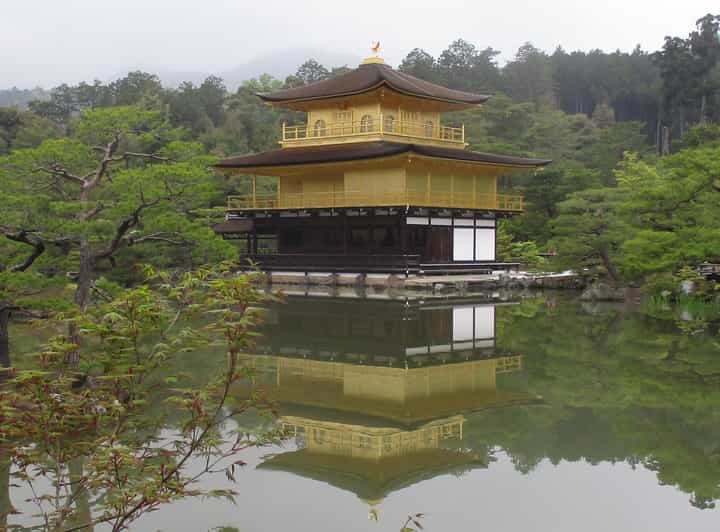
Your first major stop is the Sagano Bamboo Forest in the Sagano area. You’ll have about one hour there with guided time plus space for sightseeing and shopping.
What I like about this setup is that you’re not rushed through. The bamboo area is the kind of place where your first instinct is to snap a picture at every angle, but the best moment is usually the quieter one: when you slow down, listen to the wind, and take in how the path changes as you move.
Also, there’s time for shopping. That’s useful because the bamboo area sits in a spot where you can grab small snacks or simple souvenirs before you head to the next temple visit. If you have dietary needs, this is your chance to sort it out before the longer ride segment.
The tour guide also frames what you see in a broader context—how this part of Kyoto connects to the country’s past and the ways people lived in earlier eras, including references to the environment preserved around major monuments.
A small caution
Bamboo areas can get busy. Even with guidance, you may want to keep your expectations realistic: your guided walk is the point, not the fantasy of empty pathways.
Kinkaku-ji (Golden Pagoda): Why the Guidance Changes Everything
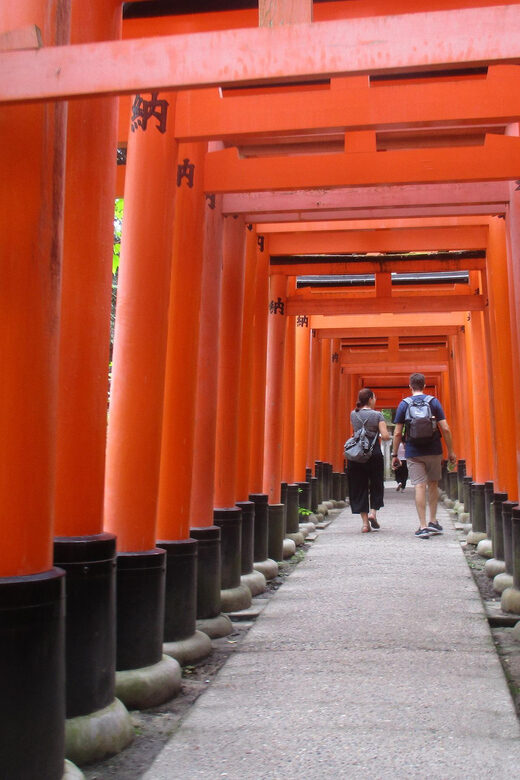
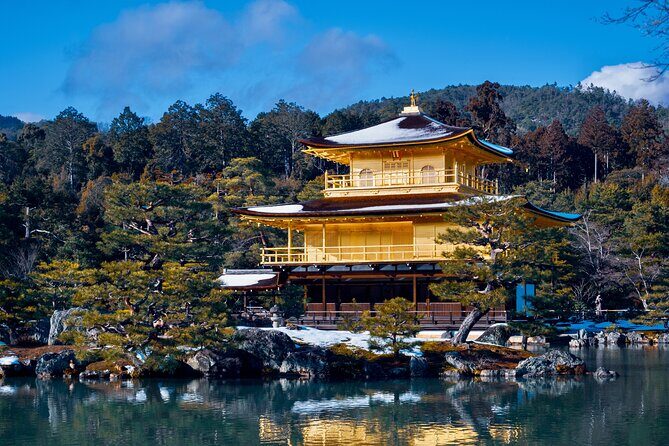
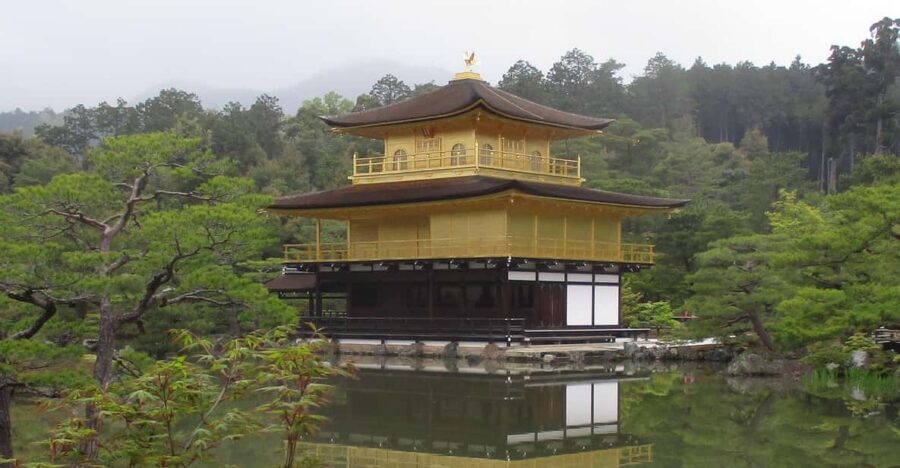
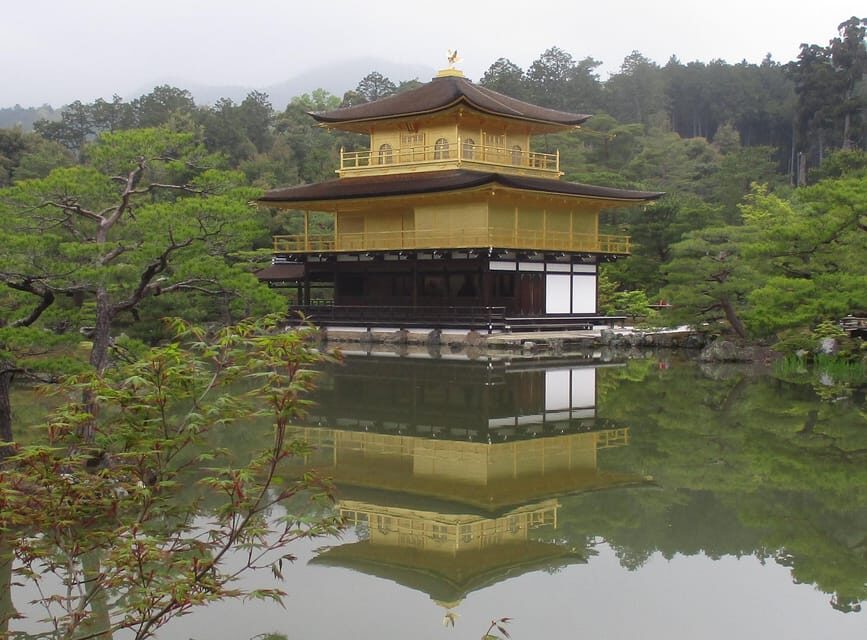
Next comes Kinkaku-ji, the Golden Pagoda. You’ll spend about one hour there with a guided visit.
This is where a strong guide really pays off. One of the best bits of feedback I saw was how much the guide knew—someone described the guide as Omae, with big culture and a warm, friendly manner, plus Italian that’s polished enough to make the explanations easy to follow. Even if you think you know Kyoto basics, Kinkaku-ji becomes more meaningful when your guide connects it to how the area developed and what the architecture and setting represented.
You’re also getting the broader angle: the tour includes stories about relatives of the imperial house, aristocrats, and literati from the past—people associated with retreating life, cultural prestige, and the kind of refined routines that existed alongside the samurai era. That’s the difference between seeing a temple and understanding why it matters to Kyoto’s identity.




Timing note
Because you only get about an hour at Kinkaku-ji, aim for momentum. If you want slower wandering for photos, you may need to accept fewer stops or skip the shopping part. The best approach is to listen, then choose where to spend your remaining time.
Why the Tour Feels More Like Understanding Kyoto
This experience isn’t only about ticking off monuments. It’s designed to teach you how Japanese people think about daily life and historical identity—especially in a place like Kyoto, where old and modern coexist.
The guide’s role is hands-on: you’re encouraged to ask questions, and the explanations are built around what you’re seeing. That can include the country’s historical evolution, the cultural meaning of preserved environments, and how aristocrats and samurai-class life connects to the spaces you visit.
And in a short 5-hour format, that matters. Long tours can fade into repetition. Here, the pacing forces your brain to stay awake: transit, bamboo, temple, then back to Kyoto Station.
Value Check: Is $117 Worth It?
At $117 per person for about 5 hours, the value comes from what’s included and how time-efficient the route is.
Here’s the practical breakdown of value drivers:
- Transport included across train, bus/coach, and subway/metro
- Entrance fees included for the monuments scheduled during the itinerary
- Italian-speaking guide who can explain what you’re seeing and answer questions
- A schedule that covers two major destinations without you doing route math on the fly
If you were to do this independently, you’d spend time figuring out transit connections, likely paying for separate entry tickets, and still needing to manage language gaps. If you’re comfortable navigating Japan, it might feel pricey. But if you want a guided, low-friction half day with built-in context, it’s a strong deal for the time you save.
Where You End (and How to Use That Freedom)
You return to Kyoto Station. The tour also gives you flexibility: you’re free to leave halfway.
How to use that smartly:
- If bamboo is your top priority and you want a slower temple visit later, you could consider exiting earlier and using the rest of your time elsewhere.
- If Kinkaku-ji is your main target, you might stay for the full flow and then plan dinner right around Kyoto Station.
Because the return point is Kyoto Station, your logistics after the tour are simple: you can head to another neighborhood, pick up hotel directions, or just reset without hunting down a final stop in the suburbs.
Who This Tour Suits Best
This tour is a good fit if you:
- want a half-day plan that hits two big Kyoto sights
- prefer explanations in Italian, with space for questions
- like practical pacing and don’t want to spend your limited time figuring out transit
It’s also a decent choice if you’re visiting Kyoto for the first time and want a guide to connect the dots between what looks like scenery and what’s actually part of the city’s story.
If you’re the kind of traveler who loves roaming slowly with zero structure, you might feel the time constraints. But if you like focused sightseeing with answers along the way, you’ll likely enjoy the format.
Should You Book It?
I’d book this tour if you want a clean, efficient Kyoto hit: Sagano Bamboo Forest plus Kinkaku-ji, guided in Italian, with transport and entrance fees handled. The best reason to choose it is the guide—feedback strongly highlights preparation and culture, plus a friendly, engaging approach (including mention of the guide Omae).
Skip it only if you strongly dislike structured routes, you’re sensitive to time limits, or Italian guidance doesn’t work for you. Otherwise, it’s a smart way to spend a half day in northwestern Kyoto and come away with more than a set of photos.
FAQ
Where do I meet the tour in Kyoto Station?
Meet at Kyoto Station, North entrance (Karasuma-guchi). The exact spot is between the four escalators in front of the cab (not bus) terminal, toward the east just outside the central north entrance. Kyoto Tower should be visible at the top left from that point.
How long is the tour?
The total duration is 5 hours.
What does the tour include?
It includes an Italian-speaking guide, all scheduled transportation, and entrance fees for the monuments visited during the itinerary.
Is the tour only in Italian?
Yes, the guide speaks Italian.
Does the tour start and end at Kyoto Station?
It starts at Kyoto Station and returns to Kyoto Station. You’re also free to leave halfway if you want.
Can I get a refund if plans change?
You can cancel up to 24 hours in advance for a full refund.