Kyoto feels quieter at 8 a.m. This 4-hour, small-group walk puts you in less-crowded sacred spaces and slows down enough to actually notice what you’re seeing. You’ll move through old forest, focused Buddhist art, and Zen temple architecture with an English-speaking local guide.
I especially like the calm you get at Shimogamo Jinja, a UNESCO World Heritage site that still feels like a retreat even while you’re in Kyoto. I also love the sheer visual punch of 1,001 statues of Kannon at Sanjusangendo, plus the peaceful garden stroll that turns a temple visit into a breather.
One consideration: this is an active walking tour with moderate fitness needs, and the biggest temple entry fees (Sanjusangendo and a Zen garden) aren’t included. Bring water, wear solid shoes, and plan to budget some yen on the day.
In This Review
- Key things to know before you go
- Why this Kyoto loop feels calmer than the usual temple grind
- Price and what $97.55 really covers
- Getting there: starting at McDonald’s Shichijo Keihan and ending at Tofukuji Station
- Stop 1: Shimogamo Jinja’s UNESCO forest quiet (and why early matters)
- Stop 2: Sanjusangendo Temple and the 1,001 Kannon statues
- Stop 3: Tofuku-ji Temple and Zen garden time at Rinzai’s head temple
- Pacing and walking level: what “active” really means
- Who this tour suits best (and who might not love it)
- The authenticity angle: what makes “off the beaten path” feel real here
- Should you book Kyōto Off The Beaten Path: Hidden Zen Garden & Magical Shrine?
- FAQ
- What time does the tour start?
- How long is the tour?
- Where does the tour meet?
- Where does the tour end?
- What is included in the price?
- Are entrance fees included?
- Is water included?
- How big are the groups?
- What if the weather is bad or I need to cancel?
Key things to know before you go
- 8:00 a.m. start to dodge the crush and hear the sites at a calmer volume
- Shimogamo Jinja UNESCO forest with free admission and a truly quiet feel
- Sanjusangendo’s 1,001 Kannon statues plus garden paths for slower viewing
- Tofuku-ji Zen focus tied to Rinzai Zen and founded in 1236
- Small group max 8 travelers, which makes questions easier and pacing smoother
- Entrance fees are extra: Sanjusangendo ¥600 and Zen garden ¥500
Why this Kyoto loop feels calmer than the usual temple grind
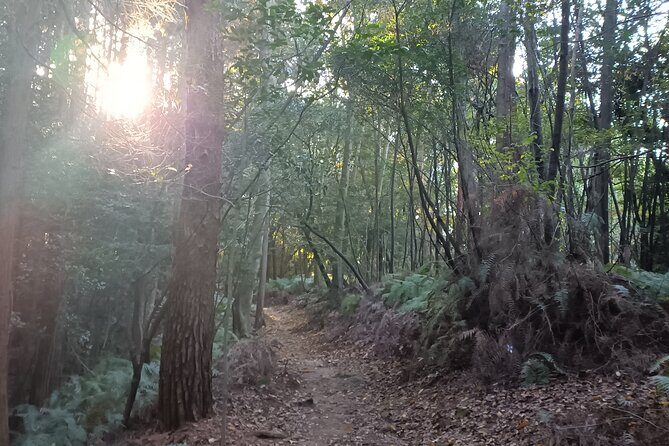
This tour is built around a simple idea: start early and choose places that aren’t top-of-every-list. If you’ve ever done Kyoto in “checklist mode,” you’ll appreciate the pace here. It’s a walking day, but it’s not a sprint, and the guide’s job is to connect the spiritual and historical dots while you’re actually there.
I like that the experience is set up for cultural meaning, not just sightseeing. You’re not rushing between photo stops. Instead, you get time to absorb how shrines and temples work in everyday Japanese life: what people come to do, why certain spaces feel guarded or serene, and how Buddhist imagery is meant to be viewed with patience.
You’ll also benefit from the small group size (maximum 8). That matters in Kyoto. In big groups, you spend time trying to stay oriented. Here, you can usually hear the guide and move as a unit without feeling glued to someone’s back.
You can also read our reviews of more tours and experiences in Kyoto.



Price and what $97.55 really covers
At $97.55 per person for about 4 hours, you’re paying mainly for a local English-speaking guide and a structured route that makes it easier to reach the quieter corners of Kyoto. What’s not included is equally important for value.
Budget for:
- Sanjusangendo entrance: ¥600 (not included)
- Zen garden entrance: ¥500 (not included)
- Water and other drinks: not included (and no alcohol is requested)
Shimogamo Jinja is free, so you get at least one major stop without extra tickets. If you’re trying to keep the day predictable, bring some cash (or a card you know works) for those two entrance fees and plan for a snack or water from convenience stores nearby.
Think of it this way: this is not a cheap “transport-only” tour. The pricing makes sense if you want the guide’s context, the early start, and a less crowded schedule.
Getting there: starting at McDonald’s Shichijo Keihan and ending at Tofukuji Station
Logistics are refreshingly simple. You begin at McDonald’s – Shichijo Keihan (229 Hiyoshichō, Higashiyama Ward), with an 8:00 a.m. start time. The tour ends at Tofukuji Station, specifically by the Family Mart.
That end point is useful because it lets you continue your day without backtracking. You can also base your mental plan around the fact that you’ll finish near a major train stop.
The tour also notes it’s near public transportation, so it’s not one of those experiences where you’re stuck unless you hire a taxi. Still, because you’re walking, it’s worth arriving on time with a clear sense of where you’ll be at 8:00 a.m.
Stop 1: Shimogamo Jinja’s UNESCO forest quiet (and why early matters)
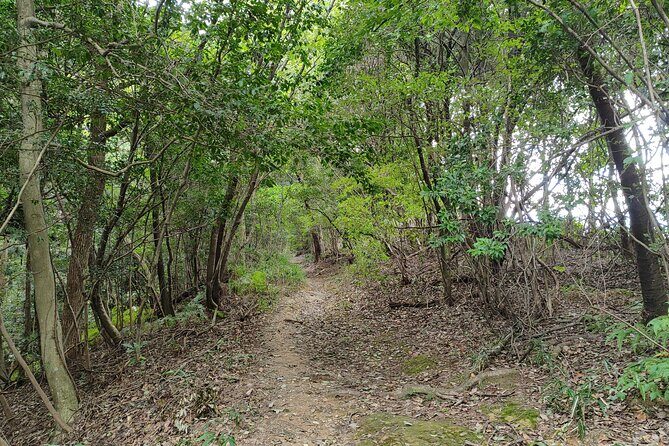
Shimogamo Jinja is UNESCO World Heritage, but the bigger win is how it feels. You’ll walk through an ancient, sacred forest that provides a real break from Kyoto’s busier tourist pockets. Even when you’re in the middle of the city, this place reads as protected and calm.
The free admission is nice, but the real value is the experience of the space as a whole. Shrines here aren’t just “a building you look at.” They’re part of a larger setting—trees, paths, and atmosphere—where people come with a slower mindset.
Why I think this stop works so well on this kind of tour:
- The early start helps you see it before the day gets noisy.
- The guide’s explanations give you something to look for beyond the obvious.
- You’ll likely feel like you’re stepping into a different rhythm, not just moving to a new landmark.
Time is about 1 hour, which is enough to enjoy the forest walk without turning it into a long, unfocused wander.
Stop 2: Sanjusangendo Temple and the 1,001 Kannon statues
Next up is Sanjusangendo Temple, famous for its 1,001 statues of Kannon, the Buddhist goddess of mercy. It’s one of those places where the main attraction is hard to summarize until you’re standing there. The sheer number gives it a special kind of power: it’s repetition with purpose, not just decoration.
Along with Kannon, you’ll also see other guardian deities. The point isn’t to memorize everything. The guide helps you understand what the statues represent and why this kind of arrangement matters to worship practices.
You’ll also get a peaceful break with time in the garden areas, including:
- the East Garden Pond
- the Strolling Garden
This portion is where I’d slow down on purpose. The statues can feel intense, even when you’re calm. Having garden time after helps your brain switch modes from “observing details” to “taking in the setting.”
Sanjusangendo entrance isn’t included, so plan on paying ¥600 on the day. If you’re someone who likes to see a site fully but still move with the group, this timing works well at about 1 hour.



Stop 3: Tofuku-ji Temple and Zen garden time at Rinzai’s head temple
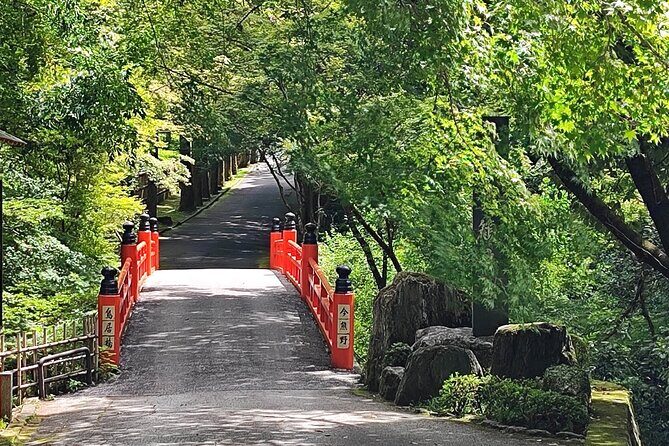
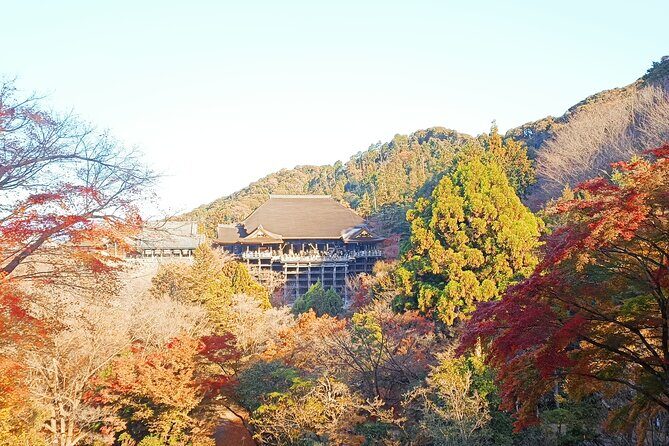
Tofuku-ji is a major Zen Buddhist temple in Kyoto. It’s known for its historic buildings and, especially, its stunning autumn foliage. Even if you’re traveling outside peak leaf season, the temple’s identity is still anchored in the way it was built and used over time.
This temple was founded in 1236, and it’s recognized as the head temple of Rinzai Zen Buddhism. That matters because Zen isn’t just a style you see in art. It’s also a way of thinking about space, discipline, and attention. With a guide, you’re more likely to notice those choices instead of just admiring buildings like museum pieces.
The tour allots about 2 hours for this stop, which is a good chunk. You’ll have time to see the main temple atmosphere and then focus on the Zen garden element.
A Zen garden entrance fee applies here: ¥500 (not included). If you want the full effect, don’t treat it as optional. This is where Zen garden viewing makes sense as part of the larger temple context.
One practical thought: temples can be peaceful, but they also come with uneven walking surfaces. Bring shoes with grip and stay mindful if you’re visiting after rain.
Pacing and walking level: what “active” really means
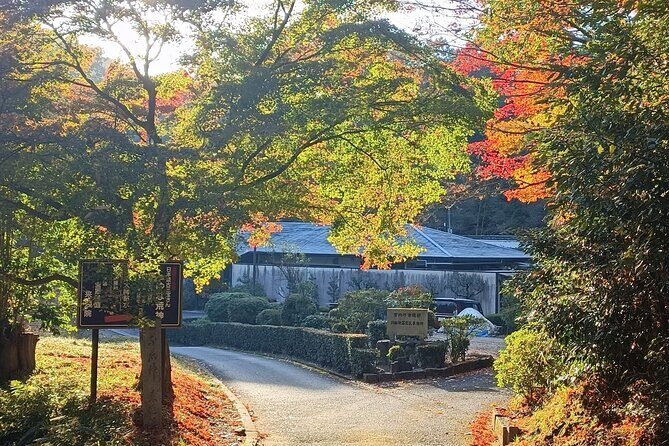
This is an active walking tour designed for people with moderate physical fitness. It’s not described as a gentle stroll with long sit-down breaks. You should expect continuous movement plus some walking on temple paths.
If your legs and joints are a concern, this may not be the best fit. I’m saying that plainly because the value of the day comes from timing and flow. When you need frequent rest, it can throw off the rhythm and make the guide’s pacing harder to enjoy.
A good way to prepare:
- Wear comfortable, grippy shoes you trust on stone and temple paths
- Carry a light layer if mornings feel cool
- Plan your bathroom breaks early since you’re moving through multiple sites
- Bring water since it’s not provided
Also, because the tour starts at 8:00 a.m., you’ll want breakfast timing that works for you. Don’t overpack your morning with huge meals, but do give yourself energy.
Who this tour suits best (and who might not love it)
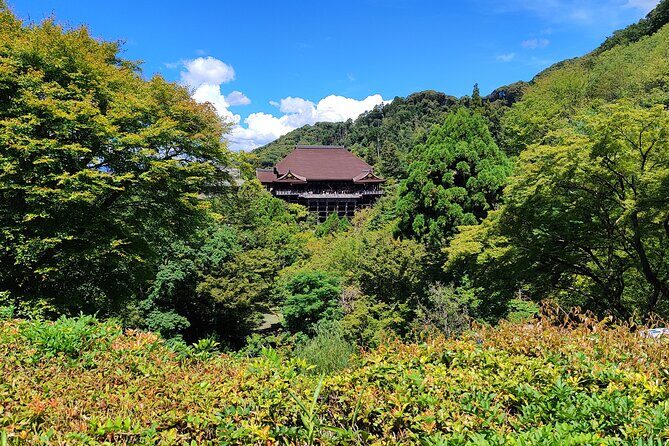
You’ll likely love this experience if you:
- want temples and shrines with less crowd noise
- enjoy context, explanations, and seeing how places connect to broader culture
- like walking and can handle moderate foot travel
- prefer small groups (max 8) where you can actually ask questions
This tour might be less satisfying if you:
- want a seated, low-mobility format
- dislike paying extra for entrances during the day
- prefer a very short itinerary with minimal walking
There’s also a seasonal and weather reality. The tour notes it requires good weather, and in poor conditions it may be rescheduled or refunded. If you’re the type who travels with flexible days, you’ll handle that better.
The authenticity angle: what makes “off the beaten path” feel real here
“Off the beaten path” can sometimes mean nothing more than a slightly different photo location. Here, it feels more grounded because the day is anchored in places that naturally function as local sacred sites, not just tourist magnets.
Shimogamo Jinja’s setting does that instantly. The forest walk makes you slow down. Sanjusangendo’s statue hall does it through focus: you can’t casually skim 1,001 Kannon statues. And Tofuku-ji does it by linking the day to Zen’s institutional role in Japan, with its Rinzai head temple connection and long foundation story.
The guide’s role is what ties it together. Instead of random facts, you get explanations that help you read the sites: what you’re looking at, why it matters, and how it fits into Japan’s religious landscape.
Should you book Kyōto Off The Beaten Path: Hidden Zen Garden & Magical Shrine?
I’d recommend it if you want a morning-to-early-afternoon Kyoto experience that’s practical, quieter, and meaning-focused. The best reasons to book are the 8:00 a.m. start to beat the crowds, the small group size, and the route through Shimogamo, Sanjusangendo, and Tofuku-ji with a local guide who can explain what you’re seeing.
If you’re budgeting tightly or you dislike paying additional entrance fees, you’ll want to account for ¥600 + ¥500 and plan water on your own. If your mobility is limited, also consider whether the “active” walking pace fits you.
For most people who like temples and want an easier, more human-paced day in Kyoto, this is a strong choice.
FAQ
What time does the tour start?
The tour starts at 8:00 a.m.
How long is the tour?
It runs for about 4 hours.
Where does the tour meet?
You meet at McDonald’s – Shichijo Keihan, 229 Hiyoshichō, Higashiyama Ward, Kyoto.
Where does the tour end?
It ends at Tofukuji Station, near Family Mart (12 Chome Honmachi, Higashiyama Ward, Kyoto).
What is included in the price?
An experienced local guide with good command of English is included.
Are entrance fees included?
No. Sanjusangendo entrance is ¥600 per person, and the Zen garden entrance fee is ¥500 per person. Shimogamo Jinja admission is free.
Is water included?
No. Water and other drinks are not included. Alcohol is not requested.
How big are the groups?
The maximum group size is 8 travelers.
What if the weather is bad or I need to cancel?
The tour requires good weather. If it’s canceled due to poor weather, you’ll be offered a different date or a full refund. You can cancel for a full refund up to 24 hours before the experience’s start time.