REVIEW · TOKYO
Mount Fuji Day Tour:Lake Kawaguchi, HealingVillage,Oshino Hakkai
Book on Viator →Operated by Hotel Takitei · Bookable on Viator
Fuji magic in one long, stress-free day.
What I like most is that this route strings together three Fuji-view stops plus a traditional village without you having to plan rail times, transfers, or drive in the mountains. You’re out of Tokyo noise for about 10 hours, and the pacing gives you real chances to pause, look, and take photos.
I especially love two parts: the photo opportunities from multiple angles around Lake Kawaguchi, and the chance to see Oshino Hakkai’s eight ponds up close after the first viewpoints. On top of that, the tour guide I ran with was Rachel, and she was practical and informative—exactly what you want when you’re trying to understand what you’re looking at, fast.
One drawback to think about: Mount Fuji visibility is never guaranteed, and weekend/season traffic can push the return time. Also, one issue I heard about on a different run was a late start caused by a Tokyo subway outage, so it’s smart not to schedule anything tight afterward.
In This Review
- Key things to know before you go
- A one-day Fuji plan that saves you from Tokyo logistics
- Stop 1: Arakurayama Sengen Park for that early Fuji viewpoint
- Stop 2: Oshino Hakkai and the story behind the eight ponds
- Stop 3: Oishi Park on Lake Kawaguchi for seasonal color
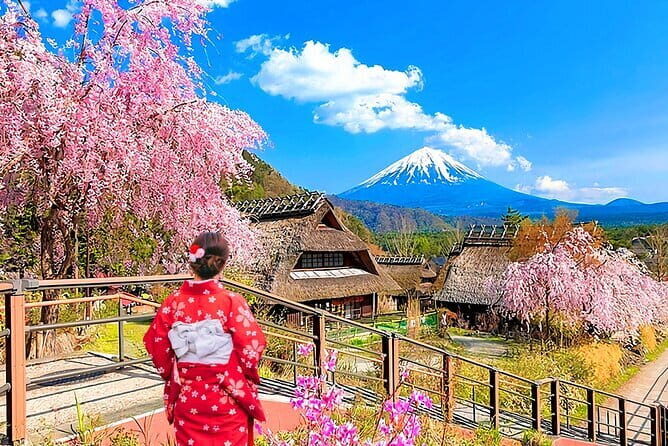
- Stop 4: Saiko Iyashi no Sato Nemba for thatched-roof calm
- Price and what you’re really paying for
- Timing, traffic, and the real Mount Fuji weather rule
- How to make the day easier: cash, snacks, and photo planning
- Group-tour reality: helpful guides, but manage expectations
- Who this Mount Fuji day tour fits best
- Should you book this Fuji day tour from Tokyo?
- FAQ
- How long is the Mount Fuji day tour?
- What places does the tour visit?
- Is food included?
- What admissions are included in the price?
- Do I need cash for the day?
- Is Mount Fuji visibility guaranteed?
- Is this a small-group tour?
- Can I eat on the bus?
- Will the schedule change during Oct 26–Nov 20?
Key things to know before you go
- Small-group size up to 40 with pickup and drop-off at the designated meeting point
- Four stops in one day: Arakurayama Sengen Park, Oshino Hakkai, Oishi Park, and Saiko Iyashi no Sato Nemba
- Photo-focused timing built around viewpoint time blocks at each stop
- Cash may be necessary since some spots and restaurants can be cash-only
- One included admission: Saiko Healing Village Root Field (500 yen per person)
- Seasonal swap note: Oct 26–Nov 20 may skip Oishi Park due to the Kawaguchiko Maple Corridor
A one-day Fuji plan that saves you from Tokyo logistics
This is the kind of Mount Fuji day tour that makes sense when you want the countryside version of Japan without treating your travel day like a math problem. You meet at a set location, then a professional driver handles the route, tolls, and parking. The guide keeps the group together and talks in multiple languages, which matters when you’re hopping between viewpoints and villages.
The best value here is that the day is built around three different “ways of seeing” Fuji. You start with a classic high-view viewpoint, move to a village known for water shaped by Mount Fuji, and then circle back to Lake Kawaguchi areas for more open views. By the time you reach the traditional thatched-roof village near West Lake, the day feels less like rushing through attractions and more like a full Fuji region day.
The reality check: you’re still going to be in a car most of the day. That’s the trade. If your dream is to self-drive or make frequent spontaneous stops, this tour format may feel limiting. If your dream is to get to key places reliably, the “show up and go” setup is a big win.
You can also read our reviews of more tours and experiences in Tokyo.



Stop 1: Arakurayama Sengen Park for that early Fuji viewpoint
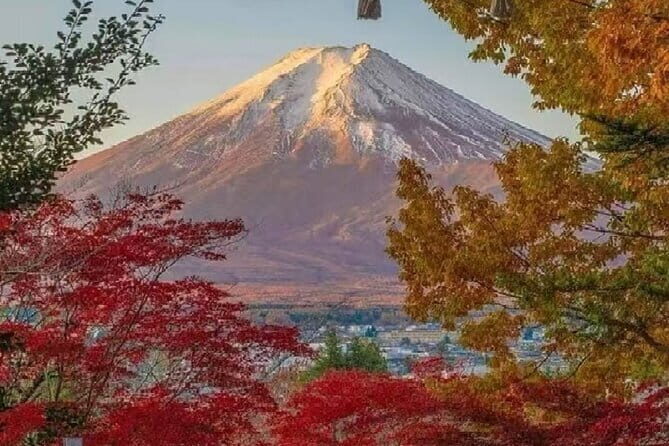
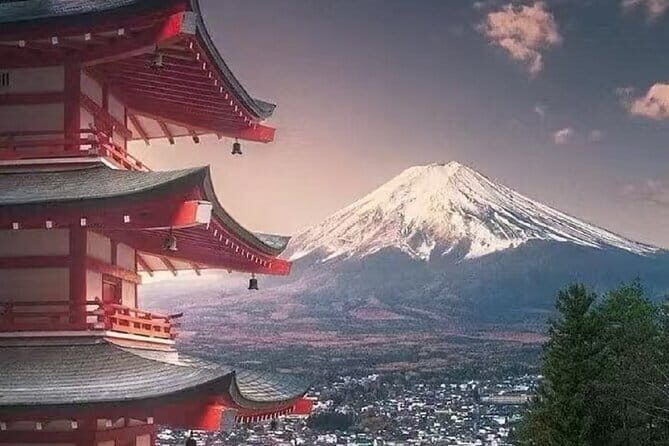
Your first stop is Arakurayama Sengen Park, with about 1 hour and 10 minutes on site. This is a strong opener because the park sits in a way that lets you look toward Mount Fuji and the surrounding area, which sets the tone for the entire day.
What I like about starting here is that it often gives you the first, most motivating frame: you’re not waiting until mid-afternoon to see the mountain. Even when visibility is imperfect, a viewpoint this early helps you decide where you want to focus later. You also get enough time to climb and wander without feeling like you’re sprinting through steps.
Admission is not included for this stop, so factor that into your budget. The good news is that the tour handles the logistics; you just handle yourself part—water, camera, and a quick plan for how you’ll move when crowds show up.
One practical tip: wear shoes you can walk in comfortably. These viewpoint areas can mean stairs and uneven ground, and you’ll be happier if your legs aren’t fighting you.
Stop 2: Oshino Hakkai and the story behind the eight ponds
Next comes Oshino Hakkai for roughly 1 hour and 10 minutes. This is one of the most popular Fuji-region stops for a reason: you’re not just looking at scenery, you’re looking at how the mountain affects the water around it.
The key detail here is that the eight crystal-clear ponds are fed by Mount Fuji’s snowmelt. Over decades, the water filters through volcanic rock. That’s the whole point: the ponds feel simple and beautiful, but there’s real geology behind the effect.
I love this stop because it slows you down. The views are great, but the real experience is standing at water level and noticing the quiet, mirror-like surface. It’s also a place where you can shop lightly, snap photos, and then just breathe for a bit before the next drive.
Admission is not included here either. Also, the stop can get busy, especially in peak travel seasons, so arrive ready to move with the flow and grab your photos when you see a clear pocket of space.
Stop 3: Oishi Park on Lake Kawaguchi for seasonal color
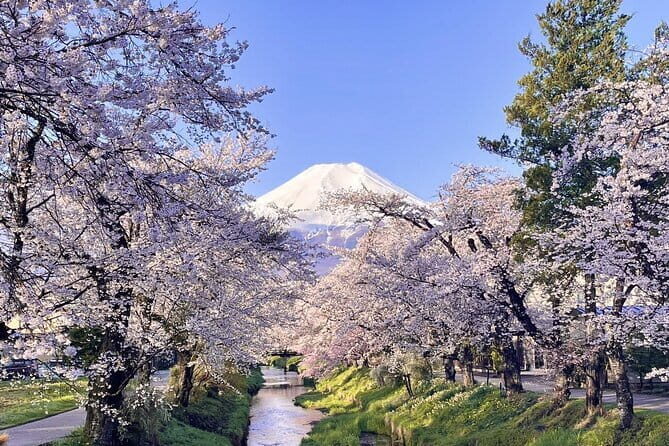
After the ponds, you head to Oishi Park (Kawaguchiko-Oishi Park) with about 40 minutes. That time limit sounds short, but it fits the style of the day: this is a viewpoint-and-photo sprint, not a half-day festival.
The park is known for seasonal color. In summer you’ll find lavender blooms, in autumn you get red leaves, and in other seasons you’ll see softer color changes. Even if the weather isn’t perfect, Oishi Park gives you open lake views that help you reconnect the entire Fuji story: mountain water, lake shoreline, and the region’s distinct seasonal look.
Here’s the important scheduling note: Oct 26–Nov 20 is seasonal for the Kawaguchiko Maple Corridor, and during that period the tour may not go to Oishi Park. If your plan is tightly tied to autumn photos, double-check timing before you book.
Like the other major stops, admission is not included. If you’re someone who likes to linger, use this 40 minutes strategically—pick one “main” viewpoint path, take your time for photos, then walk on rather than trying to do everything.
Stop 4: Saiko Iyashi no Sato Nemba for thatched-roof calm
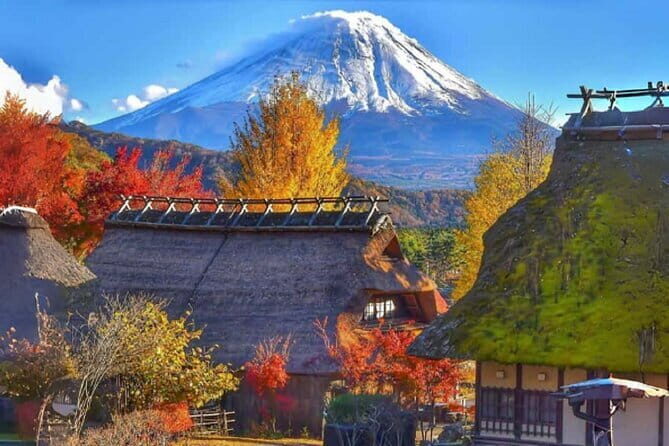
The final stop is Saiko Iyashi no Sato Nemba, listed as West Lake Healing Hometown Root Field. You get about 1 hour here, and the included admission is 500 yen per person for the Root Field area.
This is a different kind of payoff. Instead of water and viewpoints, you’re in a traditional village setting with thatched-roof houses. It’s often compared to the feel of other famous heritage villages, and the mood is the point: slower walking, calmer visuals, and a sense of stepping away from the busier tourist zones around Lake Kawaguchi.
This stop is also your best moment to reset after the drive and photo stops. If your feet are feeling tired, this is a good time to move at your own pace—watch the atmosphere, take a few slower photos, and read details if signage is available.
Admission is included for Root Field, but other minor items or optional activities inside the village aren’t included (not specified as included beyond the root field ticket). If you want souvenirs, bring a small cash buffer because some places only accept cash.






Price and what you’re really paying for
The price is $46.91 per person, which is a fair chunk of a day, especially when you compare it to “DIY” travel. But the value comes from what’s bundled:
- pickup and drop-off at the designated meeting point
- professional driver plus tolls, fuel, and parking fees
- multilingual guide
- four fixed stops with time blocks
- one included admission (Saiko Root Field 500 yen)
What you’re not paying for inside the tour price: food, plus admissions at Arakurayama Sengen Park, Oshino Hakkai, and Oishi Park. The tour also explicitly notes that eating is prohibited on the bus, which means you’ll need to plan for snacks and drinks outside the vehicle.
So the question becomes: do you want to trade money for convenience? If you’re staying in Tokyo and don’t want to manage transfers to the Fuji area, this cost makes sense. If you love planning your own route and you’re confident driving in mountain traffic, you may do better on your own. But most people come to Fuji for the view—and for that, this kind of organized route is a practical deal.
Timing, traffic, and the real Mount Fuji weather rule

This is a day trip that runs about 10 hours. That includes travel time between stops and time on site. It’s long enough to feel like a real excursion, not a quick hit. It’s also long enough that traffic can affect the schedule.
There’s a clear warning built in: on weekends, during sakura season, and on Japanese holidays, return time may be delayed due to traffic. The tour provider covers overtime fees for the guide and driver, but the advice is still the same—avoid scheduling activities or transport immediately after your tour ends. Build in buffer time so you’re not stuck rushing to catch another plan.
Crowds also matter. Some stops can be heavy with visitors in peak seasons, so your experience will depend on timing and weather. If Fuji is visible, crowds often surge to photograph the same angles. If visibility is poor, it can be easier to move around, but the emotional payoff is lower.
And then there’s the big one: weather conditions are unpredictable, and visibility of Mount Fuji cannot be guaranteed. That’s not just a polite note. It’s the central reality of planning for Fuji. Your best strategy is to treat the day as a countryside experience even if the peak is shy—Oshino Hakkai’s ponds and the thatched-roof village still feel special without a perfect mountain shot.
How to make the day easier: cash, snacks, and photo planning
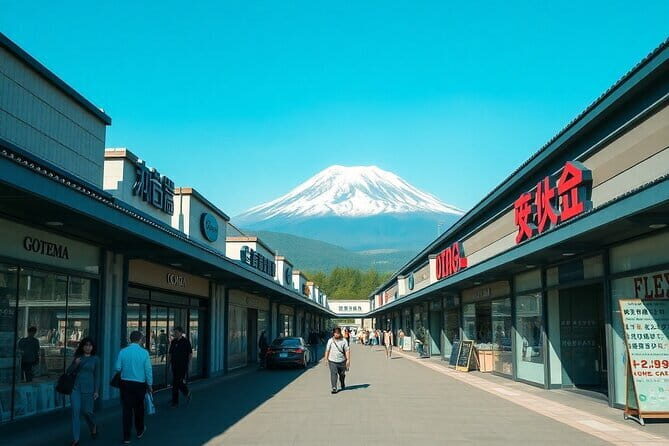
A few practical points can noticeably improve your experience.
First, bring cash. The tour recommends it because some scenic spots, restaurants, and other places may only accept cash payments. Even if you mostly pay by card in Tokyo, the Fuji-region day can include smaller places that don’t.
Second, plan for food on your own. Food and drinks are not included, and eating is prohibited on the bus. So you’ll want to eat at stops or nearby restaurants during your time blocks. If you’re the type who needs a full sit-down meal to recover from walking, pack snacks as backup.
Third, prepare for quick photo windows. Oishi Park only gets 40 minutes, and viewpoints depend on where the crowd is moving. If you want “your” photo angle, identify it early and be ready to shoot quickly when space opens up. This day is designed for momentum.
Finally, expect language variety. Since it’s a group tour, you may ride with guests from other languages. That’s normal for this format. The guide being multilingual helps, but your best experience will come if you’re comfortable moving as a group.
Group-tour reality: helpful guides, but manage expectations
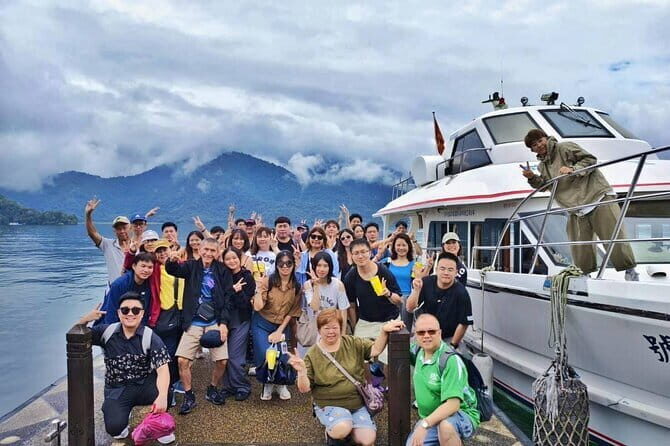
The strongest part of the experience is the overall ease. You skip the public transport hassle and you’re handled from stop to stop with a professional driver. One of the highlights in the feedback I received was the sense of hassle-free touring and how helpful the guide felt—especially when it’s someone like Rachel guiding you through what you’re seeing.
That said, one caution: group tours are still subject to the real world. On one run described to me, the tour left about 45 minutes late because a Tokyo subway outage disrupted the morning. There wasn’t magic to erase the delay on site, so the lesson is simple: don’t plan a tight second activity right after the tour.
If you approach it with flexibility—good shoes, cash, and a calm attitude—the structure works. If you need precision to the minute, you may feel annoyed when the day bends.
Who this Mount Fuji day tour fits best
This tour is a good fit if you:
- want Mount Fuji-area highlights from Tokyo without arranging buses or trains
- prefer a guided route with fixed timing over self-planning
- enjoy a mix of viewpoints, water, and a heritage-style village
- want a small-group day (max 40) with multilingual support
It may not be ideal if you:
- need guaranteed Mount Fuji visibility (no tour can promise that)
- hate long car rides and would rather build a custom itinerary
- plan to do something immediately afterward with no buffer time
Should you book this Fuji day tour from Tokyo?
I’d book it if your priority is getting to the key Fuji-region sites in one day and keeping your stress level low. The price reflects the convenience: transportation, guide, tolls, and a guided route that covers Arakurayama Sengen Park, Oshino Hakkai, Oishi Park, and Saiko Iyashi no Sato Nemba.
I’d think twice if your plan is extremely schedule-dependent, or if you only care about Mount Fuji being perfectly visible. This trip is still worth it when the mountain hides, but your emotional payoff is highest on clear days.
If you do book, set yourself up for success: bring cash, wear walking shoes, and don’t schedule anything tight after the return. Fuji rewards patience—and this tour is built for exactly that.
FAQ
How long is the Mount Fuji day tour?
The tour runs for about 10 hours.
What places does the tour visit?
It visits Arakurayama Sengen Park, Oshino Hakkai, Oishi Park (Kawaguchiko-Oishi Park), and Saiko Iyashi no Sato Nemba (West Lake Healing Hometown Root Field).
Is food included?
No. Food and drinks are not included.
What admissions are included in the price?
The Root Field ticket for Saiko Iyashi no Sato Nemba is included (500 yen per person). Admissions for other stops are not included.
Do I need cash for the day?
It’s recommended to bring cash because some scenic spots and restaurants may only accept cash payments.
Is Mount Fuji visibility guaranteed?
No. Weather is unpredictable, and visibility of Mount Fuji cannot be guaranteed.
Is this a small-group tour?
Yes. The tour has a maximum of 40 travelers.
Can I eat on the bus?
No. Eating is prohibited on the bus under Japanese law.
Will the schedule change during Oct 26–Nov 20?
Yes. The Kawaguchiko Maple Corridor period (Oct. 26–Nov. 20) may mean the tour does not go to Oishi Park during that time.