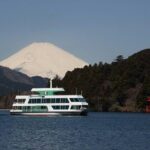
Fuji in one day beats most stand-alone plans. I like that this trip bundles the Mt. Fuji photo stops with real local culture, including the shibazakura festival and Saiko’s traditional village. I also like the hassle-free round-trip transport that saves you from timing trains and changing buses. One catch: the schedule is tight, so if you want long food breaks or slow wandering, this may feel a bit rushed.
You’ll ride in an air-conditioned vehicle with a guide, and the tour is offered in English and Mandarin. On past departures, guides such as Kishida, Taiyo, and Agnes were praised for organization and clear meeting-point help, including practical tips on viewpoints and timing. If weather clouds roll in, you may still get lucky on certain stops, but you should plan for an up-and-down Mt. Fuji day.
In This Review
- Key Points You’ll Actually Care About
- Mt. Fuji From Tokyo in One Day: What This Tour Delivers
- Price and Value: What You Pay Up Front vs. Tickets Later
- Riding Out and Back: Time-Saving Transport From Tokyo
- Fuji Shibazakura Festival at Motosuko Resort: The Main Photo Moment
- Saiko Iyashi-no-Sato Nenba: Traditional Village Time With Fuji Behind It
- Lake Kawaguchiko and Oishi Park: Two Ways to See Fuji and Water
- Kawaguchiko Natural Living Center: The Red Torii Photo Angle
- Chureito Pagoda and Arakura Fuji Sengen Shrine: Icons and Spiritual Meaning
- Weather Reality: How to Play the Fuji Odds
- Lunch, Food Stops, and the Timing Tradeoff
- Who This Tour Fits Best (and Who Should Skip It)
- Should You Book This One-Day Mt. Fuji + Shibazakura Trip?
- FAQ
- How long is the Mount Fuji & Fuji Shibazakura Festival one-day trip?
- What’s included in the tour price?
- Are lunch, Saiko Iyashi-no-Sato Nenba tickets, and the Fuji Shibazakura Festival tickets included?
- What languages is the tour offered in?
- What happens during Golden Week in Japan (May 1 to May 7)?
- Can I cancel and get a full refund?
Key Points You’ll Actually Care About
- One organized ride from Tokyo means you spend less time figuring out transport and more time on the views
- Fuji Shibazakura Festival gives you that rare Mt. Fuji + pink groundcover photo combo
- Short, purposeful stops at Lake Kawaguchi and Oishi Park keep the day moving even when it’s busy
- Traditional Japanese village time at Saiko Iyashi-no-Sato Nenba adds culture beyond the postcard
- Iconic Mt. Fuji photo angles like the red torii at Kawaguchiko Natural Living Center
- Golden Week change: Chureito Pagoda and Arakura Fuji Sengen Shrine may be skipped if traffic is extreme
Mt. Fuji From Tokyo in One Day: What This Tour Delivers
A one-day Mt. Fuji plan is always a gamble. But it’s also a smart one if you’re short on time. This trip focuses on the Fuji area around Lake Kawaguchi, and it strings together the stops that most people come for: shibazakura blooms, lake views, and a couple of religious and cultural sites.
What makes it feel “worth it” is the pacing. You don’t just stare at Mt. Fuji from one angle. You rotate through several viewpoints around Lake Kawaguchi, then add a traditional village and shrine so the day doesn’t turn into one long photo sprint.
The tour runs about 10 hours, which is long enough to hit multiple key spots, but not so long that you lose your whole day. The tradeoff is that many stops are 50 minutes or less, so you’ll want to move efficiently once you arrive.
A few more Tokyo tours and experiences worth a look



Price and Value: What You Pay Up Front vs. Tickets Later
At $58.90 per person, you’re buying the heavy lift: air-conditioned transport and a guide for the day. You’re also getting a mobile ticket, which makes check-in easier than older paper-ticket systems.
What’s not included is important for value. Lunch isn’t included, and two major photo/culture stops require tickets:
- Saiko Iyashi-no-Sato Nenba: ¥500 per person
- Fuji Shibazakura Festival (held when shibazakura are in bloom at Motosuko Resort): ¥1,200 per person
If you total those ticket costs, the “real” budget is clearly higher than the $58.90 base price. Still, for a guided, round-trip day trip that covers multiple Fuji-area sites, it can be good value—especially if you’d otherwise spend time and stress coordinating transport on your own.
One more money detail: because lunch is not included, plan on paying for meals separately. If you prefer controlling your food (and speed), bring snacks. It’s a simple way to keep the day from feeling like it’s waiting on food.
Riding Out and Back: Time-Saving Transport From Tokyo
This is one of those trips where the logistics matter as much as the sights. The tour gives you round-trip transportation between Tokyo and the Mt. Fuji area, and you’re on an air-conditioned vehicle with a guide.
That helps in two big ways:
- Less planning: You’re not juggling train schedules, transfers, and ticket machines while trying to get to the best viewpoint hours.
- More structure: You get a day plan and meeting points, which matters with a group.
Also, the tour is capped at a maximum of 45 travelers, which usually keeps things organized. It’s big enough for a lively group, but not so huge that you’re constantly searching for your guide.
Fuji Shibazakura Festival at Motosuko Resort: The Main Photo Moment
The day kicks off with the Fuji Shibazakura Festival at Motosuko Resort, when the shibazakura plants are blooming. The festival has been running since 2008, and it’s built around one idea: show Mt. Fuji with a blanket of low pink flowers in the foreground.
Why this stop is worth protecting: Mt. Fuji photos are partly luck, partly timing. Shibazakura helps even when the weather isn’t perfect, because the color gives your pictures a strong foreground. When you get a clean view, it’s a classic look—Mt. Fuji rising above soft pink blooms.
This stop is listed as about 1 hour and the festival ticket is not included (¥1,200). That hour is usually what you need to:
- find a decent spot quickly,
- take a first round of photos,
- and then relax long enough to enjoy the atmosphere.
Possible drawback: since this is a group stop, the best angles can get popular. If you’re serious about photos, arrive ready to move fast.
Saiko Iyashi-no-Sato Nenba: Traditional Village Time With Fuji Behind It
Next up is Saiko Iyashi-no-Sato Nenba, a traditional Japanese village area in Fujikawaguchiko Town. It’s described as a particularly picturesque place, and the big selling point is the way it frames Mt. Fuji in the background.
This stop is about 50 minutes, and the ticket is ¥500 per person (also not included). The village itself carries history tied to a landslide during a typhoon in 1966. Even if you don’t know the details before you arrive, the site’s meaning comes through fast: it’s not just a set dressing for photos. It’s a look at rural life and the local way of experiencing the landscape.
What you’ll likely enjoy here is the contrast with the festival. Shibazakura is bright, open, and photo-driven. Nenba is slower. You get a more human scale, more texture, and a sense of place beyond the skyline view.





Lake Kawaguchiko and Oishi Park: Two Ways to See Fuji and Water
After the village, the tour goes to Lake Kawaguchiko, the most popular of the Fuji Five Lakes. You’ll get a short stop—about 20 minutes—but it’s a high-impact one. The lake is known for panoramic views of Mt. Fuji from the shore, and it has the longest shoreline among the Fuji Five Lakes, which is why viewpoints feel more varied even in a short visit.
Then you move to Oishi Park for around 30 minutes. Here, the goal is a triple combo: flowers + lakeside promenade + Mt. Fuji. The park’s promenade features flowers that bloom according to season, so it’s not just a one-note photo spot. Even if shibazakura isn’t the star here, seasonal bloom timing can still give you a strong foreground.
A practical note: these stops are short, so you’ll want to choose where you stand quickly. If you’re traveling in a group, your guide will likely help you find the best viewing points, but you should still be ready to walk a bit once you’re off the bus.
Kawaguchiko Natural Living Center: The Red Torii Photo Angle
One of the most photo-friendly moments comes at Kawaguchiko Natural Living Center, where you can aim for the picture of a red torii with Mt. Fuji in the background. This stop is about 15 minutes and includes time at the second floor for that familiar composition.
This is the kind of spot that makes a Fuji day feel complete. You’re not just looking at the mountain—you’re capturing a specific, classic shrine element in front of it.
Because the time is short, treat it like a photo mission:
- move to your preferred viewpoint quickly,
- take several shots as conditions change,
- and then step out so you don’t get stuck in one angle while the group moves on.
Chureito Pagoda and Arakura Fuji Sengen Shrine: Icons and Spiritual Meaning
If you get clear skies, Chureito Pagoda is one of the big payoff stops. It’s in Arakurayama Sengen Park, and the view is famous for combining Chureito Pagoda, Mt. Fuji, and Fujiyoshida City below. This stop is listed at about 50 minutes, so you’ll have more time here than at some of the others.
Then the tour visits Arakura Fuji Sengen Shrine. The shrine is said to have been built in 705 and served as a guardian place of worship for over 1,300 years. It’s tied to protection against bad luck and prayers for harmony, so it’s not only about views. The shrine gives the day a spiritual grounding that fits well with Mt. Fuji as a sacred mountain in Japanese culture.
Two practical considerations:
- During Golden Week (May 1–7), traffic around Mt. Fuji is expected to be heavy. For that period, the tour may cancel the Chureito Pagoda and Arakura Fuji Sengen Shrine visit and shift time toward other attractions.
- These are popular spots, so even with a timed stop, you should expect crowds and plan for some waiting in peak conditions.
Weather Reality: How to Play the Fuji Odds
Here’s the truth you should plan around: Mt. Fuji visibility depends on weather, and clouds can move in and out. The good news is that the tour’s structure helps. With multiple stops around the lake and different vantage points, you get several chances to catch the mountain clearly.
You’ll also want to think in layers. Even in warmer months, mountain weather can feel cooler near viewpoints, and you’ll be outside for short bursts through the day.
One more helpful strategy: prioritize photo timing during the stops where you have the clearest chance of unobstructed views (lake shore angles, park viewpoints, and the torii framing). When the sky opens, don’t overthink. Move, shoot, and enjoy.
Lunch, Food Stops, and the Timing Tradeoff
Lunch isn’t included, and that matters because the day is packed. The tradeoff for visiting many key sites is that you don’t get a long sit-down meal break.
If you’re the type who wants food to be part of the experience, plan ahead. You might find that quick meals are more satisfying than long waits with limited time. The simplest fix is to bring snacks and a drink so you can keep your energy up between stops.
Also, if you’re sensitive to crowds and want downtime, use the short stop at each location for what you truly need. You’re not losing time by being decisive—you’re buying back time later when you might want an extra minute for a better view.
Who This Tour Fits Best (and Who Should Skip It)
This is a strong fit if you:
- want an organized Mt. Fuji day trip from Tokyo without coordinating trains,
- care about getting multiple iconic viewpoints in one go,
- like a blend of nature, shrine culture, and a traditional village visit,
- enjoy photo stops where timing is important.
This is not the best fit if you:
- want slow travel, long meals, and unstructured wandering,
- hate crowd-heavy sightseeing areas (especially around the most famous pagoda viewpoint),
- are budgeting tightly and don’t want to add festival and village tickets.
Group tours can be a little “everyone move together” sometimes. If that pace works for you, you’ll feel satisfied by the number of sights packed into the day.
Should You Book This One-Day Mt. Fuji + Shibazakura Trip?
Book it if you want the Fuji highlights without the planning headache. The price is reasonable for what’s included—transport, guide, and a route that hits Lake Kawaguchi’s best-known viewpoints plus a traditional village and shrine stops. The shibazakura festival is the kind of seasonal bonus that’s hard to recreate on your own.
Skip or choose another plan if you’re chasing a slow, relaxed day or if you’re uncomfortable with tight time windows. Also, if you’re traveling during Golden Week, know that two major stops may be swapped out due to traffic, so your priorities should be flexible.
If you want a practical Mt. Fuji hit with guided structure and great photo odds, this is a solid way to do it.
FAQ
How long is the Mount Fuji & Fuji Shibazakura Festival one-day trip?
The tour runs for about 10 hours.
What’s included in the tour price?
You get an air-conditioned vehicle and a guide. You also receive a mobile ticket for the experience.
Are lunch, Saiko Iyashi-no-Sato Nenba tickets, and the Fuji Shibazakura Festival tickets included?
No. Lunch is not included. Saiko Iyashi-no-Sato Nenba costs ¥500 per person, and the Fuji Shibazakura Festival ticket costs ¥1,200 per person.
What languages is the tour offered in?
The tour is available in English and Mandarin.
What happens during Golden Week in Japan (May 1 to May 7)?
Because traffic around Mt. Fuji is expected to be heavily congested, the tour cancels the visit to Chureito Pagoda and Arakura Fuji Sengen Shrine and reallocates time to other attractions.
Can I cancel and get a full refund?
Yes. You can cancel up to 24 hours in advance for a full refund. Changes made less than 24 hours before the start time won’t be accepted, and refunds don’t apply if you cancel closer than that.